States Advance Labor Protections for Cannabis, Gig Workers Amid Federal Stall
State legislatures are enacting worker-classification rules targeting cannabis and gig-economy employers as federal labor reform remains gridlocked.
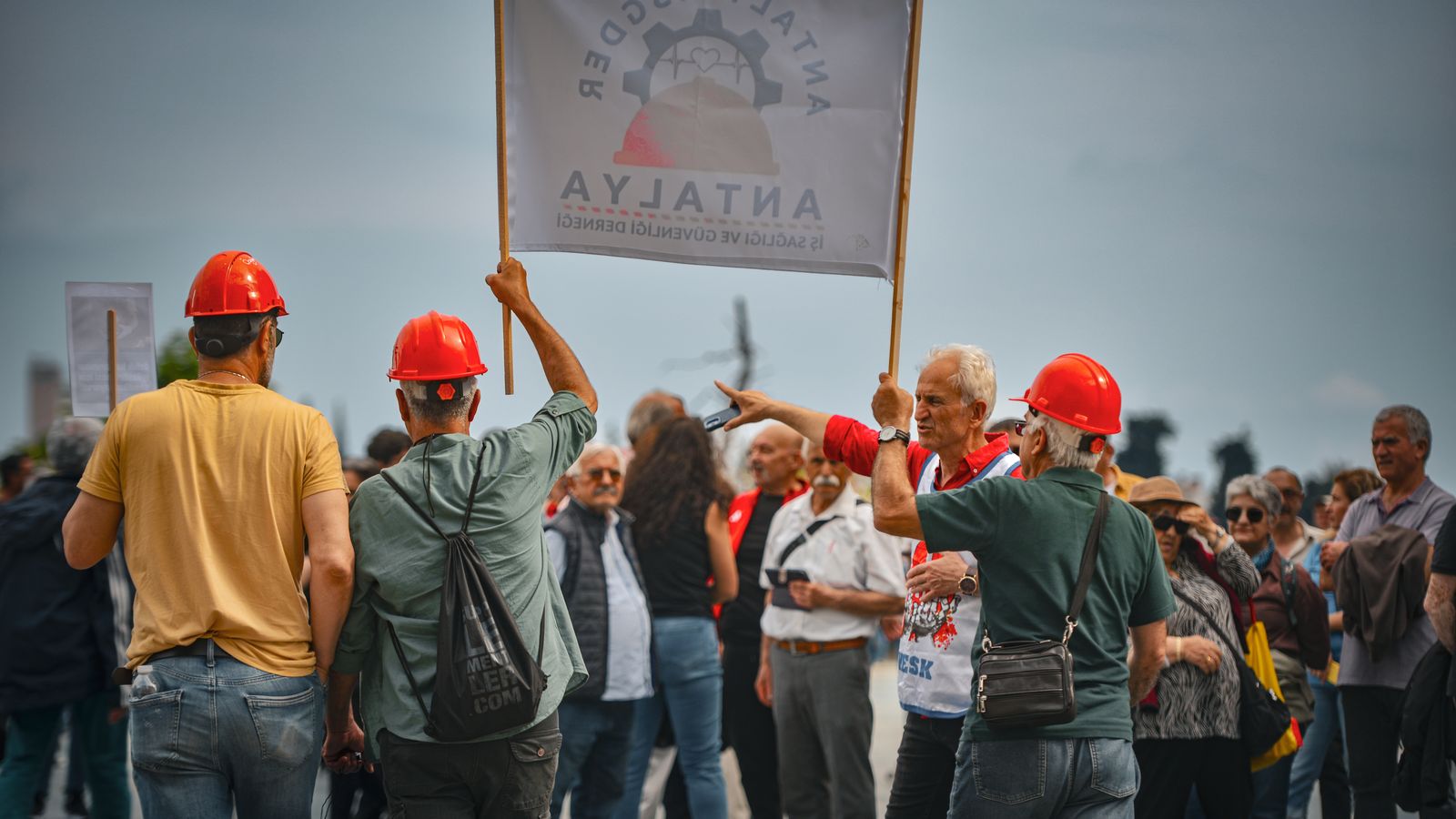
A group of people participating in a protest in Antalya, Türkiye, wearing red hard hats and holding signs.
State Bills Target Cannabis Budtenders, Delivery Drivers
California, New York, and Illinois have introduced bills that would reclassify certain cannabis-industry workers as employees rather than independent contractors, triggering minimum-wage and overtime obligations. The California measure, AB 1472, applies an ABC test to dispensary budtenders and delivery personnel, presuming employee status unless the employer proves the worker operates an independent business. New York's companion bill, S 4821, extends the same framework to adult-use retailers licensed by the Office of Cannabis Management.
Illinois HB 3290 goes further. It bars cannabis licensees from using independent-contractor agreements for any worker performing core retail or cultivation tasks, a provision labor advocates say closes a loophole some MSOs have used to avoid payroll taxes and workers' compensation premiums.
This push mirrors gig-economy fights over rideshare and delivery apps, but cannabis adds a complication: federal prohibition means most cannabis workers can't access unemployment insurance or NLRA protections. State-level classification becomes the only enforcement lever available.
Federal Rulemaking Remains Stalled
The Department of Labor's proposed independent-contractor rule under the FLSA has been pending since January 2023, with no final text published as of September 2026. The rule would codify an economic-realities test, replacing a Trump-era standard that made it easier to classify workers as contractors. Industry groups, including the U.S. Chamber of Commerce, have lobbied against the proposal, arguing it would impose compliance costs on small businesses.
Cannabis operators face an added complication under Internal Revenue Code Section 280E, which disallows deductions for wages paid to employees of Schedule I businesses. Reclassifying contractors as employees can trigger a double hit: higher payroll costs plus lost tax deductions. Some operators have kept workers off payroll to avoid that math. State legislators are now targeting the strategy directly.
For background on how 280E intersects with labor costs, see the CannIntel topic hub on cannabis labor law.
Enforcement Will Vary; Expect Audits in California, New York
California's Labor Commissioner and New York's Department of Labor have both signaled they'll prioritize cannabis-sector audits once the new statutes take effect in early 2027. California's Division of Labor Standards Enforcement has already assessed more than twelve million dollars in back wages and penalties against unlicensed delivery services since 2024. The new law extends that authority to licensed operators.
Enforcement elsewhere remains uncertain. Illinois hasn't yet funded additional investigator positions, and industry observers expect the state to rely on worker complaints rather than proactive audits. Ohio and Michigan have similar bills in committee but haven't advanced them to floor votes.
The outcome hinges on state budget cycles and whether labor agencies receive appropriations for enforcement staff. Without dedicated funding, classification statutes often go unenforced — leaving workers to file private wage claims, a slow and expensive process that few cannabis employees pursue.
Frequently asked questions
What is the ABC test for worker classification?
The ABC test presumes a worker is an employee unless the hiring entity proves: (A) the worker is free from control, (B) performs work outside the usual course of the hiring entity's business, and (C) is customarily engaged in an independently established trade. California, New York, and Massachusetts use versions of this test.
How does 280E affect cannabis payroll costs?
Internal Revenue Code Section 280E bars cannabis businesses from deducting ordinary business expenses, including wages, because cannabis remains Schedule I. Reclassifying contractors as employees increases payroll costs while eliminating the ability to deduct those costs, creating a double financial hit for operators.
Which states are most likely to enforce the new laws?
California and New York have dedicated labor-enforcement divisions and have publicly committed to cannabis-sector audits starting in early 2027. Illinois, Ohio, and Michigan have bills pending but have not yet funded enforcement staff, making proactive audits less likely in those states.
Can cannabis workers file federal wage claims?
No. Cannabis workers cannot access federal unemployment insurance or National Labor Relations Act protections because cannabis is federally illegal. State-level wage-and-hour laws are the only enforcement mechanism available, which is why state classification statutes matter so much.
Sources
The cannabis newsletter you forward to your team.
Federal policy, market data, grower alerts, and the one story that matters today. Sent every weekday at 7am. Free.
No spam. Unsubscribe with one click. 21+ only.
Related from Laws

Boston Mayor Wu Endorses No on 8 Cannabis Repeal Campaign
Boston Mayor Michelle Wu joined the No on 8: Stop the Repeal campaign, adding a high-profile name to the opposition to the Massachusetts repeal question.

Rhode Island THC Drink Guide Lands as Federal Hemp Cap Nears
A new Herb.co consumer guide asks whether Rhode Island THC drinks are legal, but a November federal hemp redefinition may decide the answer.

Cannabis Reform Foes Cite GAO in Push to Reopen Hearings
Opponents of cannabis reform pointed to a GAO document to argue for reopening hearings, Law360 reported, though the filing's forum and contents remain unconfirmed.
More from the newsroom

Nebraska MMJ Growers Harvest First Crops With No Buyers Yet
Nebraska's first medical cannabis harvests are coming in before any processor, transporter, lab or dispensary exists to take delivery, MJBizDaily reported.

South Dakota AG Says Medical Marijuana Law Meets Rescheduling
A South Dakota attorney general's legal opinion concludes the state's existing medical marijuana laws need no changes to comply with federal rescheduling, a position other states may adopt.

DEA Judge Orders New Replies as Marijuana Rescheduling Stays Stalled
A DEA administrative law judge ordered fresh replies in the Schedule III proceeding, which remains sidelined with no final rule in sight.