Police1 readers split on off-duty cannabis safety risk for first responders
Survey reveals divided opinion among law enforcement on whether off-duty marijuana use poses operational hazards.
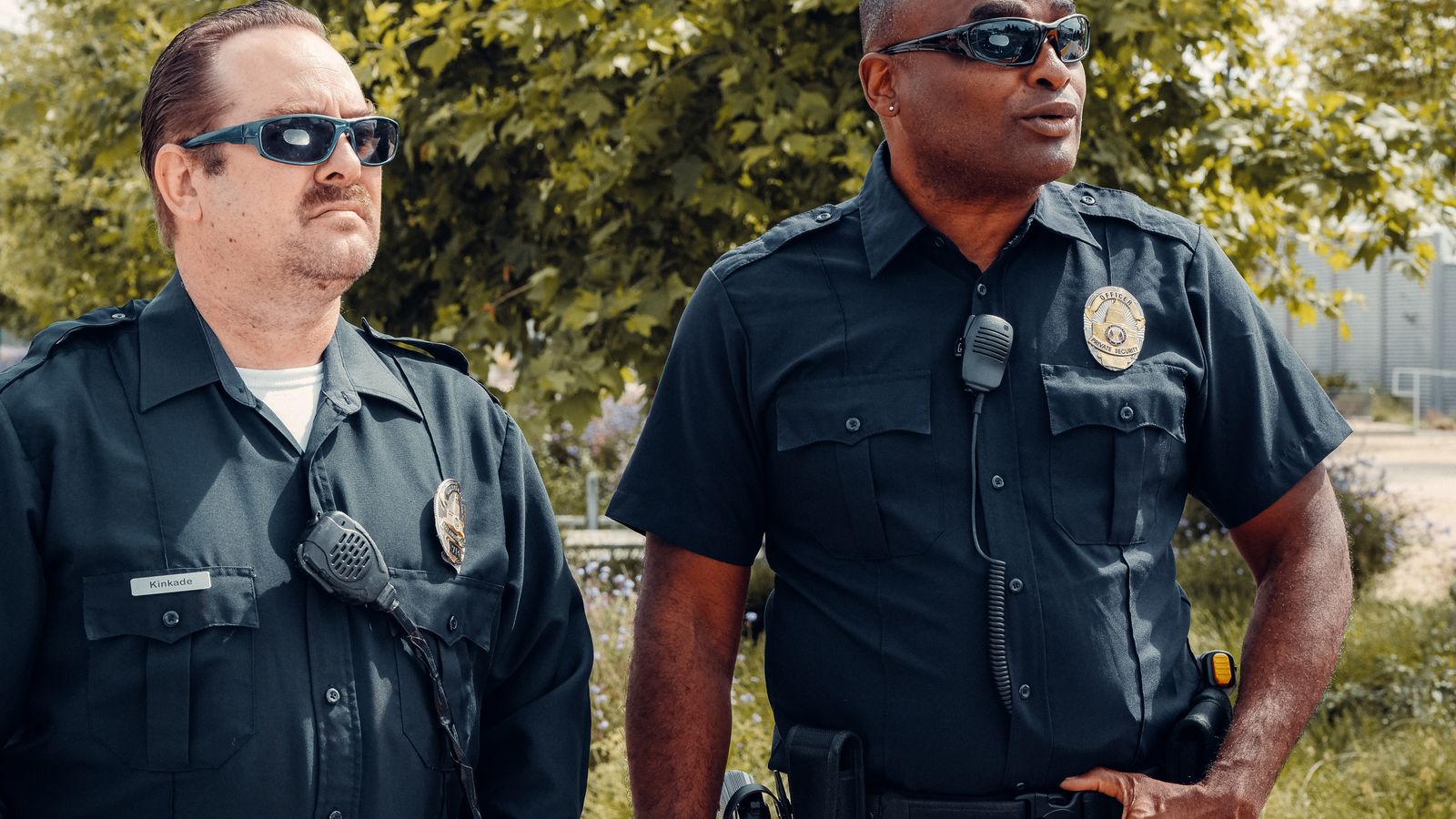
Two police officers in uniform, wearing sunglasses, standing outdoors with a serious demeanor.
Survey Reflects Ongoing Conflict Between State Legalization and Federal Employment Standards
The Police1 poll, published on August 21, 2026, captured responses from active law enforcement officers and emergency services personnel on whether off-duty cannabis consumption threatens operational safety. Sample size wasn't disclosed. Neither was methodology. But the results reflected a spectrum of views ranging from zero-tolerance positions grounded in federal law to conditional acceptance based on state-legal frameworks and impairment testing protocols.
Federal law is unambiguous: cannabis remains a Schedule I controlled substance under the Controlled Substances Act, 21 U.S.C. § 812(c), meaning any use—on or off duty—violates federal statute. First responders employed by federal agencies or departments receiving federal grants face termination risk regardless of state law. State and local agencies operating under state-legal regimes must reconcile conflicting legal frameworks, creating a patchwork of employment policies across jurisdictions.
Timing matters here. The survey coincides with increased scrutiny of workplace cannabis policies following recent state-level employment protections. New York's Labor Law § 201-d, effective March 2021, prohibits discrimination based on off-duty legal cannabis use, though it carves out safety-sensitive positions. California Labor Code § 12954 was amended in 2024 to extend similar protections but permits employers to enforce zero-tolerance policies for positions requiring federal security clearances or Department of Transportation compliance.
Impairment Detection Remains Central Barrier to Policy Reform
The absence of a reliable roadside or field test for THC impairment—analogous to alcohol breathalyzers—drives much of the operational concern voiced by survey respondents. Unlike ethanol, which clears the bloodstream within hours, THC metabolites persist in urine and blood for days or weeks after psychoactive effects subside. Standard drug screens can't distinguish recent use from impairment at the time of testing.
Current field sobriety evaluations and Drug Recognition Expert protocols rely on behavioral observation, not chemical confirmation. The National Highway Traffic Safety Administration hasn't validated a per-se THC blood concentration threshold for impairment. State statutes vary widely. Colorado law, C.R.S. § 42-4-1301(6)(a)(IV), establishes a permissible inference of impairment at 5 nanograms per milliliter of delta-9-THC in whole blood, but this standard isn't binding on employers and doesn't correlate reliably with functional impairment across all users.
For departments managing critical-incident response, the inability to confirm real-time impairment creates liability exposure. If an officer or paramedic is involved in a use-of-force event or medical error and tests positive for THC metabolites, plaintiffs' counsel will argue impairment regardless of actual cognitive state. Departments face a choice: adopt zero-tolerance policies that may violate state employment protections, or accept residual legal risk in exchange for workforce access.
Federal Funding and Collective Bargaining Agreements Constrain Local Flexibility
Many municipal police and fire departments receive federal grants under the Edward Byrne Memorial Justice Assistance Grant program, 34 U.S.C. § 10152, or the Staffing for Adequate Fire and Emergency Response grant program, which impose drug-free workplace requirements as conditions of funding. These federal strings limit the ability of local agencies to adopt permissive cannabis policies even where state law would otherwise allow it.
Collective bargaining agreements add another layer. Arbitrators have upheld terminations for off-duty cannabis use where departmental policies clearly prohibited such conduct, even in states with legal recreational markets. A 2025 arbitration decision involving a Seattle Fire Department paramedic affirmed discharge under a zero-tolerance policy despite Washington's legalization framework, reasoning that the employer's safety justification outweighed the employee's off-duty conduct protections.
Federal funding conditions, state employment statutes, and union contracts create a three-dimensional compliance matrix that varies by jurisdiction and funding source. Agencies must audit their policy manuals against applicable state labor codes, federal grant certifications, and negotiated agreements to avoid conflicting obligations. For background on evolving workplace protections across states, see the CannIntel topic hub on Cannabis Workplace Safety.
For complete background, history, and our ongoing coverage of this story:
Open the CannIntel topic hub →Frequently asked questions
Can first responders be fired for off-duty cannabis use in states where marijuana is legal?
Yes, in most cases. Federal law classifies cannabis as Schedule I, and many agencies receive federal grants requiring drug-free workplaces. State employment protections vary; some carve out safety-sensitive positions, allowing zero-tolerance policies.
Why is impairment testing a barrier to cannabis workplace policies?
THC metabolites remain detectable for weeks after use, but standard tests cannot distinguish recent consumption from impairment at the time of testing. No validated roadside test exists, unlike alcohol breathalyzers.
Do federal grants restrict local police departments from allowing off-duty cannabis use?
Yes. Byrne JAG and SAFER grants impose drug-free workplace certifications as funding conditions under 34 U.S.C. § 10152. Agencies risk losing federal dollars if they adopt permissive cannabis policies.
What is New York Labor Law § 201-d and how does it affect first responders?
Section 201-d prohibits discrimination based on off-duty legal cannabis use but permits employers to enforce restrictions for safety-sensitive positions, leaving first responder agencies discretion to maintain zero-tolerance policies.
Have arbitrators upheld terminations for off-duty cannabis use in legal states?
Yes. A 2025 Seattle Fire Department arbitration affirmed discharge under a zero-tolerance policy despite Washington's legalization, reasoning that the employer's safety justification outweighed off-duty conduct protections.
Sources
The cannabis newsletter you forward to your team.
Federal policy, market data, grower alerts, and the one story that matters today. Sent every weekday at 7am. Free.
No spam. Unsubscribe with one click. 21+ only.
Related from Laws
AG Blanche Says DOJ Won't Interfere With State-Legal Cannabis
Attorney General Todd Blanche said the Justice Department isn't seeking to interfere with state-legal marijuana operators, but no written policy or rule change accompanied the reported remarks.

Blanche Says Lucas Charges Aren't Aimed at State Cannabis Laws
The attorney general framed the federal case against Virginia's Senate president pro tem as conduct-based, not a move against state marijuana policy.

DOJ indicts Virginia lawmaker, six others over hemp THC shop
Federal prosecutors charged a Virginia state lawmaker and six others over a hemp THC operation, testing where hemp ends and marijuana begins.
More from the newsroom

Virginia Senator Faces Federal Marijuana and Fraud Charges
Marijuana Moment reported Oct. 22 that a top Virginia senator faces federal marijuana and fraud charges; the counts, court and named defendant await confirmation.

New Jersey Bill Extending Hemp Drink Sales Advances
A bill to extend New Jersey hemp drink sales moved forward Oct. 22, but the public record behind the headline is thin.

Survey of 7,913 German Patients Finds Pharmacy Cannabis Preferred
A survey of 7,913 German medicinal cannabis patients, nearly 90% with experience of both channels, points to the illegal market as a major source of stress.