Ohio THC Beverages Face Legal Gray Zone as Hemp Loophole Persists
Hemp-derived delta-9 drinks remain widely available despite unclear state enforcement stance on total THC limits.
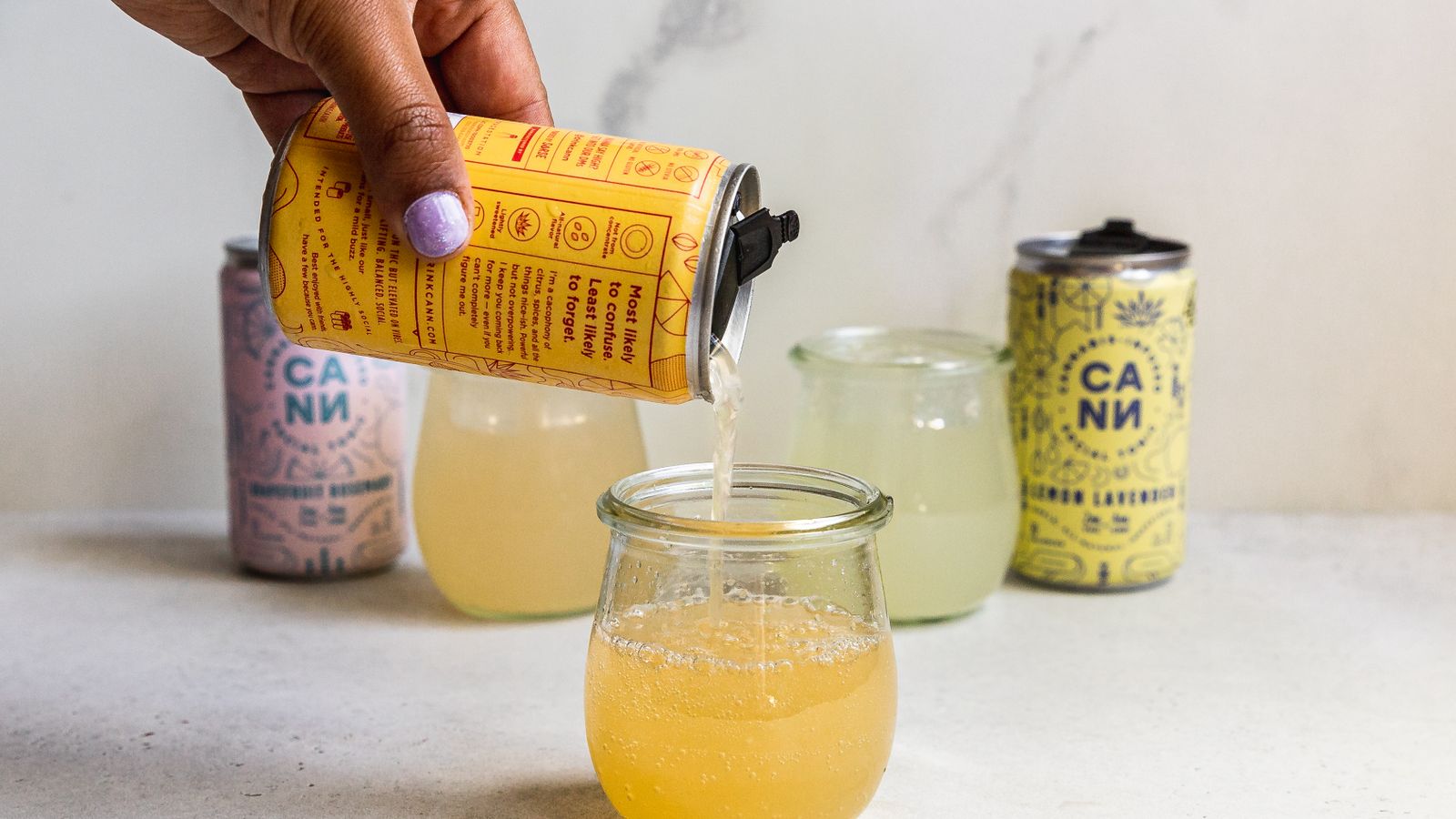
Hand pouring cannabis-infused beverage from a can into a glass, set against a marble backdrop.
Hemp-Derived THC Drinks Occupy Unregulated Market Space
Ohio retailers continue selling hemp-derived THC beverages under federal law despite the state's new adult-use cannabis program launching in August 2026. These products comply with the 2018 Farm Bill's definition of hemp—cannabis with no more than 0.3% delta-9 THC on a dry-weight basis. But the drinks often contain significant amounts of delta-9 THC in liquid form, where the dry-weight calculation creates a loophole. A 12-ounce beverage can legally contain 30-50 milligrams of delta-9 THC and still meet the 0.3% threshold because the calculation excludes water weight.
Gas stations, vape shops, and online retailers across Ohio sell the beverages without the testing, labeling, or dosage controls required for products sold through state-licensed cannabis dispensaries. Ohio's Division of Cannabis Control, which oversees the adult-use program, hasn't issued guidance on whether hemp-derived intoxicating products fall under its jurisdiction. The agency didn't respond to inquiries about enforcement plans as of September 24, 2026.
This regulatory silence mirrors confusion in other states. Minnesota and California have moved to regulate hemp-derived intoxicants under state cannabis frameworks. Texas and Florida have left enforcement to local jurisdictions or declined to act. Ohio's inaction leaves the market open but unpredictable.
Total THC vs. Delta-9: The Chemistry Behind the Confusion
The legal ambiguity centers on whether Ohio will enforce a total THC standard that includes tetrahydrocannabinolic acid, the non-intoxicating precursor that converts to delta-9 THC through decarboxylation. Federal hemp regulations measure only delta-9 THC in its activated form. Many state cannabis programs test for total THC—the sum of delta-9 THC and 87.7% of THCA, reflecting the conversion ratio when cannabis is heated or metabolized. Ohio's medical program uses this standard.
Hemp-derived beverages exploit this gap. Manufacturers source hemp flower or extract high in THCA, then convert it to delta-9 THC through controlled heating or chemical isomerization. The finished product contains delta-9 THC concentrations that would fail total THC testing but pass federal delta-9-only testing. A beverage with 40 milligrams of delta-9 THC and negligible THCA can legally ship across state lines as a hemp product, even though it delivers a dose equivalent to a strong cannabis edible.
The math is straightforward: if Ohio enforces total THC limits on hemp products, most intoxicating beverages currently on shelves would become illegal overnight.
The Division of Cannabis Control hasn't published testing protocols for hemp-derived products. Its adult-use rules, finalized in July 2026, focus on licensed cannabis operators and don't address hemp. Retailers told local media they've seen no state inspections or cease-and-desist orders. That silence has allowed the beverage market to grow unchecked.
Where Consumers Can Buy THC Drinks in Ohio
As of September 2026, hemp-derived THC beverages are available at an estimated 2,000-plus retail locations statewide. Convenience stores, smoke shops, and CBD retailers stock them. Online vendors ship directly to Ohio addresses without age verification beyond checkout declarations. Brands like Cann, Wunder, and regional startups dominate the market, with products ranging from 5-milligram microdose seltzers to 50-milligram craft sodas.
State-licensed cannabis dispensaries can't sell beverages that exceed Ohio's 10-milligram THC per serving limit for edibles. That cap applies to total THC, not just delta-9, and products must pass potency and contaminant testing by state-approved labs. The result? A two-tier market where unregulated hemp drinks often contain higher doses than regulated cannabis products.
Industry observers expect the gap to narrow. Ohio lawmakers introduced HB 392 in June 2026, a bill that would bring hemp-derived intoxicants under the Division of Cannabis Control's oversight and impose the same testing and labeling standards as adult-use cannabis. The bill stalled in committee and hasn't advanced since August. Its sponsor, Rep. Jamie Callender, said in a statement that the goal is consumer safety, not prohibition, but didn't provide a timeline for action.
Enforcement Outlook: Expect State-by-State Variation
Ohio's regulatory posture on hemp THC beverages remains unsettled, and enforcement will likely vary by county and municipality even if state rules clarify. Local health departments and law enforcement agencies have shown inconsistent interest in hemp product compliance. Columbus and Cleveland haven't announced crackdowns. Smaller jurisdictions have issued warnings to retailers about selling intoxicating hemp products to minors.
The federal picture is equally unclear. The U.S. Drug Enforcement Administration hasn't rescheduled cannabis as of September 2026, and the Farm Bill's hemp definition remains unchanged. The Food and Drug Administration continues to assert that adding delta-9 THC to food and beverages violates the Federal Food, Drug, and Cosmetic Act, but the agency has issued zero enforcement actions against beverage manufacturers. That gap between policy and enforcement has emboldened the market.
Retailers face legal risk even without active enforcement. If Ohio adopts total THC testing for hemp products retroactively, current inventory could become contraband. Insurance coverage for hemp retailers is sparse. Banks remain reluctant to service businesses selling intoxicating hemp products due to federal money-laundering concerns. The business model is viable today but fragile.
Consumer safety is the variable nobody can model. Hemp-derived beverages aren't subject to Ohio's mandatory testing for pesticides, heavy metals, residual solvents, or microbial contaminants. A 2025 study by the U.S. Hemp Authority found that 23% of hemp-derived edibles tested above labeled potency by more than 20%, and 11% contained detectable pesticide residues. Ohio has no equivalent testing regime for these products.
What to Watch in 2026-2027
Three indicators will signal whether Ohio moves to regulate or tolerate the hemp beverage market. First, watch for guidance from the Division of Cannabis Control on total THC enforcement—if the agency issues an advisory or rule clarifying that hemp products must meet the same total THC limits as cannabis products, expect rapid market contraction. Second, track HB 392's progress. If the bill advances in the 2027 legislative session, it could harmonize hemp and cannabis regulation by mid-year. Third, monitor federal action: if the DEA reschedules cannabis to Schedule III, as proposed in the 2024 NPRM, the Farm Bill's hemp carve-out could face legal challenges that cascade to state enforcement.
Until then, Ohio's hemp THC beverage market operates in a space that's technically legal, practically unregulated, and politically unstable. Retailers are selling. Consumers are buying. The state is watching. That equilibrium won't hold indefinitely.
For complete background, history, and our ongoing coverage of this story:
Open the CannIntel topic hub →Sources
The cannabis newsletter you forward to your team.
Federal policy, market data, grower alerts, and the one story that matters today. Sent every weekday at 7am. Free.
No spam. Unsubscribe with one click. 21+ only.
Related from Laws
Nevada County Approves Dispensary Selection Process for Two Towns
Supervisors approved a process for choosing cannabis dispensary operators in North San Juan and Soda Springs, but the county notice leaves key details unstated.

DEA Accepts New Report in Rescheduling Hearing; Foes Seek Discovery
DEA does not object to a new report entering the marijuana rescheduling record, while opponents ask for added testimony and document discovery.

Puerto Rico Rolls Back Medical Cannabis Workplace Protections
High Times Magazine reports Puerto Rico has narrowed employment protections for medical cannabis patients, raising questions about which workers lose coverage and which keep it.
More from the newsroom

Organigram enters fight for Aurora as Curaleaf bid clock runs
British American Tobacco's stake in Organigram could put the tobacco giant at the center of the Aurora contest before Curaleaf's offer expires Dec. 4.

L.A. Cannabis Industry Rallies Behind Nithya Raman, Substack Reports
A High Adam post says Los Angeles operators are energizing around Councilmember Nithya Raman, but the platform details behind the 'actual plan' remain unverified.
Tilray Medical Wins Approval for In-House EU-GMP Cannabis Testing
Tilray Medical can now run EU-GMP quality testing in-house, a move that could shift lab costs and batch-release timing, though key details remain undisclosed.