North Carolina Supreme Court Upholds Cannabis Odor as Probable Cause
State's highest court reaffirms that marijuana smell alone justifies vehicle searches despite hemp legalization.
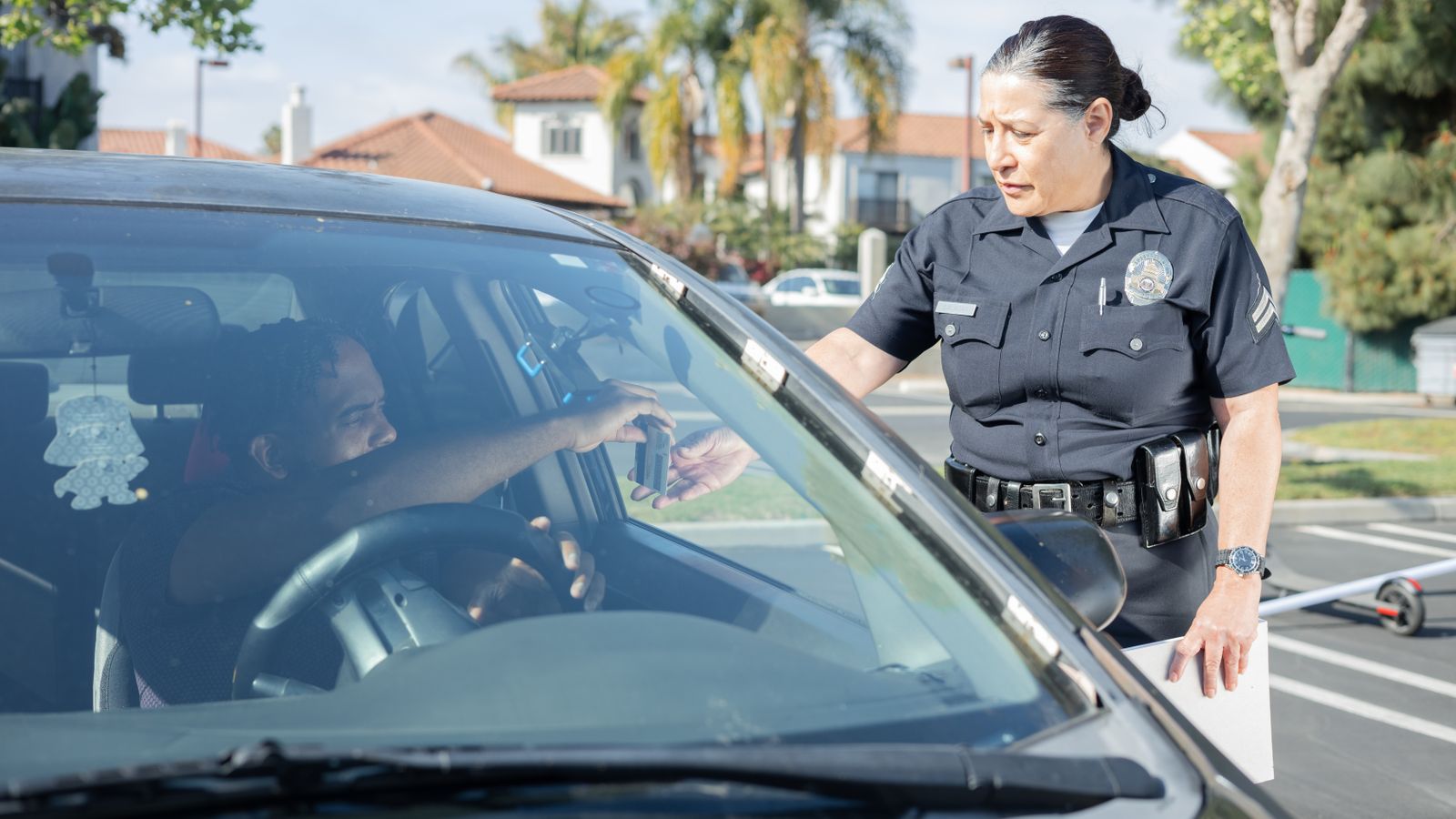
A police officer hands a traffic ticket to a driver in a parked car. Public safety interaction.
Court Rejects Hemp-Legalization Defense for Second Time
The ruling marks the second time in 18 months North Carolina's top court has held that officers need not distinguish hemp from marijuana when conducting searches based on odor. It reinforces a legal framework that effectively nullifies the practical implications of the state's 2022 Farm Act hemp provisions, which legalized cannabis containing 0.3% delta-9 THC or less on a dry-weight basis.
The defendant argued that because hemp and marijuana are indistinguishable by smell, and because hemp possession is legal under state law, odor alone can't establish probable cause that a crime is being committed. The court disagreed. The officer's detection of cannabis odor provided a reasonable basis to believe illegal marijuana was present, the justices held.
This position has remained consistent since the court's initial ruling on the issue in early 2025. North Carolina joins a growing list of states where hemp legalization has failed to alter Fourth Amendment search-and-seizure doctrine tied to cannabis odor.
The Chemical Reality Courts Are Ignoring
Hemp and marijuana are chemically identical until laboratory testing measures total THC content. That process requires decarboxylation and can't be performed in the field. Both emit the same terpene profile—primarily myrcene, caryophyllene, and limonene. Olfactory differentiation is scientifically impossible.
The 0.3% delta-9 THC threshold that separates legal hemp from illegal marijuana under North Carolina law refers to pre-decarboxylated content measured on a dry-weight basis. When heated, THCA in both hemp and marijuana converts to delta-9 THC at roughly a 0.877 conversion ratio, meaning total THC content can only be determined through gas chromatography or high-performance liquid chromatography testing.
Officers conducting roadside stops have no access to this testing. So the court's ruling permits searches based on a distinction that can't be made at the point of enforcement, creating what defense attorneys characterize as a constitutional gap where legal conduct triggers the same consequences as illegal conduct.
Implications for Hemp Farmers and Transporters
North Carolina licensed 1,847 hemp growers as of July 2026. All of them now face potential vehicle searches when transporting compliant crops. The state's hemp program requires growers to obtain certificates of analysis showing delta-9 THC levels below 0.3%, but those certificates provide no immunity from roadside detention if an officer detects cannabis odor.
Industry attorneys report a sharp increase in cases where licensed hemp transporters are detained, their cargo seized, and criminal charges filed pending lab results that can take 60 to 90 days. Even when charges are eventually dropped after testing confirms compliance, growers face crop loss, missed delivery windows, and contract penalties.
Small-scale cultivators who lack the legal resources to challenge extended detentions bear the economic impact disproportionately. For full background on how odor-based searches intersect with hemp commerce across multiple jurisdictions, see the CannIntel topic hub on cannabis odor as probable cause.
Diverging State Approaches to the Odor Question
At least seven states have reached the opposite conclusion. They hold that cannabis odor alone no longer supports probable cause in jurisdictions where hemp is legal. Virginia's Court of Appeals ruled in 2024 that the odor of marijuana, without additional indicia of illegality, can't justify a search when legal hemp is indistinguishable by smell. Maryland, Vermont, and Minnesota appellate courts have issued similar holdings.
The split creates a patchwork enforcement landscape. A hemp transporter traveling Interstate 95 from Vermont to Georgia crosses jurisdictions with fundamentally incompatible Fourth Amendment standards. In Vermont, odor triggers no search authority. In North Carolina, the same odor provides full probable cause.
Calls for federal guidance have grown louder, but the DEA and Department of Justice have declined to issue nationwide standards. What remains is a state-by-state gamble for anyone transporting hemp or marijuana in states where one or both are legal under local law.
What Comes Next for North Carolina Defendants
Defense attorneys are now pivoting to suppression arguments based on the totality of circumstances rather than odor alone. The strategy concedes that odor may contribute to probable cause but argues that without corroborating evidence—visible plant material, packaging, scales, or admissions—a search violates the Fourth Amendment.
Limited success has followed this approach in North Carolina trial courts, where judges largely defer to officer testimony about training and experience in distinguishing marijuana odor from other scents. Appellate review remains deferential to those factual findings. Suppression motions are an uphill fight.
A more viable path may be legislative. A bill introduced in the 2026 session would explicitly bar odor-only searches in the absence of additional probable cause, but it stalled in committee and hasn't advanced. Advocates expect renewed efforts in 2027, particularly if hemp industry groups coordinate lobbying with criminal-justice reform coalitions.
Until then, enforcement will remain inconsistent. Expect significant county-to-county variation in how prosecutors handle odor-based cases, with urban jurisdictions more likely to decline charges absent corroborating evidence and rural counties pursuing convictions aggressively.
Frequently asked questions
Can police in North Carolina search a vehicle based only on the smell of cannabis?
Yes. The North Carolina Supreme Court ruled August 14, 2026 that cannabis odor alone provides sufficient probable cause for a warrantless vehicle search, even though legal hemp and illegal marijuana cannot be distinguished by smell. Officers are not required to determine whether the odor originates from legal hemp before conducting a search.
Does a certificate of analysis protect hemp transporters from search in North Carolina?
No. While a certificate of analysis showing delta-9 THC below 0.3% proves compliance with state hemp law, it does not prevent an officer from initiating a search based on cannabis odor. Licensed hemp growers report detentions and cargo seizures pending lab confirmation, a process that can take 60 to 90 days.
Which states have ruled that cannabis odor is not probable cause after hemp legalization?
Virginia, Maryland, Vermont, and Minnesota appellate courts have held that cannabis odor alone does not support probable cause when legal hemp is indistinguishable by smell. These rulings create a jurisdictional split, with enforcement standards varying significantly across state lines for hemp and marijuana transporters.
Why can't officers distinguish hemp from marijuana by smell?
Hemp and marijuana are the same plant species and emit identical terpene profiles, primarily myrcene, caryophyllene, and limonene. The 0.3% delta-9 THC threshold that separates them legally can only be measured through laboratory testing involving decarboxylation, a process unavailable during roadside stops.
Sources
The cannabis newsletter you forward to your team.
Federal policy, market data, grower alerts, and the one story that matters today. Sent every weekday at 7am. Free.
No spam. Unsubscribe with one click. 21+ only.
Related from Laws
AG Blanche Says DOJ Won't Interfere With State-Legal Cannabis
Attorney General Todd Blanche said the Justice Department isn't seeking to interfere with state-legal marijuana operators, but no written policy or rule change accompanied the reported remarks.

Blanche Says Lucas Charges Aren't Aimed at State Cannabis Laws
The attorney general framed the federal case against Virginia's Senate president pro tem as conduct-based, not a move against state marijuana policy.

DOJ indicts Virginia lawmaker, six others over hemp THC shop
Federal prosecutors charged a Virginia state lawmaker and six others over a hemp THC operation, testing where hemp ends and marijuana begins.
More from the newsroom

Virginia Senator Faces Federal Marijuana and Fraud Charges
Marijuana Moment reported Oct. 22 that a top Virginia senator faces federal marijuana and fraud charges; the counts, court and named defendant await confirmation.

New Jersey Bill Extending Hemp Drink Sales Advances
A bill to extend New Jersey hemp drink sales moved forward Oct. 22, but the public record behind the headline is thin.

Survey of 7,913 German Patients Finds Pharmacy Cannabis Preferred
A survey of 7,913 German medicinal cannabis patients, nearly 90% with experience of both channels, points to the illegal market as a major source of stress.