Herb.co Guide Maps Minnesota THC Drinks Ahead of Federal Hemp Cutoff
A consumer guide to Minnesota's THC beverage market lands weeks before a federal hemp redefinition that could upend the category.
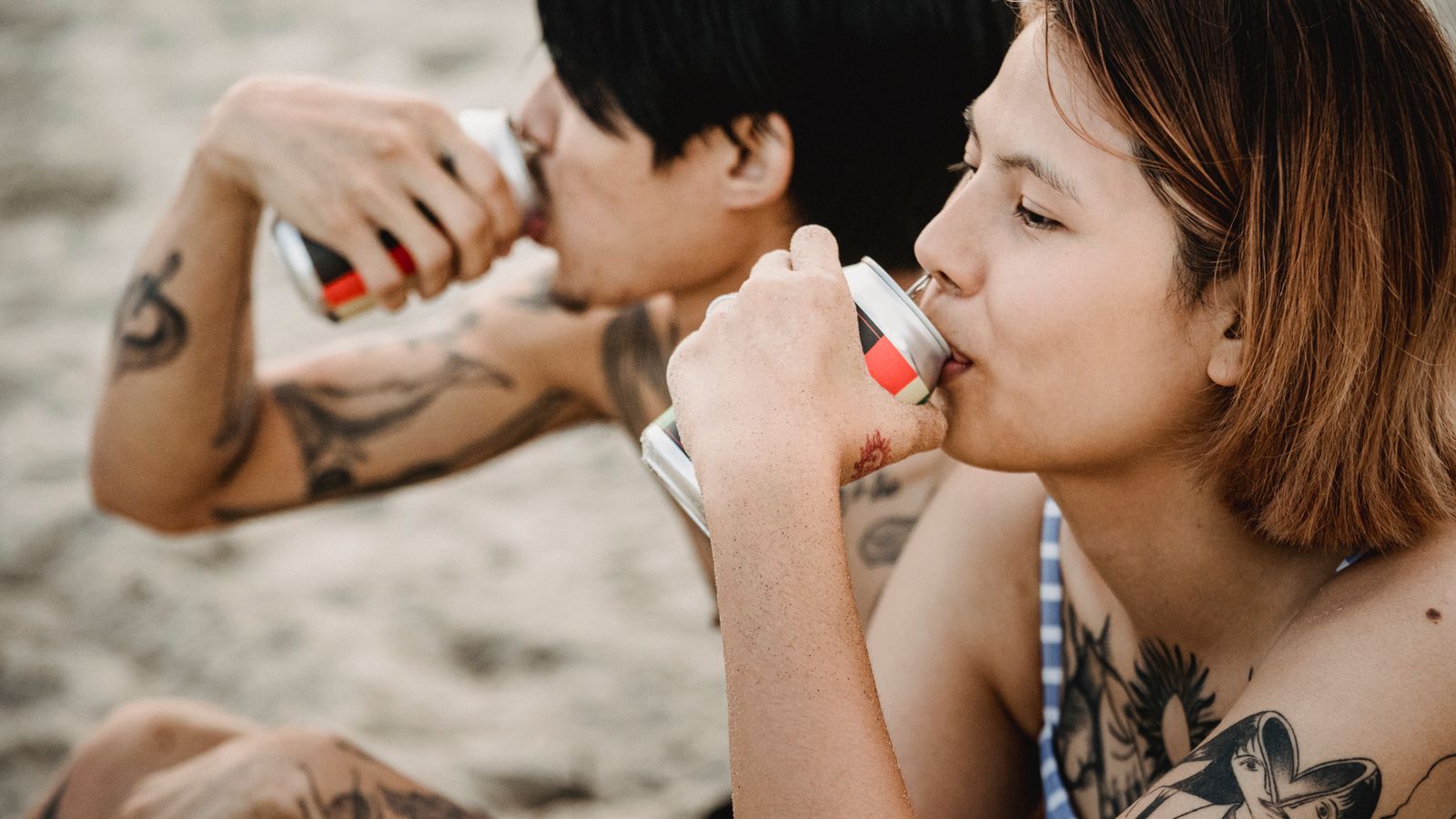
Two tattooed friends enjoying canned drinks while relaxing at the beach in summer.
A consumer guide lands at a delicate moment
Herb.co's Oct. 8 guide asks whether THC drinks are legal in Minnesota, where to buy them and what is changing in 2026. Those are the right questions. The answers are moving.
The guide, headlined "THC Drinks in Minnesota: Are They Legal, Where to Buy Them and What's Changing (2026)," surfaced in a CannIntel policy feed. Only the headline and publisher came through. We haven't independently verified its body text, and nothing below should be read as a summary of it.
What follows is the documentary record behind those three questions, with each claim tied to a primary source.
Minnesota's 2022 law created the hemp-drink market
Minnesota's hemp-derived edibles law took effect July 1, 2022, and capped servings at 5 mg of THC and packages at 50 mg. That statute is why THC seltzers and sodas appeared in Minnesota stores before adult-use retail existed. [1]
It was unusual. Most states hadn't touched hemp-derived THC at that point, and Minnesota wrote caps into law instead of leaving the category to the 2018 Farm Bill's gaps.
Then came the 2023 adult-use law, codified largely in Minnesota Statutes chapter 342, which built a licensing structure under the Office of Cannabis Management (OCM). Hemp-derived products now sit inside that regulatory perimeter. [2]
Where you can buy them depends on the license, not the label
Legal sale of a THC drink in Minnesota turns on the retailer's license status under OCM, not on what the can says. A can labeled "hemp-derived" tells a buyer nothing about whether the seller is compliant.
That's the gap consumer guides struggle to close. Retail channels, license categories and local rules have shifted since 2022, and a guide written in October can be stale by December. OCM's licensing pages are the authoritative check. [2]
Buyers should look for what regulators look for: tested product and a compliant label, sold by a seller who can show its credentials.
The federal cutoff is the real "what's changing"
A federal hemp redefinition enacted in November 2025 is set to take effect in November 2026, and it targets intoxicating hemp products. As we read the enacted language, it would cap total THC at 0.4 mg per container for many finished hemp products. Verify the exact text before relying on that figure. [3]
Do the math on a 5 mg Minnesota drink. It exceeds that federal cap more than tenfold.
If the provision takes effect as written, a state-legal beverage could still fall outside federal hemp. Minnesota's own caps wouldn't change that. A state can license a product, but it can't redefine federal law for it.
What operators should pull from the file now
Brands and retailers selling hemp-derived THC drinks in Minnesota should audit three documents before the federal date arrives. The audit isn't exotic. It's the same discipline an investigator applies to any compliance record.
- The current OCM license or registration for each sales channel.
- Certificates of analysis showing per-container total THC, not just per-serving.
- Inventory and contract terms that assume sales continue past mid-November.
Inventory is the exposure. A distributor holding pallets of 5 mg cans has a clock on its books, and nobody has said publicly whether a sell-through window exists. Absent that, assume none.
What we can't yet say
CannIntel couldn't confirm from the signal what the Herb.co guide says about current retail channels, pricing or pending Minnesota changes. Those details would require the full text or primary-source confirmation.
Not yet. We'll update this piece when we have both.
Several questions remain open: whether Congress delays or amends the federal change, whether OCM issues guidance on how chapter 342 interacts with it, and whether Minnesota lawmakers respond in the 2027 session. For full background on this story, see the CannIntel topic hub on Minnesota THC beverages.
The next hard signal is the federal effective date in mid-November 2026. Watch for any OCM bulletin to licensees before then, because silence from the regulator would itself be informative.
Sources
The cannabis newsletter you forward to your team.
Federal policy, market data, grower alerts, and the one story that matters today. Sent every weekday at 7am. Free.
No spam. Unsubscribe with one click. 21+ only.
Related from Laws

Ohio's New Marijuana Rules Raise Less-THC, Higher-Price Question
WSYX asked on Oct. 7 whether Ohio's new marijuana rules leave customers with less THC for more money, putting price per milligram in focus.

Oklahoma Pot Agency Accused of Retaliation Over Gender Pay Gap
Law360 reports an Oklahoma marijuana agency faces a retaliation accusation tied to a gender pay gap; the filing's details are not yet verified.
Maryland Cannabis Administration Launches Dispensary Inventory Pilot
Maryland's cannabis regulator started a pilot program targeting dispensary inventory, per Outlaw Report, but the operating terms haven't surfaced yet.
More from the newsroom
Federal hemp ban sets Nov. 12 clock for Indiana THC drinks
A federal hemp redefinition caps total THC at 0.4 mg per container on November 12, 2026, threatening the hemp-derived beverages Indiana shoppers now buy.

Third NJ Cannabis Operator Sues to Overturn Labor Peace Rule
Veteran-owned The Cannabis Place says it can't secure a labor peace agreement and could lose its license, becoming the third New Jersey operator to sue.

Cannabis Place Dispensary Sues NJCRC, UFCW in Federal Court
A New Jersey dispensary took the state's cannabis regulator and the UFCW union to federal court, per Heady NJ, in a case that could test labor peace rules.