Massachusetts CCC Advances New Cannabis Testing Regulations
The Cannabis Control Commission moved a testing-rule package forward, but the signal doesn't include the text, leaving operators to track the docket for details.
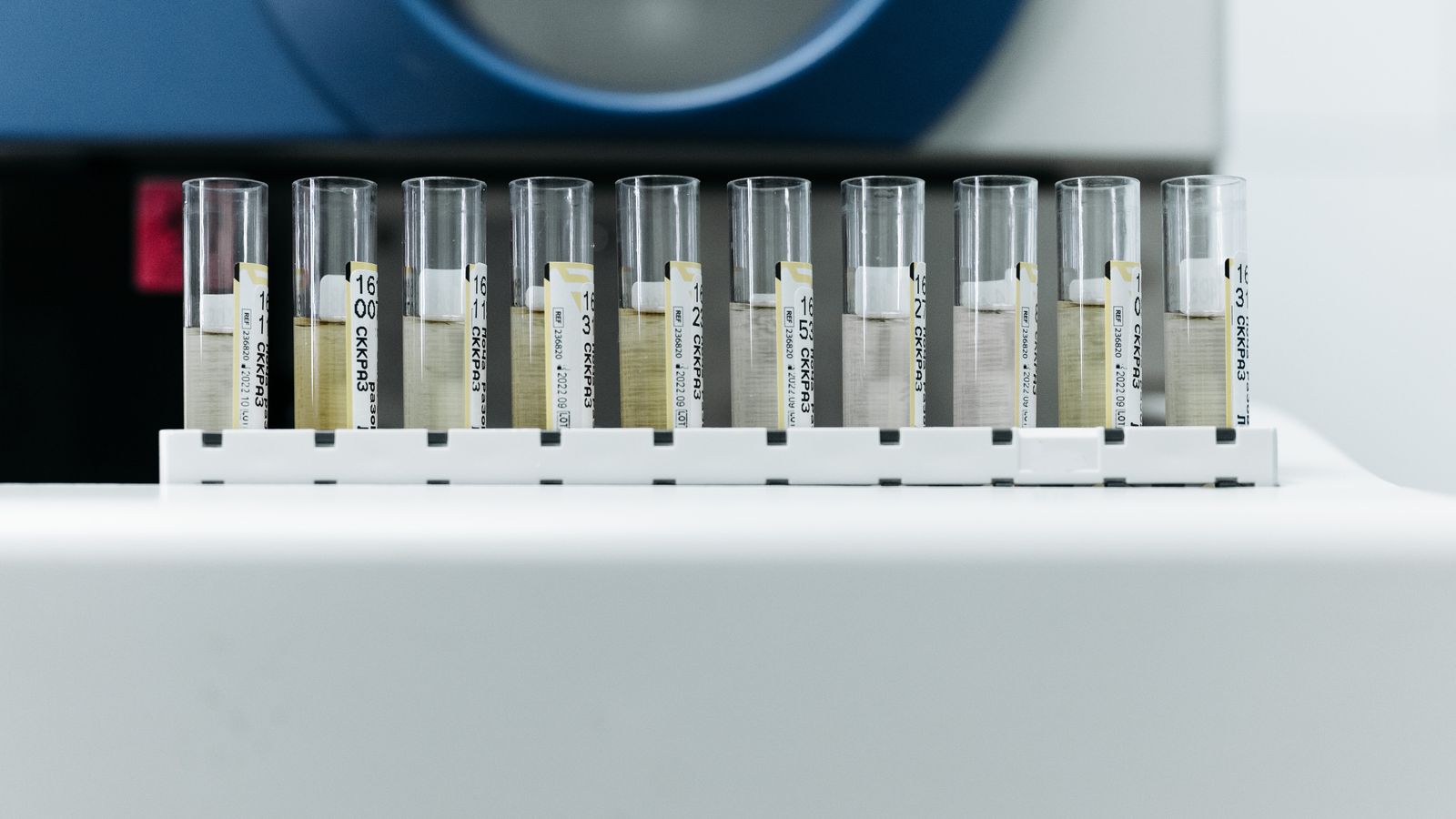
Row of labeled test tubes on a rack in a modern laboratory environment.
What the Commission did
The Massachusetts Cannabis Control Commission (CCC) advanced a new set of cannabis testing regulations, according to a Cannabis Equipment News report published Nov. 13, 2026.
That's the whole of what the available signal confirms. The report's headline says "advances." It doesn't say adopted, finalized, or effective.
On a strict reading, those words describe different legal events. Anyone holding a license should care about the gap.
Advanced is not final: the procedural ladder
A CCC vote to advance a rule package usually signals a step in the rulemaking sequence, not a compliance deadline.
In Massachusetts, state agencies generally move regulations through a defined process before they bind licensees. Commonly that means a draft, a public comment window, a hearing, and a final vote ahead of publication in the Code of Massachusetts Regulations (CMR). Cannabis rules sit in 935 CMR 500 (adult use) and 935 CMR 501 (medical use).
Which stage this vote represents, I can't confirm from the signal. Operators shouldn't assume the answer.
What is not yet known
The signal doesn't supply the rule text, the vote count, the effective date, or the specific testing parameters under revision.
- Scope: unconfirmed whether the changes touch potency, contaminants, pesticides, heavy metals, microbials, or lab accreditation.
- Timing: no effective date or phase-in schedule is stated.
- Thresholds: no action limits or method requirements are cited.
- Enforcement: no penalty or recall-trigger language is described.
Until the text is public, any claim about operational impact is speculation. CannIntel isn't going to guess at it.
Why testing rules hit the P&L
Testing requirements are a direct cost-of-goods variable, and under IRC §280E that cost sits in an unusually consequential place.
Section 280E denies ordinary business deductions to businesses trafficking in Schedule I or II controlled substances. Cannabis remains Schedule I federally. The DEA's rescheduling proceeding to Schedule III is a separate track, and its status shouldn't be conflated with this story. Where 280E applies, the main path to reduce taxable gross income is cost of goods sold (COGS) under §471.
Whether a given testing expense qualifies as inventoriable COGS or falls into a non-deductible bucket depends on how it ties to production. That's a classification question for each operator's tax adviser. Rule changes that raise per-batch testing volume or cost ripple into both margins and tax exposure. The math is brutal.
A tightened testing regime is a compliance event and a tax-classification event at the same time, and the two teams rarely sit in the same meeting.
Who is affected
Three groups carry the most exposure from any testing change: independent testing labs, cultivators and product manufacturers, and retailers holding inventory.
Labs face method validation, equipment, and accreditation questions. Cultivators and manufacturers absorb per-batch cost and the risk of failed lots. Retailers can get stuck holding product if a rule changes what counts as compliant.
Cannabis Equipment News, the source of the headline, serves the hardware side of the industry. That suggests the equipment angle, instrumentation and lab capacity, may be where the practical story develops.
What operators should do now
Pull the CCC's meeting materials and the current draft of 935 CMR 500 and 501 before budgeting for changes.
- Read the commission's posted agenda and any redline for the specific amendments.
- Identify the comment deadline, if one is open.
- Ask your tax adviser how any new testing cost flows through §471 inventory costing.
- Confirm with your testing lab whether its methods and accreditation align with the proposal.
For full background on this story, see the CannIntel topic hub on Massachusetts cannabis testing regulations.
What to watch
The next verifiable signals are the CCC's posted rule text and its stated effective date.
Massachusetts remains one of the East Coast's most closely watched adult-use markets, so a testing overhaul will draw attention from multi-state operators well beyond the state line. We'll be watching the CCC docket for the language and the vote details, and CannIntel will update this report once they post.
Frequently asked questions
What did the Massachusetts Cannabis Control Commission do on testing rules?
According to Cannabis Equipment News, the CCC advanced new cannabis testing regulations. The available report doesn't say whether the vote was a final adoption or an earlier procedural step, and it doesn't include the rule text.
When do the new Massachusetts testing rules take effect?
The signal doesn't state an effective date. Operators should check the CCC's posted agenda and the current text of 935 CMR 500 and 501 for the schedule once it is published.
Why do cannabis testing rules matter for taxes?
Under IRC §280E, most deductions are barred for cannabis businesses, so cost of goods sold under §471 carries outsized weight. How testing expenses are classified can change taxable gross income, so operators should consult a tax adviser.
Which Massachusetts regulations govern cannabis testing?
Cannabis licensing and testing requirements sit in the Code of Massachusetts Regulations, chiefly 935 CMR 500 for adult use and 935 CMR 501 for medical use, administered by the Cannabis Control Commission.
Sources
The cannabis newsletter you forward to your team.
Federal policy, market data, grower alerts, and the one story that matters today. Sent every weekday at 7am. Free.
No spam. Unsubscribe with one click. 21+ only.
Related from Laws

Cottage Food Rules Collide With Hemp THC Edibles Boom
A West Central Tribune report on hemp, CBD and THC in cottage foods spotlights a regulatory gap home bakers and state agencies are still trying to close.

FOX8 Maps What Legal Weed Could Look Like in North Carolina
A local TV outlook on adult-use legalization in North Carolina leaves the hard questions, especially hemp and THCA, unanswered.

Utah Opens Comment Window on Medical Cannabis Rules Through Dec. 15
Operators, patients and tax advisers have until December 15 to weigh in on Utah's proposed medical cannabis rules, and the filing details matter more than the headline.
More from the newsroom

Tilray Hits Record Low as Globe and Mail Asks: Buy or Trap?
The Globe and Mail framed Tilray's record-low share price as a buy-or-trap question, and the answer depends on what its operating model actually produces.
The Times Reports Superstrength Cannabis Farms Dot UK Towns
A Times headline says illicit high-potency grows are likely in most British towns, and the economics behind that claim show how an untaxed, unregulated supply chain keeps scaling.

USDA Updates Hemp Crop Insurance for 2027 as THC Risk Looms
The USDA revised hemp crop insurance for the 2027 crop year, and growers are now weighing how the program treats THC compliance losses.