Poll shows Massachusetts cannabis sales repeal failing badly
MJBizDaily reported that a new poll puts the Massachusetts repeal of adult-use cannabis sales well short, 15 days before Election Day.
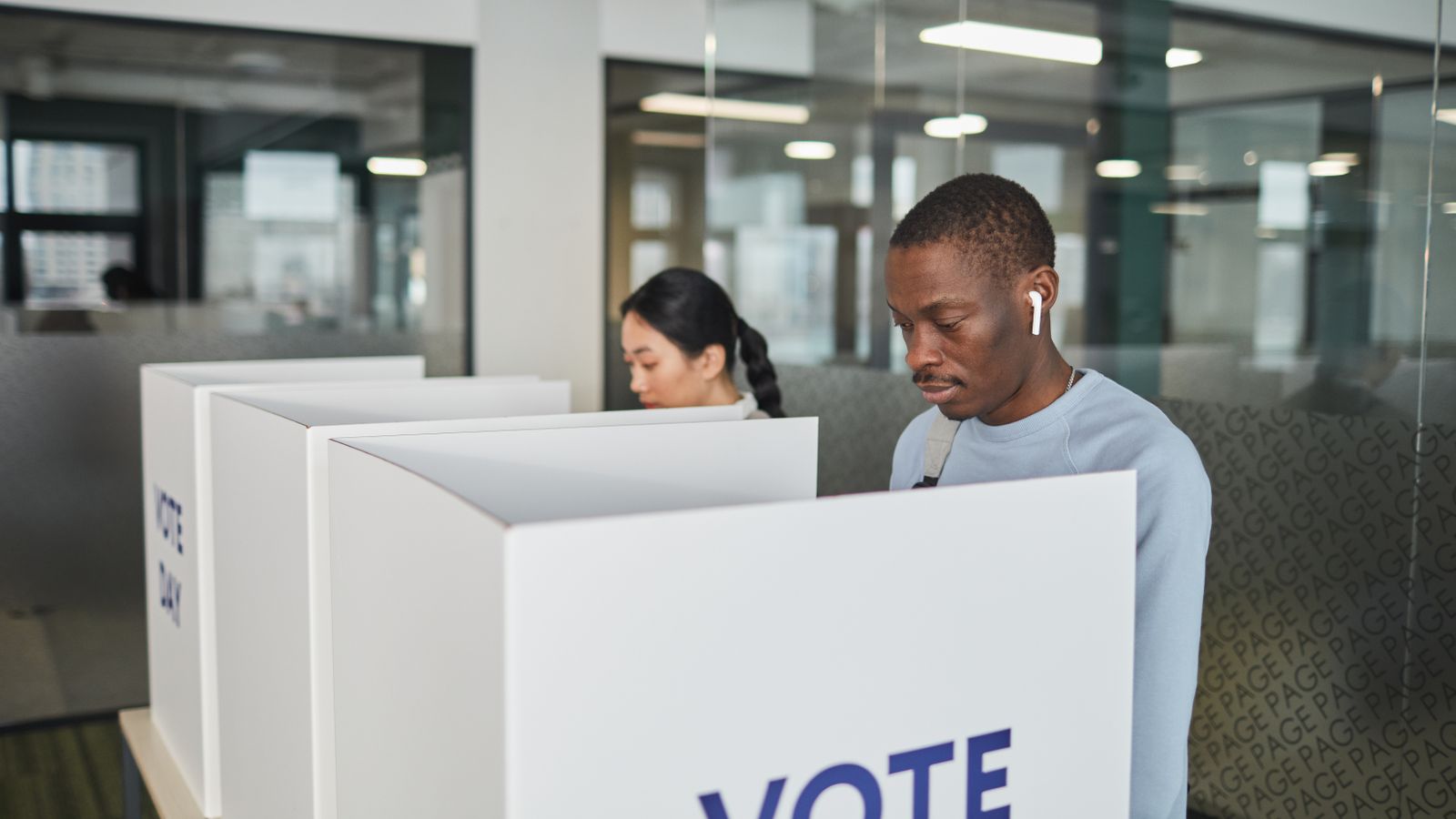
Two individuals casting votes in an indoor voting booth, emphasizing democracy.
The poll points to a rout, but the toplines matter
MJBizDaily reported Monday that the latest poll shows the Massachusetts adult-use sales repeal failing by a wide margin.
The outlet's headline described the repeal effort as failing badly. The feed CannIntel reviewed carries only that headline. It doesn't include the pollster, the sample size, the margin of error or the yes-no split, and we won't invent them.
That gap matters. Likely-voter and registered-voter surveys can diverge by several points, and ballot-question polling is sensitive to how the question is worded. Voters sometimes answer one way in the abstract and another once they read the actual ballot language.
The background is firm, though: Massachusetts voters approved adult-use legalization in 2016, licensed retail sales began in 2018, and the Cannabis Control Commission (CCC) has regulated the market ever since.
A repeal measure asks voters to reverse a decision they made a decade ago, after years of storefronts opening in their towns and tax dollars flowing to the state. That's a hard sell. The poll suggests it's proving harder than the campaign hoped.
Why a lopsided poll changes the operator math
A repeal that polls this poorly looks less like an existential threat to licensed operators than a source of cost and distraction.
The cleanest read on this poll is that the repeal campaign hasn't persuaded a majority to unwind a market voters already authorized. Nothing in the reported headline suggests a late surge is likely, though a single poll can't rule one out.
For licensees, ballot risk still carries a price. Lenders factor it into terms. Landlords and equipment vendors factor it into leases and credit. Multi-state operators (MSOs) with Massachusetts footprints have to disclose it to investors.
Margins are already tight. Under 280E, the federal tax provision that bars cannabis businesses from deducting ordinary expenses, operators carry a heavy tax load before any political risk shows up. There's little cushion for a shock.
A repeal that passed would have jolted every East Coast market watching Massachusetts. A failure this lopsided is a quiet win for the status quo, and it's hard to argue otherwise.
Not a result, though. Polls are snapshots, and the vote is on November 3, 2026.
What to watch before Election Day
Three developments in the next 15 days will show whether the poll holds or the race tightens.
- Independent polling that publishes full toplines, crosstabs and exact ballot wording.
- Campaign finance reports from both sides, which would show whether either camp is making a late push.
- Any CCC guidance to licensees on how it would handle a transition if the measure passed.
The first item matters most. One poll, however lopsided, is a data point. Two or three polls pointing the same way are a trend, and the trend is what lenders and boards of directors will act on.
For full background on this story, see the CannIntel topic hub on the Massachusetts cannabis repeal ballot question.
Operators in other states should pay attention too. Repeal efforts rarely get tested at the ballot box in a mature market, and Massachusetts is one of the first real tests of whether voters will reverse legalization once it's established.
The next signal: results on November 3. A margin that matches this poll would likely end the repeal push for now, while a narrow one would tell lawmakers and the CCC that the argument isn't settled.
For complete background, history, and our ongoing coverage of this story:
Open the CannIntel topic hub →Sources
The cannabis newsletter you forward to your team.
Federal policy, market data, grower alerts, and the one story that matters today. Sent every weekday at 7am. Free.
No spam. Unsubscribe with one click. 21+ only.
Related from Laws
AG Blanche Says DOJ Won't Interfere With State-Legal Cannabis
Attorney General Todd Blanche said the Justice Department isn't seeking to interfere with state-legal marijuana operators, but no written policy or rule change accompanied the reported remarks.

Blanche Says Lucas Charges Aren't Aimed at State Cannabis Laws
The attorney general framed the federal case against Virginia's Senate president pro tem as conduct-based, not a move against state marijuana policy.

DOJ indicts Virginia lawmaker, six others over hemp THC shop
Federal prosecutors charged a Virginia state lawmaker and six others over a hemp THC operation, testing where hemp ends and marijuana begins.
More from the newsroom

Virginia Senator Faces Federal Marijuana and Fraud Charges
Marijuana Moment reported Oct. 22 that a top Virginia senator faces federal marijuana and fraud charges; the counts, court and named defendant await confirmation.

New Jersey Bill Extending Hemp Drink Sales Advances
A bill to extend New Jersey hemp drink sales moved forward Oct. 22, but the public record behind the headline is thin.

Survey of 7,913 German Patients Finds Pharmacy Cannabis Preferred
A survey of 7,913 German medicinal cannabis patients, nearly 90% with experience of both channels, points to the illegal market as a major source of stress.