Massachusetts Cannabis Commissioner Targets Data-Driven Oversaturation Fix
A Cannabis Control Commission official outlined plans to use market data to address retail license density concerns.
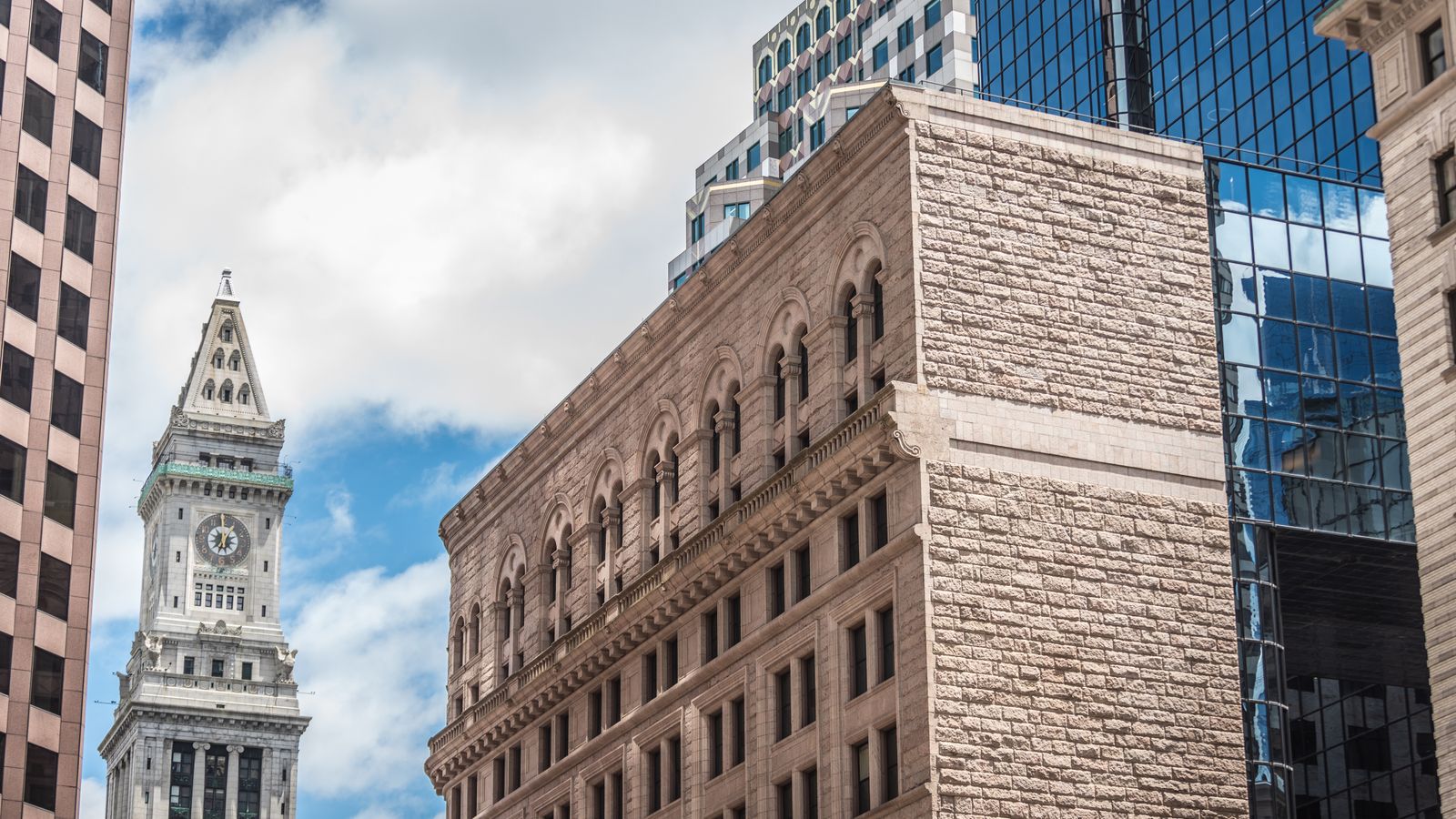
A striking view of Boston's Custom House Tower and surrounding skyscrapers against a bright sky.
Commissioner Signals Regulatory Framework Shift
A Cannabis Control Commissioner indicated the agency will implement quantitative metrics to assess whether specific regions have reached market saturation. The statement came during a September 2026 public hearing. No timeline for rule adoption was provided. The commissioner wasn't identified by name. Massachusetts currently operates under a geographic-neutral licensing system that doesn't cap retail locations by municipality or region.
The Cannabis Control Commission has issued approximately 380 adult-use retail licenses since the program launched in November 2018. Under existing regulations, the CCC lacks statutory authority to deny applications based solely on market density absent a formal rulemaking process.
Existing Regulatory Framework and 935 CMR 500.000
Massachusetts regulations at 935 CMR 500.101 establish merit-based criteria for license approval but don't incorporate market-saturation thresholds. Current approval standards focus on financial capacity, compliance history, and local host community agreements. The CCC may deny applications for failure to meet those criteria or for violations of M.G.L. c. 94G, the state's cannabis statute.
Any data-driven oversaturation standard would require amendments to 935 CMR 500.000 through the formal rulemaking process, including public comment periods and legislative review under M.G.L. c. 30A. The commissioner's statement didn't reference specific data sources the agency might adopt—per-capita sales, license-to-population ratios, or average revenue per location remained unmentioned.
Implications for Pending Applications and Equity Licensees
Massachusetts had 47 pending adult-use retail applications as of August 2026, according to CCC monthly reports. A saturation-based approval framework could delay or block those applications in high-density markets such as Boston, Worcester, and Springfield. Social equity applicants face particular risk. They receive priority review under the CCC's equity program, yet saturation caps could disproportionately affect urban corridors where equity applicants concentrate.
The CCC's equity program, established under 935 CMR 500.105, grants expedited review and technical assistance to applicants from communities with disproportionate drug-war enforcement. Critics note that equity applicants often target urban markets with higher foot traffic and lower real estate barriers—precisely the regions most likely to trigger saturation thresholds. How a data-driven model would interact with equity-program priorities wasn't addressed by the commissioner.
Revenue and Tax Implications Under M.G.L. c. 64N
Massachusetts collected $186.4 million in cannabis excise taxes during fiscal year 2026, a 12% increase over FY 2025. The state imposes a 10.75% excise tax under M.G.L. c. 64N, plus local option taxes up to 3%, in addition to the standard 6.25% sales tax. Retail oversaturation—defined as declining per-store revenue—could compress margins and reduce aggregate tax collections if total market demand remains flat.
Oversaturation doesn't alter the statutory tax rate or collection mechanism under the tax code. Lower per-location revenue may increase the incidence of license surrenders or compliance lapses, indirectly affecting state receipts. The Department of Revenue hasn't issued guidance on how saturation-based licensing would interact with tax forecasting models. For full background on this story, see the CannIntel topic hub on Massachusetts Cannabis Program.
For complete background, history, and our ongoing coverage of this story:
Open the CannIntel topic hub →Frequently asked questions
Does Massachusetts currently limit cannabis retail licenses by region?
No. Massachusetts operates a geographic-neutral licensing system. The CCC does not cap retail locations by municipality or region under existing regulations at 935 CMR 500.000. Any saturation-based limits would require formal rulemaking.
How many cannabis retail licenses has Massachusetts issued?
Approximately 380 adult-use retail licenses as of September 2026. The state also operates a separate medical program with additional dispensary licenses. The CCC publishes monthly licensing data on its public dashboard.
What is the cannabis tax rate in Massachusetts?
Massachusetts imposes a 10.75% excise tax under M.G.L. c. 64N, plus optional local taxes up to 3%, and the standard 6.25% sales tax. Total effective rate ranges from 17% to 20% depending on municipality.
How would oversaturation limits affect equity applicants?
Equity applicants often target urban markets with higher density, which may be first to hit saturation thresholds. The CCC has not clarified how data-driven caps would interact with priority review for equity licensees under 935 CMR 500.105.
What regulatory process is required to implement saturation limits?
The CCC must amend 935 CMR 500.000 through formal rulemaking under M.G.L. c. 30A, including public hearings, comment periods, and legislative review. Emergency regulations are possible but rare and time-limited.
Sources
The cannabis newsletter you forward to your team.
Federal policy, market data, grower alerts, and the one story that matters today. Sent every weekday at 7am. Free.
No spam. Unsubscribe with one click. 21+ only.
Related from Laws

Cannabis Reform Foes Cite GAO in Push to Reopen Hearings
Opponents of cannabis reform pointed to a GAO document to argue for reopening hearings, Law360 reported, though the filing's forum and contents remain unconfirmed.

South Dakota AG Says Medical Marijuana Law Meets Rescheduling
A South Dakota attorney general's legal opinion concludes the state's existing medical marijuana laws need no changes to comply with federal rescheduling, a position other states may adopt.

DEA Judge Orders New Replies as Marijuana Rescheduling Stays Stalled
A DEA administrative law judge ordered fresh replies in the Schedule III proceeding, which remains sidelined with no final rule in sight.
More from the newsroom

Nebraska MMJ Growers Harvest First Crops With No Buyers Yet
Nebraska's first medical cannabis harvests are coming in before any processor, transporter, lab or dispensary exists to take delivery, MJBizDaily reported.

Vermont Event Permits Could Open Legal Cannabis Sales at Fairs
WCAX reports a Vermont event-permit concept could extend legal cannabis sales past licensed storefronts to community events, though the rules remain unpublished in the available report.

South Dakota AG Says Medical Marijuana Law Already Meets Rescheduling
A South Dakota attorney general opinion says existing medical marijuana rules need no changes after federal rescheduling, a template other state regulators may copy.