Manipur's 2020 Hemp Amendment Shields Illegal Trade, Report Finds
A legal loophole in Manipur's Narcotic Drugs and Psychotropic Substances Act amendment may enable unregulated cannabis commerce under the guise of hemp cultivation.

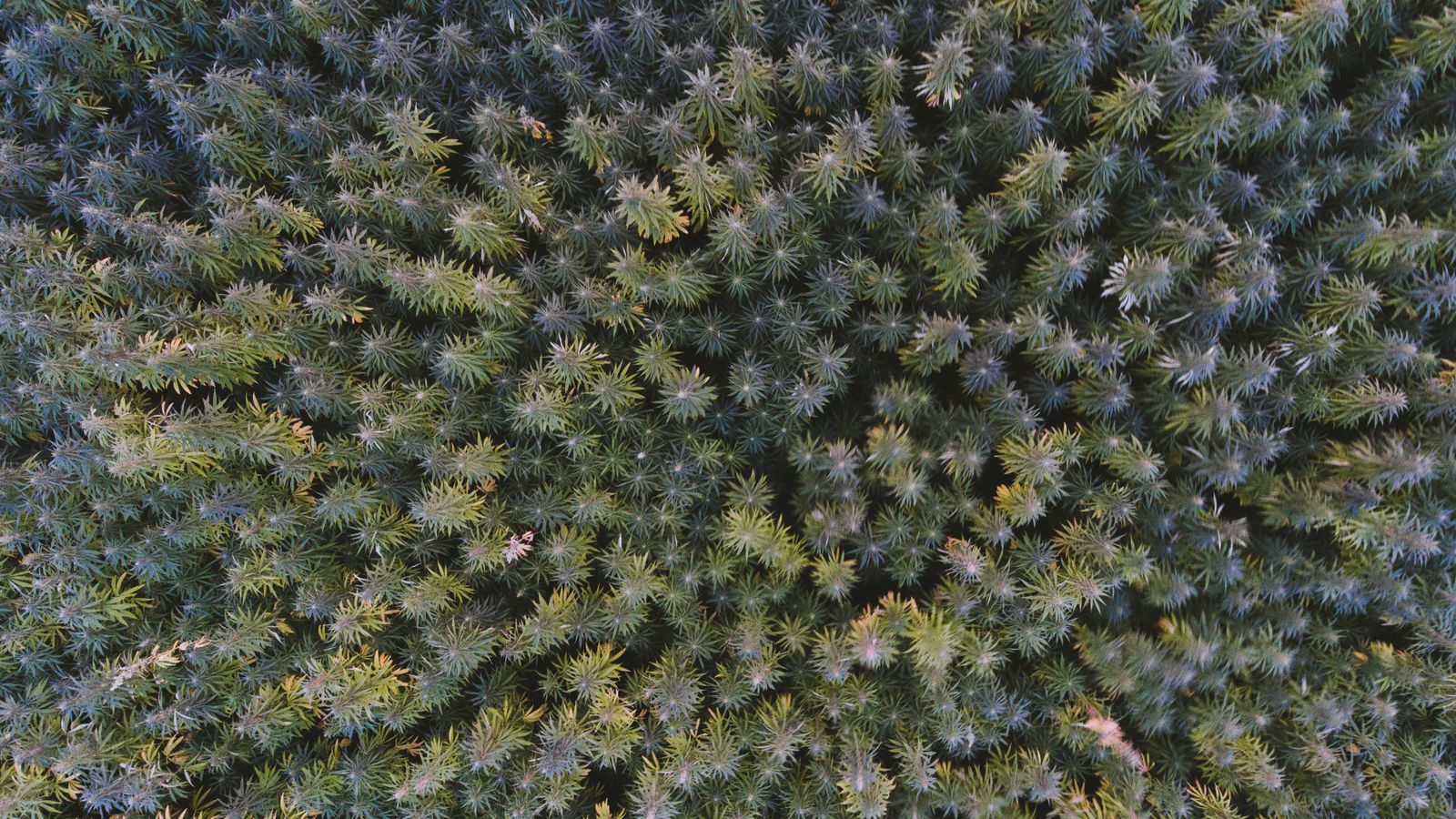
An aerial perspective of a vibrant cannabis field in North Carolina, showcasing dense green foliage.
Phantom Amendment Creates Enforcement Vacuum
Manipur's 2020 legislative amendment to the NDPS Act introduced hemp cultivation provisions without corresponding enforcement mechanisms or THC thresholds, creating what investigators term a "phantom law." The amendment, passed by the Manipur Legislative Assembly in 2020, amended the state's application of the Narcotic Drugs and Psychotropic Substances Act, 1985 to permit hemp cultivation. It didn't define permissible THC levels. It didn't establish a licensing framework.
The Frontier Manipur investigation documented cases where cultivators cited the 2020 amendment to justify cannabis cultivation that would otherwise violate federal NDPS provisions. Under India's federal NDPS Act, cannabis cultivation remains prohibited except for industrial hemp with THC content below 0.3 percent, subject to state-level licensing.
Manipur's amendment didn't specify THC limits or create a state licensing authority, leaving enforcement agencies without clear statutory tools to distinguish legal hemp from prohibited cannabis.
Federal-State Conflict Over Cannabis Regulation
The amendment exposes tensions between India's federal drug scheduling under the NDPS Act and state-level agricultural policy, particularly in northeastern states with traditional hemp cultivation. The NDPS Act, codified as Act No. 61 of 1985, grants states authority to regulate hemp cultivation through licensing schemes, but requires states to define industrial hemp parameters.
Manipur joins Uttarakhand, Uttar Pradesh, and Himachal Pradesh in permitting licensed hemp cultivation, but remains the only state without published THC thresholds or a functional licensing bureau. Uttarakhand's 2017 hemp policy, by contrast, caps THC at 0.3 percent and requires annual cultivation licenses issued by the state excise department.
The gap has practical consequences. Manipur police reported 127 cannabis-related arrests in 2025, yet prosecutors struggled to secure convictions when defendants invoked the 2020 amendment, according to court records cited in the investigation.
Enforcement Agencies Lack Statutory Clarity
State narcotics enforcement units report difficulty prosecuting cannabis cases due to the amendment's ambiguous language and absence of implementing regulations. The Manipur Narcotics and Affairs of Border Bureau, the state's primary drug enforcement agency, hasn't issued guidance on hemp cultivation standards since the 2020 amendment took effect.
Field officers told The Frontier Manipur they lack access to portable THC testing equipment. This makes it impossible to verify whether seized plants meet industrial hemp criteria. Without lab-confirmed THC data, cases collapse at the trial stage when defense counsel cite the state amendment.
The investigation documented three dismissed prosecutions in Imphal district courts during 2025 where magistrates ruled that the state amendment created reasonable doubt about the illegality of the seized cannabis.
Traditional Cultivation Meets Modern Legal Gaps
Manipur's hill districts have cultivated cannabis for fiber and traditional medicine for generations, complicating enforcement of federal prohibition statutes. Ethnic communities in Churachandpur, Ukhrul, and Senapati districts historically grew cannabis for rope, textiles, and Ayurvedic preparations—practices predating India's 1985 NDPS Act.
The 2020 amendment was intended to reconcile traditional agricultural practices with federal drug law by creating a legal pathway for low-THC hemp, but without THC testing infrastructure or licensing protocols, the amendment instead created what legal analysts describe as de facto decriminalization.
For context on India's evolving hemp framework, see the CannIntel topic hub on India hemp regulation.
Revenue and Regulatory Implications
The regulatory vacuum has cost Manipur an estimated ₹40 crore in potential hemp licensing revenue since 2020, while enabling an untaxed gray market. Uttarakhand's hemp licensing program generated ₹12 crore in state revenue during its first three years, according to the state excise department's 2023 annual report.
Manipur's 2020 amendment included no fee structure for cultivation licenses, no excise provisions for hemp products, and no framework for seed certification or processing facilities. Industry observers estimate 200-300 hectares of cannabis are under cultivation in Manipur's hill districts. The state collects no tax or licensing revenue from this activity.
The economic opportunity is significant. India's industrial hemp market is projected to reach ₹1,800 crore by 2030, driven by demand for textiles, construction materials, and CBD extracts, according to the Indian Industrial Hemp Association.
Path Forward Requires Implementing Regulations
Legal experts say Manipur must issue implementing regulations that define THC thresholds, establish a licensing bureau, and fund testing infrastructure to operationalize the 2020 amendment. Without these components, the amendment remains what The Frontier Manipur terms a "phantom law"—statutory text without enforcement teeth.
Himachal Pradesh's 2020 hemp policy offers a model. That state capped THC at 0.3 percent, created a licensing fee schedule, designated the excise department as the licensing authority, and contracted with agricultural universities to certify low-THC seed varieties.
Manipur's agriculture and excise departments haven't published draft regulations or timelines for implementing the 2020 amendment. The state's next legislative session is scheduled for September 2026.
Frequently asked questions
What does Manipur's 2020 hemp amendment allow?
The 2020 amendment to Manipur's application of the NDPS Act permits hemp cultivation but doesn't define THC limits, establish licensing procedures, or create enforcement standards. This creates a legal gray zone where cultivators cite the amendment to justify cannabis growing that may violate federal law.
How does Manipur's hemp law compare to other Indian states?
Uttarakhand, Uttar Pradesh, and Himachal Pradesh have hemp policies with 0.3% THC caps, licensing bureaus, and testing requirements. Manipur's 2020 amendment includes none of these components, making it the only state with a hemp law lacking implementing regulations.
Why can't Manipur police prosecute cannabis cases effectively?
Officers lack portable THC testing equipment and statutory guidance on hemp versus cannabis. When defendants cite the 2020 amendment, prosecutors can't prove THC levels exceed legal limits, leading magistrates to dismiss cases for lack of evidence.
What revenue has Manipur lost from the regulatory gap?
An estimated ₹40 crore since 2020, based on Uttarakhand's hemp licensing revenue of ₹12 crore over three years and estimated cultivation area in Manipur's hill districts. The state collects no licensing fees or excise tax from hemp activity.
What would fix Manipur's hemp law?
Implementing regulations must define industrial hemp as cannabis with ≤0.3% THC, designate a licensing authority, establish cultivation fees, fund testing labs, and certify low-THC seed varieties. Himachal Pradesh's 2020 policy provides a workable model.
Sources
The cannabis newsletter you forward to your team.
Federal policy, market data, grower alerts, and the one story that matters today. Sent every weekday at 7am. Free.
No spam. Unsubscribe with one click. 21+ only.
Related from Laws
Former Trump Official Pushes Hemp THC Ban in New Policy Brief
A former Trump administration drug policy adviser is calling for federal action to close the hemp THC loophole created by the 2018 Farm Bill.

Pennsylvania Budget Signed Without Adult-Use Cannabis Provisions
Governor Josh Shapiro signed Pennsylvania's fiscal 2026-27 budget after weekend legislative sessions, but adult-use legalization language was stripped from the final package.

Pennsylvania passes $50.8B budget, omits marijuana legalization
The state legislature finalized spending without adult-use cannabis language, shelving revenue projections cited by legalization advocates.
More from the newsroom

Curaleaf Secures First Approval for Standardized Cannabis Product
The MSO's regulatory clearance marks a shift toward pharmaceutical-grade cannabis in U.S. markets.

Avecho Launches World's Largest CBD Insomnia Trial in Australia
Perth biotech's 200-patient Phase 3 study could secure exclusive Australian regulatory pathway for CBD sleep therapy.

Trulieve Expands NYSE Presence as MSO Seeks Broader Investor Access
The Florida-based operator is leveraging its existing NYSE listing to attract institutional capital ahead of federal reform.