Former Trump Official Pushes Hemp THC Ban in New Policy Brief
A former Trump administration drug policy adviser is calling for federal action to close the hemp THC loophole created by the 2018 Farm Bill.
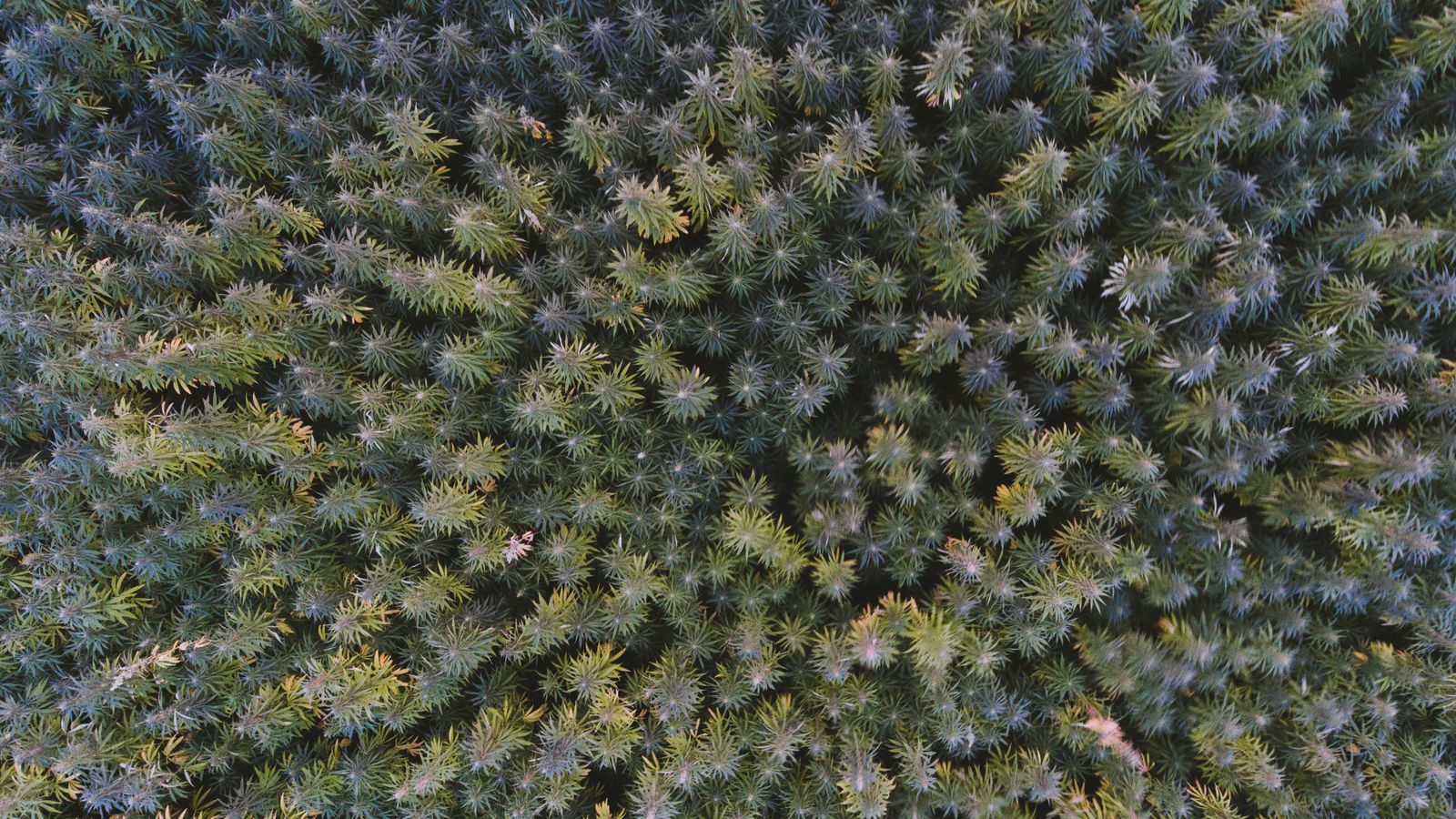
Explore the top-down view of a lush hemp field captured by drone photography.
Former Official Calls for Immediate Federal Action
The policy brief argues that hemp-derived intoxicating cannabinoids exploit a statutory loophole and should be classified as controlled substances. Circulated to federal agencies and congressional offices, the document represents a renewed push from conservative drug policy circles to restrict the hemp-derived THC market. That market has grown into a multi-billion-dollar industry since 2018.
The brief doesn't specify which federal agency should take enforcement action. Both the Drug Enforcement Administration and the Food and Drug Administration hold regulatory authority over hemp-derived substances. The author served in the Office of National Drug Control Policy during the first Trump administration.
The 2018 Farm Bill Loophole at Issue
The Agricultural Improvement Act of 2018 legalized hemp by removing it from the Controlled Substances Act definition of marijuana, defining hemp as cannabis containing no more than 0.3% delta-9 THC on a dry weight basis. That statutory language created a pathway for manufacturers to sell products containing high concentrations of other THC isomers—delta-8 THC, delta-10 THC, and THCA—as well as concentrated delta-9 THC products that comply with the 0.3% threshold by weight.
Industry data puts the loophole's retail sales at an estimated $28 billion since 2019. Gas stations sell the products. So do convenience stores and dedicated hemp retailers in states without legal cannabis programs.
Legal Arguments in the Policy Brief
The brief contends that Congress intended to legalize only non-intoxicating industrial hemp fiber and seed products, not psychoactive cannabinoids in concentrated form. It cites legislative history from the 2018 Farm Bill debates. The 0.3% threshold, it argues, was designed to distinguish industrial hemp crops from marijuana plants—not to permit extraction and concentration of intoxicating compounds.
Delta-8 THC and other semi-synthetic cannabinoids fall under the Federal Analogue Act, 21 U.S.C. § 813, according to the document. That statute treats substances substantially similar to Schedule I drugs as controlled substances. DEA hasn't issued a formal determination on this question.
State-Level Enforcement Already Underway
At least 19 states have enacted restrictions on hemp-derived intoxicating products since 2021, with enforcement actions targeting delta-8 THC retailers in Colorado, New York, and Oregon. Those state bans have created a patchwork regulatory environment. Products legal in Tennessee are prohibited in neighboring Kentucky.
Federal preemption could eliminate that state-by-state variation, the policy brief urges. It doesn't address whether a federal ban would override state hemp programs operating under USDA-approved plans.
Industry Pushback and Economic Stakes
The U.S. Hemp Roundtable, a trade association representing hemp manufacturers, has consistently opposed federal restrictions on hemp-derived cannabinoids. The 2018 Farm Bill permits all derivatives of compliant hemp, the group argues. It has retained former congressional staff and federal lobbyists to defend the current statutory framework.
Hemp farmers in Kentucky, North Carolina, and Tennessee have invested heavily in cultivation infrastructure for cannabinoid extraction. A federal ban would eliminate the primary revenue stream for those operations, which produce little revenue from fiber or seed sales.
Congressional Activity on Hemp THC
No standalone bill to restrict hemp-derived THC has advanced in the 119th Congress, though language addressing the loophole was included in earlier drafts of the 2023 Farm Bill reauthorization. Committee negotiations stripped that language after opposition from rural-state Republicans whose districts depend on hemp farming revenue.
For full background on this story, see the CannIntel topic hub on the hemp THC loophole.
What Comes Next
The brief's circulation to federal agencies doesn't trigger a formal rulemaking process, but it could influence DEA or FDA enforcement priorities. DEA has statutory authority to issue interim final rules classifying substances as controlled analogues without advance notice-and-comment rulemaking. Emergency scheduling provisions in 21 U.S.C. § 811(h) grant that power.
Watch for whether DEA issues a notice of proposed rulemaking or enforcement guidance on hemp-derived cannabinoids before the 2026 midterm elections. Any such move would face immediate legal challenge from the hemp industry on Administrative Procedure Act grounds.
For complete background, history, and our ongoing coverage of this story:
Open the CannIntel topic hub →Sources
The cannabis newsletter you forward to your team.
Federal policy, market data, grower alerts, and the one story that matters today. Sent every weekday at 7am. Free.
No spam. Unsubscribe with one click. 21+ only.
Related from Laws

EU Excludes Cannabis From New Genomic Editing Rules Under NGT Regulation
The European Union's new NGT Regulation explicitly bars cannabis from streamlined gene-editing pathways, preserving strict GMO oversight.

Pennsylvania Budget Signed Without Adult-Use Cannabis Provisions
Governor Josh Shapiro signed Pennsylvania's fiscal 2026-27 budget after weekend legislative sessions, but adult-use legalization language was stripped from the final package.

Pennsylvania passes $50.8B budget, omits marijuana legalization
The state legislature finalized spending without adult-use cannabis language, shelving revenue projections cited by legalization advocates.
More from the newsroom

Releaf Becomes First B Corp Certified Medical Cannabis Company
UK-based Releaf earns B Corp status, setting a corporate governance benchmark for the global cannabis sector.

Curaleaf Secures First Approval for Standardized Cannabis Product
The MSO's regulatory clearance marks a shift toward pharmaceutical-grade cannabis in U.S. markets.
Avecho Launches World's Largest CBD Insomnia Trial in Australia
Perth biotech's 200-patient Phase 3 study could secure exclusive Australian regulatory pathway for CBD sleep therapy.