Indiana Hemp Industry Braces as Federal Ban Deadline Nears
Indiana Public Media reported on the state's hemp sector as the federal ban on intoxicating hemp products approaches, with the details of the coverage still thin.

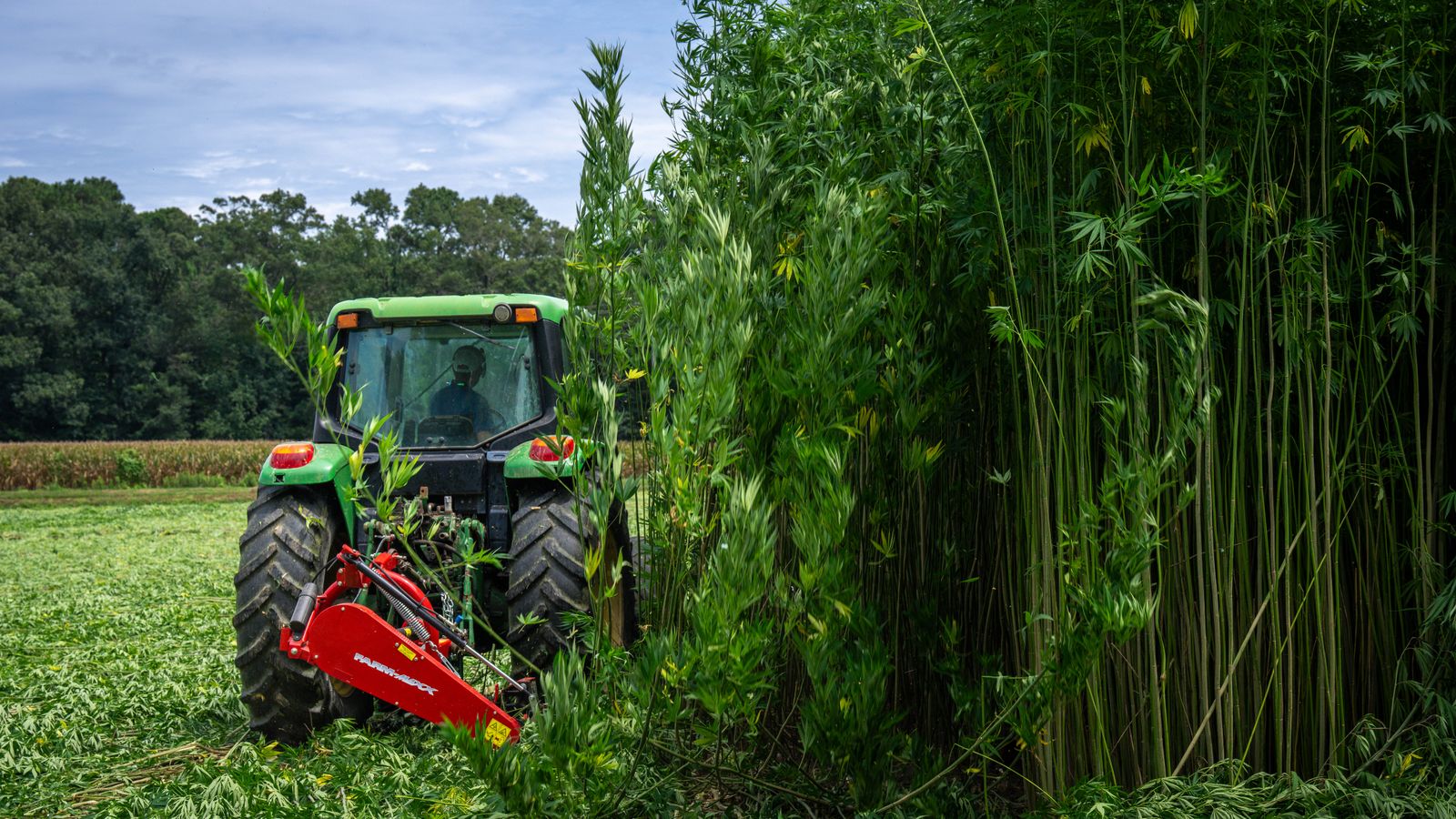
An aerial view of a tractor harvesting crops in a lush green farm field under a cloudy sky.
What the signal shows, and what it doesn't
The only verified fact here is that Indiana Public Media published a piece on Nov. 12, 2026 asking what comes next for the state's hemp industry as a federal ban approaches. The signal CannIntel received carries a headline, a publisher and a timestamp. It doesn't carry the body of the story.
That matters, and we're saying so up front. The feed item is a Google News aggregation link. No quotes, figures, named officials or company names came with it. We won't invent them.
What follows is the documented policy backdrop, which is public record, and a plain accounting of what operators should be asking now.
The federal framework behind the headline
The "ban" in question traces to the hemp definition in the 2018 Farm Bill, which legalized hemp containing no more than 0.3% delta-9 THC by dry weight. That definition let an intoxicating-hemp market grow: products built on delta-8 THC, THCA flower, THC-O and similar compounds, sold outside state-licensed cannabis systems.
Critics, including many licensed cannabis operators and a number of state regulators, have long called this a loophole. Products with real psychoactive effect reached shelves with little testing, age-gating or potency oversight in many states.
The legislative push to close it targets the definition itself. Tightening what counts as hemp, particularly how total THC is measured and which synthesized cannabinoids qualify, would push a large share of the current market back into illegal territory. CannIntel's topic hub on the federal hemp loophole and intoxicating hemp ban tracks the statutory text, the effective-date mechanics and the compliance windows as they develop. For full background on this story, start there.
The signal's headline says the ban "looms." It doesn't say the ban has taken effect. We won't imply that it has.
What Indiana operators should be pressure-testing
For a state like Indiana, which has no adult-use cannabis market, a federal hemp restriction removes a legal-adjacent product category without offering a regulated replacement. That's the structural point worth stating plainly, and it's the part most likely to drive the Indiana Public Media reporting.
Indiana is a useful test case for a reason. Neighboring Illinois and Michigan run licensed adult-use programs. Indiana doesn't. Hemp-derived intoxicants have filled part of that gap for consumers, and for retailers they've been a revenue line that can't easily be replaced.
Operators there, and in comparable prohibition states, should be working through a short checklist:
- Inventory exposure: how much stock is delta-8, THCA flower or other products that would fall outside a narrowed hemp definition.
- Contract terms: whether supplier and wholesale agreements have regulatory-change or force-majeure clauses.
- Product pivots: whether non-intoxicating CBD and fiber lines can carry the business if intoxicating SKUs are pulled.
None of this is exotic. Hemp operators in other states have been running the same triage as the federal timeline firmed up. Indiana's difference is the absence of a licensed fallback.
A caveat on scope. We haven't seen the Indiana Public Media text, so we can't say which of these pressures the reporting emphasizes, or whether it quotes growers, retailers, state agriculture officials or lawmakers. Readers who want the original sourcing should go to the outlet directly.
Here's one opinion, because the evidence supports it: a ban without a transition path is the hardest version of this policy for small operators. Large multistate companies can absorb a product-category loss. A single-location Indiana shop that built its margin on THCA flower can't.
Watch the effective date next, along with any compliance grace period written into the final federal language. Until that's fixed in statute, every inventory and contract decision in the hemp channel is a bet on a deadline nobody has locked down.
For complete background, history, and our ongoing coverage of this story:
Open the CannIntel topic hub →Sources
The cannabis newsletter you forward to your team.
Federal policy, market data, grower alerts, and the one story that matters today. Sent every weekday at 7am. Free.
No spam. Unsubscribe with one click. 21+ only.
Related from Laws

West Virginia Court Rules No Minimum Distance Between Dispensaries
A West Virginia appeals court held that state law sets no minimum spacing between competing medical marijuana dispensaries, a ruling that reshapes how operators site stores.

GreenState column blasts two-tier Schedule III plan as 'a scam'
A GreenState opinion piece argues that splitting marijuana oversight between medical and adult-use tracks would leave state-legal operators stuck under 280E while handing benefits to a narrow class.

Wisconsin's Incoming Governor Pitches Legalization to Offset Medicaid Cuts
An incoming governor and a top lawmaker both point to 2027, tying cannabis revenue to a Medicaid budget gap and putting Wisconsin on the legalization map.
More from the newsroom

Study finds 86% of cannabis products lack required label info
A Medical Xpress-reported analysis says most products on shelves omit legally required label details, raising compliance and consumer-safety questions for operators and regulators alike.

Brazil's Medical Cannabis Market Hits $90M a Year as Prescriptions Surge
High Times reports Brazil's prescription-driven medical cannabis market has reached roughly $90 million annually, but the signal leaves key tax and regulatory questions unanswered.
First Phase of Federal Hemp Product Ban Takes Effect
The first phase of a renewed federal ban on intoxicating hemp products is now in force, and industry groups are lobbying Congress for a regulatory alternative.