Reason: 95% of Hemp Products Face Ban, Florida Shops Brace
A Reason Magazine report says the federal hemp redefinition could erase most of the market, and Florida's small retailers are already absorbing the shock.
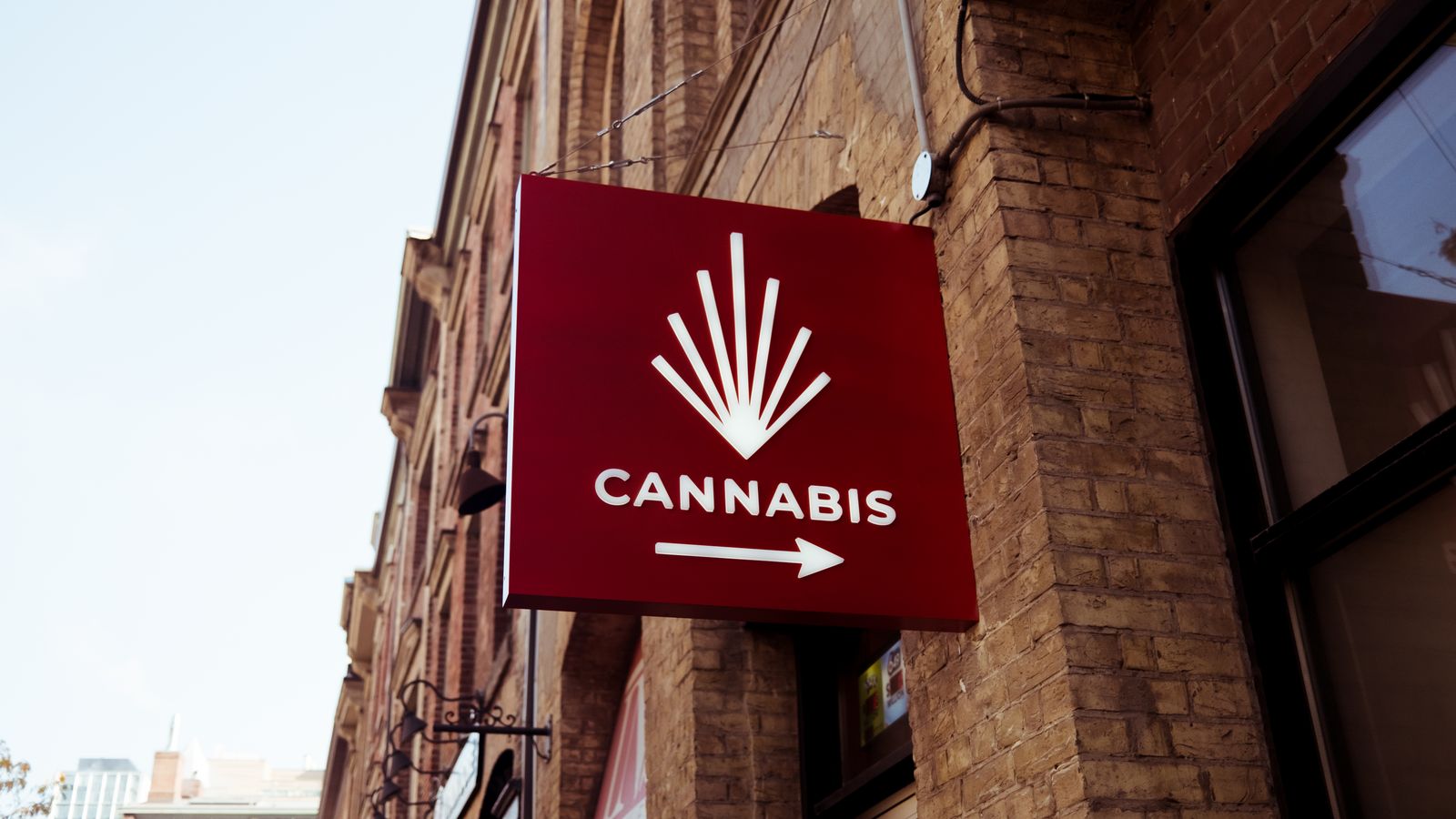
A red sign featuring a cannabis emblem on a city building facade, indicating a store direction.
Reason says 95% of hemp products are in the crosshairs
Reason Magazine reported that about 95% of products sold as hemp could soon be illegal, with Florida small businesses among the first to feel it.
The headline figure is Reason's, and the signal we reviewed doesn't include the underlying methodology. Treat the exact percentage as the outlet's estimate until the full dataset surfaces. The direction of travel, though, isn't in dispute.
Florida makes a useful test case. It has a dense retail footprint of smoke shops, CBD storefronts, and convenience stores that stock hemp-derived THC edibles, vapes, and flower.
The Farm Bill loophole is what's being closed
The 2018 Farm Bill defined hemp by delta-9 THC concentration, and that wording let intoxicating derivatives flourish.
Hemp is legal federally if it contains no more than 0.3% delta-9 THC by dry weight. Processors used that gap to convert hemp-derived CBD into delta-8 THC and other psychoactive compounds, then sold them outside any state cannabis program.
Congress has since moved to tighten the definition. The cleanest read on the policy is simple. Lawmakers decided the loophole produced an unregulated intoxicant market, and they want it shut. For the full legislative backstory, see the CannIntel topic hub on the federal hemp loophole.
Why the damage concentrates in the smallest shops
Small retailers carry the highest exposure because intoxicating hemp products are their margin.
A corner smoke shop in Florida doesn't have a diversified catalog to fall back on. Intoxicating hemp products are often the highest-margin items on the shelf, and the revenue they generate pays rent and payroll.
Large multi-state operators can absorb the loss of a product category. Independent shops can't. That's the asymmetry Reason's reporting points at.
What operators are weighing right now
Operators face a short list of bad options: reformulate, pivot, or wind down inventory.
- Reformulate toward non-intoxicating products such as low-THC CBD, if the revised definition leaves room for them.
- Pivot into non-hemp lines like kratom, vape hardware, or general convenience goods.
- Liquidate existing stock before any enforcement date, a risky bet without a firm deadline.
- Lobby for a regulated pathway, which several trade groups are pursuing.
None of these preserves the old revenue. How much runway any of them buys isn't yet clear.
The compliance clock is the real unknown
The effective date and any transition period will decide how many Florida businesses survive.
The Reason piece doesn't, in the material we reviewed, supply a confirmed enforcement date. That gap matters more than the 95% headline. A long phase-in lets retailers sell through inventory and retool, while a short one turns shelf stock into a write-off.
Operators should read the final statutory text and any agency guidance line by line, particularly the treatment of total THC versus delta-9 alone, and of THCA flower.
Why regulated cannabis markets are watching
A hemp crackdown could push intoxicating-product demand toward state-licensed dispensaries, but only where those exist.
Licensed cannabis operators in states like California and Ohio have long argued that untested hemp THC undercuts them. A closed loophole could shift some of that demand back to regulated channels.
Florida complicates the thesis. Its medical marijuana program is limited and adult-use isn't legal, so displaced hemp customers don't have an obvious licensed alternative. Some will go to the illicit market. That math is hard to ignore.
What to watch next
Three signals will show whether the 95% figure becomes reality: statutory text, agency enforcement posture, and Florida's own response.
Watch for the final language on THC measurement, any federal transition period, and whether Florida regulators step in with state-level rules or a licensing framework. The Florida Department of Agriculture and Consumer Services, which oversees hemp in the state, is the agency to track.
Then there's the political variable nobody can model: whether a coalition of small retailers, farmers, and consumers can win a carve-out before the clock runs out.
For complete background, history, and our ongoing coverage of this story:
Open the CannIntel topic hub →Sources
The cannabis newsletter you forward to your team.
Federal policy, market data, grower alerts, and the one story that matters today. Sent every weekday at 7am. Free.
No spam. Unsubscribe with one click. 21+ only.
Related from Laws
Henrico Approves Zoning Rules for Recreational Marijuana Businesses
Henrico County adopted local zoning rules for recreational cannabis businesses, setting a land-use framework ahead of Virginia's anticipated 2027 retail sales launch.

Nepal Supreme Court Orders Government to Regulate Cannabis Cultivation
A Ratopati report says the court directed regulation of medicinal and industrial cannabis cultivation, but the signal gives no ruling text, deadline or enforcement mechanism.

Iowa Medical Cannabis Board Backs Ending Patient Sales Tax
A unanimous board vote pairs a sales-tax repeal with six other program reforms, but nothing changes unless the legislature acts.
More from the newsroom

Auxly Reports Q3 2026 Sales Up 24%, Profit Comparison in Focus
Auxly Cannabis Group posted 24% higher third-quarter sales, but a murky year-over-year profit comparison is what investors will weigh against the top-line growth.

New York Regulators Project $2B in 2026 Sales, $350M in Tax
New York's cannabis regulators set a 2026 forecast of $2 billion in sales and $350 million in tax revenue, a benchmark operators and investors will now be measured against.

Trulieve Set to Join Russell 3000 Index, Report Says
A Marijuana Herald report says the Florida-based MSO will enter a flagship U.S. equity benchmark, a rare crossover for a plant-touching operator still barred from major exchanges.