DEA Withholds Cannabis Rescheduling Timeline From States, CA Official Says
Federal agency refuses to share procedural updates with state regulators preparing for Schedule III transition, according to California's cannabis director.
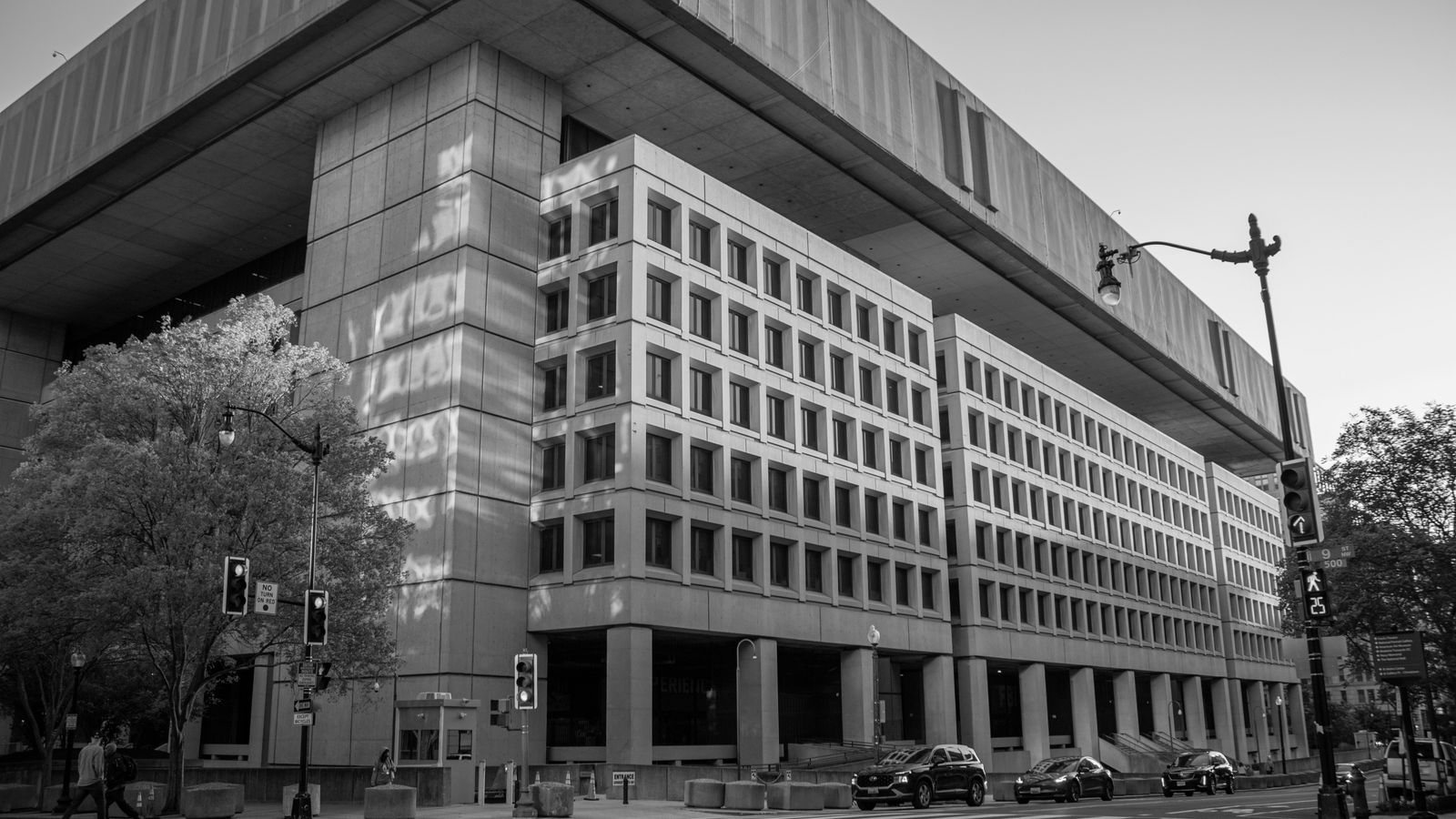
Black and white image of the FBI Headquarters in Washington, D.C. under a clear sky.
Federal Agency Declines State Coordination Requests
The DEA has refused multiple requests from state cannabis regulators for procedural updates on the rescheduling timeline. According to a California Department of Cannabis Control official, the agency's sought guidance on when the final rule will publish and what implementation period states will receive. The DEA hasn't responded to those inquiries, the official said.
The Administrative Procedure Act requires a 30-day minimum between final rule publication and effective date for substantive rules. State regulators are seeking clarity on whether DEA will provide additional lead time beyond that statutory floor.
Schedule III Transition Creates State Compliance Gap
State-licensed cannabis operators will face new federal compliance obligations under Schedule III that current state frameworks don't address. Schedule III substances require DEA registration for handlers, prescription requirements for distribution, and adherence to Good Manufacturing Practice standards under 21 CFR Part 211. No state cannabis regulatory structure currently incorporates these federal requirements.
California's DCC has drafted contingency regulations. But it can't finalize them without knowing the effective date. The agency faces a procedural timeline of 45 to 60 days for emergency rulemaking under California Administrative Procedure Act Section 11346.1.
Multistate Operators Prepare Without Federal Guidance
Publicly traded cannabis companies have disclosed rescheduling preparation costs in recent SEC filings but lack concrete timelines. Curaleaf Holdings disclosed $2.3 million in Q2 2026 compliance-preparation expenses. Trulieve Cannabis Corp. reported $1.8 million in similar costs. Both cited DEA silence on implementation timing as a material uncertainty.
Cultivators and manufacturers face the most acute compliance gap. Schedule III GMP requirements mandate facility modifications, equipment validation, and quality-control protocols that take 90 to 180 days to implement, according to pharmaceutical consultants advising the industry.
280E Tax Relief Remains Contingent on Final Rule
Cannabis businesses can't claim federal tax deductions under Section 280E until the day Schedule III reclassification takes effect. Internal Revenue Service guidance issued in March 2026 confirmed that the tax treatment change isn't retroactive and applies only to tax years in which cannabis is a Schedule III substance for the full year or pro-rated portion.
For calendar-year filers, a January 1, 2027 effective date would allow full-year 280E relief in 2027. A mid-year effective date would require bifurcated accounting and pro-rated deduction claims. Operators with fiscal years ending before the effective date receive no 2026 relief.
State Medical Programs Face Registration Uncertainty
Thirty-eight state medical cannabis programs operate under frameworks incompatible with Schedule III prescription requirements. The Controlled Substances Act requires Schedule III substances to be dispensed only pursuant to a valid prescription from a DEA-registered practitioner. State medical programs use physician recommendations or certifications, not prescriptions.
DEA hasn't clarified whether it'll issue a carve-out for state programs or require prescription conversion. The agency's May 2024 Notice of Proposed Rulemaking didn't address the state-program question. Public comments from the National Association of Boards of Pharmacy and the Federation of State Medical Boards requested explicit guidance. DEA hasn't responded in the docket.
Congressional Oversight Pressure Mounts
Senate Judiciary Committee members sent a September 18 letter demanding DEA provide a public rescheduling timeline by October 15. The letter, signed by Senators Cory Booker, Ron Wyden, and Jeff Merkley, cited the California official's disclosure as evidence of inadequate stakeholder coordination. DEA hasn't acknowledged the letter.
The next procedural milestone is the final rule's submission to the Office of Management and Budget for regulatory review under Executive Order 12866. OMB's online docket shows no cannabis rescheduling submission as of September 22. For full background on this story, see the CannIntel topic hub on DEA rescheduling. The White House Office of Information and Regulatory Affairs typically completes review within 90 days, though complex rules can take longer. Until that submission appears, no firm timeline exists.
For complete background, history, and our ongoing coverage of this story:
Open the CannIntel topic hub →Sources
The cannabis newsletter you forward to your team.
Federal policy, market data, grower alerts, and the one story that matters today. Sent every weekday at 7am. Free.
No spam. Unsubscribe with one click. 21+ only.
Related from Laws

Delaware updates enforcement statute to reflect cannabis oversight role
State legislation renames alcohol and tobacco enforcement officers to include marijuana enforcement duties.

Michigan Democrat Warns Cannabis Industry Against GOP Tax Cut Pledge
A Democratic state senator cautioned Michigan cannabis operators not to trust a Republican gubernatorial candidate's promise to reduce cannabis excise taxes.

Federal Court Upholds Reinstatement of NJ Worker Fired for Cannabis Test
Third Circuit ruling affirms state employment protections for off-duty marijuana use under New Jersey Cannabis Regulatory Act.
More from the newsroom

Curaleaf Stock Jumps 6% on Aurora Bid Speculation, Florida Push
TSX:CURA climbed 6.12% Tuesday as investors bet on Aurora Cannabis takeover rumors and Florida adult-use momentum.
Vireo Growth Acquires Nevada Dispensary for $500K Cash
The Minnesota-based MSO expands its western footprint with a bargain-priced retail asset in Las Vegas.

Trulieve Added to S&P Total Market and Completion Indices
The Florida MSO joins S&P's broad-market benchmarks, signaling institutional recognition despite federal Schedule I status.