DEA Rescheduling Bet May Go Wrong as THCA Hemp Loophole Widens
Industry sources warn the Schedule III move could legitimize intoxicating hemp products the DEA intended to eliminate.
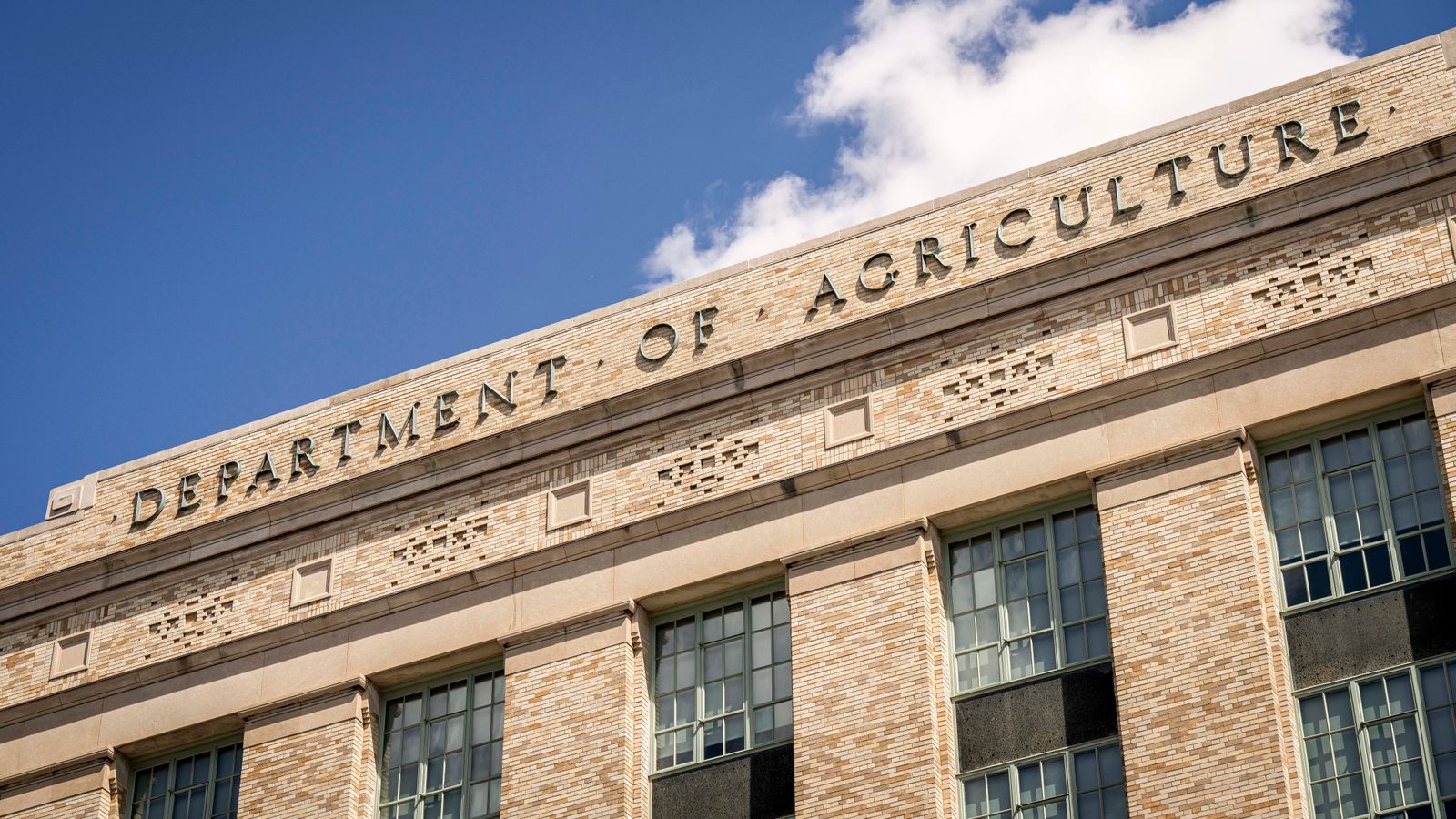
Close-up of the Department of Agriculture building facade under a clear blue sky.
The Rescheduling Framework Leaves Hemp Definitions Intact
The DEA's proposed rule moves marijuana to Schedule III but doesn't amend the statutory definition of hemp under 7 U.S.C. § 1639o, which defines hemp as cannabis containing no more than 0.3% delta-9 THC on a dry-weight basis. That threshold applies only to delta-9 THC, not total THC or THCA, the non-intoxicating precursor that converts to delta-9 when heated. Rescheduling changes the Controlled Substances Act classification for marijuana. It leaves the Farm Bill language governing hemp untouched.
A regulatory gap opens. THCA flower with 20% total THC but 0.2% delta-9 THC remains federally legal hemp under current statutory text. Rescheduling marijuana doesn't close that gap—it just moves the goalposts for what counts as controlled marijuana.
THCA Conversion Math and the Decarboxylation Question
THCA converts to delta-9 THC at roughly an 87.7% efficiency rate during decarboxylation, meaning a product with 15% THCA yields approximately 13% delta-9 THC when smoked or vaporized. The 2018 Farm Bill's delta-9 threshold was written for industrial hemp fiber and seed, not intoxicating flower. Congress didn't anticipate the THCA loophole because it didn't account for pre-decarboxylation testing.
DEA and FDA have both signaled discomfort with intoxicating hemp products, but neither agency has issued a final rule defining THCA as a controlled substance or amending the delta-9 testing standard. Rescheduling marijuana to Schedule III doesn't resolve that ambiguity. It leaves THCA in a legal gray zone that state regulators are now interpreting inconsistently.
State Enforcement Splits as Federal Clarity Stalls
At least 14 states have moved to ban or restrict THCA hemp products since January 2025, but enforcement varies widely. Minnesota, Oregon, and Colorado treat THCA flower as marijuana subject to state cannabis regulations. Texas and Florida have issued advisory opinions but haven't pursued criminal enforcement. North Carolina and Tennessee continue to allow THCA sales under hemp licenses, creating a patchwork that confuses retailers and consumers alike.
The DEA's rescheduling proposal, currently in the public comment period with hearings scheduled for August 2026, doesn't address state-level hemp enforcement. Industry attorneys warn that without federal clarification on THCA's status, the loophole will persist regardless of marijuana's schedule.
The 280E Tax Angle and Unintended Incentives
Rescheduling marijuana to Schedule III would eliminate IRS Code Section 280E for state-licensed cannabis operators, allowing standard business deductions. But THCA hemp sellers already operate outside 280E because they sell federally legal hemp, not controlled marijuana. That tax advantage has fueled the rapid expansion of THCA retailers in states without legal marijuana markets.
If rescheduling removes the 280E burden from licensed dispensaries but leaves THCA hemp sellers untouched, the competitive gap narrows—but THCA products remain cheaper to produce and distribute because they bypass state excise taxes and seed-to-sale tracking. The economic incentive to exploit the loophole doesn't disappear. It shifts.
What the DEA Could Do—But Probably Won't
The DEA has statutory authority under the Controlled Substances Act to issue an interim final rule classifying THCA as a controlled substance, but such a move would face immediate legal challenge under the Farm Bill's hemp exemption. The agency would need to argue that THCA is marijuana by virtue of its conversion potential, a theory that hasn't been tested in federal court. Most legal scholars expect the DEA to avoid that fight until Congress amends the Farm Bill.
The 2023 Farm Bill reauthorization debate included proposals to define hemp by total THC rather than delta-9 alone, but those amendments failed in committee. The next reauthorization cycle isn't scheduled until 2028. That leaves a two-year window for the THCA market to expand further.
Industry Reaction and the Legitimacy Paradox
Some hemp industry groups are quietly arguing that rescheduling marijuana validates the THCA loophole by confirming that Congress intended a bright-line delta-9 threshold. If the DEA moves marijuana to Schedule III without addressing THCA, the reasoning goes, the agency implicitly accepts that pre-decarboxylation cannabinoids fall outside the Controlled Substances Act. That's a stretch legally, but it's the argument being road-tested in state legislatures.
Licensed cannabis operators see it differently. They argue rescheduling was meant to reduce federal criminal penalties and tax burdens, not to legitimize unregulated intoxicating hemp. The political irony is sharp: the reform the industry lobbied for may entrench the loophole it wants closed.
What Happens Next
The DEA's final rescheduling rule is expected by late 2026 or early 2027, but the THCA question will likely remain unresolved until the next Farm Bill cycle or a federal court ruling. State-level enforcement will continue to diverge. Retailers in permissive states will expand THCA product lines. Operators in restrictive states will lobby for clarity.
The bet that rescheduling would clean up the hemp loophole assumed the DEA would act decisively on THCA. That assumption is looking shaky. Enforcement will vary—and the loophole will widen—until Congress or the courts step in.
For complete background, history, and our ongoing coverage of this story:
Open the CannIntel topic hub →Sources
The cannabis newsletter you forward to your team.
Federal policy, market data, grower alerts, and the one story that matters today. Sent every weekday at 7am. Free.
No spam. Unsubscribe with one click. 21+ only.
Related from Laws

Menominee Dispensary Cap Upheld as Michigan Judge Validates Local Limits
A Michigan judge ruled Menominee's three-dispensary limit legal, handing municipalities renewed authority to cap cannabis retail.

DEA Rescheduling Bet May Collapse on THCA Hemp Loophole Enforcement Gap
Industry's Schedule III wager hinges on total-THC testing rules DEA hasn't written yet.
DEA Rescheduling May Leave Hemp-Derived THCA Fully Legal
Schedule III move could create unintended loophole for hemp-converted cannabinoids under 2018 Farm Bill.
More from the newsroom

Brazil's Medical Cannabis Market Hits $500M Valuation in 2026
Regulatory reforms and patient demand drive rapid expansion in Latin America's largest cannabis economy.

Colder BHO Extraction Cuts Wax Compounds Without Losing Potency, Study Finds
Peer-reviewed Abstrax research shows lower temperatures reduce unwanted lipids while preserving cannabinoids and terpenes.

DEA Marijuana Rescheduling Timeline Faces New Delay Risk as July Ends
Administrative hurdles and political headwinds threaten the DEA's proposed move to Schedule III before the 2026 midterms.