DEA opposes additional rescheduling briefing on GAO report
The agency told Cannabis Wire it opposes another briefing tied to a GAO report, adding friction to a rescheduling process hemp operators are watching.
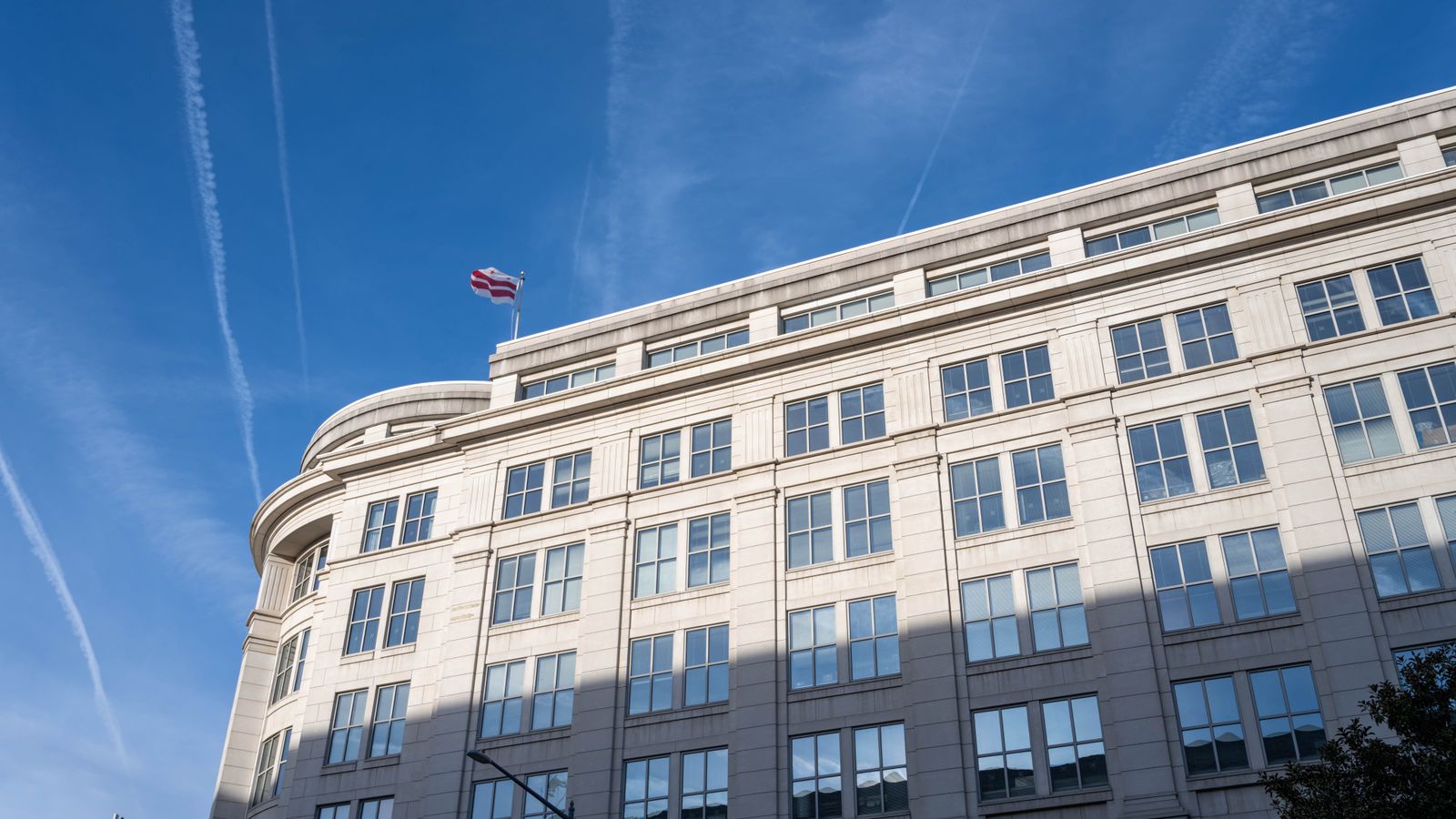
Elegant office building under a clear blue sky in Washington, D.C.
DEA draws a line on another briefing
The DEA told Cannabis Wire it opposes an additional briefing on a GAO report connected to marijuana rescheduling. The outlet published the report on Oct. 14, 2026.
That's the confirmed core. Everything beyond it needs care.
What the signal doesn't tell us
The public record available so far leaves out who requested the briefing, what the GAO report found, and what the DEA's stated reasons were. The Cannabis Wire headline is the only verified element CannIntel has reviewed.
We aren't going to guess at the rest. A refusal to hold a briefing can mean scheduling conflicts, a pending legal posture, or a view that the report has already been addressed. Those are very different stories.
CannIntel has requested the underlying Cannabis Wire reporting and will update this piece when specifics are confirmed on the record.
Why a briefing fight matters to the rescheduling timeline
Even a procedural dispute over a briefing signals that the DEA and outside overseers aren't aligned on how much explanation the scheduling process owes. Rescheduling marijuana from Schedule I under the Controlled Substances Act has been a slow, litigation-prone effort.
Every friction point matters because the process has repeatedly stalled on procedure rather than substance. That pattern is hard to ignore.
Still, a declined briefing isn't a ruling. It doesn't move marijuana to Schedule III, and it doesn't stop it either.
Rescheduling doesn't rewrite the hemp definition
Hemp is defined by statute, not by the Controlled Substances Act schedules, so any outcome on marijuana scheduling leaves the hemp test untouched. The 2018 Farm Bill, codified at 7 U.S.C. 1639o, defines hemp as cannabis with a delta-9 THC concentration of not more than 0.3% on a dry weight basis.
Marijuana, by contrast, is the same plant above that line. A scheduling change would alter how the DEA treats marijuana. It wouldn't redraw the 0.3% threshold, which only Congress can change.
THCA is where the chemistry breaks the test
THCA converts to delta-9 THC through decarboxylation, which is why delta-9-only testing and total-THC testing can give opposite answers on the same flower. Heat strips a carboxyl group from THCA, releasing CO2 and leaving delta-9 THC.
The conversion isn't one-to-one by weight. THCA's molecular weight is about 358.5 g/mol against roughly 314.5 for delta-9 THC, so the theoretical yield is about 87.7% of the THCA mass. In practice, labs apply that factor when they report total THC as delta-9 plus 0.877 times THCA.
A flower sample can read under 0.3% delta-9 as sold and still deliver far more once smoked or vaped. That gap is the entire loophole fight, and it sits outside the DEA scheduling question. Whether regulators measure delta-9 alone or total THC remains the sharpest dividing line in hemp enforcement.
The operator lens: two separate tax and legal tracks
Marijuana operators and hemp-derived THC sellers face different federal exposure, so a scheduling delay hits them unevenly. Licensed marijuana businesses remain subject to Section 280E of the tax code as long as their product sits in Schedule I or II. Rescheduling to Schedule III is the path that would end that exposure.
Hemp sellers don't carry 280E risk in the same way, but they face a patchwork of state rules and shifting federal guidance on total THC. For them, the more consequential variable is Congress and state agencies, not the DEA's briefing calendar.
For full background on this story, see the CannIntel topic hub on DEA cannabis rescheduling.
What to watch next
The next useful signals are the GAO report text, the name of whoever requested the briefing, and any DEA statement explaining its opposition. Those three items would turn a headline into a story with stakes.
Watch also for whether Congress or HHS responds on the record. Until then, the picture is unsettled. Expect enforcement on THCA products to vary by state regardless of what happens in Washington.
For complete background, history, and our ongoing coverage of this story:
Open the CannIntel topic hub →Sources
The cannabis newsletter you forward to your team.
Federal policy, market data, grower alerts, and the one story that matters today. Sent every weekday at 7am. Free.
No spam. Unsubscribe with one click. 21+ only.
Related from Laws
AG Blanche Says DOJ Won't Interfere With State-Legal Cannabis
Attorney General Todd Blanche said the Justice Department isn't seeking to interfere with state-legal marijuana operators, but no written policy or rule change accompanied the reported remarks.

Blanche Says Lucas Charges Aren't Aimed at State Cannabis Laws
The attorney general framed the federal case against Virginia's Senate president pro tem as conduct-based, not a move against state marijuana policy.

DOJ indicts Virginia lawmaker, six others over hemp THC shop
Federal prosecutors charged a Virginia state lawmaker and six others over a hemp THC operation, testing where hemp ends and marijuana begins.
More from the newsroom

Virginia Senator Faces Federal Marijuana and Fraud Charges
Marijuana Moment reported Oct. 22 that a top Virginia senator faces federal marijuana and fraud charges; the counts, court and named defendant await confirmation.

New Jersey Bill Extending Hemp Drink Sales Advances
A bill to extend New Jersey hemp drink sales moved forward Oct. 22, but the public record behind the headline is thin.

Survey of 7,913 German Patients Finds Pharmacy Cannabis Preferred
A survey of 7,913 German medicinal cannabis patients, nearly 90% with experience of both channels, points to the illegal market as a major source of stress.