DEA Marijuana Rescheduling Bet Faces Growing Uncertainty
Industry expectations for Schedule III reclassification hit new turbulence as political and procedural headwinds mount.
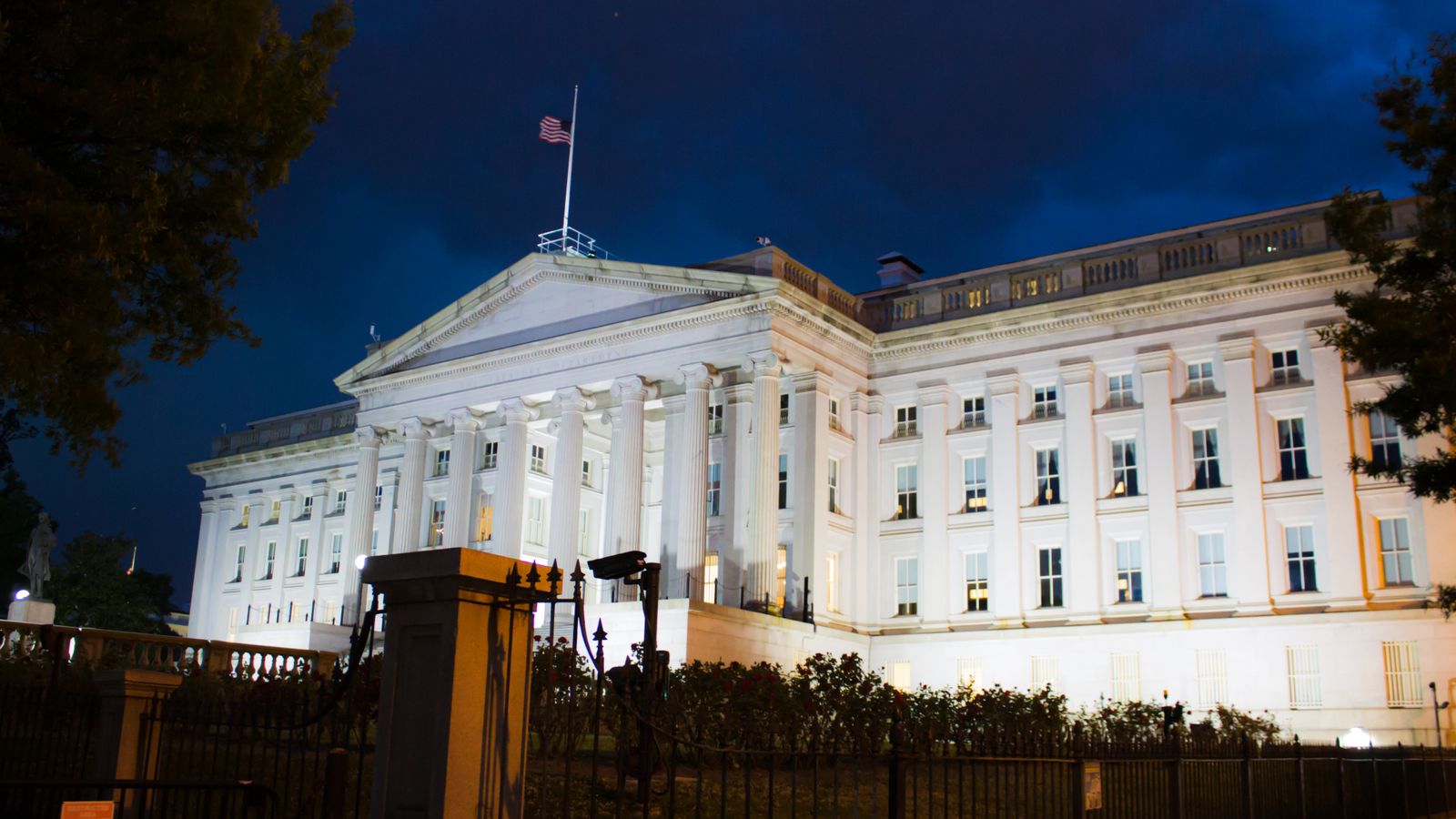
Stunning view of the U.S. Treasury Building illuminated against a twilight sky in Washington, DC.
Administrative Timeline Slips Past Key Milestones
The DEA has missed its informal July 2026 target for finalizing the rescheduling rule, with no public timeline for the administrative law judge hearing or final determination. The agency published its Notice of Proposed Rulemaking in May 2024, triggering a public comment period that closed in July 2024. The process has stalled since then.
The delay matters. Every month cannabis remains Schedule I, operators pay an estimated $1.8 billion annually in excess federal taxes under Internal Revenue Code Section 280E, according to industry trade group estimates. That's cash that can't be reinvested in expansion, R&D, or competitive pricing.
Political Variables Nobody Can Model
The 2026 midterm election cycle has injected new uncertainty into what was assumed to be a technocratic rulemaking process. Three Senate Republicans who previously signaled openness to rescheduling have reversed course in recent campaign appearances, citing constituent opposition. Two Democratic senators in swing states have gone quiet on the issue.
Here's the cleanest read on the political shift: rescheduling polled well in 2023 when inflation was the dominant issue, but in 2026, with crime and fentanyl dominating town halls, the optics have flipped. DEA leadership is acutely sensitive to Senate Judiciary Committee sentiment, and that committee's composition could change in November.
What Schedule III Actually Delivers
Even if rescheduling proceeds, the operational relief is narrower than many operators priced in. Schedule III eliminates 280E tax penalties, unlocking an estimated 15-22% margin improvement for profitable MSOs. It doesn't grant federal legal safe harbor. Interstate commerce remains prohibited. Banking access improves marginally but doesn't approach parity with alcohol or tobacco.
State-licensed cannabis businesses would still operate in violation of the Controlled Substances Act. Federal prosecution risk drops but doesn't disappear. The FDA would gain explicit authority to regulate cannabis as a prescription drug, opening a new compliance frontier that small operators can't afford to handle.
For full background on this story, see the CannIntel topic hub on DEA rescheduling.
Market Pricing Assumes Certainty That Doesn't Exist
Public MSO valuations have run up 40-60% since January 2026 on rescheduling optimism, but the risk of a delayed or derailed process isn't reflected in current multiples. Curaleaf, Trulieve, and Green Thumb Industries trade at forward EBITDA multiples that assume Schedule III takes effect in Q4 2026 or Q1 2027.
If the DEA punts the decision past the November election, or if a new Congress pressures the agency to withdraw the rule, those valuations unwind fast. Cowen analysts estimate a 25-35% downside scenario for the top-five MSOs if rescheduling is shelved or delayed beyond 2027.
What to Watch in the Next 90 Days
Three indicators will signal whether rescheduling stays on track or derails: the DEA's response to pending FOIA requests on the ALJ hearing schedule, Senate Judiciary Committee hearing agendas in September, and whether the White House Office of Management and Budget flags the rule for additional review.
October 15, 2026 is the next hard deadline, when the DEA must submit its fall regulatory agenda to OMB. If rescheduling isn't listed as a Q4 2026 priority, the market will reprice the probability sharply lower. The political variable nobody can model is whether a lame-duck Congress tries to block the rule legislatively in the post-election session.
For complete background, history, and our ongoing coverage of this story:
Open the CannIntel topic hub →Frequently asked questions
What is the current status of DEA marijuana rescheduling?
The DEA proposed rescheduling marijuana from Schedule I to Schedule III in May 2024. The public comment period closed in July 2024, but no administrative law judge hearing has been scheduled and no final rule has been issued as of July 2026.
What does Schedule III rescheduling mean for cannabis operators?
Schedule III eliminates Internal Revenue Code Section 280E tax penalties, unlocking an estimated 15-22% margin improvement for profitable operators. It does not legalize interstate commerce, grant federal safe harbor, or eliminate Controlled Substances Act violations.
How much do cannabis operators pay in 280E taxes annually?
Industry estimates place the annual 280E tax burden at approximately $1.8 billion across all state-licensed cannabis operators. This is excess federal tax that would be eliminated under Schedule III.
When will the DEA finalize the rescheduling rule?
No official timeline has been published. The DEA must submit its fall 2026 regulatory agenda to OMB by October 15, 2026. If rescheduling is not listed as a Q4 2026 priority, the process is likely delayed into 2027 or beyond.
What happens if rescheduling is delayed or withdrawn?
Analysts estimate a 25-35% downside scenario for top-five MSO valuations if rescheduling is shelved or delayed beyond 2027. Operators would continue paying 280E penalties and margin compression would persist.
Sources
The cannabis newsletter you forward to your team.
Federal policy, market data, grower alerts, and the one story that matters today. Sent every weekday at 7am. Free.
No spam. Unsubscribe with one click. 21+ only.
Related from Laws

Arkansas Governor, Democratic Challenger Both Oppose Marijuana Legalization
Republican Governor Sarah Huckabee Sanders and Democratic challenger Chris Jones rejected adult-use cannabis ahead of the 2026 gubernatorial race.

Massachusetts Cannabis Commission Tracks New Delivery Bans Across State
State regulators are monitoring a growing number of municipalities blocking cannabis delivery as local opt-outs spread.

Schedule III Rescheduling Leaves Cannabis Real Estate Law Unchanged
Federal rescheduling doesn't alter landlord liability or property-law barriers for cannabis operators, Vicente LLP analysis finds.
More from the newsroom

Cannabist Shuts Colorado Cultivation Facility Amid Bankruptcy
Multi-state operator closes grow operation as Chapter 11 restructuring advances in federal court.

Canopy Growth Faces Scrutiny on Turnaround Sustainability
Analysts question whether the Canadian MSO can maintain recent operational improvements amid persistent cash-burn and market headwinds.

Vireo Growth Acquires 25 Cannabist Dispensaries in Second Deal
The deal adds to Vireo's footprint months after its initial Cannabist acquisition closed.