DEA issues first medical marijuana registrations; 280E question opens
MJBizDaily reported the first DEA medical marijuana registrations, but whether they change §280E exposure depends on schedule status and registrant class.

Cannabis buds in glass jars on a wooden board indoors with soft lighting.
What the report establishes, and what it doesn't
MJBizDaily reported on Oct. 30, 2026 that the DEA issued its first medical marijuana registrations.
That headline is the confirmed fact. The signal CannIntel reviewed doesn't say how many registrations were issued, to whom, or under which provision of the Controlled Substances Act.
We won't guess. The gaps matter because the tax answer changes by registrant category, and a manufacturer isn't a pharmacy isn't a researcher.
A registration is not a schedule
DEA registration grants permission to handle a controlled substance; scheduling classifies it, and §280E turns on the classification.
Registration authority sits in 21 U.S.C. §822, with registrant-specific requirements in §823. Scheduling is a separate lever, set under §812 and moved by rulemaking or statute.
The signal doesn't address marijuana's schedule. That omission is the whole ballgame for tax purposes.
On a strict reading, IRC §280E reaches trades or businesses that traffic in controlled substances "within the meaning of schedule I and II." Registration, standing alone, doesn't appear in that text. If marijuana remains Schedule I, a new registration doesn't by itself lift the deduction bar.
Where §280E bites: a three-part taxonomy
Section 280E denies deductions and credits only when three elements are present: a Schedule I or II substance, trafficking, and conduct prohibited by federal or state law.
The statute bars "any amount paid or incurred during the taxable year in carrying on any trade or business" that consists of such trafficking. Cost of goods sold sits outside the bar under existing tax doctrine, which is why operators fight over inventory accounting and not much else.
Now the open question. The third element reads "prohibited by Federal law or the law of any State in which such trade or business is conducted." On a strict reading, a registrant acting within DEA authorization has a colorable argument that its conduct isn't federally prohibited. State law then becomes the remaining hook.
That's an argument, not a ruling. Nothing in the signal shows IRS guidance, a revenue ruling, or a court decision adopting it. Treat it as a question for tax counsel, not a filing position.
Which registrations matter to operators
The tax and compliance consequences differ by registrant class, so operators should sort the announcement by category before drawing conclusions.
Three questions separate the cases:
- Is the registrant a manufacturer or distributor, a dispenser, or a researcher?
- Does the registration cover the registrant's full activity, or only a defined program?
- Does the state license sit on top of the federal registration, or operate independently?
A state-licensed dispensary in Florida or Ohio isn't automatically a DEA registrant. Most operate under state authority alone. A registration issued to one entity doesn't extend to its licensees, affiliates, or supply chain partners.
What to watch before tax planning changes
Operators shouldn't change 280E positions until the DEA's registrant list, the legal basis, and any IRS response are public.
Start with the primary document. Registrations rest on a DEA order or notice, and its text will say which provision of the Controlled Substances Act applies and whether any schedule change accompanies it. Reporting on a headline isn't a substitute for that text.
Next, look for Treasury or IRS signals. Section 280E is a tax statute, and the IRS decides how it applies to a federally registered marijuana handler. Silence from the agency means existing positions stand.
Then check state conformity. Several states tie their own income tax to the federal base, so a federal change could flow through or be blocked by state revenue code language. Each state's conformity date and decoupling rules need a line-by-line read.
For full background on this story, see the CannIntel topic hub on DEA medical marijuana registrations.
One editorial read: the market will price this headline as a tax win. On the statutory text, that's premature.
The next signal is the DEA's own registration notice and any IRS statement that follows. Until both are on the record, 280E exposure is unchanged.
For complete background, history, and our ongoing coverage of this story:
Open the CannIntel topic hub →Frequently asked questions
What did the DEA do on Oct. 30, 2026?
According to MJBizDaily, the DEA issued its first medical marijuana registrations. The signal CannIntel reviewed doesn't specify the number of registrants, their category, or the legal authority used, so those details remain unconfirmed.
Does a DEA registration eliminate IRC §280E?
Not on its face. Section 280E applies to trafficking in Schedule I or II substances. Registration doesn't appear in that text. Relief would depend on marijuana's schedule or on a successful argument that registered conduct isn't federally prohibited.
Does IRC §280E allow cost of goods sold?
Yes, under existing tax doctrine. Section 280E bars deductions and credits for amounts paid in carrying on the business, but cost of goods sold is treated as a reduction of gross receipts, not a deduction. Inventory accounting is a common audit issue.
Are state-licensed dispensaries now DEA registrants?
No. A state license and a DEA registration are separate authorizations. A registration issued to one entity doesn't extend to other licensees or affiliates, and the signal doesn't say any dispensary program is covered.
Sources
The cannabis newsletter you forward to your team.
Federal policy, market data, grower alerts, and the one story that matters today. Sent every weekday at 7am. Free.
No spam. Unsubscribe with one click. 21+ only.
Related from Laws

Op-Ed Urges Congress to Protect Patient Access in Rescheduling
A Marijuana Moment op-ed argues that moving cannabis to Schedule III without congressional action could leave medical patients worse off, not better.
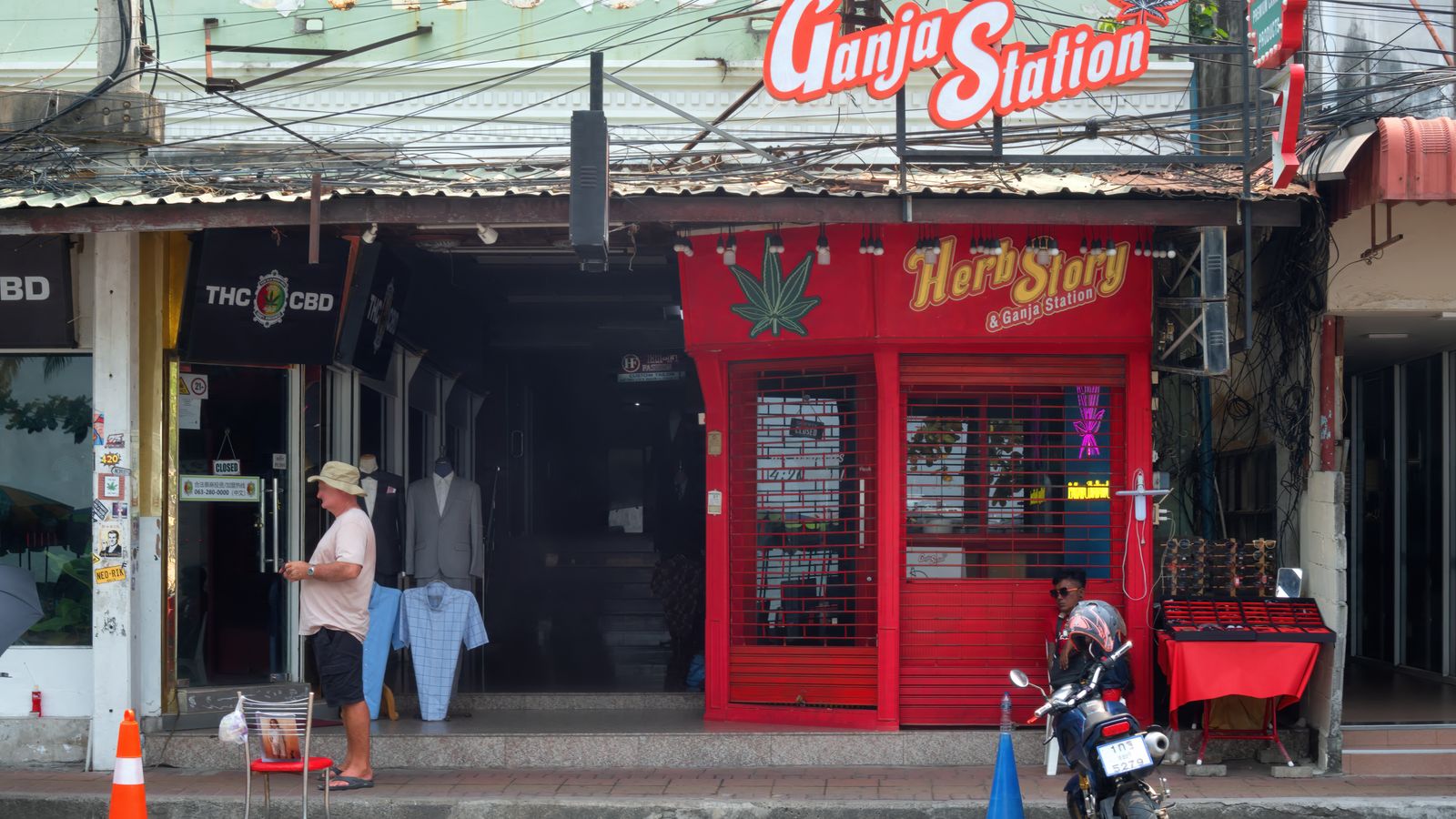
Thailand inspections suspend 105 cannabis licences, revoke 24
A nationwide inspection sweep ended with 105 suspensions and 24 revocations, though the signal leaves open who ran it, what it cost operators, and what triggered each penalty.
Thailand Revokes 24 Cannabis Licences, Suspends 105 More
A regulatory sweep removes 24 operators from Thailand's cannabis market and sidelines 105 more, tightening a framework that has been under pressure since decriminalization.
More from the newsroom

Canada: Daily Cannabis Use Tops Daily Drinking for Under-50s
A Toronto Star report says daily cannabis use now outpaces daily alcohol use among Canadian adults under 50, a threshold few predicted when legalization began.

Study: More Canadians Use Cannabis Daily Than Drink Alcohol Daily
A study reported by CBC finds daily cannabis use now outpaces daily alcohol use in Canada, a milestone for the post-legalization market.

Bone Thugs-N-Harmony's Flesh-N-Bone Says Group Is Busier Than Ever
The Cleveland rap group's OG member told Cannabis Now the weed-rap pioneers are as active as at any point in their three-decade run.