Cannabis Dispensaries Launch Vape Recycling Programs Amid E-Waste Crisis
Operators roll out battery take-back initiatives as single-use cartridges flood landfills with lithium and heavy metals.
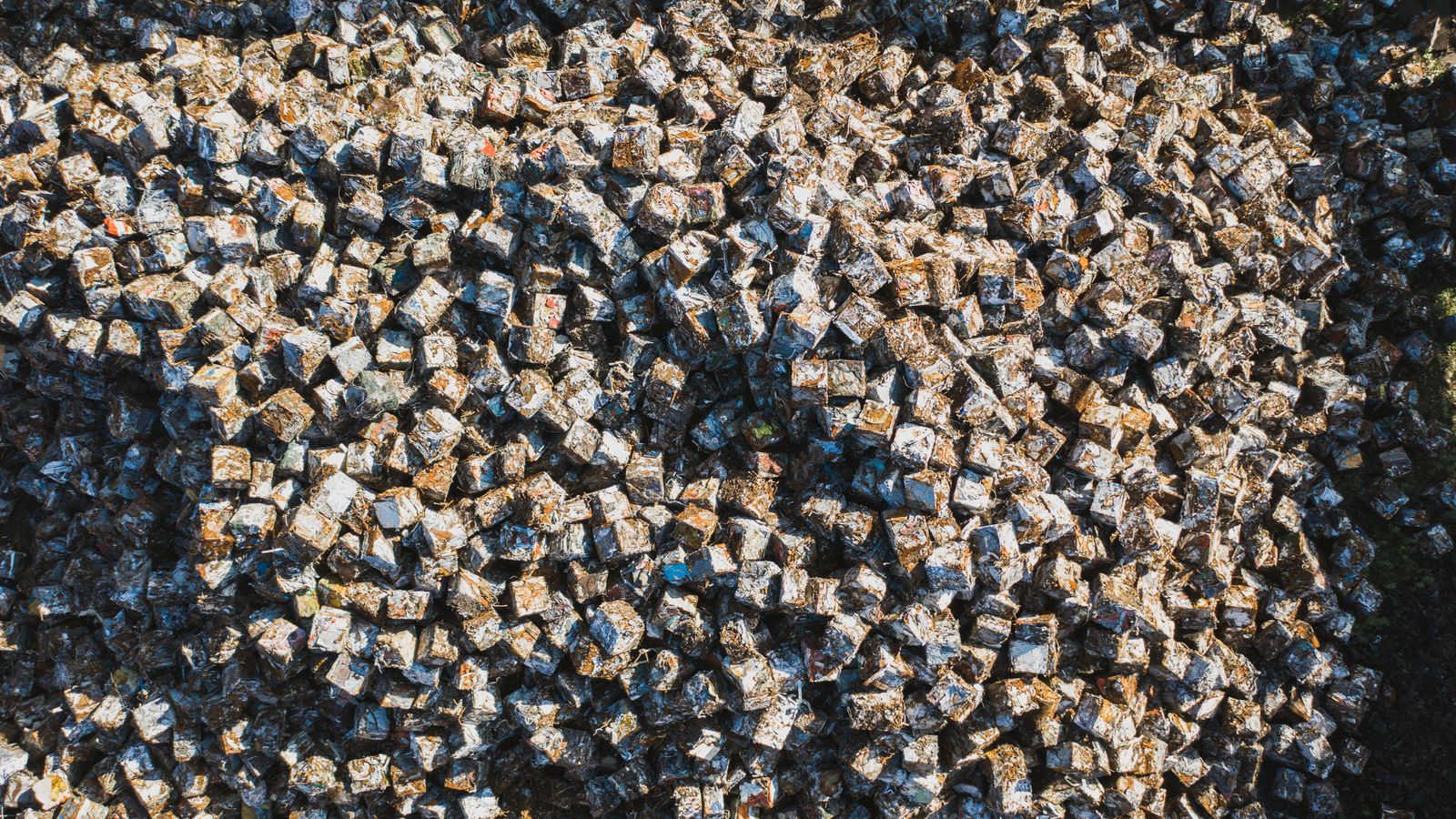
Aerial perspective of densely packed metal scrap cubes in an industrial setting, highlighting recycling.
Dispensary-Led Take-Back Programs Expand to Six States
California, Colorado, Massachusetts, Michigan, Illinois, and Washington now host retailer-run vape recycling drop-off points, with 140 participating dispensaries collecting used cartridges and batteries for specialized e-waste processors. The programs accept 510-thread cartridges, disposable pens, and pod systems regardless of brand or purchase location.
Planet 13 in Las Vegas piloted the first large-scale program in March 2026. It collected 4,200 units in the first 60 days. The company partnered with TerraCycle to process lithium batteries and separate glass, metal, and ceramic components for resale to electronics manufacturers.
"We were seeing customers ask what to do with dead pens every single day," said Marcus Rivera, sustainability director at Planet 13. "Municipal recycling won't touch them because of residual cannabis oil, so they end up in the trash."
The Math Behind the Waste Stream
Vape cartridges and disposables now account for 38% of cannabis sales by unit volume in mature markets, according to BDSA data through June 2026. A standard 510-thread cartridge contains 0.8 grams of lithium, 2.1 grams of steel, and trace amounts of lead and cadmium in heating elements.
California alone sold 47 million vape units in 2025. If discarded improperly, that's 37 tons of lithium and 98 tons of steel entering landfills annually from one state. Lithium batteries leach heavy metals into groundwater when crushed in compactors.
Recycling programs divert an estimated 12% of that waste stream so far, based on early collection data from participating retailers.
Regulatory Pressure Builds in Three States
California's Department of Cannabis Control issued draft extended producer responsibility (EPR) regulations in May 2026 that would require manufacturers to fund take-back programs by 2027. The NPRM proposes a $0.15-per-unit fee on all vape products to finance collection infrastructure and processor contracts.
Washington and Massachusetts are drafting similar rules. Washington's Liquor and Cannabis Board held stakeholder meetings in June on a proposed battery stewardship framework modeled on the state's existing paint and electronics EPR programs.
Industry groups including the Cannabis Trade Federation support voluntary retailer programs but oppose mandatory manufacturer fees. They argue the cost would be passed to consumers already facing 30-40% effective tax rates in some markets.
Reusable Hardware Gains Traction as Waste Alternative
Pax Labs, Vessel, and Yocan have each reported double-digit sales growth for rechargeable battery systems with replaceable cartridges in Q2 2026. These devices cost $30-80 upfront but eliminate single-use battery waste entirely.
Select Oil, a major California extractor, launched a refillable pod system in April that uses medical-grade stainless steel cartridges rated for 200+ refills. The company offers $5 credits for returned pods, which are cleaned, re-certified, and refilled at its Oakland facility.
"The unit economics work if you can close the loop," said Select co-founder Katya Smirnoff. "We're seeing 40% of customers return pods within 90 days."
What Operators Are Watching
The next signal: California's final EPR rules, expected by October 2026, will set the template for manufacturer-funded recycling nationwide. If the $0.15 fee survives industry comment, expect similar proposals in Illinois, New York, and New Jersey by early 2027.
Retailers report customer enthusiasm for drop-off programs but note collection bins require weekly pickup to prevent overflow. The economics depend on processor contracts. TerraCycle charges $1.20 per pound of mixed vape waste, while regional e-waste haulers quote $0.80-$1.50 depending on volume.
For background on cannabis sustainability initiatives and regulatory trends, see the CannIntel topic hub on cannabis vape waste and sustainability.
Frequently asked questions
Can I recycle cannabis vape cartridges in regular e-waste bins?
No. Municipal e-waste programs typically reject cannabis vapes due to residual THC oil, which is federally illegal. Dispensary take-back programs and specialized processors like TerraCycle are the only legal recycling channels in most markets.
What happens to collected vape cartridges after recycling?
Processors separate lithium batteries for metal reclamation, extract steel and aluminum components for resale to electronics manufacturers, and incinerate residual cannabis oil and plastic housings in permitted hazardous-waste facilities.
Do reusable vape batteries save money compared to disposables?
Yes, over time. A rechargeable battery system costs $30-80 upfront but eliminates the $5-15 battery cost embedded in each disposable cartridge. Heavy users break even within 6-10 purchases.
Which states are considering vape recycling mandates?
California released draft extended producer responsibility rules in May 2026. Washington and Massachusetts are drafting similar frameworks. Illinois, New York, and New Jersey have announced stakeholder meetings for early 2027.
Sources
The cannabis newsletter you forward to your team.
Federal policy, market data, grower alerts, and the one story that matters today. Sent every weekday at 7am. Free.
No spam. Unsubscribe with one click. 21+ only.
Related from Culture

Amsterdam-Style Cannabis Café Eyes Valencia Street for Summer 2027
A San Francisco operator is planning the Mission's first on-site consumption lounge, targeting a mid-2027 launch on Valencia.

Cannabis Daily Use Surpasses Alcohol in America for First Time
Daily cannabis consumption now exceeds daily drinking among U.S. adults, marking a historic shift in American substance-use patterns.

NFL-Backed Study Reveals Athletes Use Cannabis in Silence
New research funded by the NFL shows widespread undisclosed cannabis consumption among professional athletes despite evolving league policies.
More from the newsroom

FAA Examines Fitness-For-Duty Rules as Federal Marijuana Policy Evolves
The Federal Aviation Administration is reviewing workplace drug-testing protocols amid ongoing federal rescheduling proceedings.

San Antonio Police Begin Enforcing Texas Hemp Product Ban
SAPD becomes first major Texas department to actively enforce HB 1325's sweeping restrictions on intoxicating hemp products.

Texas Hemp THC Ban Forces Smoke Shop Closures Across State
New Texas law banning delta-8 and other hemp-derived THC products takes effect, threatening hundreds of retailers statewide.