Virginia, Texas Legalization Push Sets Stage for MSO Market Entry
Two high-population states move toward adult-use frameworks as operators position for license applications.

View of Denver's State Capitol with tree and flags in the foreground.
Virginia's Legislative Calendar Accelerates
Virginia's General Assembly is expected to vote on adult-use enabling legislation by February 2027, with retail sales targeted for Q4 2027. The commonwealth's medical program launched in 2020 and serves roughly 80,000 registered patients through five vertically integrated operators. Draft language circulating in Richmond would reserve 40% of initial retail licenses for existing medical licensees. The remainder gets allocated through a social-equity lottery weighted toward applicants from zip codes with cannabis-conviction rates exceeding the state median.
The bull case? Population density in the Northern Virginia corridor and Richmond metro, where median household income exceeds $95,000. Analysts at Cowen project a mature Virginia market could generate $800 million in annual sales by 2030, assuming per-capita consumption tracks North Carolina's medical program adjusted for adult-use uplift.
Legislative uncertainty anchors the bear case. Virginia's Republican-controlled House of Delegates remains divided on home-grow provisions, and Governor Glenn Youngkin has signaled he'd veto any bill permitting cultivation of more than two plants per household.
Texas Medical Expansion as Prelude to Adult-Use
Texas lawmakers filed six separate adult-use bills in the current session, none with clear passage odds, but the state's Compassionate Use Program added chronic pain and PTSD to qualifying conditions in June 2026. That expansion doubled the addressable patient pool to an estimated 1.2 million Texans. Enrollment remains capped by a physician-referral bottleneck and a 1% THC limit on flower products.
Three MSOs hold Texas low-THC licenses. Trulieve operates four dispensaries in Houston and Dallas-Fort Worth, Curaleaf runs two locations in Austin, and Green Thumb Industries secured a cultivation permit in El Paso in March 2026. None are profitable in the state due to the restrictive product mix, but all three have disclosed plans to scale infrastructure if adult-use advances.
Texas represents the largest untapped U.S. cannabis market by population. A mature adult-use program could eclipse $3 billion in annual sales, according to projections from New Frontier Data, though that figure assumes a regulatory structure similar to Illinois rather than the constrained frameworks in Minnesota or Connecticut.
MSO Positioning and Debt Capacity
Trulieve, Curaleaf, Green Thumb Industries, and Verano Holdings have all disclosed Virginia or Texas as strategic priorities in recent earnings calls. Trulieve's CFO noted on the Q2 2026 call that the company has reserved $120 million in undrawn credit capacity specifically for southern-state expansion. Curaleaf CEO Boris Jordan told investors in July that Virginia represents a top-three market priority alongside New York and Pennsylvania.
Verano operates 14 dispensaries in Maryland and three in West Virginia. It hasn't disclosed Texas plans but holds a $200 million term loan maturing in 2028 that includes an accordion feature permitting an additional $75 million draw for new-market entry. Green Thumb's balance sheet is the cleanest of the four, with net leverage at 1.8x EBITDA as of June 30, compared to Trulieve's 3.2x and Curaleaf's 2.9x.
The operational question is whether these MSOs can execute retail buildouts without triggering covenant breaches or dilutive equity raises, particularly if Virginia's licensing timeline slips past Q4 2027.
Comparable-Market Revenue Multiples
Virginia's population of 8.6 million is comparable to Massachusetts, where adult-use sales reached $1.4 billion in 2025. Adjusting for Virginia's lower per-capita income and higher rural population share, Cowen's $800 million mature-market estimate implies a 57% discount to the Massachusetts run rate. That spread reflects uncertainty around local-option bans, which could exclude up to 30% of Virginia municipalities from hosting retail, according to a July 2026 analysis by the Virginia Cannabis Control Authority.
Texas comps are harder to construct. No state with comparable population density and conservative legislative posture has launched adult-use sales. Florida's 2024 adult-use referendum failed with 43% support. Ohio's rollout has been delayed twice due to zoning disputes. The closest analog may be Michigan, which generated $3.2 billion in 2025 sales serving 10 million residents, though Michigan's regulatory environment is far more permissive than any framework under discussion in Austin.
License-Application Strategy
Virginia's draft rules would cap initial retail licenses at 150 statewide, with no more than five licenses per operator in the first 18 months. That structure favors MSOs with existing medical operations, but it also creates openings for private equity-backed entrants and regional players. Jushi Holdings runs six Pennsylvania dispensaries within 90 miles of the Virginia border and has indicated it'll apply for Northern Virginia licenses if the bill passes.
Texas hasn't released draft rules. Industry lobbyists expect any adult-use framework to include a two-year head start for existing low-THC licensees before opening applications to new entrants. That'd give Trulieve, Curaleaf, and Green Thumb a structural advantage, though all three would need to retool cultivation facilities currently optimized for high-CBD, low-THC biomass.
Political Risk and Timeline Uncertainty
Virginia's bill has majority support in the Democratic-controlled Senate but faces a tougher vote in the House, where the Republican majority is three seats. Two moderate Republicans from suburban Richmond districts told the Virginia Mercury in July they'd support the bill if home-grow limits remain at two plants. A floor vote is scheduled for February 12, 2027.
Texas remains a longer-odds bet. Lieutenant Governor Dan Patrick, who controls the Senate calendar, has blocked adult-use bills in three consecutive sessions. The six bills filed in 2026 have a combined 41 co-sponsors in the 150-member House, well short of the 76 needed for passage. Decriminalization of possession under one ounce has broader support and could pass as a standalone measure, but that wouldn't open a legal retail market.
What Investors Are Watching
The next signal? Virginia's February 12 House vote. If the bill clears both chambers, the Cannabis Control Authority has indicated it'd publish draft licensing rules by April 2027, with applications opening in June. Texas advocates are focused on securing a committee hearing for HB 447, the most detailed of the six adult-use bills, though no hearing has been scheduled as of August 9.
For MSOs, the operational variable is debt capacity. Trulieve and Curaleaf both carry leverage ratios above 2.5x, and neither has disclosed plans for equity raises. If Virginia's timeline holds and both states move forward, the operators best positioned are those with undrawn credit lines and existing southern infrastructure—a narrow field that favors Green Thumb and Verano over more leveraged competitors.
For complete background, history, and our ongoing coverage of this story:
Open the CannIntel topic hub →Sources
The cannabis newsletter you forward to your team.
Federal policy, market data, grower alerts, and the one story that matters today. Sent every weekday at 7am. Free.
No spam. Unsubscribe with one click. 21+ only.
Related from Business

Michigan Retailer Closes Five Dispensaries Citing New Tax Burden
A Michigan cannabis operator is shuttering five locations as the state's revised tax structure squeezes multi-location retailers.
Michigan Dispensary Chain Closes Five Stores, Blames 24% Tax Rate
An unnamed multi-location operator shuttered five Michigan cannabis retail locations this week, citing the state's combined 24% tax burden as the primary driver.
Minnesota Cannabis Operators Face Licensing Delays, Inventory Shortages
State regulators struggle to process applications as businesses report cash-flow strain and supply gaps.
More from the newsroom
Federal Judge Denies Request to Block Texas Hemp Ban
A U.S. district court rejected industry arguments for a temporary restraining order, leaving the state's consumable hemp prohibition in effect.

Massachusetts Cannabis Study Finds Consumer Concerns on Potency, Tax Spending
New research shows Bay State cannabis consumers prioritize product potency accuracy and transparency in how the state spends marijuana tax revenue.
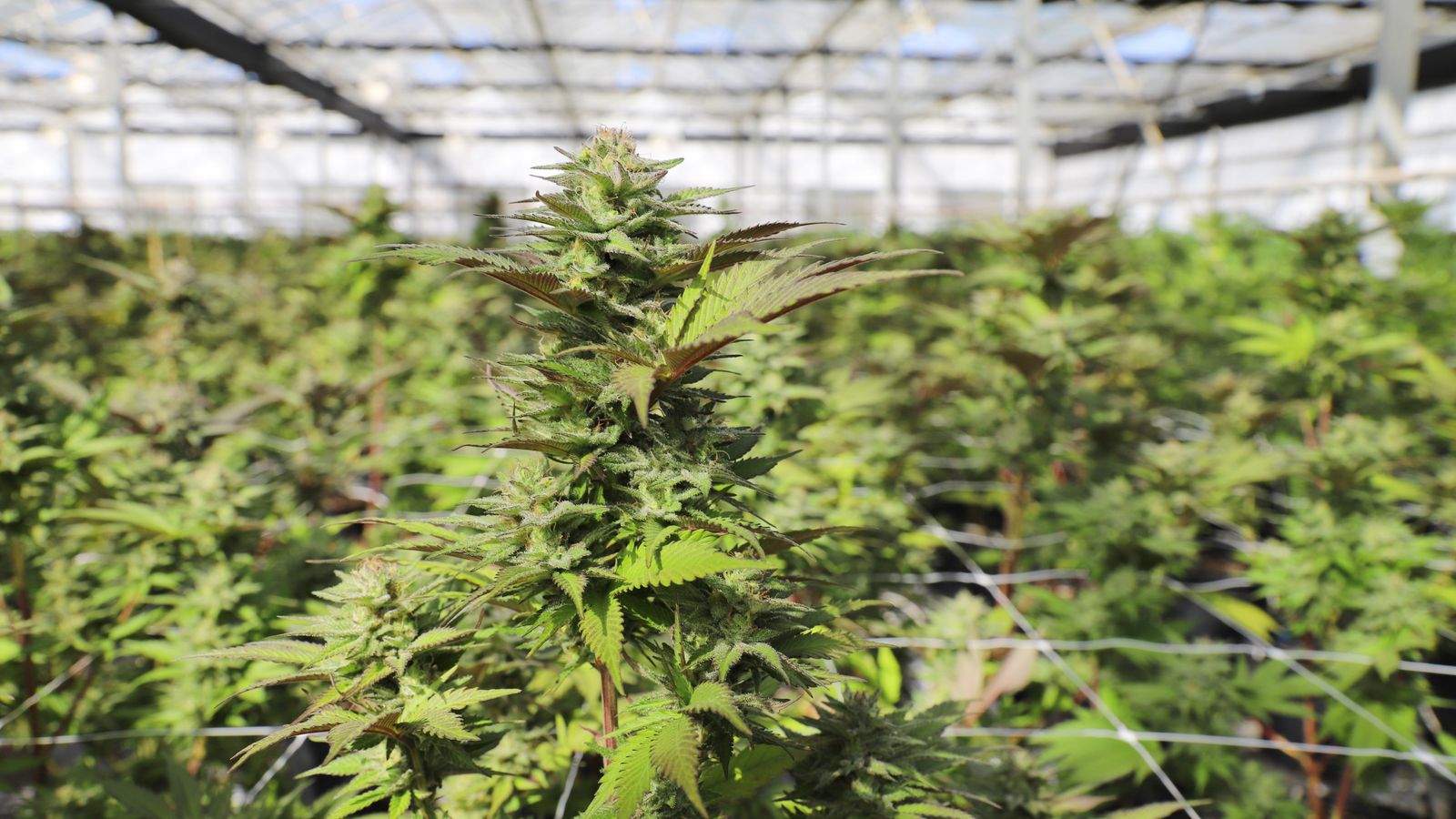
Georgia regulators tour Macon cultivation site as patient enrollment climbs
State cannabis commission inspects production facility amid rising demand for medical marijuana access.