Vireo Growth Announces Financing for NY, Florida Cultivation Site
Vireo Growth Inc. disclosed financing for a New York and Florida cultivation facility on Oct. 5. The dollar amount, lender and terms weren't in the initial notice.
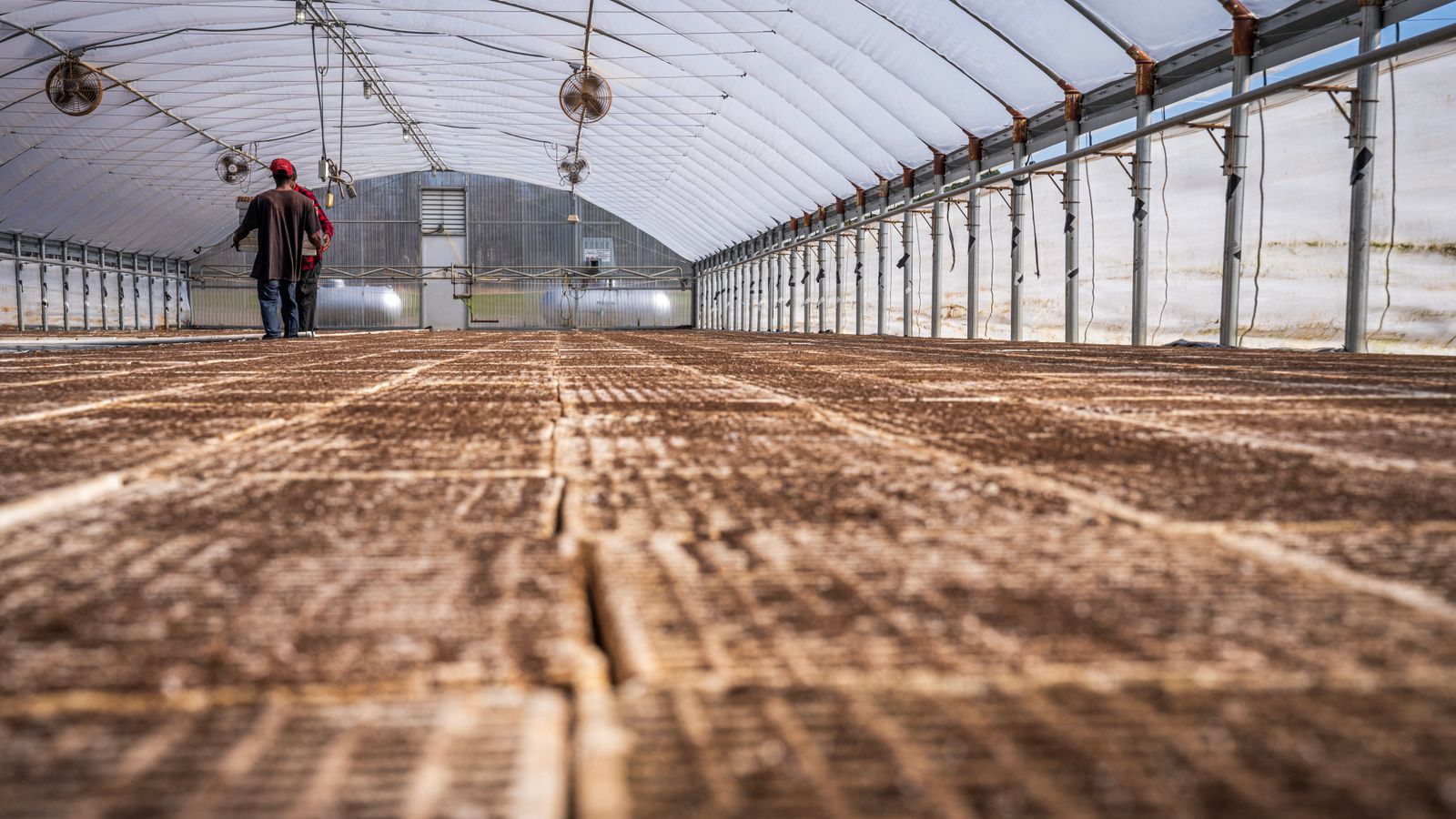
Interior of a large empty greenhouse with two workers inspecting the space.
The notice says financing, and little else
Vireo Growth Inc. disclosed financing tied to a cultivation facility serving New York and Florida, but the initial notice gave no figures.
The headline, published Oct. 5, 2026 by The Manila Times, is all CannIntel has to work from. It names the company, the two states and the purpose. It doesn't name a lender, a loan size, an interest rate, a maturity date or a closing date.
It also doesn't settle whether this is one facility or separate projects in each state, which is a real ambiguity, and we won't guess at it.
The cleanest read on this announcement is that it's a direction signal, not a data release. The numbers will come in a full press release or a regulatory filing.
Why the New York and Florida pairing stands out
New York and Florida are structurally opposite markets, so one financing package spanning both deserves scrutiny.
New York's adult-use program runs through the Office of Cannabis Management (OCM), which oversees licensing under the state's cannabis law. Florida's program is medical-only and sits under the Department of Health's Office of Medical Marijuana Use. Florida voters rejected adult-use legalization in November 2024 when Amendment 3 drew roughly 56% support against a 60% threshold.
Different customers. Different rules. Different growth curves.
An operator financing cultivation capacity for both is making a call on two things at once: adult-use demand in a large coastal state and the durability of a limited-license medical franchise in another. Those bets don't move together, and a lender will price them separately.
Who lends to cannabis cultivators, and why that matters here
Plant-touching operators have historically financed growth through specialty lenders, equipment financing and sale-leasebacks rather than conventional bank debt.
Federal law still shapes that capital stack. Traditional banks have largely stayed away from plant-touching businesses, which pushes operators toward private credit and structured deals. Those deals tend to carry higher rates and tighter covenants than a typical industrial loan, though the specifics vary by borrower and collateral.
So the lender's identity is the first tell. A specialty cannabis lender signals a conventional structure for this sector. A larger institutional name would be genuinely unusual, and it would say something about how credit markets view the two states.
Five details that will decide whether this is a big deal
The terms, not the headline, determine whether the financing is expansion capital, refinancing or a stopgap.
Here's what to look for when the full disclosure lands:
- Principal amount and whether it's drawn in full or in tranches
- Interest rate, maturity and any amortization schedule
- Collateral, including whether it's secured by real property or equipment at the facility
- Use of proceeds: new construction, buildout, or refinancing existing debt
- Which state or states the capital actually lands in
Use of proceeds matters most. Cultivation capex in a market with flat or falling flower prices is a very different story from capex ahead of a demand inflection. Not every expansion is a growth story.
The operator and investor read
For now, the financing is a positive signal about access to capital, but it can't be graded as a good deal until the terms are public.
Operators watching Vireo should treat this as a data point on credit availability for mid-sized multistate players. If the terms prove reasonable, it suggests lenders will still fund cultivation in licensed markets. If they prove expensive, it confirms that capital remains the tax cannabis companies pay for operating outside the federal banking system. Either outcome is informative. Neither is knowable today.
Investors face the same gap. A financing headline is easy to read as a vote of confidence. It can just as easily be a company paying up to fund capacity it needs. That distinction only shows in the covenants.
For full background on this story, see the CannIntel topic hub on Vireo Growth expansion and financing, which we'll update as details emerge.
The next signal: a full press release or a filing that names the lender and the loan size. Until then, the headline is all anyone has.
Sources
The cannabis newsletter you forward to your team.
Federal policy, market data, grower alerts, and the one story that matters today. Sent every weekday at 7am. Free.
No spam. Unsubscribe with one click. 21+ only.
Related from Business

Vireo Growth acquires Palatka cannabis facility for $21M
The multistate operator paid $21 million for a Palatka site, a hard-asset bet on Florida's medical market while Canada and Germany show the cost of overbuilding.

Vireo Makes Latest $21M Florida Purchase, Deepening MSO Foothold
MJBizDaily reported the multistate operator's newest Florida deal, a $21 million purchase that extends a pattern of incremental buying in a license-capped medical market.

Nasdaq Offers Safe Harbor Financial 180-Day Compliance Extension
SHF Holdings, the Denver fintech behind Safe Harbor Financial, received written Nasdaq notice of a 180-day extension to a compliance deadline.
More from the newsroom
AG Blanche Says DOJ Won't Interfere With State-Legal Cannabis
Attorney General Todd Blanche said the Justice Department isn't seeking to interfere with state-legal marijuana operators, but no written policy or rule change accompanied the reported remarks.

Blanche Says Lucas Charges Aren't Aimed at State Cannabis Laws
The attorney general framed the federal case against Virginia's Senate president pro tem as conduct-based, not a move against state marijuana policy.

DOJ indicts Virginia lawmaker, six others over hemp THC shop
Federal prosecutors charged a Virginia state lawmaker and six others over a hemp THC operation, testing where hemp ends and marijuana begins.