Safe Harbor Financial Reports Q2 2026 Results, Revenue Climbs 18%
The cannabis banking specialist posted $4.2 million in quarterly revenue as deposit growth accelerated across Western state clients.
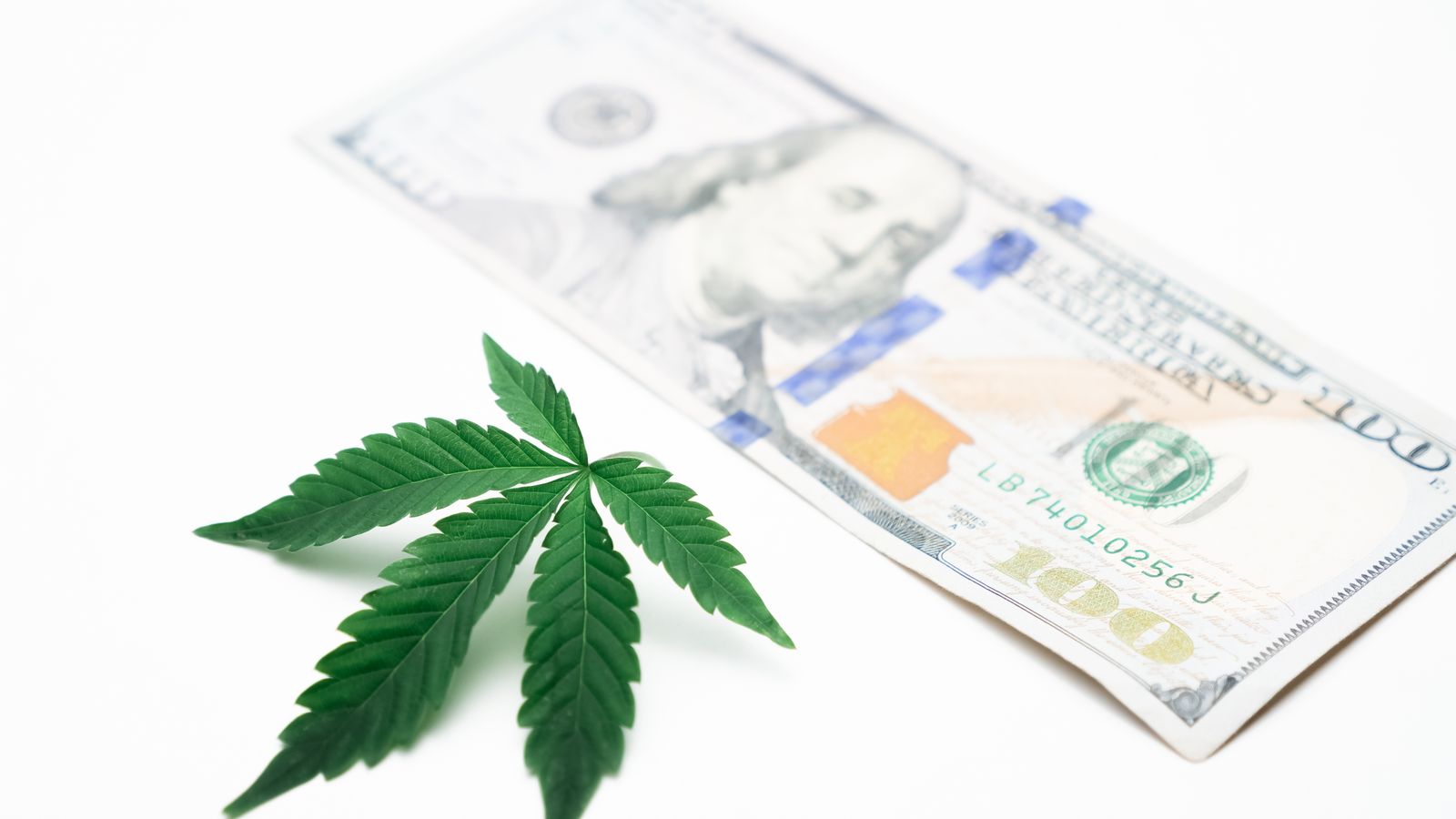
A close-up image of a cannabis leaf alongside a hundred-dollar bill, symbolizing cannabis economy.
Revenue Growth Driven by Deposit Expansion
Safe Harbor Financial's Q2 2026 revenue of $4.2 million marks the sixth consecutive quarter of double-digit growth, according to the earnings release filed with OTC Markets. Total deposits hit $387 million as of June 30, 2026, up from $312 million in the prior-year period. Net interest income climbed to $3.1 million, reflecting higher loan origination volume as cannabis operators refinanced legacy debt at lower rates following federal rescheduling.
The loan book expanded to $141 million, concentrated in real estate-backed credit facilities for dispensaries and cultivation sites in Colorado, California, Oregon, and Washington. Non-performing loans remained below 1.2% of total assets, a ratio the bank attributed to conservative underwriting and the elimination of 280E-related cash flow stress for borrowers.
Operating Margins Compress on Compliance Spend
Net income for the quarter fell to $890,000, down from $1.1 million in Q1 2026, as the bank absorbed higher regulatory compliance costs tied to new FinCEN guidance issued in May 2026. Operating expenses rose 14% quarter-over-quarter to $2.8 million. The increase came from staffing additions in the bank's anti-money-laundering unit and technology upgrades required under revised Bank Secrecy Act reporting standards for cannabis accounts.
Safe Harbor CEO Sundie Seefried said in the release that the bank expects compliance expenses to stabilize in the second half of 2026 as systems adjustments are completed. The bank didn't provide formal margin guidance for Q3 or Q4.
Deposit Mix Shifts Toward Operating Accounts
Operating deposits—checking and sweep accounts used for payroll and vendor payments—now represent 68% of total deposits, up from 54% a year earlier. The shift reflects growing confidence among cannabis operators that federal enforcement risk has receded, reducing the need for cash-intensive treasury management. Safe Harbor processed $1.9 billion in transaction volume during Q2, a 22% increase from the prior quarter.
Forty-seven new client relationships came aboard in the quarter, bringing the bank's total cannabis-linked account base to 312 businesses. Geographic concentration remains high. Colorado and California clients account for 71% of deposits.
Loan Portfolio Weighted Toward Real Estate
Real estate-backed loans comprise 83% of Safe Harbor's $141 million loan book, with an average loan-to-value ratio of 58%. The bank extended $19 million in new credit during Q2, primarily term loans for property acquisition and expansion projects in states with supply constraints. Working capital lines represented just 11% of the portfolio, a conservative posture the bank maintained despite easing federal risk.
Charge-offs for the quarter totaled $140,000, or 0.4% of average loans on an annualized basis. The allowance for credit losses stood at $2.1 million, or 1.5% of total loans.
Capital Ratios Exceed Regulatory Minimums
Safe Harbor's Tier 1 capital ratio was 14.2% as of June 30, well above the 8% threshold for well-capitalized banks under federal guidelines. The bank didn't raise external capital during the quarter and has no near-term plans for equity or debt issuance, according to the release. Retained earnings funded the quarter's balance sheet growth.
Its tangible common equity ratio—a measure of loss-absorption capacity—stood at 12.8%, down slightly from 13.1% at year-end 2025 as asset growth outpaced earnings retention.
Management Flags State-Level Policy Uncertainty
Safe Harbor's corporate update highlighted ongoing regulatory fragmentation across state cannabis programs as a constraint on lending appetite. California's pending tax reform package and Oregon's inventory tracking rule changes have delayed loan approvals for clients in those states, the bank noted. Colorado remains the most stable lending market, with predictable licensing and compliance frameworks.
The release made no mention of expansion plans into newly legal states in the Southeast or Midwest, where adult-use programs launched in 2026 but lack mature banking infrastructure.
Stock Trades at 1.8x Book Value
Safe Harbor's OTC-traded stock closed at $14.20 per share on August 9, valuing the bank at $68 million, or 1.8 times tangible book value. The stock's gained 31% year-to-date, outpacing the broader cannabis sector but trailing regional bank indices. Average daily trading volume remains thin at fewer than 8,000 shares, limiting liquidity for institutional investors.
For full background on Safe Harbor's role in cannabis banking infrastructure, see the CannIntel topic hub on Safe Harbor Financial.
The next earnings report is scheduled for early November 2026, covering Q3 results. Investors will watch for evidence that compliance cost pressures have peaked and whether the bank accelerates loan growth in the second half of the year.
Sources
The cannabis newsletter you forward to your team.
Federal policy, market data, grower alerts, and the one story that matters today. Sent every weekday at 7am. Free.
No spam. Unsubscribe with one click. 21+ only.
Related from Business

Delaware Adult-Use Sales Miss First-Year Projections by Wide Margin
State regulators overestimated demand, infrastructure readiness, and consumer shift from medical to recreational channels.
Israel Reopens Anti-Dumping Investigation Into Canadian Cannabis Imports
Trade tribunal revives case alleging below-cost flower sales from Canada hurt domestic Israeli cultivators.

Tilray Bets on Cannabis Demand to Reverse Revenue Slide
The diversified cannabis operator faces investor skepticism as it pivots growth strategy toward U.S. legalization tailwinds.
More from the newsroom

THC Drug Eliminated Nightmares in 37% of PTSD Patients, German Trial Finds
Nabilone, a synthetic THC analog, outperformed placebo in reducing trauma-related nightmares in a 10-week randomized controlled trial.

Senate Hemp THC Vote Fractures Partisan Lines in Rare Coalition Split
A procedural vote on intoxicating hemp products broke traditional Republican and Democratic blocs, signaling deepening rifts over cannabis policy.

Hochul Signs Bill Expanding Microbusiness, Dispensary Pathways in NY
New law loosens ownership restrictions and creates new licensing routes for small operators in New York's cannabis market.