New Jersey Cannabis Revenue Falls Short of Murphy Projections Again
State tax collections from adult-use sales dropped 11% year-over-year in Q2 2026, the third consecutive quarterly decline.

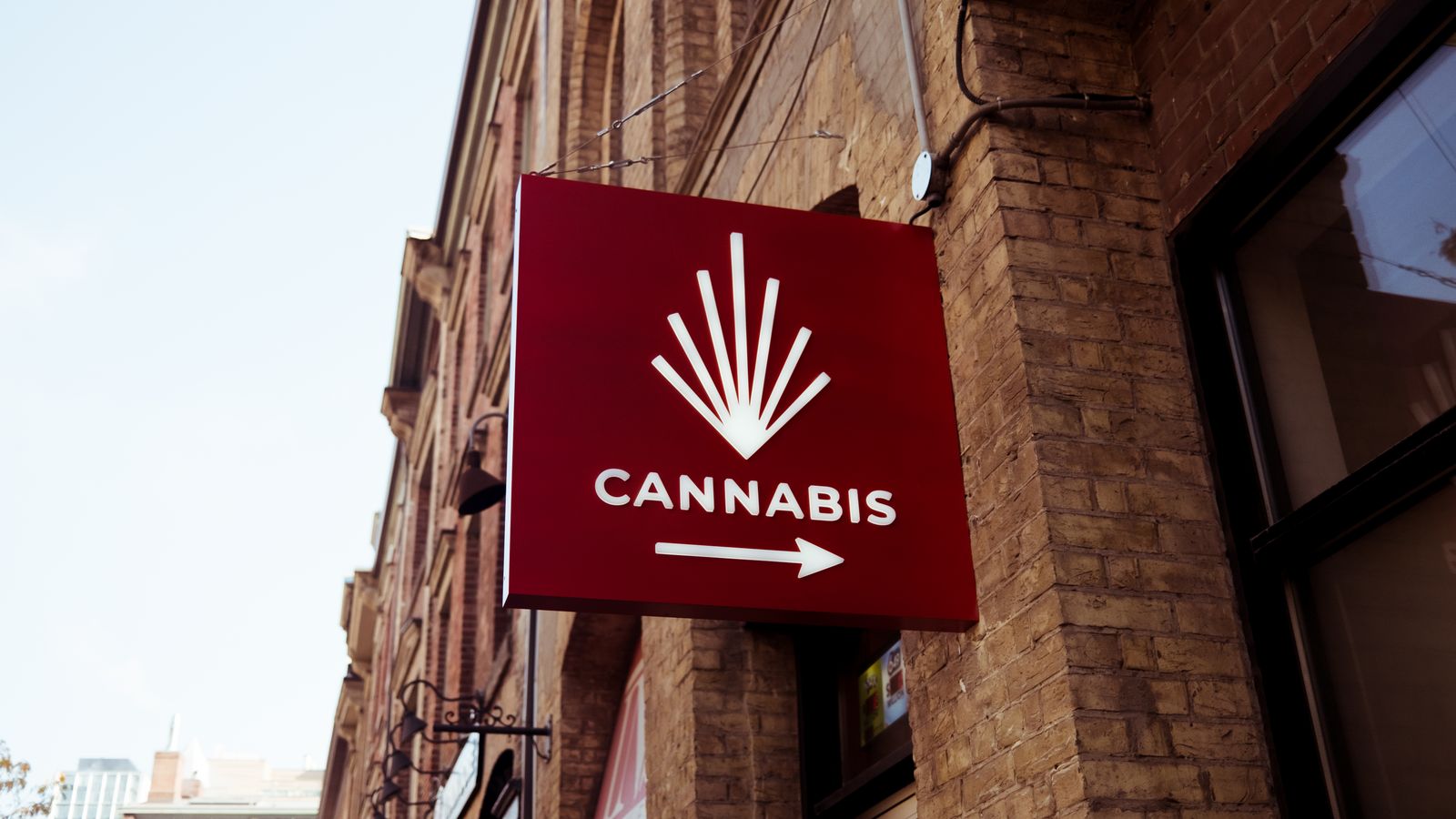
Street view of licensed cannabis retailer sign in urban setting with storefronts and cars.
Revenue Decline Accelerates Despite Dispensary Expansion
New Jersey collected $47.2 million in cannabis excise and sales tax in Q2 2026, an 11% year-over-year drop that deepens a revenue slide now entering its ninth month. The decline comes even as the state's active dispensary count rose to 142 locations, up from 128 a year earlier. That suggests per-store sales are falling faster than the retail footprint is expanding.
State Treasury figures show the cumulative fiscal-year-to-date haul through June 2026 totaled $89.3 million, roughly 29% below the $126 million annual target Murphy's administration embedded in the FY26 budget. The governor's office hasn't revised the forecast publicly. Meanwhile, municipal leaders in towns that banked on cannabis revenue-sharing payments are now facing budget shortfalls.
The Q2 figure represents a steeper drop than the 7% decline recorded in Q1 2026 and the 4% dip in Q4 2025. It signals accelerating erosion rather than a plateau. No official explanation has been issued by the New Jersey Cannabis Regulatory Commission (CRC), though industry observers point to price compression, illicit-market competition, and New York's neighboring adult-use rollout as probable drags.
Illicit Market and Cross-Border Leakage Blamed
Industry operators and policy analysts attribute the revenue miss to two structural pressures: New Jersey's failure to suppress its legacy market and customer migration to New York's lower-tax regime. New Jersey imposes a 6.625% sales tax plus municipal levies that can reach 2%. New York's combined state and local cannabis tax burden averages 13% but applies to a smaller base due to later market entry and fewer stores.
New Jersey's regulatory framework prioritized equity and social justice in licensing, but the slow pace of approvals left a vacuum the illicit market never relinquished.
The CRC has issued 394 conditional licenses since 2022. Only 142 have converted to operational retail permits. That gap has left large swaths of North and Central Jersey underserved, particularly in densely populated cities like Newark and Paterson, where no adult-use dispensaries have opened. Operators report that unlicensed storefronts and delivery services continue to dominate those markets, undercutting legal pricing by 30-40%.
Cross-border dynamics are also biting. New York opened its first adult-use dispensaries in December 2022, eight months after New Jersey, and now operates 87 licensed stores concentrated in New York City and the Hudson Valley. New Jersey residents in Bergen, Hudson, and Passaic counties—accounting for roughly 1.3 million people—can reach a New York dispensary faster than many in-state options, and anecdotal reports suggest they're doing so to access a wider product range despite the tax differential.
What Comes Next: CRC Under Pressure to Accelerate Licensing
The revenue shortfall is likely to intensify pressure on the CRC to fast-track conditional-license conversions and crack down on unlicensed operators. Neither remedy is straightforward. Licensing bottlenecks stem largely from municipal opt-outs—more than 70% of New Jersey's 565 municipalities have banned or declined to zone for cannabis retail—and from the CRC's own capacity constraints in processing applications and conducting inspections.
Governor Murphy hasn't publicly addressed the Q2 figures, but his administration is expected to revise revenue projections downward in the FY27 budget proposal due in February 2027. Municipal officials in towns like Montclair and Jersey City, which approved local cannabis taxes anticipating six-figure windfalls, are already revising their own budgets. Montclair's finance director told the town council in June that cannabis revenue would cover less than half the $800,000 originally forecast for FY26.
The next data point arrives in October, when Q3 2026 figures are due. If the decline continues, New Jersey risks falling behind Pennsylvania—which hasn't yet launched adult-use sales but whose medical program generated $358 million in 2025—as the Mid-Atlantic's cannabis revenue leader. For context on New Jersey's regulatory trajectory and market structure, see the CannIntel topic hub on New Jersey Cannabis Market.
The political variable no model anticipated: New York's faster-than-expected store rollout and New Jersey's slower-than-promised enforcement against the illicit tier. Both are now baked into the state's revenue reality.
For complete background, history, and our ongoing coverage of this story:
Open the CannIntel topic hub →Frequently asked questions
Why is New Jersey's cannabis tax revenue declining?
Revenue is falling due to three factors: price compression as the market matures, persistent illicit-market competition in underserved areas, and customer migration to New York's adult-use dispensaries, which offer more product variety despite a higher nominal tax rate. The state's slow licensing pace has left large regions without legal access.
How many cannabis dispensaries are operating in New Jersey?
As of Q2 2026, 142 adult-use dispensaries are operational statewide, up from 128 a year earlier. However, 394 conditional licenses have been issued, meaning only 36% have converted to active retail permits. Municipal opt-outs and CRC processing delays account for most of the gap.
What was Governor Murphy's original cannabis revenue projection?
Murphy's administration projected $126 million in annual cannabis tax revenue for fiscal year 2026. Through the first nine months, the state has collected $89.3 million, putting it roughly 29% below target with one quarter remaining.
Is New Jersey's illicit cannabis market still active?
Yes. Unlicensed storefronts and delivery services remain prevalent, particularly in Newark, Paterson, and other cities where no legal dispensaries have opened. Industry operators report illicit pricing 30-40% below legal retail, sustained by the state's failure to enforce against unlicensed sellers at scale.
How does New Jersey's cannabis tax compare to New York's?
New Jersey's combined state and local cannabis tax averages 8.625% (6.625% sales tax plus up to 2% municipal). New York's combined burden averages 13%, but applies to a smaller base due to fewer stores and later market entry. Cross-border shopping is driven by product selection and proximity, not tax arbitrage.
Sources
The cannabis newsletter you forward to your team.
Federal policy, market data, grower alerts, and the one story that matters today. Sent every weekday at 7am. Free.
No spam. Unsubscribe with one click. 21+ only.
Related from Business

German Cannabis Market Posts Rising THC, Falling Prices in New Study
Fresh data show potency climbing while per-gram costs decline across Germany's legal cannabis market.

Canopy Growth Stock Faces Investor Caution Until Profitability Emerges
Analysts warn prospective buyers to hold off on Canopy Growth shares until the company demonstrates a clear path to sustainable earnings.
New Jersey Cannabis Operator Files Bankruptcy, Lays Off 86 Workers
One of the state's largest licensed cultivators has entered Chapter 11 proceedings, marking the third major MSO restructuring in the Garden State this year.
More from the newsroom

Clinicians Face Diagnostic Maze as Cannabis Psychosis Mimics Bipolar Disorder
Overlapping symptoms and rising THC potency complicate differential diagnosis in emergency psychiatry.
Jharkhand High Court Rules Bhang Not 'Cannabis' Under NDPS Act
The court's narrow reading of India's drug statute exempts traditional bhang preparations from cannabis prosecution.

New Research Questions Cannabis Sleep Benefits for Michigan Users
Scientists challenge popular belief that marijuana improves sleep quality, citing complex effects on REM cycles.