Ascend Wellness Files Reverse Split Proxy for Nasdaq Uplisting
Illinois-based MSO calls shareholder vote on reverse split to meet US exchange listing standards.

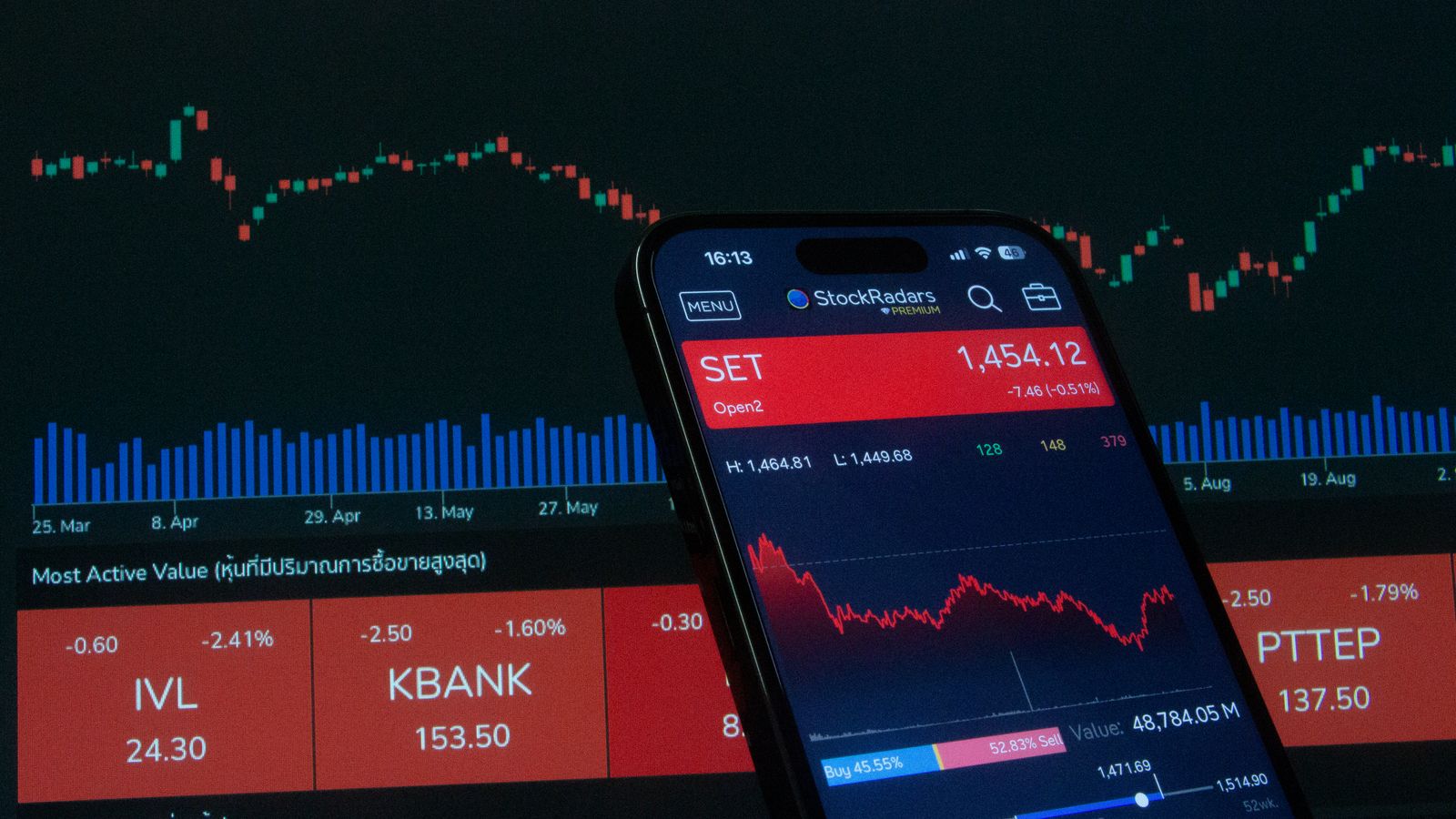
A detailed view of a cryptocurrency trading screen, featuring graphs and charts.
Reverse Split Vote Scheduled for August 2026
Ascend's proxy statement sets a shareholder vote for August 2026 on a reverse stock split ratio between 1-for-5 and 1-for-20, with the board retaining discretion to select the final ratio. The filing doesn't name a target exchange, but the structure mirrors the playbook Verano and Curaleaf used for their Nasdaq uplistings earlier this year.Ascend's Class A shares closed at $0.87 on the Canadian Securities Exchange on July 14. Nasdaq requires a minimum $4.00 bid price for initial listing. A 1-for-5 split would bring Ascend to $4.35. A 1-for-10 split? $8.70. The board's discretion suggests Ascend will calibrate the ratio based on share-price momentum closer to the vote.
The proxy doesn't disclose a timeline for the actual uplisting application, but Verano's experience offers a template: reverse split vote passed in February 2026, Nasdaq trading began 28 days later. Ascend's August vote would put it on track for a September or October uplisting, assuming shareholder approval and no SEC review delays.
Ascend's Competitive Position Among Mid-Tier MSOs
Ascend ranks as the sixth-largest US MSO by trailing twelve-month revenue, with $543 million in sales through Q1 2026. It operates 38 dispensaries across Illinois, Massachusetts, Ohio, Michigan, and New Jersey—all adult-use markets except Ohio, which launches recreational sales in August 2026.The competitive read: Ascend sits in the middle of the MSO pack, behind Curaleaf, Green Thumb, Trulieve, Verano, and Cresco, but ahead of Ayr, Columbia Care, and Acreage. Its Illinois footprint gives it exposure to the second-largest adult-use market by revenue, yet the company has struggled with profitability—Ascend posted a $12 million net loss in Q1 2026, its fourth consecutive quarterly loss.
The uplisting thesis here isn't operational momentum. It's institutional access. US exchange listings unlock index inclusion, options trading, and broader retail brokerage availability. Verano's stock rose 41% in the 30 days following its Nasdaq debut, driven largely by passive fund inflows and retail FOMO. Ascend is betting on a similar liquidity pop to offset its earnings drag.
Key metrics for Ascend vs. peer MSOs (TTM through Q1 2026):
- Revenue: $543M (6th among MSOs)
- EBITDA margin: 18.2% (below the 22-24% peer average)
- Dispensary count: 38 (mid-tier density)
- Debt-to-equity ratio: 1.8x (elevated but manageable)
- Cash on hand: $47M as of March 31, 2026
The Nasdaq Uplisting Wave and Its Limits
Seven US MSOs have now filed or completed reverse splits in preparation for Nasdaq or NYSE uplistings since Schedule III rescheduling took effect in January 2026. Verano and Curaleaf are already trading on Nasdaq; Cresco, Columbia Care, and now Ascend have filed proxy statements; Ayr and Acreage have signaled intent but haven't yet filed.The wave is real. The uplisting benefit? Not uniform. Verano's 41% post-listing gain reflected pent-up demand from retail investors locked out of CSE-only tickers. Curaleaf's gain was more modest—18% in the first 30 days—because institutional holders had already accumulated the stock via OTC markets. Ascend's smaller float and lower institutional ownership suggest it could see a Verano-sized pop if the uplisting lands cleanly.
But reverse splits compress share counts, which amplifies volatility. Ascend's average daily volume on the CSE is 1.2 million shares. A 1-for-10 split would reduce that to 120,000 shares, making the stock more susceptible to momentum swings and less attractive to large institutional buyers who need liquidity to build positions. The board's discretion to choose the split ratio matters—too aggressive a split (1-for-20) could backfire by creating a thinly traded stock that scares off the very institutions the uplisting is designed to attract.
What to Watch: Shareholder Vote and Ohio Timing
Ascend's shareholder vote in August 2026 will determine whether the company can execute the uplisting before Ohio's adult-use launch on August 6, 2026. Ohio is Ascend's third-largest market by dispensary count (8 stores), and the company has invested heavily in cultivation capacity there. A Nasdaq listing ahead of Ohio's recreational rollout would give Ascend a liquidity and visibility advantage over CSE-only competitors in the state.Schedule III rescheduling removed the primary legal obstacle to US exchange listings, but the SEC hasn't issued formal guidance on cannabis-company compliance with exchange-listing standards. Verano and Curaleaf received no-action letters from Nasdaq, confirming that Schedule III cannabis operators are eligible for listing. Ascend will need the same assurance, and any delay in that process could push the uplisting into Q4 2026.
The next signal to watch is the shareholder vote outcome, expected in late August. If the reverse split passes with >75% approval (the threshold Verano and Curaleaf cleared), Ascend will likely file its Nasdaq application within 10 business days. The company hasn't disclosed whether it's already engaged with Nasdaq or the SEC on pre-clearance discussions, but the timing of the proxy filing suggests those conversations are underway.
For more on the MSO uplisting wave and its implications for institutional capital flows, see the CannIntel topic hub on MSO US exchange uplisting.
Frequently asked questions
Why is Ascend Wellness doing a reverse stock split?
Ascend needs a reverse split to meet Nasdaq's $4.00 minimum bid-price requirement for initial listing. The company's shares currently trade at $0.87 on the Canadian Securities Exchange. A reverse split consolidates shares to raise the per-share price without changing the company's market capitalization.
When will Ascend Wellness uplist to Nasdaq?
Ascend hasn't announced a target uplisting date. The company called a shareholder vote for August 2026 to approve the reverse split. If approved, Ascend could file its Nasdaq application in September and begin trading on the exchange by October 2026, based on timelines from Verano and Curaleaf's recent uplistings.
How does Ascend compare to other MSOs seeking US exchange listings?
Ascend ranks sixth among US MSOs by revenue, with $543 million in trailing twelve-month sales. It operates 38 dispensaries across five states. The company lags peers in profitability, with an 18.2% EBITDA margin versus a 22-24% industry average. Ascend's uplisting would follow Verano and Curaleaf, which completed Nasdaq listings earlier in 2026.
What is the benefit of a Nasdaq uplisting for cannabis companies?
US exchange listings unlock institutional capital by enabling index inclusion, options trading, and broader retail brokerage access. Verano's stock rose 41% in the 30 days after its Nasdaq debut, driven by passive fund inflows and retail demand. Uplisting also reduces trading friction for investors who can't access Canadian Securities Exchange tickers.
What are the risks of Ascend's reverse stock split?
Reverse splits reduce share counts, which can amplify volatility and reduce liquidity. Ascend's average daily volume of 1.2 million shares would drop to 120,000 shares under a 1-for-10 split, making the stock less attractive to large institutional buyers. An overly aggressive split ratio (1-for-20) could create a thinly traded stock that undermines the uplisting's purpose.
Sources
The cannabis newsletter you forward to your team.
Federal policy, market data, grower alerts, and the one story that matters today. Sent every weekday at 7am. Free.
No spam. Unsubscribe with one click. 21+ only.
Related from Business

Glass House Launches Interstate Cannabis Shipments Between California, Oregon
California MSO becomes first licensed operator to ship flower across state lines under DEA Schedule III framework.

King City Gardens Lands Exclusive Jeeter Deal for Ohio Adult-Use Launch
California brand's first Ohio distribution pact signals premium-tier competition ahead of adult-use rollout.
Ascend Wellness Files DEA Registration, Advances Nasdaq Uplist Plan
The Illinois-based MSO submitted DEA bulk manufacturing registration as it prepares a reverse stock split for exchange compliance.
More from the newsroom

Idaho medical cannabis initiative fails on signature irregularities
State officials disqualified the 2026 ballot measure after finding forged signatures and procedural errors.

New York Launches Teen Cannabis Education Campaign Post-Legalization
State health officials roll out myth-busting initiative targeting adolescent misconceptions about legal cannabis

Idaho medical cannabis ballot initiative falls short of signatures
State elections officials notified campaign organizers that the petition drive failed to collect enough valid signatures for November ballot access.