Spain Cannabis Legalization: Laws, Social Clubs, and Reform Efforts
Spain operates under a unique cannabis framework where personal cultivation and consumption in private spaces remain decriminalized, while public use and sales are prohibited. The country's cannabis social clubs exist in a legal gray area, particularly prominent in Catalonia and the Basque Country. Recent protests in Madrid and ongoing legislative debates reflect growing public pressure for comprehensive legalization. This hub covers Spain's current cannabis laws, the social club model, regional variations, enforcement practices, and the evolving political landscape surrounding cannabis reform.
Executive Summary
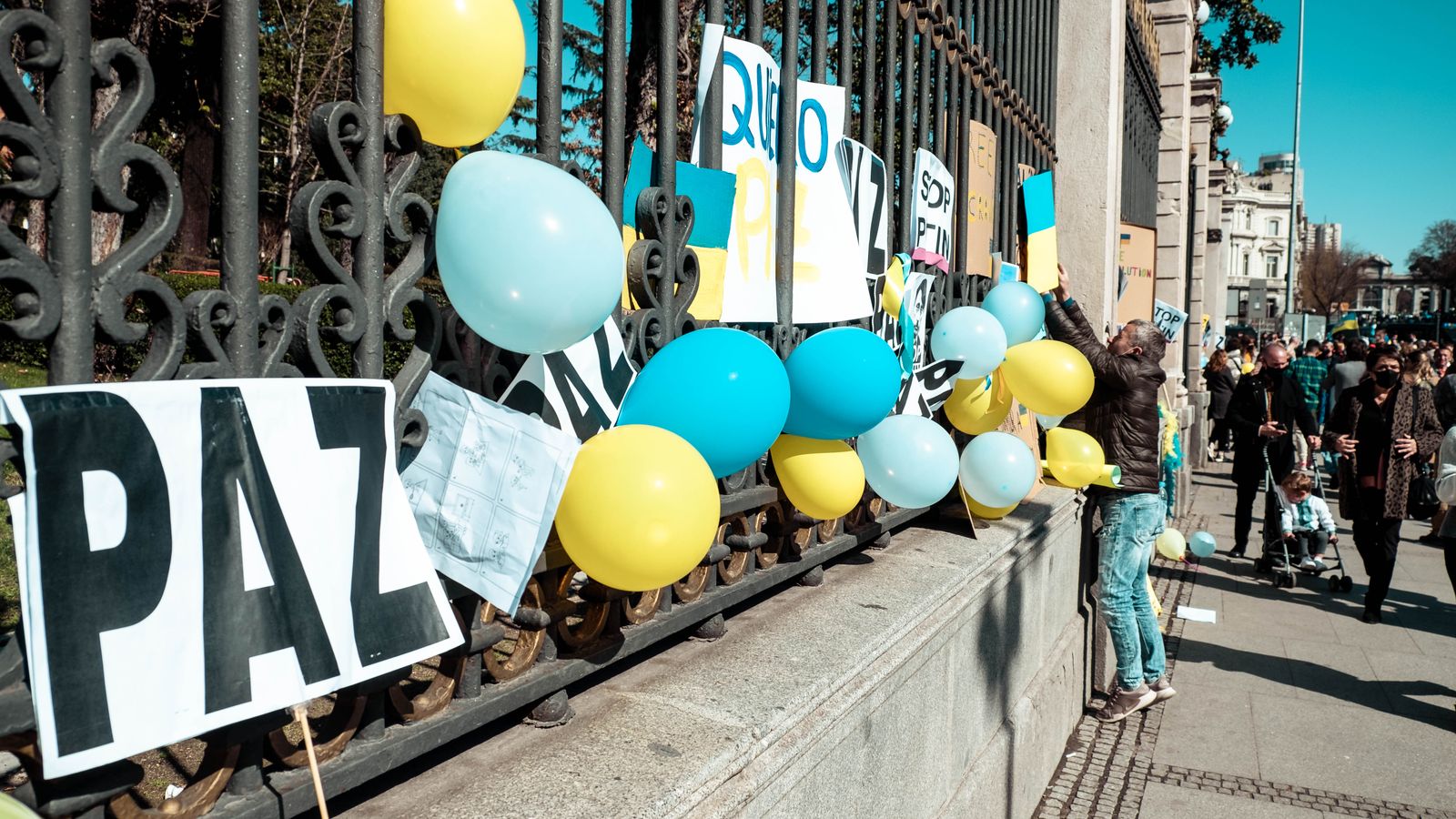
Spain stands at a crossroads in European cannabis policy, with hundreds marching through Madrid's Gran Via in May 2026 demanding full legalization while operating under a decades-old legal gray area that permits private consumption but prohibits commercial sale. The Iberian nation has long maintained one of Europe's most permissive approaches to cannabis through its unique "cannabis social club" model, where private associations cultivate and distribute to members without commercial transactions. Yet this framework exists in legal limbo—tolerated by authorities but lacking comprehensive statutory recognition. Recent mass demonstrations signal growing public pressure for Spain to join Germany and other European Union nations in establishing regulated adult-use markets, a move that could reshape Mediterranean drug policy and generate billions in tax revenue while addressing persistent questions about public health, organized crime, and regional autonomy. Spain's cannabis debate reflects broader tensions within the European Union over drug policy harmonization, with member states pursuing divergent approaches despite shared Schengen borders. The country's decriminalized personal use policy dates to a 1974 Supreme Court ruling, while its cannabis club model emerged organically in the 1990s and 2000s as advocacy groups exploited legal ambiguities. Today, an estimated 700 to 1,200 cannabis social clubs operate across Spain, serving hundreds of thousands of members in a quasi-legal ecosystem that generates no tax revenue and operates without standardized quality controls. The May 2026 Madrid march, organized by cannabis advocacy coalitions, drew an estimated 800 to 1,500 participants demanding parliamentary action on comprehensive legalization legislation that has stalled in the Cortes Generales for years.Why This Matters
Spain's cannabis policy decisions carry implications for 47 million residents, European Union drug policy coordination, and a potential multi-billion-euro regulated market that could serve as a Mediterranean model for Portugal, Italy, and Greece. The stakeholder landscape spans multiple dimensions. Approximately 3.5 million Spanish adults reported cannabis use in the past year according to 2024 data from the Spanish Observatory on Drugs and Addictions, making it the third most populous cannabis-consuming nation in the EU after Germany and France. An estimated 500,000 to 800,000 individuals hold memberships in cannabis social clubs, operating in a legal gray zone where cultivation for personal use remains technically permissible but commercial sale faces criminal penalties. From an economic perspective, legalization advocates project a regulated Spanish cannabis market could generate 3 to 5 billion euros annually in retail sales, based on per-capita consumption patterns in mature North American markets adjusted for European pricing. Tax revenue estimates range from 400 million to 1 billion euros per year, depending on tax structure—figures that appeal to policymakers managing public debt exceeding 110 percent of GDP. The Spanish cannabis club ecosystem currently operates tax-free, with membership fees and "donations" circumventing commercial transaction definitions. Regional autonomy adds complexity. Spain's 17 autonomous communities maintain varying enforcement approaches, with Catalonia, the Basque Country, and Navarre demonstrating greater tolerance for cannabis clubs while Andalusia and Madrid have pursued periodic crackdowns. Any national legalization framework must navigate Spain's constitutional structure, which grants substantial health and public safety authority to regional governments. The Catalan independence movement has historically linked cannabis policy liberalization to broader autonomy demands, viewing drug policy as a sovereignty issue. Public health stakeholders including the Spanish Society of Family and Community Medicine have expressed concerns about normalization effects on youth consumption, citing data showing Spain has the EU's second-highest rate of cannabis use among 15-to-24-year-olds at approximately 19 percent. Mental health professionals point to emergency room admissions for cannabis-related psychosis, which increased 34 percent between 2018 and 2023 according to Ministry of Health data, though causation remains debated. Law enforcement perspectives divide along institutional lines. The National Police Corps and Civil Guard have historically opposed legalization, citing obligations under the 1961 UN Single Convention on Narcotic Drugs and concerns about organized crime infiltration of cannabis clubs. Municipal police forces in Barcelona, Valencia, and other cities have adopted more permissive stances, viewing cannabis enforcement as a low priority compared to violent crime and property offenses. The Spanish judiciary has issued contradictory rulings on cannabis club legality, with some provincial courts upholding cultivation rights while others have ordered club closures and prosecuted operators.Background and History
Spain's unique cannabis legal framework evolved through judicial interpretation rather than legislative action, creating a four-decade trajectory from Supreme Court decriminalization rulings to the emergence of Europe's largest cannabis social club network.Franco Era and Early Decriminalization (1939-1983)
Under Francisco Franco's authoritarian regime (1939-1975), Spain maintained strict drug prohibition aligned with international conventions. The 1967 Law on Dangerous Drugs classified cannabis alongside heroin and cocaine, imposing prison sentences for possession, cultivation, and distribution. Cannabis use remained marginal during this period, with consumption concentrated among countercultural groups in Barcelona and Madrid. The 1974 Spanish Supreme Court ruling in Case 1/1974 established the foundational principle that private consumption of drugs in spaces not accessible to the public did not constitute a criminal offense, interpreting constitutional privacy protections to shield personal use. This decision predated Franco's death and Spain's democratic transition, reflecting judicial independence even under authoritarian rule. The ruling did not legalize cannabis but created a constitutional framework that would shape subsequent policy. Spain's 1978 Constitution, adopted three years after Franco's death, enshrined privacy rights in Article 18 that courts would later interpret as protecting personal drug consumption. The document's federalist structure granted autonomous communities substantial authority over health policy, setting the stage for regional divergence in cannabis enforcement.Democratic Transition and Legal Ambiguity (1983-1995)
The 1983 Organic Law 1/1983 reformed Spain's criminal code, distinguishing between drug trafficking (criminal) and personal possession (administrative offense). The law imposed fines rather than incarceration for possession of quantities deemed for personal use, though it did not specify quantity thresholds. This created interpretive space for courts and police to determine intent on a case-by-case basis. A landmark 1988 Supreme Court ruling clarified that cultivation of cannabis plants for personal consumption did not constitute trafficking, provided the grower could demonstrate non-commercial intent. The decision established a "shared consumption" doctrine, holding that cultivation for use among a closed group of acquaintances fell within constitutional privacy protections. This ruling provided the legal foundation for future cannabis clubs, though organized associations had not yet emerged. The 1992 Organic Law 1/1992 further refined the personal use framework, establishing that possession in public spaces constituted an administrative infraction subject to fines ranging from 300 to 30,000 pesetas (approximately 2 to 180 euros in modern currency), while possession in private spaces remained outside legal sanction. The law tasked autonomous communities with enforcement, leading to regional variation in fine amounts and prosecution priorities.Emergence of Cannabis Social Clubs (1995-2010)
Spain's first cannabis social clubs emerged in the mid-1990s in Barcelona and the Basque Country, modeled on Dutch coffeehouse concepts but adapted to Spanish legal constraints. The Pannagh association, founded in Barcelona in 1993, pioneered the closed-membership model where participants collectively cultivated cannabis for distribution among members without monetary exchange. Early clubs operated with fewer than 50 members and maintained low profiles to avoid law enforcement attention. The 2001 founding of the Basque Federation of Cannabis Associations (Ganjazz) marked the movement's formalization, with multiple clubs coordinating legal strategies and advocacy efforts. The federation developed operational guidelines emphasizing non-profit structure, closed membership, and cultivation limits proportional to member consumption needs. These principles aimed to demonstrate compliance with the Supreme Court's shared consumption doctrine. A 2003 ruling by the Provincial Court of Bilbao upheld the legality of a cannabis club's operations, finding that collective cultivation for distribution to a closed membership without commercial profit fell within constitutional protections. The decision provided judicial validation for the club model, spurring expansion across Spain. By 2005, an estimated 50 to 80 clubs operated nationwide, concentrated in Catalonia and the Basque Country. The 2006 Organic Law 1/2006 reformed administrative sanctions for drug possession, maintaining fines for public possession while reaffirming that private consumption remained outside legal sanction. The law did not address cannabis clubs directly, allowing the legal gray area to persist. Autonomous communities gained authority to set fine amounts, with Catalonia and the Basque Country adopting lower penalties than Andalusia and Madrid.Rapid Expansion and Regulatory Challenges (2010-2020)
The 2010s witnessed exponential growth in Spain's cannabis club sector, driven by economic crisis, youth unemployment exceeding 50 percent, and growing acceptance of cannabis use. The number of clubs increased from approximately 100 in 2010 to an estimated 700 to 1,200 by 2020, with Barcelona alone hosting 300 to 500 clubs serving an estimated 150,000 to 200,000 members. This expansion attracted law enforcement scrutiny and organized crime infiltration. A 2014 National Police operation shut down 14 Barcelona clubs, arresting operators on charges of drug trafficking and money laundering. Prosecutors argued that clubs accepting walk-in members without prior relationships constituted commercial operations rather than private associations. The case highlighted definitional ambiguities in the club model. The Catalan government attempted regulatory intervention with a 2015 proposed decree establishing licensing requirements, distance restrictions from schools, and membership verification procedures for cannabis clubs. The Spanish Constitutional Court suspended the decree in 2016, ruling that drug policy fell under national jurisdiction and autonomous communities lacked authority to license cannabis activities. The decision left clubs in legal limbo, tolerated but unregulated. A 2017 Supreme Court ruling in Case 1377/2016 tightened the shared consumption doctrine, holding that clubs must demonstrate members participated in cultivation decisions and bore proportional costs, rather than simply paying membership fees for cannabis access. The decision aimed to distinguish genuine cooperatives from commercial operations disguised as associations. Many clubs struggled to demonstrate compliance with these stricter criteria. The 2018 Citizens' Security Law, known as the "Gag Law," increased fines for public cannabis possession to a range of 601 to 30,000 euros, with typical penalties around 600 euros. The law empowered police to issue on-the-spot fines without judicial review, leading to criticism from civil liberties groups. Enforcement remained inconsistent across regions, with Catalonia and the Basque Country issuing fewer fines per capita than Madrid and Andalusia.Recent Developments and Legislative Efforts (2020-2026)
The COVID-19 pandemic disrupted Spain's cannabis club sector, with lockdowns forcing temporary closures and membership declines. Many clubs faced financial strain without revenue from new member fees, leading to closures of an estimated 100 to 200 clubs between 2020 and 2021. The crisis renewed calls for regulatory clarity and legal recognition to stabilize the sector. In June 2021, the left-wing Unidas Podemos party introduced a comprehensive cannabis legalization bill in the Congress of Deputies, proposing a state-licensed cultivation and retail system modeled on Canadian and U.S. frameworks. The bill would have established a Cannabis Regulatory Agency, imposed a 15 percent excise tax on retail sales, and granted existing cannabis clubs priority licensing. The Spanish Socialist Workers' Party (PSOE), the senior coalition partner, declined to support the bill, which died in committee without a floor vote. A February 2023 non-binding resolution passed the Congress of Deputies with support from Unidas Podemos, regional parties, and some PSOE members, calling on the government to study cannabis legalization models and draft regulatory proposals. The resolution directed the Ministry of Health to convene a working group including medical experts, law enforcement, and civil society organizations. As of May 2026, the working group has not released public recommendations. Germany's implementation of adult-use cannabis legalization in April 2024 intensified Spanish debate, with advocates arguing Spain risked falling behind European peers. German law permits adults to possess up to 25 grams in public and cultivate up to three plants at home, while establishing nonprofit cannabis clubs limited to 500 members. The German model influenced Spanish legalization proposals, though differences in constitutional structure complicate direct adoption. The May 2026 Madrid march represented the largest cannabis legalization demonstration in Spanish history, with organizers citing frustration over legislative inaction. Participants included cannabis club operators, medical patients, social justice advocates, and youth activists. Speakers demanded parliamentary action on legalization legislation before the next general election scheduled for 2027, framing cannabis policy as a civil rights and economic justice issue.Key Players
Government and Political Parties
The Spanish Socialist Workers' Party (PSOE) has maintained an ambivalent stance on cannabis legalization, with Prime Minister Pedro Sánchez's government neither actively pursuing reform nor blocking regional experimentation. The party's 2023 electoral platform mentioned studying "harm reduction approaches" to drug policy without endorsing legalization. PSOE's coalition with Unidas Podemos created internal tensions, as the junior partner pushed for comprehensive reform while PSOE prioritized other legislative agenda items. The Ministry of Health, controlled by PSOE, has emphasized public health concerns and international treaty obligations as reasons for caution. Unidas Podemos, the left-wing coalition party, has championed cannabis legalization since its formation in 2016. The party's 2021 legislative proposal remains the most comprehensive legalization bill introduced in Spanish parliament. Party leaders including Ione Belarra have framed legalization as addressing social inequality, noting that cannabis possession fines disproportionately impact low-income individuals and immigrants. The party lost parliamentary seats in the 2023 election, reducing its leverage within the governing coalition. The conservative People's Party (PP) and far-right Vox party oppose legalization, citing public health concerns and international treaty obligations. PP leaders have characterized cannabis clubs as fronts for organized crime and called for stricter enforcement. Vox has linked cannabis policy to immigration and national identity issues, arguing that permissive drug policies undermine Spanish values. Both parties gained seats in the 2023 election, strengthening opposition to reform. Regional parties including the Republican Left of Catalonia (ERC) and Basque Nationalist Party (PNV) support legalization as a regional autonomy issue, arguing that autonomous communities should control drug policy within their territories. These parties have proposed regional legalization frameworks, though constitutional constraints limit their authority.Advocacy Organizations
The Spanish Observatory on Cannabis (Observatorio Español de Cannabis Medicinal) coordinates advocacy efforts across dozens of local and regional organizations, focusing on medical access and adult-use legalization. The organization has documented patient testimonials, compiled research on therapeutic applications, and provided legal support to cannabis club operators facing prosecution. The Federation of Cannabis Associations of Spain (FAC) represents approximately 200 cannabis clubs nationwide, developing operational best practices and coordinating legal defense. The federation has proposed self-regulatory standards including membership verification, consumption limits, and quality testing protocols. FAC leaders have testified before parliamentary committees, arguing that formal regulation would improve public health outcomes compared to the current gray market. Regulación Responsable, founded in 2014, advocates for evidence-based drug policy reform and coordinates the annual Global Marijuana March in Spanish cities. The organization emphasizes social justice dimensions of cannabis policy, documenting racial and economic disparities in enforcement of possession laws.Opposition Groups
The Spanish Society of Family and Community Medicine has expressed concerns about normalization effects on youth consumption and called for maintaining current restrictions until more longitudinal research on health impacts becomes available. The organization has not taken a formal position on cannabis clubs but has recommended against commercial legalization. The Foundation for a Drug-Free World, active in Spain since 2008, opposes any liberalization of cannabis laws and conducts educational campaigns emphasizing health risks. The organization has criticized cannabis clubs as normalizing drug use and has called for stricter enforcement. The Spanish Episcopal Conference, representing the Catholic Church, has opposed legalization on moral grounds, arguing that drug use contradicts human dignity and that the state has an obligation to discourage consumption. The Church's position carries less political weight than in previous decades but remains influential among conservative voters.Law Enforcement and Judiciary
The National Police Corps and Civil Guard maintain that cannabis clubs operating outside narrow shared consumption parameters violate drug trafficking laws. These agencies have conducted periodic raids on clubs, particularly in Madrid and Andalusia, seizing plants and cash and arresting operators. Law enforcement representatives have testified before parliament that legalization would conflict with Spain's obligations under the 1961 UN Single Convention on Narcotic Drugs and the 1971 Convention on Psychotropic Substances. The Spanish judiciary has issued contradictory rulings on cannabis club legality, reflecting the absence of clear statutory guidance. Provincial courts in Barcelona, Bilbao, and Valencia have generally upheld club operations when defendants demonstrate compliance with shared consumption principles, while courts in Madrid and Seville have more frequently convicted operators of trafficking offenses. The Supreme Court has not issued a definitive ruling clarifying club legality under current law, allowing regional variation to persist.Legal and Regulatory Framework
Spain's cannabis legal framework rests on constitutional privacy protections, criminal code provisions distinguishing personal use from trafficking, and Supreme Court jurisprudence establishing shared consumption rights—but lacks comprehensive statutory regulation of cultivation, distribution, or commercial sale. The 1978 Spanish Constitution's Article 18 protects privacy of the home and private life, which courts have interpreted as shielding personal drug consumption from criminal sanction. This constitutional foundation distinguishes Spain from nations where drug prohibition rests solely on statutory law, making legislative reform more complex as any restrictions must respect constitutional privacy rights. The current criminal code, codified in Organic Law 10/1995 and amended multiple times, addresses cannabis in Articles 368-378. Article 368 criminalizes drug trafficking, defined as cultivation, manufacture, or distribution of substances that "damage health," with prison sentences of three to nine years for standard offenses and nine to thirteen years for aggravated circumstances including organized crime involvement or sales to minors. The law does not specify quantity thresholds, leaving courts to determine whether amounts constitute personal use or trafficking based on totality of circumstances. Article 368 includes an exception for cultivation or possession of "quantities for personal consumption," but does not define quantity limits. Courts have developed case-by-case standards, with possession of up to 100 grams of cannabis flower or five plants generally presumed for personal use absent evidence of trafficking intent. These thresholds lack statutory basis and vary by jurisdiction. Organic Law 4/2015 reformed the criminal code to enhance penalties for organized drug trafficking, defining criminal organizations as groups of three or more persons coordinating drug offenses. Prosecutors have invoked this provision against cannabis club operators, arguing that clubs with dozens or hundreds of members constitute criminal organizations. Defense attorneys counter that nonprofit associations engaged in shared consumption do not meet the coordination and profit elements of criminal organization definitions. The Citizens' Security Law (Organic Law 4/2015) establishes administrative sanctions for drug possession in public spaces, imposing fines of 601 to 30,000 euros depending on quantity and circumstances. The law defines public spaces broadly to include streets, parks, bars, and vehicles, but excludes private residences and spaces not accessible to the public. Cannabis clubs have argued their premises constitute private spaces, though courts have reached varying conclusions depending on membership verification procedures and physical security measures. Spain's obligations under international drug control treaties complicate legalization efforts. The 1961 UN Single Convention on Narcotic Drugs, to which Spain is a party, requires signatories to limit cannabis to medical and scientific purposes and to criminalize cultivation and distribution for non-medical use. The 1971 Convention on Psychotropic Substances and 1988 Convention Against Illicit Traffic in Narcotic Drugs and Psychotropic Substances impose similar obligations. While these treaties permit domestic decriminalization of personal possession, they prohibit state-licensed commercial markets. Uruguay, Canada, and several U.S. states have implemented legalization despite treaty obligations, arguing that treaties permit flexible interpretation or that domestic constitutional law supersedes international obligations. Spain has not adopted these interpretive positions. The European Union's drug policy framework allows member states to determine domestic approaches while requiring cooperation on cross-border trafficking. The EU Drugs Strategy 2021-2025 emphasizes harm reduction and public health approaches but does not mandate specific policies on cannabis. Germany's 2024 legalization tested EU coordination mechanisms, as neighboring countries expressed concern about cross-border flows. Spain's potential legalization would face similar scrutiny, particularly from France, which maintains strict prohibition. Regional variation in enforcement reflects Spain's constitutional structure granting autonomous communities authority over health and public safety. Catalonia's 2017 attempted regulation of cannabis clubs, though suspended by the Constitutional Court, demonstrated regional appetite for policy experimentation. Some legal scholars argue that autonomous communities could regulate cannabis clubs under health authority without conflicting with national criminal law, though this interpretation remains untested.State-by-State Breakdown
Spain's 17 autonomous communities demonstrate significant variation in cannabis enforcement, club density, and political support for legalization, reflecting the nation's federal structure and regional cultural differences.Catalonia
Catalonia hosts the highest concentration of cannabis clubs in Spain, with an estimated 300 to 500 clubs in Barcelona alone and another 100 to 200 across the region. The Catalan government attempted to establish a regulatory framework in 2015 through a decree requiring club licensing, but the Spanish Constitutional Court suspended the measure. Catalan police (Mossos d'Esquadra) have generally adopted permissive enforcement, prioritizing violent crime over cannabis offenses. The regional parliament has passed multiple non-binding resolutions supporting legalization. Public opinion polling shows approximately 65 to 70 percent of Catalans support legalization, the highest rate among Spanish regions. Possession limits in practice align with national standards of approximately 100 grams or five plants for personal use.Basque Country
The Basque Country pioneered Spain's cannabis club model, with the first associations emerging in the 1990s. An estimated 80 to 120 clubs currently operate across the three Basque provinces, serving approximately 30,000 to 50,000 members. The regional government has expressed support for legalization as a public health measure and has funded harm reduction programs. Basque courts have issued some of Spain's most permissive rulings on club legality, emphasizing cooperative principles and member participation in cultivation decisions. The Basque Nationalist Party (PNV), which controls the regional government, supports transferring drug policy authority to autonomous communities. Possession limits and enforcement align with Catalan practices.Madrid
Madrid has experienced more restrictive enforcement than Catalonia or the Basque Country, with the regional government controlled by the conservative People's Party since 1995. An estimated 80 to 150 cannabis clubs operate in the region, concentrated in Madrid city. Police have conducted periodic raids, and courts have issued higher conviction rates for club operators. The May 2026 march down Gran Via reflected frustration with restrictive regional policies. Public opinion polling shows approximately 50 to 55 percent of Madrid residents support legalization, lower than in Catalonia or the Basque Country. Possession fines tend toward the higher end of the statutory range.Andalusia
Andalusia, Spain's most populous region, hosts an estimated 100 to 150 cannabis clubs, primarily in Seville, Málaga, and Granada. The regional government has alternated between Socialist and conservative control, leading to inconsistent enforcement approaches. Andalusian courts have issued some of Spain's strictest rulings against cannabis clubs, with several high-profile convictions for trafficking. The region's proximity to Morocco, a major cannabis producer, has led to law enforcement focus on international trafficking networks. Public support for legalization ranges from 45 to 50 percent according to regional polling. Possession limits and fines align with national standards.Valencia
The Valencian Community hosts an estimated 80 to 120 cannabis clubs, concentrated in Valencia city and Alicante. The regional government has adopted a moderate stance, neither actively promoting clubs nor conducting aggressive enforcement. Valencian courts have generally upheld club operations when defendants demonstrate compliance with shared consumption principles. The region's tourism industry has created demand for cannabis access among international visitors, leading some clubs to accept foreign members. Public support for legalization ranges from 55 to 60 percent. Possession limits align with national standards.Galicia
Galicia has a relatively small cannabis club sector, with an estimated 20 to 40 clubs across the region. The conservative regional government has maintained restrictive enforcement, and public support for legalization is lower than in other regions at approximately 40 to 45 percent. Galicia's history as a major tobacco smuggling hub has led to law enforcement focus on drug trafficking generally. Possession fines tend toward the higher end of the statutory range.Other Regions
The remaining autonomous communities—Aragon, Asturias, Balearic Islands, Canary Islands, Cantabria, Castile and León, Castile-La Mancha, Extremadura, La Rioja, Murcia, and Navarre—host smaller cannabis club sectors ranging from 10 to 50 clubs each. Enforcement approaches generally align with national standards, with some variation based on regional political control. The Balearic Islands, particularly Ibiza and Mallorca, have seen growth in clubs catering to tourists. Navarre has adopted relatively permissive enforcement similar to the Basque Country, reflecting cultural ties.Market and Business Implications
A regulated Spanish cannabis market could generate 3 to 5 billion euros in annual retail sales and 400 million to 1 billion euros in tax revenue, while transforming the existing cannabis club ecosystem and attracting international investment. Market size projections depend on regulatory structure and tax rates. Spain's estimated 3.5 million past-year cannabis consumers spend an average of 800 to 1,200 euros annually on cannabis in the current gray market, based on consumption surveys and price data. A legal market with retail access could expand the consumer base by 20 to 40 percent through reduced stigma and increased convenience, while potentially reducing per-capita consumption through quality controls and public health messaging. These dynamics suggest a mature market of 4 to 5 million consumers spending 700 to 1,000 euros annually, yielding 3 to 5 billion euros in retail sales. Tax revenue depends on excise tax rates and compliance. Canadian provinces impose excise taxes ranging from 10 to 20 percent of retail price, while U.S. states range from 10 to 37 percent. A 15 percent excise tax on 4 billion euros in sales would generate 600 million euros annually, with additional revenue from corporate income taxes and value-added tax (VAT). Legalization advocates project total tax revenue of 800 million to 1 billion euros annually once markets mature. These figures assume 80 to 90 percent market capture from the illicit sector, with some consumers continuing to purchase from unregulated sources to avoid taxes or access higher-potency products. The existing cannabis club sector faces uncertain prospects under legalization. Some proposals would grant clubs priority licensing to operate as retail dispensaries or cultivation facilities, preserving their market position and rewarding early adopters who operated in legal gray areas. Other frameworks would require clubs to compete with commercial applicants in open licensing processes, potentially disadvantaging smaller cooperatives lacking capital for compliance infrastructure. The German model's 500-member limit on nonprofit clubs could serve as a template, though Spanish clubs have argued for higher limits based on their longer operational history. International investment interest in Spanish cannabis has grown following Germany's legalization, with Canadian licensed producers, U.S. multi-state operators, and European pharmaceutical companies exploring market entry strategies. Spain's existing hemp cultivation infrastructure, concentrated in Catalonia and Castile-La Mancha, provides a foundation for cannabis production. The country's climate allows for outdoor cultivation with lower costs than northern European nations, creating export potential if EU regulations permit cross-border commerce. Real estate implications include demand for cultivation facilities, processing centers, and retail locations. Barcelona and Madrid could support 200 to 400 dispensaries each based on population and consumption rates, with additional locations in Valencia, Seville, and other cities. Zoning restrictions similar to those applied to alcohol retailers would likely limit dispensary proximity to schools and residential areas. Cultivation facilities would concentrate in rural areas with lower land costs and existing agricultural infrastructure. Employment projections range from 30,000 to 60,000 full-time-equivalent jobs in a mature legal market, including cultivation, processing, retail, testing, and ancillary services. These estimates derive from employment ratios in mature U.S. and Canadian markets adjusted for Spain's population and consumption rates. Job creation appeals to policymakers addressing youth unemployment, though concerns about workplace safety and labor standards in cannabis operations have emerged in other jurisdictions. Banking and financial services face regulatory uncertainty. Spanish banks have generally refused accounts to cannabis clubs, citing anti-money-laundering obligations and concerns about facilitating drug trafficking. Legalization would require clarification of banking regulations to permit financial services for licensed operators, similar to frameworks developed in U.S. states and Canada. The European Central Bank's oversight of eurozone monetary policy adds complexity absent in non-euro jurisdictions. Tourism implications divide stakeholders. Amsterdam's coffeehouse model demonstrates that permissive cannabis policies attract international visitors, with an estimated 20 to 25 percent of tourists citing cannabis access as a factor in destination choice. Barcelona has already experienced "cannabis tourism" growth, with clubs marketing to international visitors despite legal prohibitions on non-resident membership. Some policymakers view regulated cannabis tourism as an economic opportunity, while others express concern about overtourism and neighborhood impacts similar to those associated with short-term rental platforms.What Experts Say
Medical professionals, economists, legal scholars, and international observers offer divergent assessments of Spain's cannabis policy options, reflecting disciplinary perspectives and normative priorities. Dr. Francisco Pascual Pastor, president of the Spanish Society for the Study of Cannabis, has stated that current policy creates public health risks by leaving cannabis quality unregulated and consumption patterns unmonitored. According to Pascual, a regulated market with potency limits, testing requirements, and age verification would reduce harms compared to the existing gray market. He has recommended a public health-focused regulatory model similar to Uruguay's state monopoly rather than a commercial model like Canada's, arguing that profit motives conflict with harm reduction. Professor José Carlos Bouso, scientific director of the International Center for Ethnobotanical Education Research and Service (ICEERS), has published research on cannabis club operations and member health outcomes. According to Bouso's studies, club members report lower rates of problematic use compared to consumers purchasing from illicit markets, potentially due to social support and consumption norms within club environments. He has argued that formalizing the club model through regulation would preserve these benefits while addressing quality control and underage access concerns. Economist Fernanda de la Figuera, who has studied cannabis market dynamics in Spain and internationally, projects that legalization would generate substantial tax revenue but cautions that high tax rates could sustain illicit markets. According to de la Figuera's modeling, excise taxes above 20 percent would leave price differentials that incentivize continued illegal production and distribution. She has recommended gradual tax increases as legal markets mature and illicit supply chains decline, similar to strategies employed in some U.S. states. Legal scholar Professor Susana Sanz Caballero of the University of Valencia has analyzed Spain's international treaty obligations and constitutional constraints on cannabis policy. According to Sanz Caballero, Spain could implement legalization by withdrawing from the 1961 Single Convention and immediately re-acceding with a reservation on cannabis, following Bolivia's precedent for coca leaf. Alternatively, Spain could argue that the convention permits flexible interpretation and that domestic constitutional law protecting privacy supersedes treaty obligations. She has noted that either approach would face diplomatic pressure from prohibitionist nations and the International Narcotics Control Board. The European Monitoring Centre for Drugs and Drug Addiction (EMCDDA), the EU agency responsible for drug policy research, has published reports on Spain's cannabis club model noting both innovative harm reduction elements and regulatory gaps. According to EMCDDA analysis, clubs demonstrate that nonprofit distribution models can operate at scale, but the absence of quality standards, potency limits, and membership verification creates public health risks. The agency has recommended that member states considering similar models implement licensing requirements, testing protocols, and consumption limits. International observers from the Organization of American States and the Global Commission on Drug Policy have cited Spain's cannabis clubs as a pragmatic middle path between prohibition and full commercialization. According to these organizations, the club model addresses personal freedom and harm reduction while limiting corporate marketing and profit incentives. They have recommended that Spain formalize the model through legislation to provide legal certainty and enable systematic evaluation of public health outcomes. Critics including the Spanish Foundation of Psychiatry and Mental Health have expressed concern about normalization effects on youth consumption and mental health impacts. According to foundation representatives, Spain already has high rates of cannabis use among adolescents, and legalization could increase prevalence through reduced stigma and increased availability. They have cited studies from U.S. states showing modest increases in youth consumption following legalization, though causation remains debated. The foundation has recommended maintaining current restrictions until longitudinal research on mental health impacts becomes available.What's Next
Spain's cannabis policy trajectory depends on the 2027 general election outcome, continued pressure from advocacy organizations, and developments in European Union drug policy coordination. The immediate calendar includes several decision points. The Ministry of Health's working group on cannabis regulation, established following the 2023 parliamentary resolution, has not released findings as of May 2026. Advocacy organizations have called for the working group to publish recommendations before the summer 2026 parliamentary recess, providing a foundation for legislative proposals in the fall session. The government has not committed to a timeline. The 2027 general election, scheduled for no later than December, will determine whether the current PSOE-Unidas Podemos coalition retains power or whether the conservative People's Party and Vox form a government. Polling as of May 2026 shows a competitive race with no clear majority, suggesting that smaller regional parties could hold decisive leverage. Cannabis legalization could become a coalition negotiation issue if Unidas Podemos or regional parties demand policy concessions in exchange for government support. Several scenarios could unfold over the next 12 to 24 months: A comprehensive legalization bill could advance if the current coalition prioritizes the issue before the election. This scenario would require PSOE leadership to overcome internal divisions and prioritize cannabis reform over competing legislative agenda items including pension reform and climate policy. Passage would depend on support from regional parties, which have generally favored legFrequently asked questions
Is cannabis legal in Spain?
Cannabis occupies a legal gray area in Spain. Personal cultivation and consumption in private spaces are decriminalized, but public consumption, street sales, and commercial distribution remain illegal. Possession of small amounts may result in fines rather than criminal charges. The Spanish Constitution protects private activities that don't harm others, creating space for home cultivation and private use.
What are Spanish cannabis social clubs and are they legal?
Cannabis social clubs are nonprofit associations where members collectively cultivate and distribute cannabis exclusively to registered members in private spaces. They operate in a legal gray area, not explicitly authorized but tolerated under Spain's decriminalization framework. Catalonia and the Basque Country have the most established club networks. Clubs must remain nonprofit, restrict membership, and avoid public advertising to minimize legal risk.
Can tourists join cannabis social clubs in Spain?
Most legitimate cannabis social clubs require Spanish residency and restrict immediate membership to prevent commercial tourism. Prospective members typically need local identification, sponsor recommendations, and must wait days or weeks before accessing cannabis. Clubs operating as de facto dispensaries for tourists face increased legal scrutiny and closure. Barcelona has cracked down on clubs targeting tourists in recent years.
What penalties exist for cannabis possession in Spain?
Public possession of small amounts typically results in administrative fines ranging from 601 to 30,000 euros, with confiscation of the substance. Larger quantities may trigger criminal charges for trafficking. Private possession and cultivation for personal use generally avoid penalties. Regional enforcement varies significantly, with Catalonia and the Basque Country typically more tolerant than other regions.
Which Spanish regions are most cannabis-friendly?
Catalonia, particularly Barcelona, and the Basque Country have the most developed cannabis social club networks and tolerant enforcement practices. These regions have attempted to establish regulatory frameworks for clubs, though national law supersedes regional efforts. Andalusia and Valencia also have active club scenes. Madrid and more conservative regions maintain stricter enforcement despite growing advocacy movements.
What is the current status of cannabis legalization efforts in Spain?
Multiple legislative proposals have been introduced in Spain's Congress, including bills from left-wing parties to regulate cannabis production and sales. Public demonstrations, including recent marches in Madrid, reflect growing support for reform. However, Spain's conservative parties and national government have resisted comprehensive legalization. Regional governments in Catalonia and the Basque Country continue pushing for regulatory authority over cannabis policy.
How does Spain's cannabis policy compare to other European countries?
Spain's decriminalization and social club model differs from the Netherlands' coffeeshop system, which allows retail sales in licensed venues. Spain's approach more closely resembles Portugal's decriminalization framework but with greater tolerance for collective cultivation. Germany recently moved toward legalization with social clubs, partially inspired by Spain's model. Spain remains more permissive than most EU nations but less commercially developed than the Netherlands.
Can you grow cannabis at home in Spain?
Home cultivation for personal consumption in private spaces is decriminalized in Spain. Courts have generally tolerated small-scale grows not visible from public areas. However, no specific plant limits are defined in law, leaving interpretation to courts. Cultivation visible from public spaces or in quantities suggesting distribution can result in fines or criminal charges. Indoor cultivation in private residences faces minimal enforcement.
What role do cannabis social clubs play in Spain's legalization debate?
Cannabis social clubs serve as a de facto regulated system, demonstrating alternatives to prohibition while remaining in legal limbo. Advocates cite clubs as evidence that controlled cannabis access can function without major social harms. Critics argue clubs enable quasi-commercial activity without proper regulation or taxation. The club model influences legislative proposals and has inspired similar frameworks in Germany and other countries considering reform.
What are the medical cannabis laws in Spain?
Spain approved limited medical cannabis access in 2022, allowing prescription of cannabis-based medications for specific conditions. The medical program remains restrictive compared to other European nations, with few approved products and limited patient access. Most Spanish medical cannabis users rely on social clubs or home cultivation rather than the formal medical system. Advocacy groups continue pushing for expanded medical access and domestic cultivation programs.
How do Spanish police enforce cannabis laws?
Enforcement varies significantly by region and municipality. Police typically issue administrative fines for public consumption or possession rather than making arrests. Social clubs face periodic raids, particularly those suspected of commercial activity or serving tourists. Enforcement focuses on trafficking and large-scale operations rather than individual users. Regional police forces in Catalonia and the Basque Country generally apply more lenient standards than national police.
What economic impact could cannabis legalization have in Spain?
Estimates suggest a regulated cannabis market could generate billions in annual revenue and significant tax income for Spain. The existing social club network and cultivation expertise provide infrastructure for a legal industry. Tourism could expand, though concerns exist about Barcelona-style overtourism. Agricultural regions see potential for cannabis cultivation as an economic development tool. However, no comprehensive economic impact studies have been conducted by the Spanish government.
The cannabis newsletter you forward to your team.
Federal policy, market data, grower alerts, and the one story that matters today. Sent every weekday at 7am. Free.
No spam. Unsubscribe with one click. 21+ only.