Ohio Cannabis Search and Seizure Law: Your Rights During Police Stops
Ohio's cannabis search and seizure laws are evolving as courts reexamine Fourth Amendment protections following decriminalization reforms. This hub covers your constitutional rights during traffic stops, when police can legally search vehicles based on marijuana odor, how Ohio's decriminalization affects probable cause standards, and what the Ohio Supreme Court's pending decisions mean for drivers. Understanding these protections is critical as law enforcement adapts to changing cannabis policies while balancing public safety and individual privacy rights under both state and federal constitutional frameworks.
Executive Summary
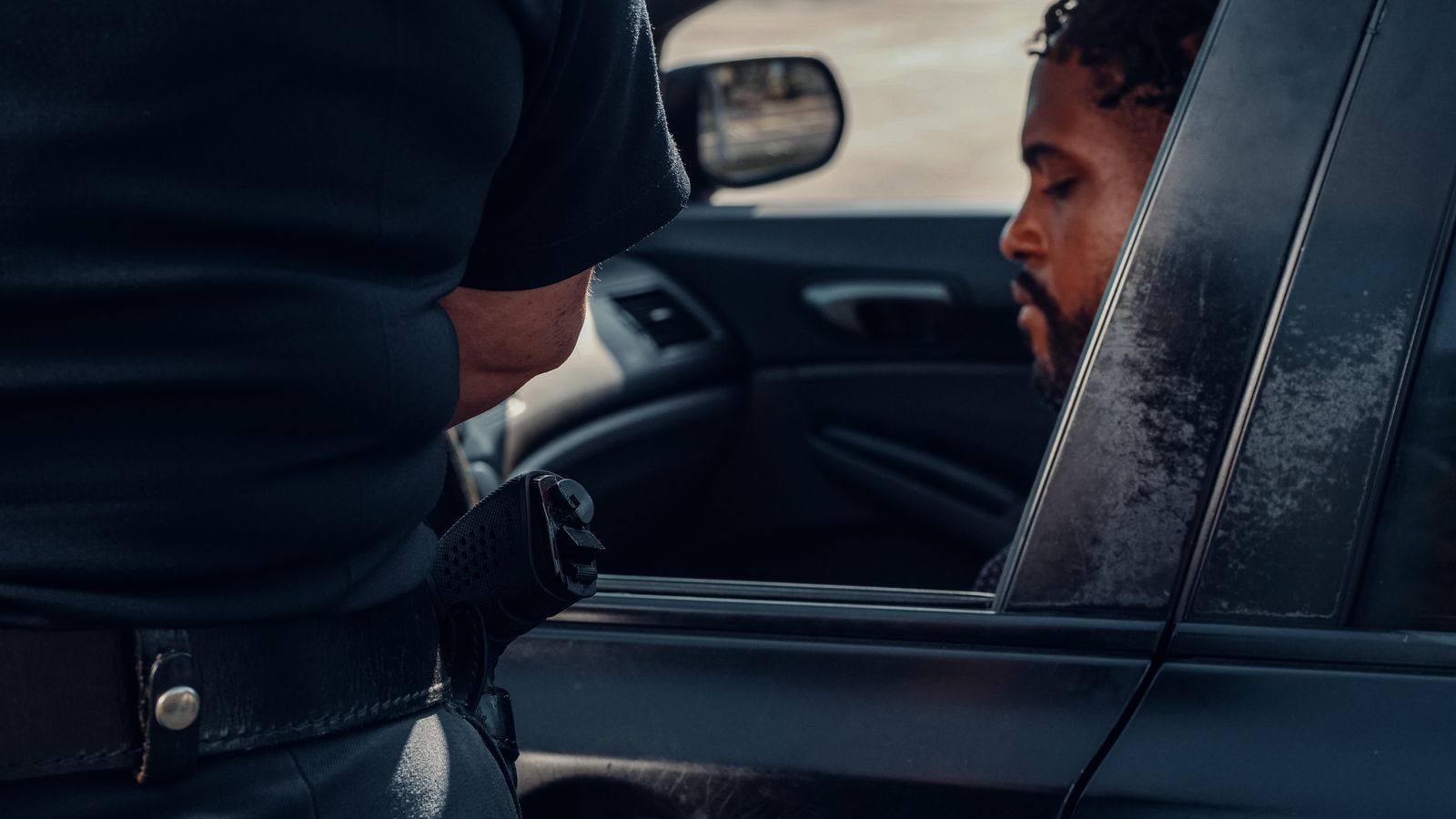
Ohio's Supreme Court is poised to decide whether the odor of cannabis alone constitutes probable cause for warrantless vehicle searches, a question with profound implications for Fourth Amendment protections in the state. The case arrives as Ohio navigates the tension between voter-approved adult-use legalization under Issue 2 (effective December 2023) and longstanding search-and-seizure precedents established during prohibition. At stake: whether law enforcement can continue using cannabis odor as justification for vehicle searches now that possession of up to 2.5 ounces is legal for adults 21 and older, or whether the legal landscape shift requires recalibrating probable cause standards. The court's ruling will affect millions of Ohio drivers, reshape traffic stop protocols for law enforcement agencies statewide, and potentially influence similar cases in the 24 states that have legalized adult-use cannabis since 2012.
The case centers on a traffic stop where officers detected cannabis odor and conducted a warrantless search, discovering evidence that led to criminal charges. Defense attorneys argue that because adults can legally possess cannabis in Ohio, odor alone cannot establish probable cause that a crime is occurring. Prosecutors counter that odor may still indicate illegal possession amounts, impaired driving, or contraband in vehicles with minors present. The Ohio Supreme Court accepted the case in early 2026, with oral arguments expected in fall 2026 and a decision likely by spring 2027.
Why This Matters
The ruling will directly impact approximately 9 million licensed drivers in Ohio and set precedent for how Fourth Amendment protections apply in states transitioning from prohibition to regulated markets. For patients enrolled in Ohio's medical cannabis program (approximately 350,000 active cardholders as of May 2026), the decision affects daily transportation of medicine. For the estimated 2.1 million Ohio adults who have used cannabis in the past year according to SAMHSA data, it determines exposure to warrantless searches during routine traffic stops.
Law enforcement agencies across Ohio's 88 counties are watching closely. The Ohio State Highway Patrol, which conducted over 1.2 million traffic stops in 2025, has trained troopers for decades to use cannabis odor as an investigative tool. A ruling that eliminates odor as standalone probable cause would require retraining thousands of officers and revising standard operating procedures. Police unions have argued that removing this tool will hamper detection of impaired drivers and illegal trafficking, while civil liberties advocates counter that odor-based searches disproportionately affect communities of color and often yield no contraband.
The economic stakes are substantial. Ohio's legal cannabis market generated $428 million in adult-use sales in 2025 (its first full year) and $256 million in medical sales, supporting approximately 8,500 jobs across 127 licensed dispensaries and 38 cultivation facilities. Uncertainty around search-and-seizure law creates compliance challenges for licensed operators transporting product and patients concerned about legal exposure during lawful use.
Background and History
Pre-Legalization Search and Seizure Framework (1970s-2023)
For five decades, Ohio courts consistently held that cannabis odor alone provided probable cause for warrantless vehicle searches under the automobile exception to the Fourth Amendment. The legal foundation rested on two pillars: cannabis possession was per se illegal under Ohio Revised Code § 2925.11, and the U.S. Supreme Court's automobile exception doctrine (established in Carroll v. United States, 267 U.S. 132 (1925)) permitted warrantless searches of vehicles when officers had probable cause to believe they contained contraband.
Ohio courts reinforced this standard repeatedly. In State v. Moore (1999), the Ohio Supreme Court held that an officer's detection of burnt cannabis odor emanating from a vehicle provided sufficient probable cause to search without a warrant. The court reasoned that because any amount of cannabis possession was criminal, odor detection created a fair probability that evidence of crime would be found. This precedent was cited in hundreds of subsequent appellate decisions across Ohio's twelve appellate districts.
The framework remained stable even as Ohio enacted incremental reforms. When the state decriminalized possession of up to 100 grams as a minor misdemeanor in 1975 (reducing penalties to a maximum $100 fine with no jail time), courts continued to recognize odor as probable cause because possession remained unlawful. The 2016 launch of Ohio's medical cannabis program under House Bill 523 created a narrow exception for registered patients, but law enforcement maintained that odor still indicated potential illegal possession by non-patients or amounts exceeding medical limits.
Issue 2 and Adult-Use Legalization (November 2023)
Ohio voters approved Issue 2 on November 7, 2023, by a margin of 57% to 43%, legalizing adult-use cannabis possession and fundamentally altering the legal landscape. The initiated statute took effect December 7, 2023, making Ohio the 24th state to legalize recreational use. Issue 2 permits adults 21 and older to possess up to 2.5 ounces of cannabis flower and up to 15 grams of concentrate. It also authorized home cultivation of up to six plants per individual (12 per household) and established a regulatory framework for licensed commercial sales administered by the Ohio Division of Cannabis Control.
The law retained significant restrictions. Possession remains illegal for individuals under 21, with penalties ranging from civil infractions to felonies depending on amount. Possession above 2.5 ounces remains criminal for all individuals. Public consumption is prohibited, and driving under the influence laws (Ohio Revised Code § 4511.19) remain fully enforceable with per se limits for THC metabolites. Employers retain the right to maintain drug-free workplace policies, and landlords can prohibit use in rental properties.
Critically, Issue 2 did not address search-and-seizure law. The statute made no amendments to Ohio Revised Code § 2933.31 (search warrant requirements) or case law governing the automobile exception. This legislative silence created immediate uncertainty: if adults can legally possess cannabis, does odor detection still provide probable cause that a crime is occurring?
Emerging Case Law and Circuit Splits (2024-2025)
In the 18 months following legalization, Ohio appellate courts issued conflicting rulings on the odor-as-probable-cause question, creating a circuit split that compelled Supreme Court intervention. The divergence centered on how to reconcile traditional probable cause analysis with the new legal status of limited possession.
The Eighth Appellate District (Cuyahoga County) ruled in State v. Johnson (March 2024) that cannabis odor alone no longer constitutes probable cause post-legalization. The court reasoned that because adults can legally possess up to 2.5 ounces, odor detection creates only a possibility—not a fair probability—of illegal possession. The court noted that officers cannot determine possession quantity or the subject's age by smell alone, making odor an insufficient basis for warrantless search. The decision required officers to articulate additional factors (such as visible contraband, admission of illegal amounts, or observable impairment) before conducting searches.
Conversely, the Second Appellate District (Montgomery County) reached the opposite conclusion in State v. Williams (July 2024). That court held that cannabis odor retains its status as probable cause because numerous illegal scenarios remain: possession by minors, amounts exceeding legal limits, public consumption, and impaired driving. The court emphasized that the automobile exception requires only probable cause that evidence of any crime will be found, not certainty about which specific crime. Because odor could indicate any of several violations, the traditional standard should persist.
The Fifth Appellate District (Stark County) adopted a middle position in State v. Martinez (October 2024), holding that odor combined with other articulable facts (such as time of day, location, driver behavior, or presence of minors in the vehicle) could establish probable cause, but odor in isolation could not. This totality-of-circumstances approach attempted to balance law enforcement needs with privacy protections but created further uncertainty about what additional factors sufficed.
Supreme Court Acceptance and Current Posture (2026)
The Ohio Supreme Court accepted jurisdiction in February 2026 to resolve the circuit split, granting a discretionary appeal in State v. Robinson, a case originating from Franklin County. The underlying facts involve a January 2025 traffic stop in Columbus where a state trooper pulled over a vehicle for a minor equipment violation. Upon approaching the driver's window, the trooper detected what he described as "a strong odor of raw cannabis." The trooper ordered the driver out, conducted a search of the vehicle, and discovered 4.2 ounces of cannabis flower in a backpack—1.7 ounces over the legal limit.
The defendant moved to suppress the evidence, arguing the search violated the Fourth Amendment because odor alone no longer establishes probable cause post-legalization. The Franklin County Court of Common Pleas denied the motion, and the Tenth Appellate District affirmed, following the reasoning of the Second District's Williams decision. The Supreme Court's acceptance of the case signals its recognition that statewide clarity is urgently needed.
Oral arguments are scheduled for October 2026. The court has invited amicus briefs from interested parties, and as of June 2026, filings have been submitted by the Ohio Attorney General's office (supporting the state's position that odor remains probable cause), the American Civil Liberties Union of Ohio (arguing odor is insufficient), the Ohio Association of Chiefs of Police, the Ohio Public Defender's office, and the National Organization for the Reform of Marijuana Laws.
Key Players
Ohio Supreme Court
The seven-member Ohio Supreme Court will issue the definitive ruling, with the composition and judicial philosophies of individual justices likely to influence the outcome. Chief Justice Sharon Kennedy, a former prosecutor and appellate judge, has historically taken law-and-order positions in criminal cases. Justice Patrick Fischer and Justice Patrick DeWine (son of Governor Mike DeWine) have similarly demonstrated deference to law enforcement in Fourth Amendment cases. Justices Melody Stewart and Michael Donnelly, both former Cuyahoga County judges, have shown greater skepticism of expansive search powers. Justices Jennifer Brunner and Joseph Deters round out the court, with Brunner bringing a civil-rights focus from her background as Ohio Secretary of State and Deters bringing prosecutorial experience as former Hamilton County Prosecutor.
The court's recent Fourth Amendment jurisprudence has been mixed. In State v. Castagnola (2022), a 4-3 majority held that police could extend a traffic stop to conduct a dog sniff without reasonable suspicion, a decision criticized by civil liberties groups. However, in State v. Hawkins (2023), the court unanimously held that prolonged detention for minor traffic violations violated constitutional protections, suggesting some appetite for limiting police discretion.
Ohio Attorney General Dave Yost
Attorney General Dave Yost's office is defending the state's position that cannabis odor retains its status as probable cause despite legalization. Yost, a Republican elected in 2018 and re-elected in 2022, opposed Issue 2 during the campaign, arguing it was poorly drafted and would create public safety risks. His office's amicus brief argues that eliminating odor as probable cause would "handcuff law enforcement" and create a "safe harbor" for illegal possession, impaired driving, and trafficking. The brief emphasizes that officers need practical tools to detect violations and that odor remains a reliable indicator of potential criminal activity even in a legalized environment.
Yost's office has coordinated with county prosecutors across Ohio to ensure consistent messaging. The Ohio Prosecuting Attorneys Association filed a supporting brief echoing the Attorney General's arguments and warning that a ruling against the state would result in dismissal of hundreds of pending cases and complicate prosecution of cannabis-related offenses.
ACLU of Ohio
The American Civil Liberties Union of Ohio is leading the civil liberties coalition arguing that odor alone cannot constitute probable cause post-legalization. The organization's amicus brief, authored by legal director Freda Levenson, argues that the Fourth Amendment requires probable cause to believe a crime is being committed, and that odor detection in a legalized context creates only speculation about illegality. The brief cites data showing that odor-based searches disproportionately affect Black and Latino drivers despite similar usage rates across racial groups, and argues that continuing the odor standard would perpetuate discriminatory enforcement.
The ACLU brief draws on precedents from other legalized states. It cites Commonwealth v. Overmyer (Pennsylvania Superior Court, 2021), which held that cannabis odor alone does not justify a warrantless vehicle search post-decriminalization, and People v. Zuniga (Illinois Appellate Court, 2020), which reached a similar conclusion following that state's legalization. The brief argues Ohio should join this emerging consensus rather than cling to prohibition-era standards.
Ohio Association of Chiefs of Police
The Ohio Association of Chiefs of Police filed an amicus brief warning that eliminating odor as probable cause would severely hamper traffic safety enforcement and drug interdiction efforts. The brief, supported by the Fraternal Order of Police of Ohio, argues that officers rely on odor detection as a critical investigative tool, particularly for identifying impaired drivers before they cause accidents. The organizations note that unlike alcohol, no reliable roadside test exists for cannabis impairment, making observational cues like odor essential for enforcement of Ohio Revised Code § 4511.19.
The law enforcement brief also emphasizes practical concerns. Officers cannot visually determine whether a driver is 21 or older, whether possession amounts are within legal limits, or whether cannabis is being consumed in the vehicle (a violation regardless of age). The brief argues that requiring officers to develop additional probable cause before searching would create impossible evidentiary burdens and allow illegal activity to go undetected.
Ohio Division of Cannabis Control
The Ohio Division of Cannabis Control, the state agency responsible for regulating the legal cannabis market, has not taken a formal position in the litigation but has expressed concern about regulatory clarity. The division, housed within the Ohio Department of Commerce, oversees licensing for cultivators, processors, dispensaries, and testing laboratories. Director James Canepa has stated in public remarks that legal market participants need clear guidance on transportation rules and law enforcement interactions to ensure compliance and avoid inadvertent violations.
The division's regulations require licensed transporters to use manifests and sealed containers, but do not address how odor from legal product should be treated during traffic stops. Industry stakeholders have reported instances of delivery drivers being detained and searched despite possessing valid licenses and manifests, creating operational disruptions and compliance uncertainty.
Legal and Regulatory Framework
Fourth Amendment and Automobile Exception
The constitutional foundation for vehicle searches rests on the Fourth Amendment's prohibition of unreasonable searches and seizures, balanced against the automobile exception doctrine permitting warrantless searches when probable cause exists. The Fourth Amendment to the U.S. Constitution provides that "the right of the people to be secure in their persons, houses, papers, and effects, against unreasonable searches and seizures, shall not be violated." This protection applies to state action through the Fourteenth Amendment's Due Process Clause.
The automobile exception, established in Carroll v. United States (1925) and refined in subsequent cases, permits police to search vehicles without warrants when they have probable cause to believe the vehicle contains contraband or evidence of crime. The Supreme Court has justified this exception based on vehicles' mobility (which creates exigent circumstances) and reduced expectation of privacy (due to pervasive regulation and public use). In California v. Carney, 471 U.S. 386 (1985), the Court held that the exception applies whenever a vehicle is "readily mobile" and located in a public place.
Probable cause exists when "there is a fair probability that contraband or evidence of a crime will be found in a particular place," according to Illinois v. Gates, 462 U.S. 213 (1983). This standard requires more than mere suspicion but less than proof beyond a reasonable doubt. Courts evaluate probable cause based on the totality of circumstances known to the officer at the time of the search.
Ohio Constitutional Provisions
Article I, Section 14 of the Ohio Constitution provides parallel protection against unreasonable searches and seizures, and Ohio courts have occasionally interpreted it more protectively than the federal Fourth Amendment. The provision states: "The right of the people to be secure in their persons, houses, papers, and possessions, against unreasonable searches and seizures shall not be violated; and no warrant shall issue, but upon probable cause." In State v. Robinette, 80 Ohio St.3d 234 (1997), the Ohio Supreme Court held that Article I, Section 14 required police to inform drivers they were free to leave before requesting consent to search, a protection exceeding federal requirements (though the U.S. Supreme Court later reversed on federal grounds).
The state constitutional provision gives the Ohio Supreme Court authority to establish search-and-seizure standards more protective than federal minimums. The court has exercised this authority selectively, generally hewing closely to federal precedent but occasionally recognizing enhanced protections based on Ohio's constitutional text and history.
Ohio Revised Code § 2925.11 and Possession Limits
Ohio Revised Code § 2925.11 criminalizes cannabis possession above legal limits, creating the statutory framework that defines when possession constitutes a crime. As amended following Issue 2's enactment, the statute establishes a tiered penalty structure. Possession of more than 2.5 ounces but less than 200 grams is a minor misdemeanor for a first offense (maximum $150 fine) and a fourth-degree misdemeanor for subsequent offenses (up to 30 days jail and $250 fine). Possession of 200 to 1,000 grams is a fifth-degree felony (6-12 months imprisonment). Possession exceeding 1,000 grams escalates to higher-degree felonies with mandatory prison terms.
The statute contains no provision addressing how officers should determine whether observed or detected cannabis falls within legal limits. This silence creates the enforcement dilemma at the heart of the Supreme Court case: officers cannot determine possession quantity by odor alone, yet the statute criminalizes only amounts exceeding the legal threshold.
Ohio Revised Code § 4511.19 and Impaired Driving
Ohio's impaired driving statute, Ohio Revised Code § 4511.19, prohibits operating a vehicle while under the influence of cannabis and establishes per se limits for THC metabolites. The statute makes it illegal to operate a vehicle with a prohibited concentration of cannabis in blood, urine, or breath. For THC (delta-9-tetrahydrocannabinol), the per se limit is 2 nanograms per milliliter of whole blood or 10 nanograms per milliliter of blood serum or plasma. For carboxy-THC (the primary metabolite), the limit is 50 nanograms per milliliter of urine or 5 nanograms per milliliter of whole blood.
Critically, these metabolite limits can be exceeded days or weeks after use in regular consumers, creating strict liability for individuals who are not actually impaired at the time of driving. Unlike alcohol, where blood alcohol concentration correlates reliably with impairment, THC metabolites persist long after psychoactive effects subside. This scientific reality complicates the law enforcement argument that odor detection serves primarily to identify impaired drivers.
Ohio Administrative Code and Medical Cannabis Regulations
Ohio Administrative Code Chapter 3796 governs the medical cannabis program and establishes transportation and possession rules for patients and caregivers. Registered patients may possess up to a 90-day supply as determined by their physician recommendation, typically not exceeding 8 ounces of flower equivalent. Patients must maintain cannabis in original packaging from licensed dispensaries and carry their registry identification card. The regulations specify that medical cannabis must be transported in a sealed container and not be accessible to the driver, mirroring open-container laws for alcohol.
Law enforcement training materials developed by the Ohio Peace Officer Training Academy instruct officers to verify patient registry status when cannabis is detected, but provide limited guidance on how to handle situations where odor is detected but no visible cannabis is present. The materials predate adult-use legalization and have not been comprehensively updated to address the changed legal landscape.
State-by-State Breakdown of Odor-as-Probable-Cause Precedent
Ohio's legal question mirrors debates in other states that have legalized cannabis, with courts reaching divergent conclusions based on state constitutional provisions, statutory language, and judicial philosophy. A survey of case law from legalized states reveals no national consensus, though a slight trend favors limiting odor as standalone probable cause.
Pennsylvania
Pennsylvania courts have held that cannabis odor alone does not justify warrantless vehicle searches following the state's medical cannabis program launch in 2016 and decriminalization in Philadelphia and Pittsburgh. In Commonwealth v. Barr, 266 A.3d 25 (Pa. Super. 2021), the Superior Court ruled that because medical patients can legally possess cannabis, odor detection creates only reasonable suspicion—not probable cause—requiring officers to develop additional evidence before searching. The court emphasized that officers cannot determine by smell whether a person is a registered patient or whether possession amounts exceed legal limits.
Illinois
Illinois appellate courts have similarly restricted odor-based searches post-legalization. In People v. Redmond, 2020 IL App (1st) 180859, the First District Appellate Court held that cannabis odor alone does not establish probable cause after the Cannabis Regulation and Tax Act took effect in January 2020. The court reasoned that because adults can legally possess up to 30 grams (approximately one ounce), odor detection is "as likely to be related to legal conduct as illegal conduct," failing the probable cause standard.
Colorado
Colorado, the first state to implement adult-use legalization in 2014, has maintained that cannabis odor can contribute to probable cause when combined with other factors, but has not definitively ruled on odor alone. In People v. McKnight, 2019 COA 51, the Colorado Court of Appeals held that odor of burnt cannabis, combined with the driver's admission of recent use and observable impairment signs, provided probable cause for a DUI investigation. The court declined to address whether odor in isolation would suffice, leaving the question unresolved.
California
California courts have taken a restrictive approach. Following Proposition 64's passage in 2016, which legalized adult possession of up to one ounce, appellate courts have held that odor alone does not justify searches. In People v. Lee, 40 Cal.App.5th 853 (2019), the Fourth District Court of Appeal ruled that cannabis odor emanating from a vehicle does not provide probable cause to search because legal possession is now commonplace. The court noted that officers must articulate additional facts suggesting illegal activity, such as excessive quantity, packaging indicative of sales, or presence of minors.
Massachusetts
Massachusetts has adopted the most protective standard. In Commonwealth v. Overmyer, 469 Mass. 16 (2014), decided before legalization but after decriminalization of possession under one ounce, the Massachusetts Supreme Judicial Court held that odor of burnt cannabis does not provide probable cause for a vehicle search. The court reasoned that because possession of small amounts was decriminalized, odor was "as consistent with lawful conduct as with criminal activity." Post-legalization cases have reinforced this standard.
New York
New York's highest court addressed the issue in People v. Chestnut, 2024 NY Slip Op 02516 (April 2024), holding that cannabis odor alone does not justify a vehicle search following the Marijuana Regulation and Taxation Act's enactment in March 2021. The Court of Appeals emphasized that adults can legally possess up to three ounces, making odor detection insufficient to establish probable cause of criminal possession. The decision required suppression of evidence obtained in odor-based searches absent additional indicia of illegality.
Market and Business Implications
Impact on Licensed Operators
Uncertainty around search-and-seizure law creates operational and legal risks for Ohio's 127 licensed dispensaries, 38 cultivators, and 18 processors navigating product transportation and employee protection. Licensed transporters moving cannabis between facilities operate under Ohio Administrative Code 3796:6-3-05, which requires sealed containers, manifests, and GPS tracking, but does not shield vehicles from law enforcement searches. Industry representatives report that delivery drivers have been detained during routine traffic stops when officers detected odor from sealed transport containers, resulting in delayed deliveries, spoiled product (particularly for fresh-frozen material used in concentrates), and employee concerns about legal exposure.
The Ohio Cannabis Operators Association, representing approximately 80 licensed businesses, has advocated for clear safe-harbor provisions protecting compliant transporters from searches based solely on odor. The organization's general counsel, Sarah Baughman, said in May 2026 testimony before the Ohio House Criminal Justice Committee that "our members are operating lawfully under state licenses, paying millions in taxes, and employing thousands of Ohioans, yet their employees face the same search risks as unlicensed individuals." The association has proposed amendments to Ohio Revised Code § 2925.11 explicitly exempting licensed transporters with valid manifests from odor-based searches, though no legislation has advanced as of June 2026.
Insurance and Liability Considerations
Cannabis businesses face elevated insurance premiums and potential coverage gaps due to search-and-seizure uncertainty, particularly for product liability and employment practices. Commercial auto insurers have increased premiums by 15-30% for policies covering cannabis transport vehicles, according to data from the Ohio Insurance Institute, citing elevated seizure risk and regulatory ambiguity. Some carriers have added exclusions for losses resulting from law enforcement seizures not resulting in criminal convictions, leaving businesses exposed to uninsured losses if product is seized during odor-based searches but charges are later dismissed.
Employment practices liability insurance (EPLI) has become more complex as well. Employees subjected to searches and arrests during lawful work activities have begun filing wrongful termination and emotional distress claims against employers, arguing inadequate training and protection. EPLI carriers have responded by requiring detailed transportation protocols, law enforcement interaction training, and legal expense reserves as conditions of coverage.
Investment and Capital Formation
Legal uncertainty around search and seizure has emerged as a factor in investor due diligence and valuation of Ohio cannabis companies, particularly for multi-state operators (MSOs) evaluating market entry or expansion. Ohio's adult-use market attracted significant capital in 2024-2025, with MSOs including Trulieve, Cresco Labs, and Green Thumb Industries acquiring or partnering with Ohio operators. However, institutional investors conducting regulatory risk assessments have flagged search-and-seizure ambiguity as a compliance concern, particularly for debt financing where lenders require detailed risk disclosures.
Private equity firms active in the cannabis sector have reported that Ohio's legal uncertainty has resulted in valuation discounts of 5-10% compared to more established markets like Michigan and Illinois, where search-and-seizure standards are clearer. The discount reflects potential operational disruptions, legal defense costs, and reputational risk from employee arrests or product seizures, even when charges are ultimately dismissed.
What Experts Say
Legal scholars, law enforcement professionals, and civil rights advocates have offered sharply divergent perspectives on how Ohio courts should resolve the odor-as-probable-cause question. The debate centers on competing values: public safety and effective law enforcement versus privacy rights and protection from discriminatory policing.
Douglas Berman, a professor at The Ohio State University Moritz College of Law and nationally recognized expert on criminal sentencing and drug policy, has argued that Ohio courts should follow the emerging trend in other legalized states and hold that odor alone is insufficient. According to Berman's analysis published in the Ohio State Law Journal in March 2026, "The fundamental premise of probable cause is that officers have a fair probability—not mere possibility—of finding evidence of crime. When adults can legally possess cannabis, odor detection tells us only that cannabis may be present, not that a crime is occurring." Berman emphasized that requiring additional articulable facts beyond odor would not unduly burden law enforcement, as officers routinely develop multi-factor probable cause in other contexts.
Conversely, Ed Orlett, executive director of the National Police Defense Foundation and a former Ohio police chief, has maintained that eliminating odor as probable cause would create dangerous enforcement gaps. In testimony before the Ohio Senate Judiciary Committee in April 2026, Orlett stated that "cannabis odor remains a critical indicator of potential impaired driving, illegal possession, and trafficking. Officers need practical tools to keep roads safe, and odor detection has proven reliable for decades." Orlett argued that the legal status of limited possession should not eliminate odor as an investigative tool, comparing it to alcohol, where legal possession does not prevent officers from investigating open-container violations or impaired driving based on odor.
Gary Daniels, chief lobbyist for the ACLU of Ohio, has emphasized the civil rights implications of continuing odor-based searches. According to data compiled by the ACLU and presented in its amicus brief, Black Ohioans are 3.2 times more likely than white Ohioans to be arrested for cannabis possession despite similar usage rates, and odor-based vehicle searches contribute significantly to this disparity. Daniels said in a May 2026 interview with the Columbus Dispatch that "allowing police to search vehicles based solely on odor perpetuates pretextual stops and discriminatory enforcement. Now that possession is legal, we need to align our search standards with that reality and protect all Ohioans' constitutional rights equally."
Mark Stanton, executive director of the Ohio Prosecuting Attorneys Association, has argued that practical realities of enforcement require maintaining odor as a probable cause factor. In a February 2026 policy paper, Stanton wrote that "officers cannot determine age, possession quantity, or impairment status by observation alone. Odor provides an objective, articulable basis for further investigation. Eliminating this tool would require officers to develop impossible levels of proof before ensuring public safety." Stanton proposed that courts adopt a totality-of-circumstances approach where odor remains a significant factor but may require corroboration depending on context.
What's Next
The Ohio Supreme Court's decision timeline and potential outcomes will shape cannabis enforcement statewide, with ripple effects for pending cases, law enforcement training, and potential legislative responses. The court accepted oral arguments for October 15, 2026, with briefs due from all parties by September 1, 2026. Based on the court's historical patterns, a decision is likely by March 2027, though complex cases occasionally extend into June.
Three primary outcomes are possible. First, the court could hold that cannabis odor alone no longer constitutes probable cause post-legalization, requiring officers to articulate additional facts before conducting warrantless searches. This outcome would align Ohio with Pennsylvania, Illinois, and New York, and would likely result in dismissal of evidence in hundreds of pending cases where searches were based solely on odor. Law enforcement agencies would need to revise training protocols and develop new investigative approaches for cannabis-related enforcement.
Second, the court could hold that odor retains its status as probable cause, reasoning that sufficient illegal scenarios remain (underage possession, excessive amounts, impaired driving) to justify the traditional standard. This outcome would maintain the status quo and provide law enforcement with continued search authority, but would likely face criticism from civil liberties advocates and could invite federal constitutional challenges.
Third, the court could adopt a middle-ground totality-of-circumstances approach, holding that odor alone is insufficient but odor combined with other articulable facts (such as visible contraband, admission of illegal possession, observable impairment, or presence of minors) can establish probable cause. This outcome would require case-by-case analysis and could create ongoing litigation over what additional factors suffice, but might represent a compromise between competing interests.
Regardless of the outcome, legislative responses are possible. If the court restricts odor-based searches, law enforcement organizations are expected to lobby for statutory amendments clarifying police authority or creating new investigative tools. Conversely, if the court maintains the traditional standard, civil liberties groups may pursue legislative reforms to codify enhanced protections. The Ohio General Assembly's Criminal Justice Committee has scheduled hearings for fall 2026 to consider potential statutory responses once the court rules.
At the federal level, the Drug Enforcement Administration's ongoing consideration of rescheduling cannabis from Schedule I to Schedule III under the Controlled Substances Act (21 U.S.C. § 812) could influence Ohio's analysis, though state legalization and search-and-seizure law operate independently of federal scheduling. If rescheduling occurs, it would not directly affect Ohio law but could provide additional policy arguments for limiting odor-based searches.
Further Reading
- Ohio Revised Code § 2925.11
Frequently asked questions
Can Ohio police search my car if they smell marijuana?
Currently, marijuana odor may provide probable cause for vehicle searches in Ohio, but this standard is under Ohio Supreme Court review. Following decriminalization of small amounts, lower courts have issued conflicting rulings on whether smell alone justifies warrantless searches. Until the Supreme Court establishes binding precedent, officers may still conduct searches based on odor combined with other factors like visible paraphernalia or driver behavior, though such searches face increasing legal challenges.
What are my Fourth Amendment rights during an Ohio traffic stop?
The Fourth Amendment protects against unreasonable searches and seizures. During Ohio traffic stops, officers need reasonable suspicion for the initial stop and probable cause for vehicle searches without consent. You have the right to refuse consent to searches, though officers may proceed if they establish independent probable cause. You should clearly state if you do not consent, remain calm, avoid sudden movements, and document the encounter when safely possible for potential legal review.
How did Ohio's cannabis decriminalization change search and seizure laws?
Ohio decriminalized possession of small cannabis amounts, reducing penalties to minor misdemeanors or civil infractions depending on quantity. This policy shift created legal uncertainty about whether marijuana odor alone justifies vehicle searches, since smell no longer necessarily indicates serious criminal activity. Courts are reassessing whether the reduced legal consequences diminish the probable cause standard, with some jurisdictions requiring additional evidence beyond odor to justify warrantless searches under evolving Fourth Amendment interpretations.
What should I do if Ohio police want to search my vehicle?
Politely ask if you are free to leave. If detained, clearly state you do not consent to searches while remaining respectful and calm. Do not physically resist or obstruct officers. If they proceed without consent, do not argue at the scene—document details afterward including officer names, badge numbers, time, location, and witness information. Consult an attorney promptly to evaluate whether the search violated your constitutional rights and explore potential suppression of evidence.
Does Ohio's medical marijuana program affect search and seizure protections?
Ohio medical marijuana patients possess legal protections for registered cannabis use, but these do not create blanket immunity from searches. Officers may still investigate suspected violations like possession exceeding legal limits, driving under the influence, or unlicensed cultivation. Patients should carry registry identification and keep cannabis in original labeled packaging. However, legal medical status does not prevent searches based on other probable cause factors beyond mere possession within legal parameters.
What evidence can police use besides marijuana smell for probable cause in Ohio?
Ohio courts recognize multiple probable cause factors including visible drug paraphernalia, open containers, erratic driving suggesting impairment, admission of recent use, bloodshot eyes, failed field sobriety tests, and prior drug-related convictions. Officers typically document combinations of observable indicators rather than relying solely on odor. The totality of circumstances determines whether sufficient probable cause exists, with courts evaluating whether reasonable officers would believe evidence of crimes exists in the vehicle.
How are other states handling marijuana odor as probable cause?
States with cannabis legalization or decriminalization show divergent approaches. Some jurisdictions like Pennsylvania and Maryland have ruled marijuana odor alone insufficient for probable cause post-decriminalization. Others maintain odor as valid probable cause when combined with additional factors. Federal circuits remain split on this issue. Ohio courts are examining these precedents while balancing state-specific decriminalization policies against traditional Fourth Amendment standards, creating ongoing legal uncertainty pending definitive Ohio Supreme Court guidance.
Can I challenge an Ohio vehicle search based on marijuana odor in court?
Yes, defendants can file motions to suppress evidence from allegedly unconstitutional searches. Success depends on case-specific factors including whether officers had probable cause beyond odor, whether consent was properly obtained, and how courts interpret Ohio's decriminalization impact on search standards. Given evolving legal precedents, challenges may succeed where searches relied exclusively on marijuana smell without corroborating evidence. Experienced criminal defense attorneys can evaluate suppression prospects based on current Ohio case law and pending Supreme Court decisions.
What is the Ohio Supreme Court deciding about cannabis vehicle searches?
The Ohio Supreme Court is reviewing whether marijuana odor alone constitutes probable cause for warrantless vehicle searches following state decriminalization reforms. The case addresses whether reduced criminal penalties for small-amount possession diminish the reasonable inference that odor indicates criminal activity. The court's ruling will establish statewide standards for law enforcement and potentially require additional evidence beyond smell to justify searches, significantly impacting Fourth Amendment protections for Ohio drivers and criminal procedure throughout the state.
Do Ohio police need a warrant to search my car for marijuana?
Generally no, due to the automobile exception to the Fourth Amendment's warrant requirement. If officers establish probable cause that a vehicle contains contraband or evidence of crimes, they may search without warrants because vehicles are mobile and evidence could be removed. However, probable cause must be based on specific articulable facts, not mere hunches. The pending Ohio Supreme Court decision may raise the evidentiary threshold for establishing probable cause in marijuana-related searches, potentially requiring warrants in more circumstances.
How does Ohio law treat cannabis in vehicles versus homes for search purposes?
Ohio law provides stronger Fourth Amendment protections for homes than vehicles. Residential searches generally require warrants supported by probable cause unless exigent circumstances exist. Vehicle searches face lower thresholds under the automobile exception, allowing warrantless searches with probable cause. However, officers cannot search homes simply because they smell marijuana from outside. The distinction reflects constitutional recognition that individuals have greater privacy expectations in residences compared to vehicles operating on public roads where mobility creates different law enforcement considerations.
What penalties do I face for cannabis possession during an Ohio traffic stop?
Penalties depend on possession amount and prior offenses. Under Ohio's decriminalization framework, possession of small amounts (typically under 100 grams) constitutes a minor misdemeanor with fines rather than jail time for first offenses. Larger amounts or repeat violations carry increased penalties including potential incarceration. Possession while driving may trigger additional charges like operating a vehicle under the influence. Medical marijuana patients with valid registrations and compliant possession face no penalties, though DUI laws still apply to impaired driving regardless of legal status.
The cannabis newsletter you forward to your team.
Federal policy, market data, grower alerts, and the one story that matters today. Sent every weekday at 7am. Free.
No spam. Unsubscribe with one click. 21+ only.