Massachusetts Adult-Use Cannabis Repeal Effort: Ballot Measure & Legal Battle
In June 2026, the Massachusetts Supreme Judicial Court ruled that a ballot measure seeking to repeal the state's 2016 adult-use cannabis law can proceed to voters. The initiative, challenged by social equity program participants who argued the Attorney General's summary omitted critical details, represents the first major attempt to roll back recreational cannabis legalization in a state where voters approved it. This hub tracks the legal proceedings, stakeholder positions, potential economic impacts, and the broader implications for cannabis policy nationwide as Massachusetts voters prepare to decide the future of adult-use sales.
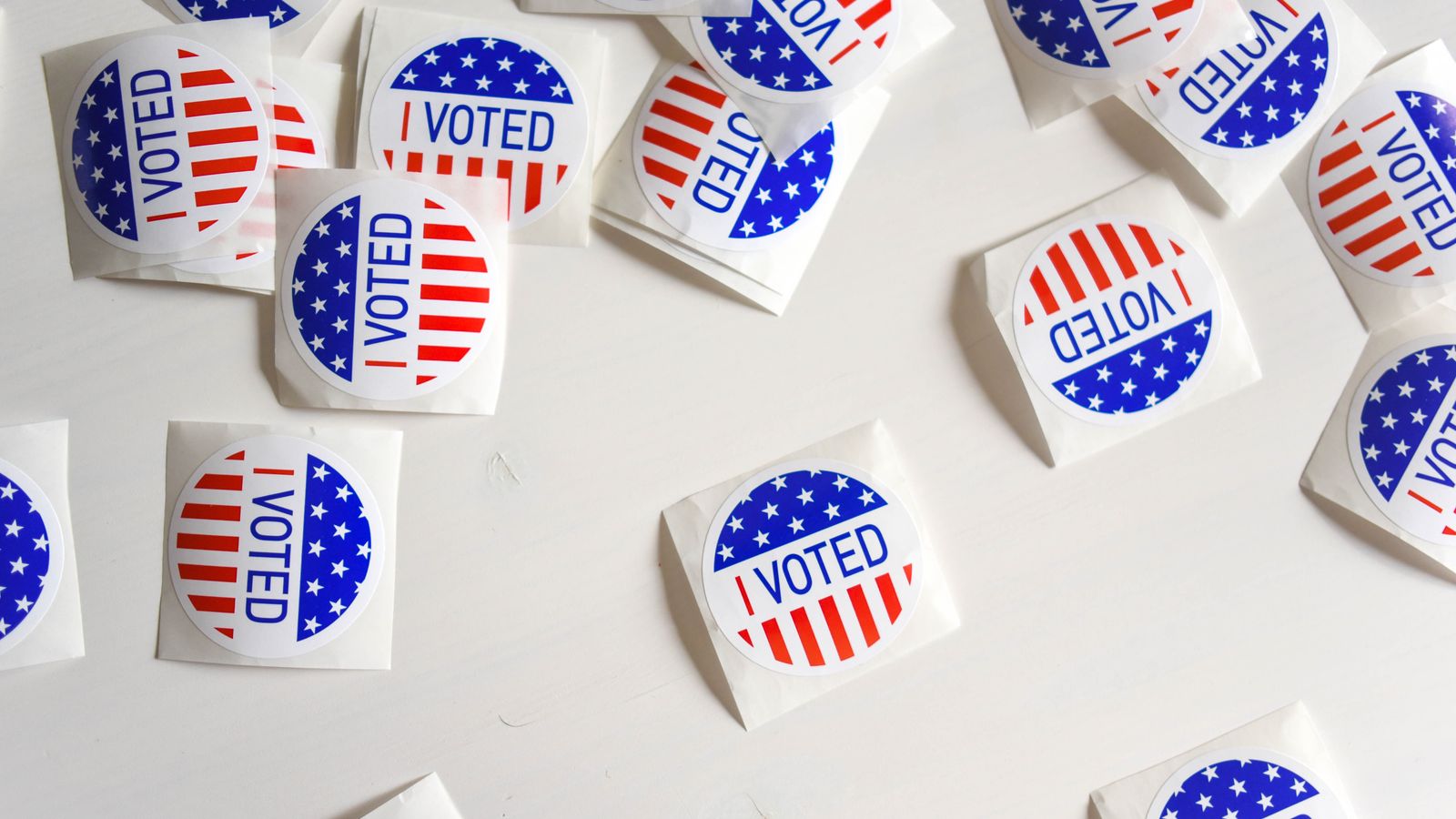
Executive Summary
The Massachusetts Supreme Judicial Court ruled in June 2026 that a ballot measure seeking to repeal the state's adult-use cannabis law will proceed to voters, setting up a potential November referendum that could eliminate recreational marijuana sales in a state that generated over $1.8 billion in cannabis revenue in 2025. The initiative, if approved by voters, would overturn Question 4 from 2016, which legalized adult-use cannabis for individuals 21 and older. The ballot question survived a legal challenge from social equity program participants who argued that Attorney General Andrea Joy Campbell's summary omitted critical details about the measure's impact on medical cannabis access, existing businesses, and the state's $200 million annual tax revenue stream. The court's decision places Massachusetts at the center of a national debate over cannabis policy reversal, marking the first serious attempt to repeal an established adult-use program in any state since legalization began in 2012. The repeal effort represents an unprecedented test case for the cannabis industry. Massachusetts currently hosts approximately 450 licensed adult-use retailers and cultivation facilities, employing more than 15,000 workers across the commonwealth. The state collected $206 million in cannabis excise taxes in fiscal year 2025, with municipalities receiving an additional $89 million through local option taxes. If voters approve the repeal measure in November 2026, the state would need to address questions about business license revocations, inventory disposal, real estate lease obligations, and the fate of social equity applicants who invested years and capital into entering the regulated market.Why This Matters
The Massachusetts repeal effort affects $1.8 billion in annual economic activity, 15,000 jobs, 450 licensed businesses, and sets a precedent that could embolden prohibition advocates in other adult-use states. The stakeholder impact extends across multiple dimensions. Licensed operators face existential uncertainty, with multi-state operators like Curaleaf, Trulieve, and Verano Holdings maintaining significant Massachusetts footprints representing 8-12% of their total U.S. revenue. Single-state operators and craft cultivators face complete business elimination if the measure passes. Real estate investors who financed cannabis-specific properties—often at premium rates due to federal prohibition—confront potential defaults on $400-600 million in specialized commercial mortgages. Social equity applicants represent a particularly affected group. Massachusetts established its Social Equity Program in 2018 to address disproportionate enforcement of cannabis prohibition in communities of color. The Cannabis Control Commission certified over 240 social equity applicants, providing technical assistance, priority licensing review, and access to a $10 million loan fund. Many participants invested 3-5 years navigating the licensing process, with average startup costs ranging from $750,000 to $2.5 million for retail operations. A repeal would eliminate their market entry opportunity after substantial personal and financial investment. Patients constitute another critical stakeholder group. While the ballot measure explicitly preserves medical cannabis access under the 2012 law, medical dispensaries currently source significant inventory from adult-use cultivation facilities. The adult-use market's larger scale enables cultivation diversity, competitive pricing, and product innovation that benefits medical patients through shared supply chains. Medical-only operators previously struggled with limited product selection and higher prices before adult-use legalization expanded cultivation capacity by 400% between 2016 and 2020. Municipal governments collected $89 million in local option taxes in 2025, with communities like Fall River, Worcester, and Leicester deriving 3-7% of total municipal revenue from cannabis taxes. These funds support police, fire departments, schools, and infrastructure in communities that often lack robust commercial tax bases. The Massachusetts Municipal Association estimated that repeal would create $90-110 million in annual municipal budget shortfalls across 180 host communities. The precedent implications extend nationally. Cannabis policy advocates view Massachusetts as a bellwether state whose actions influence other jurisdictions. A successful repeal would provide a roadmap for prohibition advocates in Connecticut, New York, New Jersey, and other adult-use states where opposition groups have discussed similar initiatives. Conversely, a decisive defeat would demonstrate voter commitment to legalization and potentially discourage repeal efforts elsewhere.Background and History
Massachusetts became the first state on the East Coast to legalize adult-use cannabis through a 2016 ballot measure, implementing sales in 2018 after a complex regulatory development process that established one of the nation's most comprehensive cannabis frameworks.Medical Cannabis Foundation (2012)
Massachusetts voters approved medical cannabis through Question 3 on November 6, 2012, with 63% support. The law, codified as M.G.L. c. 94I, established a Department of Public Health-regulated medical marijuana program allowing patients with debilitating conditions to access cannabis through nonprofit dispensaries. The law permitted patients to possess up to a 60-day supply and authorized hardship cultivation for patients unable to access dispensaries. The medical program launched slowly. The Department of Public Health issued final regulations in May 2013, accepted applications in September 2013, and awarded the first provisional certificates in January 2014. The first medical dispensary, Alternative Therapies Group in Salem, opened on June 24, 2015—nearly three years after voter approval. By November 2016, only 18 medical dispensaries operated statewide, serving approximately 24,000 registered patients.Adult-Use Legalization (2016)
The Campaign to Regulate Marijuana Like Alcohol submitted signatures for a 2016 ballot initiative in December 2015, gathering 81,492 certified signatures—well above the 64,750 required threshold. The initiative qualified as Question 4 for the November 8, 2016 ballot. Question 4 proposed legalizing cannabis possession and use for adults 21 and older, establishing a Cannabis Control Commission to regulate cultivation and retail sales, and imposing a 3.75% state excise tax plus up to 3% local option tax on top of the standard 6.25% sales tax. The measure allowed adults to possess up to one ounce in public and ten ounces at home, cultivate up to six plants per person (12 per household), and permitted retail sales through licensed establishments. Opposition came from Governor Charlie Baker, Attorney General Maura Healey, Boston Mayor Marty Walsh, and the Campaign for a Safe and Healthy Massachusetts, which raised $2.4 million largely from business interests. Supporters, including the Marijuana Policy Project and local advocates, raised $4.8 million. On November 8, 2016, Question 4 passed with 53.7% approval (1,817,101 yes votes to 1,568,111 no votes). The law took effect on December 15, 2016, immediately legalizing possession and home cultivation. Retail sales required regulatory framework development.Legislative Amendments (2017)
The Massachusetts Legislature passed H.3818 in July 2017, significantly amending the voter-approved law. Changes included increasing the maximum state excise tax from 3.75% to 6.25%, delaying retail sales implementation by six months to July 2018, prohibiting home delivery initially, expanding municipal control to ban retail establishments, and restructuring the Cannabis Control Commission composition. Governor Baker signed the amendments on July 28, 2017. Cannabis advocates criticized the Legislature for overriding voter intent, particularly regarding tax increases and implementation delays, but did not mount a referendum challenge.Regulatory Development (2017-2018)
The Cannabis Control Commission held its first meeting on September 12, 2017, with Chairman Steven Hoffman and four commissioners. The commission conducted 13 public hearings across Massachusetts between October 2017 and February 2018, receiving over 3,000 public comments. The commission approved final adult-use regulations (935 CMR 500.000) on March 15, 2018, establishing comprehensive rules for cultivation, manufacturing, testing, transportation, and retail operations. Key provisions included seed-to-sale tracking through Metrc, mandatory testing for potency and contaminants, child-resistant packaging requirements, advertising restrictions, and social consumption prohibitions. The commission began accepting adult-use license applications on April 1, 2018. Priority review went to existing medical dispensaries seeking dual licensure and to social equity applicants.Market Launch (2018-2020)
The first adult-use retail sales occurred on November 20, 2018, at Cultivate in Leicester and New England Treatment Access (NETA) in Northampton. Lines stretched for hours as customers purchased cannabis legally for the first time on the East Coast. Market growth proceeded rapidly. By December 2019, 47 adult-use retailers operated statewide, generating $393 million in sales during the first 13 months. The commission issued licenses across all categories: 184 cultivation licenses, 89 product manufacturer licenses, 15 testing laboratory licenses, and 98 retail licenses by year-end 2019. The COVID-19 pandemic initially disrupted operations in March 2020, with Governor Baker designating cannabis retailers as essential businesses on March 24, 2020. The industry adapted through curbside pickup, online ordering, and enhanced safety protocols. Sales increased 67% in 2020 compared to 2019, reaching $1.3 billion as consumers shifted spending from closed restaurants and entertainment venues.Social Equity Program Development (2018-2021)
The Cannabis Control Commission established the Social Equity Program through regulations adopted in September 2018. The program aimed to address disproportionate cannabis prohibition enforcement in communities with high arrest rates, poverty levels above 20%, and median household incomes below 65% of the state median. Certified Economic Empowerment Priority Applicants received priority application review, reduced licensing fees (from $1,500 to $100 for retail licenses), technical assistance through the commission's training programs, and access to the Social Equity Trust Fund established in 2020 with $10 million in initial funding. By June 2021, the commission certified 241 Economic Empowerment Priority Applicants and 18 Social Equity Program participants. However, only 12 social equity licensees had opened for business by mid-2021, facing challenges including access to capital, real estate discrimination, and complex regulatory compliance requirements that favored well-capitalized applicants.Market Maturation (2021-2025)
The Massachusetts adult-use market matured significantly between 2021 and 2025. Total sales grew from $1.4 billion in 2021 to $1.8 billion in 2025. The number of retail locations increased from 198 in January 2021 to 447 by December 2025, with geographic expansion into previously underserved regions including Cape Cod, the Berkshires, and southeastern Massachusetts. Product diversification accelerated. Flower sales declined from 52% of total sales in 2020 to 38% in 2025, while vape cartridges, edibles, and concentrates gained market share. Infused beverages emerged as a growth category, increasing from 0.8% of sales in 2021 to 4.2% in 2025. Wholesale prices declined substantially. Average wholesale flower prices dropped from $2,800 per pound in 2020 to $1,200 per pound in 2025, driven by cultivation capacity expansion and interstate competition from Maine's lower-cost market. Many small cultivators exited the market or consolidated, with the number of active cultivation licenses declining from 184 in 2020 to 156 in 2025 despite overall market growth. The Cannabis Control Commission collected $206 million in state excise taxes in fiscal year 2025, with municipalities collecting an additional $89 million through local option taxes. The commission's Cannabis Control Trust Fund, which receives all excise tax revenue, distributed funds to public health programs, municipal police training, and industry regulation costs.Repeal Movement Origins (2024-2025)
Opposition to adult-use cannabis persisted among certain constituencies despite market establishment. The Coalition for Safe Communities, formed in early 2024, brought together parents' groups, some law enforcement organizations, substance abuse treatment providers, and religious organizations concerned about youth access, impaired driving, and public health impacts. The coalition cited Massachusetts Department of Public Health data showing past-30-day cannabis use among high school students increased from 24.3% in 2017 to 27.8% in 2023, though the increase was not statistically significant and remained below pre-legalization peaks of 31.2% in 2013. The coalition also highlighted Massachusetts State Police data showing cannabis-involved traffic fatalities increased from 38 in 2018 to 67 in 2024, though attributing causation remained complex due to improved testing protocols and the presence of inactive THC metabolites. The coalition filed an initial petition with the Attorney General's office in August 2024, proposing a ballot measure to repeal M.G.L. c. 94G (the adult-use law) while preserving M.G.L. c. 94I (the medical law). Attorney General Andrea Joy Campbell certified the petition summary on October 3, 2024, allowing signature gathering to proceed.Signature Gathering and Qualification (2024-2025)
The Coalition for Safe Communities gathered signatures between November 2024 and May 2025. Massachusetts law requires 74,574 certified signatures (3% of total votes cast for governor in the previous election) to place an initiative on the ballot. The coalition submitted 112,847 signatures to local election officials on May 7, 2025. After local certification, the Secretary of State's office verified 89,234 valid signatures on June 18, 2025, exceeding the threshold by nearly 15,000 signatures. The measure qualified for the November 2026 ballot, designated as Question 2, pending any legal challenges to the Attorney General's summary.Legal Challenge and Supreme Judicial Court Ruling
Social equity program participants filed suit in October 2025 challenging Attorney General Campbell's summary as misleading, arguing it omitted critical information about economic impacts and medical cannabis supply chain dependencies, but the Supreme Judicial Court ruled 5-2 in June 2026 that the summary met legal standards.Plaintiff Arguments
A coalition of 14 social equity licensees and applicants, represented by the Lawyers' Committee for Civil Rights and Economic Justice, filed suit in Suffolk Superior Court on October 8, 2025. The plaintiffs argued that Attorney General Campbell's summary violated M.G.L. c. 53, § 22A, which requires ballot question summaries to be "fair, concise, and in such language that a 'Yes' or 'No' vote will not mislead the voters." The plaintiffs identified three specific omissions. First, the summary stated the measure would "repeal the law allowing recreational marijuana sales" but failed to mention that medical dispensaries rely on adult-use cultivation facilities for 60-70% of their inventory, potentially disrupting medical access despite the measure's explicit preservation of M.G.L. c. 94I. Second, the summary did not disclose the $206 million in annual state tax revenue and $89 million in municipal revenue that would be eliminated. Third, the summary omitted any mention of the 15,000 jobs and 450 businesses that would face closure. The plaintiffs argued these omissions would mislead voters into believing the measure simply returned Massachusetts to its pre-2016 status, when in fact the integrated supply chain and economic ecosystem created since 2018 meant repeal would have far broader consequences than the summary suggested.Attorney General's Defense
Attorney General Campbell's office filed a motion to dismiss on November 15, 2025, arguing that ballot summaries must be concise and cannot include every potential consequence of a measure. The office cited precedent from Carney v. Attorney General, 447 Mass. 218 (2006), which held that summaries need not address "every conceivable ramification" of a ballot question. The Attorney General's brief argued that the summary accurately described the measure's direct legal effect—repealing M.G.L. c. 94G while preserving M.G.L. c. 94I—and that voters could reasonably understand this meant eliminating adult-use sales while maintaining medical access. The brief contended that economic impacts, supply chain relationships, and employment effects were secondary consequences beyond the scope of a summary's required content.Superior Court Ruling
Suffolk Superior Court Judge Michael Ricciuti ruled on January 22, 2026, denying the plaintiffs' request to remove the measure from the ballot. Judge Ricciuti found that while the summary could have been more detailed, it met the legal standard of fair and non-misleading language. The judge noted that the Attorney General has discretion in crafting summaries and that courts should not substitute their judgment for the Attorney General's unless the summary is clearly misleading. The plaintiffs appealed directly to the Supreme Judicial Court on February 5, 2026, as permitted under M.G.L. c. 211A, § 10, for cases involving ballot questions.Supreme Judicial Court Decision
The Supreme Judicial Court heard oral arguments on April 14, 2026. The court issued its decision on June 9, 2026, in Coalition for Cannabis Equity v. Campbell, ruling 5-2 that the ballot measure could proceed. Justice Frank Gaziano wrote for the majority, holding that the Attorney General's summary "fairly and concisely describes the measure's legal effect" and that the omitted information, while relevant to voters' decision-making, did not rise to the level of making the summary misleading. The majority opinion emphasized that voters approved the original adult-use law in 2016 with knowledge of its economic potential, and could reasonably understand that repeal would eliminate those economic benefits. The majority rejected the plaintiffs' argument about medical cannabis supply chain disruption, noting that the measure explicitly preserves M.G.L. c. 94I and that medical dispensaries operated before adult-use legalization. The opinion stated that "potential indirect effects on medical cannabis availability are speculative and beyond the scope of a summary's required content." Justice Dalila Argaez Wendlandt wrote a dissenting opinion, joined by Justice Serge Georges Jr., arguing that the summary's omission of supply chain integration was material and misleading. The dissent noted that the medical cannabis market of 2012-2016 was "fundamentally different" from the current integrated system, and that voters deserved to know that medical patients could face reduced access and higher prices if adult-use cultivation ceased. The dissent would have required the Attorney General to revise the summary to include language about potential medical cannabis impacts. The court's ruling cleared the final legal obstacle to placing the measure on the November 2026 ballot.Key Players
Coalition for Safe Communities
The Coalition for Safe Communities serves as the primary organization supporting the repeal measure. Founded in January 2024, the coalition includes the Massachusetts Family Institute, Smart Approaches to Marijuana Massachusetts chapter, the Massachusetts Chiefs of Police Association Substance Abuse Committee, and approximately 40 local parents' groups. Executive Director Patricia Downing, a former substance abuse counselor from Worcester, leads the coalition's campaign. The organization raised $3.8 million through May 2026, with major contributions from the national Smart Approaches to Marijuana organization ($800,000), the Philanthropy Roundtable ($500,000), and individual donors concerned about youth access and public health. The coalition's messaging emphasizes youth use concerns, impaired driving risks, and what it characterizes as the cannabis industry's predatory marketing practices. Campaign materials feature testimonials from parents whose children experienced cannabis use disorder and law enforcement officials discussing drugged driving enforcement challenges.Coalition to Protect Massachusetts Cannabis
The Coalition to Protect Massachusetts Cannabis formed in August 2025 to oppose the repeal measure. The coalition includes the Massachusetts Cannabis Industry Association, the Massachusetts Recreational Consumer Council, the National Organization for the Reform of Marijuana Laws Massachusetts chapter, social equity licensees, and labor unions representing cannabis workers. Campaign director James Chen, formerly a policy advisor to the Cannabis Control Commission, coordinates opposition efforts. The coalition raised $6.2 million through May 2026, with contributions from multi-state operators including Curaleaf ($1.2 million), Trulieve ($900,000), and Verano Holdings ($700,000), as well as smaller donations from individual licensees, consumers, and reform advocates. The coalition's messaging focuses on economic impacts, tax revenue losses, job eliminations, and threats to social equity participants who invested years entering the regulated market. Campaign materials emphasize that repeal would not eliminate cannabis use but would instead push consumers to the illicit market, eliminating safety testing and quality controls.Attorney General Andrea Joy Campbell
Attorney General Campbell, elected in 2022 as Massachusetts's first Black woman attorney general, plays a central role through her office's responsibility for certifying ballot question summaries. Campbell has not taken a public position on the repeal measure itself, maintaining the traditional neutrality of the Attorney General's office on ballot questions. Campbell's office defended its summary language through the legal challenge, arguing that it met statutory requirements for fairness and conciseness. The Attorney General's Consumer Protection Division also continues to enforce cannabis advertising regulations and consumer protection laws regardless of the ballot measure's outcome.Cannabis Control Commission
The Cannabis Control Commission, chaired by Shannon O'Brien since January 2024, maintains regulatory oversight of the adult-use and medical markets. The five-member commission has not taken an official position on the repeal measure, though individual commissioners have expressed concerns about impacts on social equity participants and market stability. The commission continues processing license applications and renewals while the ballot measure proceeds, though some applicants have paused investments pending the November vote. The commission's staff of 127 employees faces uncertain job security if repeal passes, as the commission would likely downsize significantly to oversee only the smaller medical market.Governor Maura Healey
Governor Healey, who opposed Question 4 as Attorney General in 2016 but later stated she would not seek to overturn voter-approved legalization, has not taken a public position on the 2026 repeal measure as of June 2026. Healey's administration faces significant budget implications if repeal passes, as the state would lose $206 million in annual excise tax revenue currently allocated to public health programs, municipal grants, and regulatory costs. The Governor's office has indicated it will respect voters' decision while noting concerns about economic disruption and impacts on social equity participants who relied on state encouragement to enter the market.Social Equity Licensees and Applicants
Social equity program participants represent a particularly affected stakeholder group. Organizations including the Massachusetts Social Equity Coalition, Pure Oasis (Boston's first social equity dispensary), and individual applicants have been vocal opponents of repeal. Pure Oasis founder Kobie Evans, who spent four years and $2.1 million opening Boston's first social equity dispensary in 2020, has testified that repeal would eliminate his business and investment while doing nothing to address the disproportionate prohibition enforcement that the social equity program aimed to remedy. Evans and other social equity participants argue that repeal represents a betrayal of the state's commitment to addressing prohibition's harms.Massachusetts Municipal Association
The Massachusetts Municipal Association, representing 351 cities and towns, has expressed concern about the $89 million in annual local option tax revenue that municipalities would lose if repeal passes. The association has not taken an official position on the measure, but Executive Director Geoffrey Beckwith has stated that municipalities should have time to adjust budgets if voters approve repeal, suggesting a potential implementation delay. Host communities including Fall River, Leicester, and Worcester have passed resolutions opposing repeal, citing economic benefits and tax revenue that supports municipal services.Legal and Regulatory Framework
Massachusetts cannabis law consists of two primary statutes—M.G.L. c. 94I governing medical use and M.G.L. c. 94G governing adult use—with comprehensive regulations at 935 CMR 501.000 (medical) and 935 CMR 500.000 (adult-use) establishing one of the nation's most detailed regulatory frameworks.Adult-Use Statutory Framework
M.G.L. c. 94G, enacted through Question 4 in 2016 and amended by H.3818 in 2017, establishes the legal foundation for adult-use cannabis. Key provisions include: Possession limits: Adults 21 and older may possess up to one ounce of cannabis in public and up to ten ounces at home, with no more than five grams in concentrate form. Home cultivation is permitted up to six plants per person and 12 plants per household, with plants kept in a locked area not visible from public view. Taxation: The law imposes a 10.75% excise tax (6.25% state excise tax plus 3.75% retail sales tax, with the latter replacing the standard 6.25% sales tax) plus an optional local tax up to 3%. The effective maximum tax rate is 13.75% in municipalities that adopt the full local option. Cannabis Control Commission: The law establishes a five-member commission appointed by the Governor, Treasurer, and Attorney General to regulate all aspects of adult-use cannabis, from cultivation through retail sales. The commission has broad rulemaking authority under M.G.L. c. 94G, § 4. Municipal control: Cities and towns may prohibit adult-use establishments through local ballot measures or votes of the local legislative body, or may limit the number and type of establishments through zoning. As of May 2026, 189 municipalities prohibit adult-use establishments, while 162 allow them with varying restrictions.Medical Cannabis Statutory Framework
M.G.L. c. 94I, enacted through Question 3 in 2012, establishes the medical marijuana program. The law allows patients with debilitating medical conditions certified by a licensed physician to access cannabis through registered dispensaries. Patients may possess up to a 60-day supply as determined by their physician, typically ten ounces. The Department of Public Health regulates medical dispensaries through 105 CMR 725.000, with oversight transitioning to the Cannabis Control Commission in 2018 through M.G.L. c. 55, § 12 of the 2017 amendments. Medical dispensaries operate as nonprofit entities, though many are affiliated with for-profit adult-use operations through complex corporate structures. The repeal measure would eliminate M.G.L. c. 94G entirely while preserving M.G.L. c. 94I, theoretically maintaining medical access. However, the integrated supply chain means many medical dispensaries source inventory from adult-use cultivators, creating practical complications if adult-use operations cease.Regulatory Structure
The Cannabis Control Commission's regulations at 935 CMR 500.000 (adult-use) and 935 CMR 501.000 (medical) establish comprehensive requirements across all license types: Cultivation licenses: Three tiers based on canopy size (Tier 1: up to 5,000 square feet; Tier 2: 5,001-10,000 square feet; Tier 3: 10,001-100,000 square feet), plus unlimited outdoor cultivation licenses. Cultivators must use seed-to-sale tracking through Metrc, maintain detailed records, and comply with security requirements including 24-hour video surveillance. Product manufacturer licenses: Required for extraction, infusion, and processing operations. Manufacturers must operate in commercial-grade facilities meeting food safety standards, maintain standard operating procedures for all processes, and test all products before distribution. Testing laboratory licenses: Independent laboratories must be ISO/IEC 17025 accredited and test for potency (THC, CBD, and other cannabinoids), contaminants (pesticides, heavy metals, microbials, mycotoxins), and residual solvents. All products must pass testing before retail sale. Retail licenses: Retailers must maintain separate inventory tracking, implement age verification procedures, comply with advertising restrictions (no billboards within 500 feet of schools, no marketing appealing to minors), and use child-resistant packaging. Retailers may co-locate adult-use and medical operations but must maintain separate entrances and point-of-sale systems. Transportation licenses: Required for moving cannabis between licensed facilities. Transporters must use GPS-tracked vehicles, maintain manifests for all shipments, and comply with security protocols.Federal Law Conflicts
Despite state legalization, cannabis remains a Schedule I controlled substance under the Controlled Substances Act, 21 U.S.C. § 812. This creates ongoing conflicts: Banking access: Most federally-insured banks refuse cannabis business accounts due to potential Bank Secrecy Act violations and money laundering concerns, forcing many operators to conduct cash-heavy operations despite state-level legality. Tax treatment: Internal Revenue Code § 280E prohibits businesses trafficking in Schedule I or II substances from deducting ordinary business expenses, resulting in effective federal tax rates of 60-75% for cannabis operators despite state-legal status. Interstate commerce: The Commerce Clause and federal prohibition prevent interstate cannabis commerce, requiring each state to maintain a closed-loop system. Massachusetts operators cannot legally import cannabis from lower-cost Maine producers or export to higher-price New York markets. Bankruptcy protection: Federal bankruptcy courts refuse to hear cases involving cannabis businesses due to the Controlled Substances Act, leaving operators without restructuring options available to other industries. These federal conflicts would persist for medical operators even if Massachusetts voters approve adult-use repeal, as cannabis remains federally prohibited regardless of state medical programs.Market and Business Implications
Repeal would eliminate $1.8 billion in annual sales, force closure of 447 retail locations and 156 cultivation facilities, eliminate 15,000 jobs, and create $400-600 million in commercial real estate defaults while pushing consumers to illicit markets or neighboring states.Licensed Operator Impact
Massachusetts adult-use operators face complete business elimination if voters approve repeal. Multi-state operators with significant Massachusetts presence include Curaleaf (37 retail locations), Trulieve (14 locations), Verano Holdings (9 locations), and Ascend Wellness (7 locations). These companies derive 8-12% of total U.S. revenue from Massachusetts operations, with state-specific revenue ranging from $85 million to $140 million annually per operator. Single-state operators face existential threats. Companies like Berkshire Roots, Insa, and Revolutionary Clinics operate exclusively or primarily in Massachusetts, with no geographic diversification to offset revenue loss. These operators collectively employ approximately 3,200 workers and generated $380 million in combined revenue in 2025. Craft cultivators and small manufacturers would be eliminated entirely. Massachusetts hosts 89 Tier 1 and Tier 2 cultivators producing small-batch, craft cannabis that competes on quality rather than scale. These operators typically generate $800,000 to $2.5 million in annual revenue with profit margins of 15-25%, providing middle-class incomes for owner-operators and 3-8 employees per facility.Wholesale Market Disruption
The Massachusetts wholesale market would collapse if adult-use sales cease. Wholesale flower prices averaged $1,200 per pound in May 2026, with cultivators producing approximately 425,000 pounds annually for the combined adult-use and medical markets. Medical-only demand represents roughly 65,000 pounds annually, leaving 360,000 pounds of cultivation capacity without a market. Cultivators could not economically downsize to medical-only production. Fixed costs for facilities, security, and compliance represent 60-70% of total cultivation costs, making small-scale production economically unviable. Most cultivators would face a binary choice: close entirely or continue operating illegally. Product manufacturers face similar dynamics. Massachusetts hosts 89 licensed product manufacturers producing vape cartridges, edibles, concentrates, and infused beverages. Medical patients represent only 18% of total product manufacturer sales, insufficient to sustain current operations. Manufacturers invested $15-40 million in specialized extraction equipment, commercial kitchens, and packaging lines that would become stranded assets.Real Estate and Financial Impacts
Cannabis-specific real estate faces severe distress if repeal passes. Property owners invested $400-600 million in cannabis-specific improvements including vault rooms, security systems, HVAC upgrades for cultivation facilities, and specialized electrical infrastructure. These improvements have limited alternative uses, creating potential write-downs of 60-80% of improvement value. Commercial mortgages for cannabis properties total an estimated $450-550 million across Massachusetts, with most loans originated by credit unions, private lenders, and specialized cannabis real estate investment trusts. Default rates could reach 40-60% if operators lose revenue, creating losses of $180-330 million for lenders. Landlords who leased to cannabis tenants face vacancy and re-tenanting costs. Cannabis retail leases typically command premium rents of $45-75 per square foot in urban markets, 30-50% above comparable retail space, due to limited availability of compliant properties. Landlords would face 12-24 month vacancy periods and rent reductions of 30-40% when re-tenanting to conventional retail uses.Employment Impact
The Massachusetts cannabis industry employs approximately 15,000 workers across all license types, according to Cannabis Control Commission data from December 2025. Job distribution includes retail (6,200 employees), cultivation (4,800 employees), manufacturing (2,100 employees), testing laboratories (400 employees), and transportation (300 employees), with the remainder in administrative and support roles. Average wages in the cannabis industry are $42,000 annually for entry-level positions and $68,000 for experienced roles, according to a 2025 survey by the Massachusetts Cannabis Industry Association. Many employees are former criminal justice system participants who face employment barriers in other industries, making cannabis jobs particularly valuable for this population. Job losses would concentrate in communities that host multiple cannabis facilities. Fall River, with 14 retail locations and 8 cultivation facilities, would lose approximately 850 cannabis jobs representing 2.1% of total city employment. Leicester, with 6 retail locations serving its population of 11,000, would lose 180 jobs in a community with limited alternative employment options.Tax Revenue Loss
Massachusetts collected $206 million in cannabis excise taxes in fiscal year 2025, allocated through the Cannabis Control Trust Fund to public health programs ($82 million), municipal grants ($41 million), regulatory costs ($Frequently asked questions
What does the Massachusetts cannabis repeal ballot measure propose?
The ballot measure seeks to end adult-use cannabis sales in Massachusetts by repealing the 2016 voter-approved law that legalized recreational marijuana. If passed, it would eliminate the legal framework for recreational dispensaries while leaving the medical cannabis program intact. The initiative represents an unprecedented attempt to reverse cannabis legalization in a state where voters previously approved it.
When did the Massachusetts Supreme Judicial Court rule on the repeal measure?
The Massachusetts Supreme Judicial Court ruled in June 2026 that the ballot question seeking to repeal adult-use cannabis sales can proceed to voters. The decision came after social equity program participants challenged Attorney General Andrea Joy Campbell's summary of the initiative, arguing it omitted key details about the measure's impact.
Who challenged the Massachusetts cannabis repeal ballot measure?
Participants in Massachusetts' social equity program challenged the ballot measure, arguing that Attorney General Andrea Joy Campbell's summary left out critical details. Social equity licensees, who receive priority licensing to address historical harms from cannabis prohibition, expressed concerns that the repeal would disproportionately impact communities the program was designed to help.
What was Massachusetts' original adult-use cannabis law?
Massachusetts voters approved adult-use cannabis legalization in November 2016 through a ballot initiative. The law took effect in December 2016, with retail sales beginning in November 2018. It established a regulatory framework for cultivation, processing, testing, and retail sales of recreational marijuana to adults 21 and older, separate from the state's existing medical cannabis program.
How large is Massachusetts' cannabis industry?
Massachusetts' cannabis industry has generated over $4 billion in total sales since adult-use sales began in 2018. The state collected approximately $200 million in cannabis tax revenue in 2025 alone. The industry employs thousands of workers across cultivation, manufacturing, testing, and retail operations, with over 400 licensed adult-use dispensaries operating statewide as of early 2026.
What arguments do repeal supporters make?
Repeal supporters typically cite concerns about public health, youth access, impaired driving, and community character. Some opponents of legalization argue that the cannabis industry has not delivered promised benefits or that negative consequences outweigh tax revenue. However, specific organized opposition groups and their funding sources for this Massachusetts initiative have not been widely reported as of June 2026.
What would happen to existing cannabis businesses if the measure passes?
If voters approve the repeal, Massachusetts' adult-use cannabis businesses would face closure or conversion to medical-only operations. The exact transition timeline and provisions for existing licenses, employee protections, and business wind-down procedures would depend on the measure's specific language. Social equity licensees who invested in adult-use operations would be particularly affected.
Has any U.S. state repealed cannabis legalization after voters approved it?
No U.S. state has successfully repealed adult-use cannabis legalization after voters approved it. While some jurisdictions have banned cannabis businesses through local ordinances, Massachusetts' ballot measure represents the first statewide attempt to reverse recreational legalization. The outcome could influence similar efforts in other states where cannabis legalization faces ongoing opposition.
What is Massachusetts' social equity cannabis program?
Massachusetts' social equity program provides priority licensing, technical assistance, and fee waivers to applicants from communities disproportionately harmed by cannabis prohibition. Participants include individuals with prior cannabis convictions, residents of high-enforcement areas, and economic empowerment applicants. The program aims to ensure diverse ownership in the cannabis industry and address historical injustices.
When will Massachusetts voters decide on the cannabis repeal?
The specific election date has not been publicly confirmed as of the June 2026 court ruling. Massachusetts ballot measures typically appear on November general election ballots. If the measure qualifies with sufficient signatures and meets all requirements, it would likely go before voters in November 2026 or a subsequent election cycle.
What role did Attorney General Andrea Joy Campbell play?
Attorney General Andrea Joy Campbell certified the ballot measure's summary, which social equity program participants challenged as incomplete. In Massachusetts, the Attorney General reviews initiative petitions and prepares summaries that appear on ballots. Campbell's office defended the summary's accuracy, and the Supreme Judicial Court ultimately allowed the measure to proceed despite the challenge.
How does this compare to cannabis policy trends nationwide?
The Massachusetts repeal effort runs counter to national trends toward cannabis legalization. As of 2026, 24 states have legalized adult-use cannabis, with several more considering legalization. However, the Massachusetts measure reflects ongoing opposition in some communities and could signal vulnerabilities in cannabis legalization even in progressive states. The outcome may influence both legalization advocates and opponents nationwide.
The cannabis newsletter you forward to your team.
Federal policy, market data, grower alerts, and the one story that matters today. Sent every weekday at 7am. Free.
No spam. Unsubscribe with one click. 21+ only.