Marijuana Users and Gun Rights: Federal Law, State Conflicts, and Legal Challenges
The intersection of marijuana use and Second Amendment rights creates a complex legal landscape where federal firearms prohibitions clash with state cannabis legalization. Federal law prohibits cannabis users from purchasing or possessing firearms, regardless of state legality, creating constitutional challenges under recent Supreme Court precedents. This hub examines ATF Form 4473 requirements, the Rahimi decision's impact on prosecutions, state-level conflicts, medical versus recreational user distinctions, and ongoing litigation challenging the federal ban as applied to lawful state-program participants.
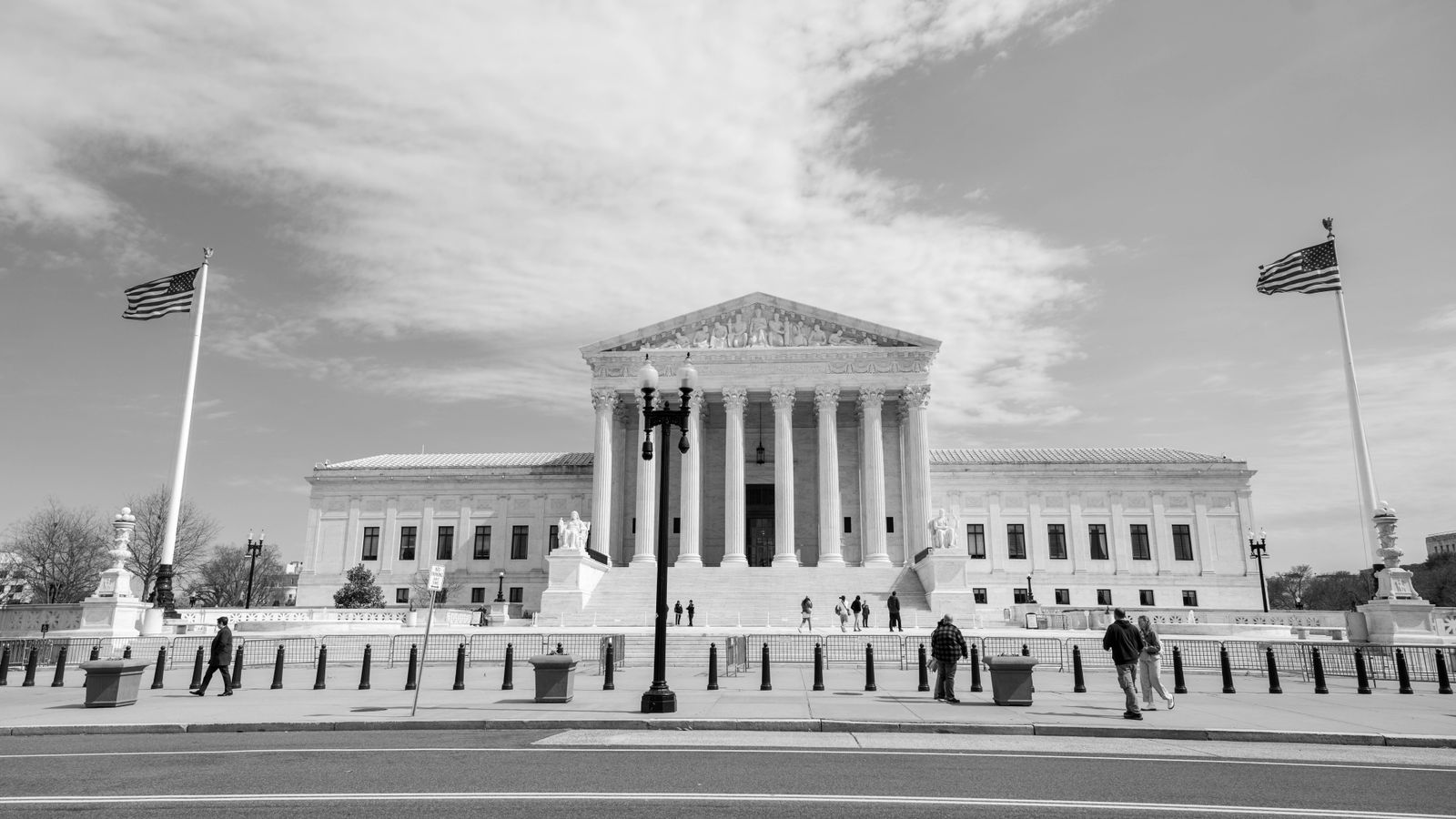
Executive Summary
The Supreme Court's recent ruling on marijuana users' gun rights has fundamentally reshaped how prosecutors can enforce federal firearm prohibitions against cannabis consumers, creating a narrow pathway for challenges while preserving the core ban for most users. The decision, handed down in August 2026, limits the government's ability to prosecute marijuana users under 18 U.S.C. § 922(g)(3), which prohibits unlawful drug users from possessing firearms. The Court held that prosecutors must prove active, ongoing use at the time of possession rather than relying on past admissions or medical marijuana cards alone. This ruling affects an estimated 55 million Americans who have used cannabis in the past year, including approximately 3.6 million medical marijuana patients across 38 states and Washington D.C. The decision does not legalize gun ownership for marijuana users outright, but instead raises the evidentiary bar for federal prosecution, creating a complex patchwork of enforcement that varies dramatically by jurisdiction. For gun owners, cannabis patients, and Second Amendment advocates, the ruling represents a partial victory that leaves fundamental constitutional questions unresolved while providing immediate practical relief from the broadest prosecutorial interpretations.Why This Matters
The intersection of marijuana use and gun rights directly impacts millions of Americans navigating conflicting state and federal laws, with consequences ranging from felony prosecution to loss of constitutional rights. An estimated 43% of American adults have tried marijuana at least once, while current regular users number approximately 55 million. Among these, roughly 3.6 million hold state-issued medical marijuana cards. Under federal law, all of these individuals are prohibited from purchasing, possessing, or owning firearms under 18 U.S.C. § 922(g)(3), which makes it unlawful for any "unlawful user of or addicted to any controlled substance" to possess firearms. The stakes are measured in both liberty and dollars. A conviction under § 922(g)(3) carries a maximum penalty of 10 years in federal prison and a $250,000 fine. Beyond incarceration, convicted individuals lose their Second Amendment rights permanently unless they obtain a presidential pardon or successful expungement. The prohibition also affects employment, as many law enforcement, security, and military positions require both clean criminal records and the ability to possess firearms. For the cannabis industry, the conflict creates operational nightmares. Dispensary owners and cultivation facility operators in states like Colorado, California, and Michigan face a stark choice: participate in a state-legal industry or maintain their ability to own firearms for personal or business security. The industry employs over 428,000 Americans as of 2024, many of whom work in cash-intensive businesses that face elevated security risks due to federal banking restrictions. Medical marijuana patients face particularly acute dilemmas. Veterans using cannabis for PTSD treatment under state programs, cancer patients managing chemotherapy side effects, and chronic pain sufferers replacing opioids with cannabis must choose between their medicine and their constitutional rights. The Department of Veterans Affairs has documented over 130,000 veterans enrolled in state medical marijuana programs, many of whom previously owned firearms for hunting, sport shooting, or home defense. The Supreme Court's August 2026 ruling affects prosecutorial discretion across 94 federal judicial districts, potentially reducing the estimated 300-500 annual federal prosecutions under § 922(g)(3) related to marijuana use. The decision also influences state-level enforcement in the 12 states that have adopted parallel prohibitions in their firearms statutes.Background and History
The collision between marijuana prohibition and gun rights emerged from two distinct 20th-century regulatory frameworks that evolved independently before converging in the 21st century.The Gun Control Act of 1968
Congress passed the Gun Control Act of 1968 in response to the assassinations of President John F. Kennedy, Senator Robert F. Kennedy, and Dr. Martin Luther King Jr. The Act, codified at 18 U.S.C. § 921 et seq., established the framework for federal firearms regulation still in force today. Section 922(g)(3) specifically prohibited any person who is "an unlawful user of or addicted to any controlled substance" from shipping, transporting, receiving, or possessing firearms or ammunition in interstate commerce. The provision drew no distinction between types of controlled substances, frequency of use, or state legal status. When enacted, marijuana was already classified as a Schedule I controlled substance under the Controlled Substances Act of 1970, placing it in the same category as heroin and LSD. The legislative history shows Congress intended to prevent drug users from possessing firearms based on concerns about impaired judgment and associations with criminal activity.The Controlled Substances Act and Marijuana Scheduling
The Controlled Substances Act, enacted in 1970 as Title II of the Comprehensive Drug Abuse Prevention and Control Act, established five schedules of controlled substances. Marijuana was placed in Schedule I, defined as substances with high potential for abuse, no currently accepted medical use in treatment in the United States, and a lack of accepted safety for use under medical supervision. This classification was intended as temporary pending the results of the Shafer Commission, formally known as the National Commission on Marihuana and Drug Abuse. The Shafer Commission recommended decriminalization in 1972, but President Richard Nixon rejected the findings. Marijuana has remained Schedule I for over 50 years despite repeated petitions for rescheduling. The Drug Enforcement Administration denied rescheduling petitions in 1974, 1995, 2001, 2006, and 2016. In 2024, the DEA published a Notice of Proposed Rulemaking to reschedule marijuana to Schedule III, but as of August 2026, the rescheduling remains pending following extensive public comment and administrative law judge hearings.ATF Form 4473 and the "Unlawful User" Question
The Bureau of Alcohol, Tobacco, Firearms and Explosives requires all firearms purchasers from licensed dealers to complete Form 4473, the Firearms Transaction Record. Question 21(f) on the current form asks: "Are you an unlawful user of, or addicted to, marijuana or any depressant, stimulant, narcotic drug, or any other controlled substance?" The form explicitly warns: "The use or possession of marijuana remains unlawful under Federal law regardless of whether it has been legalized or decriminalized for medicinal or recreational purposes in the state where you reside." A false answer constitutes a felony under 18 U.S.C. § 922(a)(6), punishable by up to 10 years in prison. This question has generated controversy since states began legalizing medical marijuana in 1996, creating a legal trap where honest answers result in denial of gun purchases while dishonest answers create felony liability. In 2011, the ATF issued an open letter to all federal firearms licensees clarifying that medical marijuana cardholders are prohibited persons under § 922(g)(3). The letter stated: "Therefore, any person who uses or is addicted to marijuana, regardless of whether his or her State has passed legislation authorizing marijuana use for medicinal purposes, is an unlawful user of or addicted to a controlled substance, and is prohibited by Federal law from possessing firearms or ammunition."Early Legal Challenges: Wilson v. Lynch
The first major constitutional challenge reached the Ninth Circuit Court of Appeals in 2016. S. Rowan Wilson, a Nevada resident, sought to purchase a firearm for self-defense but held a valid Nevada medical marijuana registry card. A federally licensed dealer refused to sell her a firearm based on the ATF's 2011 guidance. Wilson sued, arguing the prohibition violated her Second Amendment rights. The Ninth Circuit upheld the prohibition in Wilson v. Lynch, 835 F.3d 1083 (9th Cir. 2016). The court applied intermediate scrutiny and found the government had established a substantial relationship between the prohibition and the important governmental interest in preventing gun violence. The court cited studies showing marijuana use impairs motor skills and judgment, creating risks when combined with firearms. Critically, the court held that even if Wilson did not actually use marijuana, her registry card provided reasonable cause to believe she was an unlawful user. Wilson petitioned the Supreme Court for certiorari, but the Court denied review in 2017, leaving the Ninth Circuit's decision as binding precedent in the western states.The Bruen Revolution: New York State Rifle & Pistol Association v. Bruen
The landscape shifted dramatically on June 23, 2022, when the Supreme Court decided New York State Rifle & Pistol Association, Inc. v. Bruen, 597 U.S. 1 (2022). Justice Clarence Thomas, writing for a 6-3 majority, established a new framework for Second Amendment challenges. The Court rejected the two-step means-end scrutiny framework that lower courts had applied for over a decade, including in Wilson. Under Bruen, when the Second Amendment's plain text covers an individual's conduct, the government must justify any regulation by demonstrating it is consistent with the Nation's historical tradition of firearm regulation. The Court emphasized that analogical reasoning to historical regulations from the Founding era and Reconstruction era was required, not merely rational basis review or interest balancing. Bruen did not directly address drug users and firearms, but its methodology opened the door to renewed challenges. Within months, defendants facing § 922(g)(3) prosecutions began arguing that the provision could not survive Bruen's historical analysis.Post-Bruen Challenges: The Circuit Split Emerges
Between 2022 and 2026, federal district courts and circuit courts reached conflicting conclusions on § 922(g)(3)'s constitutionality under Bruen. The Fifth Circuit delivered the most significant blow to the prohibition in United States v. Daniels, 77 F.4th 337 (5th Cir. 2023). Patrick Daniels was indicted for possessing firearms while being an unlawful user of marijuana. The Fifth Circuit panel, in a 2-1 decision, held that § 922(g)(3) as applied to marijuana users violated the Second Amendment under Bruen. The court found no historical tradition of disarming citizens based on substance use absent a showing of dangerousness or mental incapacity. The government failed to identify analogous historical regulations from the 18th or 19th centuries. The Third Circuit reached the opposite conclusion in Range v. Attorney General United States, 69 F.4th 96 (3d Cir. 2023) (en banc), though that case involved a different subsection of § 922(g). The court's reasoning suggested deference to longstanding prohibitions on dangerous persons possessing firearms. The Sixth Circuit in United States v. Harrison (unpublished 2024 decision) upheld § 922(g)(3) against a Bruen challenge, finding sufficient historical analogues in laws disarming the mentally ill and intoxicated persons. The Ninth Circuit, bound by Wilson but applying Bruen's framework, issued conflicting panel decisions in 2024 and 2025. By early 2026, at least four circuit courts had issued decisions on § 922(g)(3) and marijuana users, with no clear consensus. The Supreme Court granted certiorari in March 2026 to resolve the circuit split.The Supreme Court's August 2026 Decision
The Supreme Court heard oral arguments in May 2026 in consolidated cases from the Fifth and Ninth Circuits. The Court's decision, announced August 19, 2026, took a narrow approach that avoided the broadest constitutional questions while significantly limiting prosecutorial discretion. In a 6-3 decision, the Court held that § 922(g)(3) remains constitutional as applied to active, ongoing unlawful drug users, but prosecutors must prove contemporaneous use at the time of firearm possession. The majority opinion, authored by Chief Justice John Roberts, found historical support for disarming individuals whose substance use rendered them dangerous, analogizing to colonial-era laws addressing habitual drunkards and the mentally ill. However, the Court rejected the government's argument that mere possession of a medical marijuana card or past admissions of use sufficed for prosecution. The majority held that "unlawful user" requires proof of regular, ongoing use during the period of firearm possession, not sporadic past use or potential future use. The Court declined to specify an exact timeframe but suggested that use within 30 days of possession would generally suffice, while use more than 90 days prior would generally be insufficient absent other evidence of ongoing addiction. Justice Clarence Thomas wrote a concurring opinion arguing the Court should have gone further and struck down § 922(g)(3) entirely as applied to marijuana users, finding no historical tradition of disarming sober citizens based on their choice of intoxicant. Justice Ketanji Brown Jackson dissented, joined by Justices Sonia Sotomayor and Elena Kagan, arguing the Court should have deferred to Congress's judgment about the dangers of combining drug use with firearms.Key Players
Bureau of Alcohol, Tobacco, Firearms and Explosives
The ATF serves as the primary federal agency enforcing firearms laws, including § 922(g)(3). The agency issues Form 4473, investigates prohibited persons in possession cases, and provides guidance to federal firearms licensees. Director Steven Dettelbach, appointed in 2022, has overseen the agency during the post-Bruen litigation wave. The ATF's 2011 open letter on medical marijuana cardholders remains in effect, though the August 2026 Supreme Court decision limits its application. The agency processes approximately 16 million Form 4473 submissions annually and maintains the National Instant Criminal Background Check System database that flags prohibited persons.Department of Justice
The DOJ prosecutes federal firearms violations through U.S. Attorneys' Offices in 94 districts. The department defended § 922(g)(3) through the Supreme Court litigation, arguing that drug users pose heightened risks of violence, accidents, and suicide. Attorney General Merrick Garland issued a memorandum in August 2026 following the Supreme Court's decision, directing federal prosecutors to focus § 922(g)(3) enforcement on cases involving violence, trafficking, or evidence of recent drug use rather than pursuing medical marijuana patients with dated registry cards. The memo represents a significant policy shift aimed at conserving prosecutorial resources and avoiding cases unlikely to survive the new evidentiary standard.Drug Enforcement Administration
The DEA maintains marijuana's Schedule I classification under the Controlled Substances Act, which forms the predicate for "unlawful user" status under § 922(g)(3). Administrator Anne Milgram has overseen the agency during the ongoing rescheduling proceeding initiated in 2024. If marijuana is rescheduled to Schedule III, the legal analysis under § 922(g)(3) could shift, as Schedule III substances include prescription medications with accepted medical uses. However, unauthorized use of Schedule III substances would still constitute "unlawful use" under federal law.National Rifle Association
The NRA filed amicus briefs supporting challenges to § 922(g)(3) in multiple circuit court cases and before the Supreme Court. The organization argued that the provision disarms millions of otherwise law-abiding citizens based on conduct that is legal in 38 states. NRA Executive Vice President Wayne LaPierre (who resigned in 2024) and his successor Doug Hamlin have both stated that gun rights should not depend on state marijuana policies. The NRA's Institute for Legislative Action has tracked state-level efforts to protect gun rights for medical marijuana patients.Firearms Policy Coalition
The Firearms Policy Coalition, a nonprofit advocacy organization, has funded litigation challenging § 922(g)(3) and filed amicus briefs in federal courts. The organization argues for strict application of Bruen's historical test and opposes categorical disarmament of non-violent citizens. FPC provided legal support to several defendants in circuit court cases between 2022 and 2026.NORML and Marijuana Policy Project
The National Organization for the Reform of Marijuana Laws and the Marijuana Policy Project have advocated for legislative solutions to the gun rights conflict. Both organizations filed amicus briefs in the Supreme Court case arguing that § 922(g)(3) creates an unconstitutional condition on the exercise of rights protected by state law. NORML Legal Counsel Paul Armentano has testified before Congress on the need to amend federal firearms laws to account for state marijuana legalization. The organizations supported the Marijuana Users' Right to Bear Arms Act introduced in Congress in 2025, though the bill has not advanced out of committee.Medical Marijuana Patients
Individual patients have served as named plaintiffs in multiple lawsuits. Jared Harrison, a Florida medical marijuana patient, challenged his prosecution under § 922(g)(3) after being found with firearms during a traffic stop. His case reached the Eleventh Circuit in 2025. Laura Roe, a Pennsylvania cancer patient, sued the ATF in 2024 seeking declaratory judgment that her medical marijuana use did not prohibit firearm ownership. These individual litigants have put human faces on the legal conflict, demonstrating that those affected include veterans, cancer patients, and chronic pain sufferers rather than recreational users or criminals.Legal and Regulatory Framework
The prohibition on marijuana users possessing firearms rests on the interaction of three federal statutes and decades of administrative interpretation, creating a complex web of criminal liability.18 U.S.C. § 922(g)(3)
The core prohibition appears at 18 U.S.C. § 922(g)(3), which makes it unlawful for any person "who is an unlawful user of or addicted to any controlled substance (as defined in section 102 of the Controlled Substances Act (21 U.S.C. 802))" to ship, transport, receive, or possess firearms or ammunition in or affecting interstate commerce. Violation constitutes a felony punishable by up to 10 years imprisonment and a $250,000 fine under 18 U.S.C. § 924(a)(2). The statute contains no exception for state-legal marijuana use, medical marijuana patients, or infrequent users. The term "unlawful user" is not defined in the statute itself, leaving interpretation to courts and the ATF.21 U.S.C. § 812 and Marijuana's Schedule I Status
Marijuana remains classified as a Schedule I controlled substance under 21 U.S.C. § 812, meaning any use not authorized by federal law is "unlawful" for purposes of § 922(g)(3). Schedule I substances are defined as having a high potential for abuse, no currently accepted medical use in treatment in the United States, and a lack of accepted safety for use under medical supervision. The Controlled Substances Act contains no exception for state-authorized medical or recreational use. Federal law preempts state law under the Supremacy Clause of the Constitution, meaning state legalization does not make marijuana use "lawful" under federal law. This creates the fundamental conflict: conduct that is legal under state law remains unlawful under federal law, triggering the firearms prohibition.18 U.S.C. § 922(a)(6) and Form 4473
Separate from the possession prohibition, 18 U.S.C. § 922(a)(6) makes it unlawful to knowingly make false statements in connection with the acquisition of firearms from licensed dealers. ATF Form 4473, Question 21(f) requires purchasers to answer whether they are unlawful users of controlled substances. A marijuana user who answers "no" commits a separate felony, even if they never actually possess the firearm. This provision ensnared Hunter Biden, son of President Joe Biden, who was convicted in Delaware federal court in June 2024 for lying on Form 4473 about his drug use. While Biden's case involved crack cocaine rather than marijuana, the same statute applies to all controlled substances. Biden was sentenced to probation, and President Biden later pardoned his son in December 2024.ATF Regulatory Guidance
The ATF has issued multiple guidance documents interpreting § 922(g)(3). The most significant is the September 21, 2011 open letter to federal firearms licensees, which states that medical marijuana cardholders are prohibited persons. The letter instructs dealers that if they have reasonable cause to believe a purchaser is an unlawful user based on a state-issued marijuana card or other evidence, they must deny the sale. ATF regulations at 27 C.F.R. § 478.11 define "unlawful user" as a person who uses a controlled substance and has lost the power of self-control with reference to the use of the substance, or uses a controlled substance in a manner that creates a hazard to themselves or others. The regulation further states that evidence of use within the past year may be considered in determining current status. Following the August 2026 Supreme Court decision, the ATF issued interim guidance stating that prosecutors should focus on evidence of use within 30 days of firearm possession and that medical marijuana cards alone do not establish current unlawful user status without additional evidence of recent use.State Law Variations
While federal law creates a uniform prohibition, state laws vary significantly. Twelve states have enacted their own prohibitions on drug users possessing firearms that parallel the federal ban. However, 38 states and Washington D.C. have legalized medical marijuana, and 24 states have legalized recreational marijuana. This creates scenarios where state law authorizes marijuana use while simultaneously prohibiting firearm possession by drug users. Some states have attempted to protect gun rights for medical marijuana patients. Oklahoma's State Question 788, passed in 2018, includes language stating that medical marijuana licensees shall not be denied the right to own firearms. However, this provision cannot override federal law and provides no protection against federal prosecution. Pennsylvania courts have held that the state's Uniform Firearms Act prohibition on drug users possessing firearms does not apply to medical marijuana patients, creating a situation where patients can legally possess firearms under state law but remain prohibited under federal law.State-by-State Breakdown
The conflict between marijuana legalization and gun rights plays out differently across states based on their marijuana laws, firearm regulations, and enforcement priorities.California
California legalized medical marijuana in 1996 through Proposition 215 and recreational marijuana in 2016 through Proposition 64. The state has approximately 750,000 medical marijuana patients and millions of recreational users. California Penal Code § 29800 prohibits firearm possession by persons addicted to narcotics, but state courts have held this does not apply to marijuana users following legalization. However, federal law still applies, and the U.S. Attorney's Offices in California's four federal districts have prosecuted § 922(g)(3) cases, particularly when firearms are found during marijuana cultivation raids or trafficking investigations. The August 2026 Supreme Court decision is expected to reduce such prosecutions significantly, as California's legal market makes proving "unlawful" use more complex.Colorado
Colorado legalized medical marijuana in 2000 and recreational marijuana in 2012, becoming one of the first states with legal adult-use sales. The state has approximately 80,000 medical marijuana patients. Colorado has no state-level prohibition on marijuana users possessing firearms, creating a situation where conduct is legal under state law but prohibited federally. The Colorado Bureau of Investigation, which operates the state's background check system, does not have access to medical marijuana registry data and does not deny firearm purchases based on marijuana use. Federal prosecutions in Colorado have been rare, with the U.S. Attorney's Office focusing resources on violent crime and trafficking. The state has an estimated 1.8 million gun owners, many of whom use marijuana recreationally.Florida
Florida legalized medical marijuana through a constitutional amendment in 2016 and has grown to over 800,000 registered medical marijuana patients, one of the largest programs in the nation. Florida Statutes § 790.065 requires background checks for firearm purchases but does not specifically address marijuana use. The state does not share medical marijuana registry data with firearms dealers or law enforcement for background check purposes. However, Florida's Department of Agriculture, which issues concealed carry permits, has denied applications from medical marijuana cardholders, leading to litigation. The Eleventh Circuit has not definitively ruled on whether Florida can deny carry permits based on medical marijuana use. Federal prosecutions in Florida have occurred primarily in cases involving violence or trafficking.Michigan
Michigan legalized medical marijuana in 2008 and recreational marijuana in 2018. The state has approximately 350,000 medical marijuana patients. Michigan law does not prohibit medical marijuana patients from possessing firearms, and the state's background check system does not flag marijuana users. However, Michigan State Police have issued guidance warning that federal law still applies. The state has seen minimal federal prosecution of § 922(g)(3) cases involving marijuana-only users. Michigan's attorney general issued an opinion in 2020 stating that medical marijuana patients do not violate state firearms laws, but the opinion acknowledged federal law remains unchanged.Oklahoma
Oklahoma legalized medical marijuana through State Question 788 in 2018, which includes explicit language stating that medical marijuana licensees shall not be denied the right to possess firearms. The state has over 375,000 medical marijuana patients, representing nearly 10% of the adult population. Oklahoma's constitutional provision creates the strongest state-level protection for gun rights, but it cannot override federal law. The Oklahoma State Bureau of Investigation does not deny firearm purchases based on medical marijuana use. Federal prosecutions have been extremely rare, with the U.S. Attorney's Office for the Western District of Oklahoma focusing on violent crime.Pennsylvania
Pennsylvania legalized medical marijuana in 2016 and has approximately 450,000 registered patients. The Pennsylvania Supreme Court ruled in 2023 that the state's Uniform Firearms Act does not prohibit medical marijuana patients from possessing firearms, finding that marijuana is not a "controlled substance" under state law for purposes of the firearms prohibition. This creates a unique situation where patients can legally possess firearms under state law while remaining prohibited under federal law. Pennsylvania State Police do not have access to the medical marijuana registry for background check purposes. Federal prosecutions have been limited.Texas
Texas has a limited medical marijuana program (Compassionate Use Program) that allows low-THC cannabis for specific medical conditions. The state has fewer than 50,000 registered patients due to the program's restrictions. Texas Penal Code § 46.04 prohibits firearm possession by persons convicted of certain drug offenses but does not create a blanket prohibition on drug users possessing firearms. Texas has strong gun rights protections and minimal state-level enforcement against marijuana users with firearms. However, the U.S. Attorney's Offices in Texas's four federal districts have actively prosecuted § 922(g)(3) cases, particularly in the Western District. The Fifth Circuit's decision in United States v. Daniels originated in Texas.Washington
Washington legalized medical marijuana in 1998 and recreational marijuana in 2012. The state eliminated its medical marijuana registry in 2016, meaning there is no state database of medical marijuana patients. Washington has no state-level prohibition on marijuana users possessing firearms. The state's background check system cannot identify marijuana users absent criminal convictions. Federal prosecutions have been rare, with the U.S. Attorney's Office for the Western District of Washington deprioritizing marijuana-related cases following state legalization.Market and Business Implications
The firearms prohibition creates significant operational and financial challenges for the cannabis industry, affecting security, insurance, employment, and investment decisions. The cannabis industry operates as a cash-intensive business due to federal banking restrictions under the Bank Secrecy Act and the Controlled Substances Act. Dispensaries and cultivation facilities often hold substantial cash on premises, making them targets for robbery. However, owners and employees who use marijuana products—including testing products for quality control—are prohibited from possessing firearms for security purposes under federal law. This creates a security paradox. Industry data shows that cannabis businesses experience robbery attempts at rates 3-5 times higher than comparable retail businesses. Yet the individuals best positioned to understand security needs—the operators themselves—cannot legally arm themselves if they use the products they sell. Many businesses instead hire armed security guards, but background checks for security positions often screen out marijuana users, limiting the available workforce. Insurance implications compound the problem. Commercial liability insurers charge cannabis businesses premiums 2-3 times higher than comparable retail operations due to the cash-intensive nature and federal illegality. Some insurers require armed security as a condition of coverage, while simultaneously requiring that armed guards not use marijuana. This creates compliance challenges in states like Colorado and California where marijuana use is widespread among the workforce. Multi-state operators face particularly complex decisions. MSOs like Curaleaf, Trulieve, and Green Thumb Industries operate in multiple states with varying marijuana and firearms laws. Executive teams must navigate personal firearms ownership decisions that could affect their ability to work in certain states or facilities. Some MSOs have adopted policies prohibiting firearms on company property to avoid potential federal liability, even in states where both marijuana and firearms are legal. The conflict affects capital formation and investment. Private equity firms and institutional investors conducting due diligence on cannabis companies must assess the risk that key personnel could face federal firearms charges. Background checks on executives sometimes reveal firearms ownership, creating questions about whether those individuals are violating § 922(g)(3) if they also use marijuana. Some investment agreements now include representations and warranties regarding firearms compliance. Ancillary businesses serving the cannabis industry face related challenges. Security companies, armored car services, and cash management firms must ensure their employees comply with federal firearms laws while working with cannabis clients. This has led to workforce shortages in some markets, as qualified security personnel who use marijuana must choose between their employment and their medicine. The August 2026 Supreme Court decision provides some relief by raising the evidentiary bar for prosecution, but it does not resolve the fundamental conflict. Industry operators still cannot honestly answer "no" on Form 4473 if they use marijuana, meaning they cannot purchase firearms from licensed dealers. The decision primarily benefits individuals who used marijuana in the past but have ceased use, or who use infrequently enough that prosecutors cannot prove ongoing use. Employment law implications extend beyond security positions. Many cannabis companies have adopted policies stating that employees may not possess firearms on company property, even if state law permits it. These policies aim to reduce potential federal liability but create tension with employees' Second Amendment rights. Several wrongful termination lawsuits have been filed by employees terminated for firearms possession, though courts have generally upheld employers' rights to prohibit firearms in the workplace. The conflict also affects veterans seeking employment in the cannabis industry. An estimated 130,000 veterans participate in state medical marijuana programs, many using cannabis to treat PTSD, chronic pain, or other service-connected disabilities. These veterans often have firearms training and security experience that would be valuable in the cannabis industry, but their marijuana use prohibits them from armed security positions. Some veterans advocacy organizations have called for legislative exemptions for veterans, but no such exemptions currently exist in federal law.What Experts Say
Legal scholars, medical professionals, and policy advocates have offered sharply divergent views on whether marijuana use justifies firearms prohibitions. Constitutional law professors have debated the historical foundation for disarming marijuana users. Duke Law School Professor Joseph Blocher, a Second Amendment scholar, has argued that Bruen's historical test is difficult to apply to modern drug regulations because the Founding era lacked comparable controlled substance laws. According to Blocher's analysis, the closest historical analogues are laws disarming the mentally ill and habitual drunkards, but those laws typically required judicial findings of incapacity rather than categorical prohibitions. UCLA Law Professor Adam Winkler, author of "Gunfight: The Battle Over the Right to Bear Arms in America," has stated that the Supreme Court's August 2026 decision represents a compromise between competing constitutional values. Winkler's research suggests that the decision preserves Congress's ability to regulate dangerous combinations of firearms and intoxicants while preventing prosecutorial overreach based on stale or minimal drug use. Medical experts have questioned the empirical basis for the prohibition. Dr. Ryan Vandrey, a professor of psychiatry and behavioral sciences at Johns Hopkins University School of Medicine, has published research showing that marijuana's impairing effects are time-limited and dose-dependent. According to Vandrey's studies, impairment typically resolves within 3-4 hours of use for most individuals, raising questions about whether prohibitions should focus on contemporaneous impairment rather than user status. The American Medical Association has not taken a position on firearms prohibitions specifically, but the organization has called for marijuana's rescheduling and has stated that marijuana has accepted medical uses. This position creates tension with Schedule I classification and the premise that all marijuana use is "unlawful." Second Amendment advocacy organizations have uniformly opposed the prohibition. The Second Amendment Foundation's founder, Alan Gottlieb, has described the prohibition as punishing individuals for exercising rights protected by state law. According to Gottlieb's public statements, the prohibition creates a hierarchy of constitutional rights where Second Amendment protections are subordinated to federal drug policy. Gun control advocacy organizations have generally supported the prohibition. The Giffords Law Center to Prevent Gun Violence has argued that substance use and firearms possession create elevated risks of suicide, accidents, and violence. According to the organization's research briefs, individuals with substance use disorders are at higher risk for these outcomes, justifying categorical prohibitions. Public health researchers have examined the empirical relationship between marijuana use and gun violence. A 2023 study published in the American Journal of Public Health found no statistically significant association between state marijuana legalization and rates of gun homicide or suicide. The study's lead author, Dr. Rebekah Levine Coley of Boston College, stated that the findings suggest marijuana use itself does not drive gun violence, though the study did not examine individual-level risks. Veterans organizations have advocated for exemptions or reforms. Iraq and Afghanistan Veterans of America has called on Congress to amend § 922(g)(3) to exclude state-legal medical marijuana use. According to the organization's policy director, the prohibition forces veterans to choose between effective PTSD treatment and their ability to own firearms for hunting, sport, or self-defense. State attorneys general have split on the issue. A coalition of 21 state attorneys general filed an amicus brief in the Supreme Court case supporting the prohibition, arguing that states have strong interests in preventing impaired individuals from possessing firearms. A separate coalition of 17 state attorneys general filed a brief opposing the prohibition as applied to state-legal marijuana users, arguing that federal law should not override state policy choices.Frequently asked questions
Can you legally own a gun if you use marijuana in a state where it's legal?
No. Federal law prohibits firearm possession by anyone who is an unlawful user of controlled substances, including marijuana, which remains federally illegal under the Controlled Substances Act. This applies regardless of state legalization. ATF Form 4473, required for all firearm purchases, explicitly asks if the buyer is a marijuana user and warns that cannabis use makes firearm possession illegal under federal law, even with a state medical card.
What is ATF Form 4473 and how does it affect marijuana users?
ATF Form 4473 is the federal Firearms Transaction Record required for all gun purchases from licensed dealers. Question 21(f) asks: 'Are you an unlawful user of, or addicted to, marijuana or any depressant, stimulant, narcotic drug, or any other controlled substance?' Answering 'yes' disqualifies the purchase. Answering 'no' while using marijuana constitutes a federal felony for making false statements, punishable by up to 10 years imprisonment under 18 U.S.C. § 922(a)(6).
How did the Supreme Court's Rahimi decision affect marijuana gun prosecutions?
United States v. Rahimi (2024) established that firearms restrictions under 18 U.S.C. § 922(g) must be consistent with historical tradition of firearm regulation. This standard has complicated prosecutions under § 922(g)(3) for marijuana users, as prosecutors must now demonstrate historical precedent for disarming cannabis users specifically. Several courts have found this burden difficult to meet, particularly for individuals legally complying with state medical or recreational programs, leading to dismissals or limitations on prosecutorial discretion.
What penalties do marijuana users face for possessing firearms?
Violating 18 U.S.C. § 922(g)(3) by possessing firearms as a marijuana user carries up to 10 years federal imprisonment and fines up to $250,000. Lying on Form 4473 adds another potential 10-year sentence under § 922(a)(6). Actual sentences vary widely based on circumstances, criminal history, and prosecutorial discretion. Many cases involve additional charges like drug trafficking. However, simple possession cases for state-compliant users are increasingly challenged on constitutional grounds following recent Supreme Court precedents.
Does having a medical marijuana card automatically disqualify you from gun ownership?
Yes, under federal interpretation. The ATF has explicitly stated that medical marijuana cardholders are prohibited persons under federal law. In a 2011 open letter, ATF clarified that state medical authorization provides no exception to federal prohibitions. The Ninth Circuit upheld this position in Wilson v. Lynch (2016), ruling that preventing medical cardholders from purchasing firearms does not violate Second Amendment rights. However, this precedent is being challenged under post-Bruen constitutional standards.
Are there any states that protect gun rights for marijuana users?
No state can override federal firearms prohibitions, but some have attempted protections. Oklahoma's State Question 788 (2018) included language stating medical marijuana licenses cannot be used to deny gun rights, though this conflicts with federal law. Pennsylvania courts have ruled that medical marijuana patients cannot be denied concealed carry permits solely for program participation, but federal purchase prohibitions still apply. These state protections offer no defense against federal prosecution under 18 U.S.C. § 922(g)(3).
What is the current status of legal challenges to the marijuana gun ban?
Multiple federal cases are challenging § 922(g)(3) as applied to marijuana users under the Bruen/Rahimi framework requiring historical tradition. In United States v. Daniels (5th Circuit, 2024), the court questioned whether historical precedent supports disarming cannabis users. Similar challenges are pending in other circuits. The Biden and Trump administrations have both defended the prohibition, but enforcement priorities vary. No circuit has definitively struck down the ban, but prosecutorial discretion has narrowed in jurisdictions requiring stronger historical justification.
How do prosecutors prove someone is an 'unlawful user' of marijuana?
The ATF defines 'unlawful user' as someone who has used marijuana recently enough to indicate regular use, typically within the past year. Evidence includes: admissions on Form 4473, medical marijuana registry records, drug test results, witness testimony, social media posts, or marijuana found during searches. Mere past use is insufficient; prosecutors must show contemporaneous use at the time of firearm possession. Post-Rahimi, some courts require additional proof that the individual's marijuana use created dangerousness justifying disarmament, raising evidentiary burdens significantly.
Can you get your gun rights restored after marijuana use?
Federal law provides no formal restoration process for § 922(g)(3) prohibitions, unlike felony convictions. The prohibition applies only while someone is an 'unlawful user,' so theoretically ceasing marijuana use ends the prohibition. However, there is no waiting period or certification process. ATF guidance suggests demonstrable abstinence and changed circumstances may end prohibited status, but no safe harbor exists. Some individuals seek declaratory judgments, but courts rarely grant prospective relief. Expungement of state marijuana convictions does not affect federal user status.
What happens if marijuana is rescheduled or legalized federally?
If marijuana is removed from Schedule I or legalized federally, the conflict would largely disappear. Rescheduling to Schedule III (as proposed by DEA in 2024) would not automatically resolve the issue, as § 922(g)(3) prohibits users of any controlled substance, not just Schedule I drugs. Complete federal legalization or specific statutory amendments would be required to eliminate the prohibition. Several proposed bills, including the SAFE Banking Act and various cannabis reform measures, have included provisions to address firearms rights, but none have passed both chambers.
How does this affect concealed carry permit holders who use marijuana?
Concealed carry permits do not exempt marijuana users from federal prohibitions. While state permits authorize carrying, federal law still criminalizes possession by cannabis users. Some states revoke permits upon discovering medical marijuana use; others maintain separation between programs. Permit holders who use marijuana risk federal prosecution, permit revocation, and state charges if state law also prohibits use while armed. The conflict is particularly acute in constitutional carry states where no permit is required, as users may be unaware they're violating federal law.
What should marijuana users do with firearms they already own?
Legally, marijuana users must dispose of firearms to comply with federal law. Options include selling to licensed dealers, transferring to eligible family members, or surrendering to law enforcement. Simply storing firearms with non-users may not constitute sufficient relinquishment if the user retains access or control. Some attorneys advise formal trust arrangements or documented transfers. However, many users maintain possession despite federal prohibition, creating ongoing legal risk. No amnesty program exists for voluntary compliance, and consultation with attorneys familiar with both firearms and cannabis law is advisable.
The cannabis newsletter you forward to your team.
Federal policy, market data, grower alerts, and the one story that matters today. Sent every weekday at 7am. Free.
No spam. Unsubscribe with one click. 21+ only.