Marijuana Arrests and Enforcement: Trends, Disparities, and Reform
Despite widespread legalization efforts, marijuana arrests remain a significant component of U.S. drug enforcement. Federal data shows hundreds of thousands of Americans are arrested annually for cannabis-related offenses, with possession charges comprising the majority. Enforcement patterns reveal stark racial disparities, with Black Americans arrested at disproportionate rates despite similar usage rates across demographics. This hub examines arrest trends, enforcement priorities, racial justice concerns, and the evolving legal landscape as states continue reforming cannabis laws while federal prohibition persists.
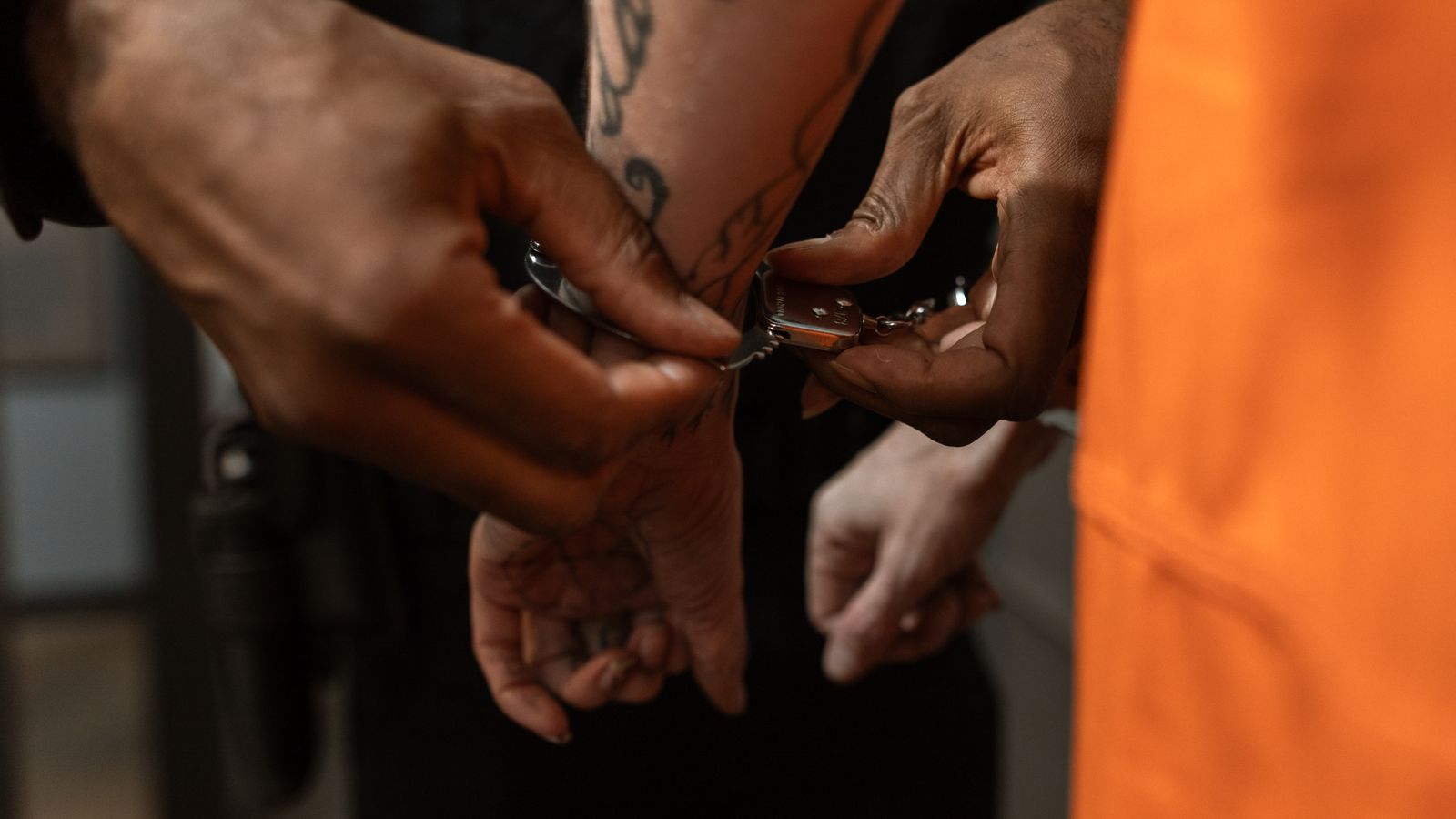
Executive Summary
Despite widespread legalization, marijuana possession remains one of the most common reasons for arrest in the United States, accounting for nearly one in four drug-related arrests nationwide according to FBI data released in August 2026. Law enforcement agencies arrested approximately 317,000 people for cannabis-related violations in 2025, with the overwhelming majority—roughly 88 percent—charged solely with possession rather than sale or manufacturing. This enforcement pattern persists even as 24 states plus the District of Columbia have legalized adult-use cannabis and 38 states permit medical marijuana programs. The continued arrests impose substantial costs on individuals, communities, and taxpayers while generating significant racial disparities in enforcement. Black Americans are arrested for marijuana possession at nearly four times the rate of white Americans despite similar usage rates across racial groups. These enforcement patterns affect employment prospects, housing access, educational opportunities, and voting rights for hundreds of thousands of Americans annually, while diverting law enforcement resources from violent crime investigations.
Why This Matters
Marijuana arrests affect more Americans than any other drug enforcement category and carry consequences extending far beyond the criminal justice system. The 317,000 cannabis arrests in 2025 represent more enforcement actions than for cocaine, heroin, methamphetamine, and synthetic opioids combined. Each arrest triggers a cascade of potential consequences: immediate detention, bail requirements averaging $5,000 to $15,000, attorney fees ranging from $2,500 to $10,000 for basic representation, potential jail time, probation supervision, mandatory drug testing, and a permanent criminal record.
For individuals, a marijuana possession conviction creates barriers to employment, particularly in industries requiring background checks or federal licensing. The conviction appears on FBI background checks accessible to employers, landlords, and educational institutions. Federal student aid becomes restricted or unavailable under 20 U.S.C. § 1091(r), affecting college access. Public housing eligibility faces restrictions under 42 U.S.C. § 13661. In twelve states, drug convictions trigger automatic driver's license suspension regardless of whether a vehicle was involved.
Taxpayers bear substantial costs for this enforcement. The American Civil Liberties Union estimated in 2023 that marijuana enforcement costs state and local governments approximately $3.6 billion annually when accounting for police officer time, court processing, public defender services, jail detention, probation supervision, and drug testing programs. The average cost per marijuana arrest ranges from $750 to $1,200 depending on jurisdiction.
Communities experience enforcement disparities that exacerbate existing inequalities. Despite the National Survey on Drug Use and Health consistently showing similar usage rates across racial groups—approximately 18 percent for both Black and white Americans—arrest rates diverge dramatically. In some counties, Black residents face arrest rates ten times higher than white residents. These disparities concentrate in specific neighborhoods, creating what researchers term "million-dollar blocks" where the cumulative cost of incarcerating residents from a single city block exceeds one million dollars annually.
Background and History: From Prohibition to Patchwork Legalization
Federal marijuana prohibition began in 1937 and evolved through escalating enforcement that peaked in 2007 with 872,000 arrests, followed by gradual state-level reforms that created the current fragmented legal landscape.
The Marihuana Tax Act of 1937
Congress enacted the Marihuana Tax Act on August 2, 1937, effectively prohibiting cannabis through prohibitive taxation and registration requirements. Federal Bureau of Narcotics Commissioner Harry Anslinger led the campaign for prohibition, testifying before Congress that marijuana caused violence and insanity. The Act imposed occupational taxes on cannabis dealers and transfer taxes on transactions, with violations punishable by up to five years imprisonment. The Supreme Court struck down the Act in Leary v. United States, 395 U.S. 6 (1969), finding the registration requirement violated Fifth Amendment protections against self-incrimination.
The Controlled Substances Act Era
Congress replaced the Tax Act with the Controlled Substances Act of 1970, codified at 21 U.S.C. § 801 et seq. The CSA placed marijuana in Schedule I, defined as substances with high abuse potential, no accepted medical use, and lack of accepted safety for use under medical supervision. Schedule I classification made any possession, cultivation, or distribution a federal crime. Simple possession carried penalties up to one year imprisonment and $1,000 fine under 21 U.S.C. § 844.
President Richard Nixon declared a "War on Drugs" in June 1971, directing increased federal resources toward drug enforcement. The Drug Enforcement Administration formed in 1973, consolidating federal drug enforcement under the Department of Justice. Despite Nixon's own commission—the Shafer Commission—recommending decriminalization of marijuana possession in 1972, federal enforcement intensified throughout the 1970s.
Mandatory Minimums and Escalation
The Anti-Drug Abuse Act of 1986 established mandatory minimum sentences for drug offenses, though marijuana possession remained a misdemeanor at the federal level. States enacted their own mandatory minimums throughout the 1980s and 1990s. By 1991, marijuana arrests exceeded 300,000 annually for the first time. The 1994 Crime Bill, formally the Violent Crime Control and Law Enforcement Act, provided federal funding to states for prison construction and law enforcement expansion, incentivizing arrest-focused drug enforcement.
Peak Enforcement: 2000-2010
Marijuana arrests reached historic highs during the 2000s despite growing public support for reform. The FBI's Uniform Crime Reporting Program documented 872,720 marijuana arrests in 2007—the highest single-year total on record. Approximately 89 percent involved possession only. This represented one marijuana arrest every 36 seconds. New York City alone made over 50,000 marijuana arrests annually from 2000 to 2010, predominantly in Black and Latino neighborhoods.
State-Level Reform Movement
California voters approved Proposition 215 in 1996, establishing the nation's first medical marijuana program. Alaska, Oregon, and Washington followed with medical programs by 1998. Decriminalization efforts preceded medical legalization in several states. Oregon decriminalized possession of small amounts in 1973. By 2000, eleven states had decriminalized possession, typically making possession of one ounce or less a civil violation with fines rather than criminal penalties.
Colorado and Washington voters approved adult-use legalization in November 2012, with sales beginning in 2014. Alaska, Oregon, and the District of Columbia followed in 2014. By 2026, twenty-four states plus DC permit adult-use cannabis, while fourteen additional states maintain medical-only programs. However, twelve states retain full prohibition with criminal penalties for any possession.
Federal Enforcement Under Different Administrations
The Obama administration issued the Cole Memorandum in August 2013, directing federal prosecutors to deprioritize marijuana enforcement in states with robust regulatory systems. Attorney General Jeff Sessions rescinded the Cole Memo in January 2018, restoring prosecutorial discretion to U.S. Attorneys. The Trump administration brought few federal marijuana possession cases, focusing instead on large-scale trafficking. The Biden administration maintained deprioritization of simple possession cases while pursuing rescheduling through administrative processes.
Recent Developments: 2020-2026
President Biden issued pardons for federal simple marijuana possession in October 2022, affecting approximately 6,500 individuals with federal convictions and thousands more with D.C. convictions. He directed the Department of Health and Human Services to review marijuana's Schedule I classification. HHS recommended rescheduling to Schedule III in August 2023. The DEA published a Notice of Proposed Rulemaking in May 2024, initiating the formal rescheduling process. Administrative Law Judge hearings began in December 2025 and continue through 2026.
Despite federal reform efforts, state and local arrests continued. The FBI reported 317,000 marijuana arrests in 2025, down from 350,000 in 2024 but still representing 23 percent of all drug arrests nationwide. Possession arrests comprised 279,000 of the total, with 38,000 arrests for sale or manufacturing.
Key Players in Marijuana Enforcement
Drug Enforcement Administration
The DEA maintains primary federal enforcement authority over controlled substances including marijuana under 21 U.S.C. § 871. The agency employs approximately 10,000 personnel including 5,000 special agents. While the DEA focuses primarily on large-scale trafficking organizations and interstate distribution, the agency's scheduling authority directly affects state-level enforcement. DEA Administrator Anne Milgram testified before Congress in March 2026 that the agency made 152 marijuana-related arrests in 2025, down from over 6,000 annually in the early 2000s. The agency's current enforcement priorities target operations exceeding 1,000 plants or involving firearms, violence, or distribution to minors.
State and Local Law Enforcement
State and local agencies conduct over 99 percent of marijuana arrests. Police departments in prohibition states maintain active enforcement, while agencies in legal states navigate complex regulatory frameworks. The International Association of Chiefs of Police has not taken an official position on legalization but emphasizes officer training on impaired driving detection. Some departments in legal states increased arrests for unlicensed sales or public consumption violations even as possession arrests declined.
NORML
The National Organization for the Reform of Marijuana Laws, founded in 1970, advocates for legalization and tracks arrest data nationally. NORML Deputy Director Paul Armentano stated in August 2026 that "hundreds of thousands of Americans continue to be arrested annually for low-level cannabis-related violations even though a majority of voters no longer believe that the responsible use of marijuana by adults should be a crime." The organization maintains a legal database tracking arrests, prosecutions, and convictions across jurisdictions.
American Civil Liberties Union
The ACLU published comprehensive marijuana arrest reports in 2013 and 2020 documenting racial disparities in enforcement. The organization's 2020 report, "A Tale of Two Countries: Racially Targeted Arrests in the Era of Marijuana Reform," analyzed over 6 million arrests from 2010 to 2018. ACLU attorney Ezekiel Edwards leads the organization's criminal law reform project focusing on marijuana enforcement disparities.
Law Enforcement Action Partnership
LEAP, formerly Law Enforcement Against Prohibition, comprises current and former police, prosecutors, judges, and corrections officials advocating for drug policy reform. The organization's 180-plus speakers include former Seattle Police Chief Norm Stamper and former Baltimore narcotics officer Neill Franklin. LEAP argues that marijuana prohibition diverts resources from violent crime investigation and undermines community-police relations.
Smart Approaches to Marijuana
SAM opposes legalization while supporting decriminalization, arguing that commercial marijuana markets increase youth access and impaired driving. Founded in 2013 by former Representative Patrick Kennedy and physician Kevin Sabet, SAM advocates for civil penalties rather than criminal sanctions for possession while maintaining criminal penalties for cultivation and sales outside medical programs.
Legal and Regulatory Framework
Marijuana enforcement operates under a complex dual-sovereignty system where federal prohibition coexists with varying state approaches ranging from full legalization to criminal prohibition.
Federal Statutes
The Controlled Substances Act at 21 U.S.C. § 812 places marijuana in Schedule I. Simple possession violates 21 U.S.C. § 844(a), carrying maximum penalties of one year imprisonment and $1,000 fine for first offense. Cultivation of any amount constitutes manufacturing under 21 U.S.C. § 841(a)(1), a felony carrying five-year mandatory minimum for 100 plants or more. Distribution of any amount violates § 841(a)(1) with penalties scaling based on quantity.
Federal law applies in all U.S. territories, on federal lands including national parks, military bases, and federal buildings, and in maritime jurisdiction. The Assimilative Crimes Act, 18 U.S.C. § 13, incorporates state criminal laws for offenses on federal enclaves, creating complexity where federal land exists within legal states.
State Criminal Codes
Twelve states maintain full prohibition: Idaho, Kansas, Nebraska, South Carolina, Tennessee, Texas, Wisconsin, Wyoming, Indiana, Iowa, Kentucky, and Georgia. Penalties vary substantially. In Texas, possession under two ounces constitutes a Class B misdemeanor carrying up to 180 days jail and $2,000 fine. Kansas classifies any possession as a misdemeanor with up to one year imprisonment. South Carolina imposes up to 30 days for first offense, six months for subsequent offenses.
Fourteen states decriminalized possession while maintaining criminal penalties for cultivation and sales. In North Carolina, possession of up to 1.5 ounces constitutes a Class 3 misdemeanor with $200 fine and no jail time. Mississippi decriminalized up to 30 grams as a civil violation with $250 fine in 2021.
Medical-only states permit possession by registered patients but arrest non-patients. Florida arrests averaged 38,000 annually from 2020 to 2025 despite the state's medical program serving over 800,000 registered patients.
Constitutional Challenges
Courts have rejected constitutional challenges to marijuana prohibition. In Gonzales v. Raich, 545 U.S. 1 (2005), the Supreme Court held that Congress may criminalize intrastate marijuana cultivation and possession under the Commerce Clause even in medical marijuana states. The Court found that homegrown marijuana for personal medical use substantially affects interstate commerce in the aggregate.
Equal protection challenges to racially disparate enforcement have largely failed. In United States v. Armstrong, 517 U.S. 456 (1996), the Court established high barriers for selective prosecution claims, requiring defendants to prove discriminatory intent and effect. Few marijuana defendants meet this burden despite statistical evidence of racial disparities.
Prosecutorial Discretion
Prosecutors exercise broad discretion in charging decisions. Many district attorneys in legal states dismiss pre-legalization possession cases or decline to prosecute new cases. Philadelphia District Attorney Larry Krasner announced in 2018 that his office would no longer prosecute marijuana possession. Manhattan District Attorney Alvin Bragg implemented similar policies in 2022. Conversely, prosecutors in prohibition states routinely pursue possession charges, with conviction rates exceeding 90 percent in most jurisdictions.
State-by-State Enforcement Patterns
Arrest rates vary dramatically by state, with prohibition states maintaining high enforcement levels while legal states show declining but persistent arrests for regulatory violations.
| State | Legal Status | 2025 Arrests | Primary Enforcement Focus |
|---|---|---|---|
| Texas | Prohibited | 47,300 | All possession; under 2 oz misdemeanor |
| Florida | Medical only | 38,100 | Non-patient possession; over 20 grams felony |
| New York | Adult-use legal | 12,400 | Unlicensed sales; public consumption |
| Georgia | Prohibited | 18,700 | All possession; low-THC oil only medical exception |
| California | Adult-use legal | 9,200 | Unlicensed cultivation; sales to minors |
| Tennessee | Prohibited | 16,500 | All possession; half-ounce or less misdemeanor |
| Illinois | Adult-use legal | 4,100 | Possession over legal limits; unlicensed sales |
| Wisconsin | Prohibited | 14,200 | All possession; any amount misdemeanor |
Texas
Texas led the nation with 47,300 marijuana arrests in 2025, representing 15 percent of all national cannabis arrests. The state maintains full prohibition except for a limited low-THC medical program serving approximately 30,000 registered patients. Possession under two ounces constitutes a Class B misdemeanor under Texas Health and Safety Code § 481.121, punishable by up to 180 days jail and $2,000 fine. Harris County, which includes Houston, implemented cite-and-release policies in 2017 for possession under four ounces, reducing jail bookings by 60 percent. However, rural counties continue booking and prosecuting most possession cases.
Florida
Florida arrested 38,100 people for marijuana offenses in 2025 despite operating one of the nation's largest medical marijuana programs with over 800,000 registered patients. Possession of 20 grams or less constitutes a first-degree misdemeanor carrying up to one year jail under Florida Statutes § 893.13. Over 20 grams escalates to a third-degree felony with up to five years imprisonment. Miami-Dade and Broward counties implemented civil citation programs allowing officers to issue notices to appear rather than arrest for possession under 20 grams, but utilization varies by department and officer.
New York
New York legalized adult-use cannabis in March 2021 through the Marijuana Regulation and Taxation Act. Possession arrests declined from 25,000 in 2020 to 12,400 in 2025. However, arrests persist for unlicensed sales, public consumption in restricted areas, and possession over the three-ounce legal limit. New York City accounts for 60 percent of state marijuana arrests, with enforcement concentrated in Brooklyn and the Bronx. The state expunged approximately 200,000 prior marijuana convictions following legalization.
California
California voters approved adult-use legalization through Proposition 64 in November 2016, with sales beginning January 2018. Arrests declined from 54,000 in 2016 to 9,200 in 2025. Current enforcement targets unlicensed cultivation operations, particularly in the Emerald Triangle counties of Humboldt, Mendocino, and Trinity. Los Angeles and San Diego prosecute unlicensed storefront operations and delivery services. Possession of up to one ounce and cultivation of up to six plants remain legal for adults 21 and older under Health and Safety Code § 11362.1.
Georgia
Georgia arrested 18,700 people for marijuana offenses in 2025, maintaining full prohibition except for a restrictive low-THC oil program serving approximately 8,000 registered patients. Possession of one ounce or less constitutes a misdemeanor under O.C.G.A. § 16-13-2, carrying up to one year jail and $1,000 fine. Over one ounce escalates to a felony with one to ten years imprisonment. Atlanta and several municipalities decriminalized possession through local ordinances, but state law governs arrests by Georgia State Patrol and county sheriffs.
Illinois
Illinois legalized adult-use cannabis on January 1, 2020, through the Cannabis Regulation and Tax Act. Arrests declined from 30,000 in 2019 to 4,100 in 2025. Chicago police made 2,400 marijuana arrests in 2025, primarily for unlicensed sales and possession over the 30-gram legal limit. The state automatically expunged approximately 500,000 prior marijuana convictions. Current enforcement focuses on unlicensed dispensaries and delivery services operating without state licenses.
Ohio
Ohio voters approved adult-use legalization in November 2023, with implementation beginning in 2024. Arrests declined from 18,000 in 2023 to 6,700 in 2025. Possession of up to 2.5 ounces became legal for adults 21 and older. However, home cultivation remains prohibited, and unlicensed sales carry felony penalties. Cleveland and Columbus implemented cite-and-release policies for possession over legal limits rather than booking arrests.
Massachusetts
Massachusetts legalized adult-use cannabis in December 2016, with sales beginning November 2018. Arrests declined from 11,000 in 2016 to 1,800 in 2025—the lowest rate per capita among legal states. Possession of up to one ounce in public and ten ounces at home became legal under Massachusetts General Laws Chapter 94G. Current enforcement targets unlicensed delivery services and sales to minors. The state sealed approximately 80,000 prior marijuana convictions.
Market and Business Implications
Continued arrests in prohibition states suppress legal market development while creating compliance risks for multi-state operators navigating conflicting state and federal laws.
MSO Risk Management
Multi-state operators face arrest risks for executives traveling to prohibition states, transportation of products across state lines, and banking relationships. Curaleaf, Trulieve, Green Thumb Industries, and Cresco Labs maintain compliance departments monitoring arrest trends and enforcement patterns. Several MSOs prohibit executives from traveling to prohibition states with cannabis products or documentation. Interstate commerce remains federally prohibited under 21 U.S.C. § 841, creating risks even for transfers between licensed facilities in different legal states.
Banking and Financial Services
The threat of federal prosecution under 18 U.S.C. § 1956 (money laundering) and 18 U.S.C. § 1957 (monetary transactions in property derived from specified unlawful activity) deters banks from serving cannabis businesses. Approximately 70 percent of dispensaries operate cash-only due to lack of banking access. The SAFE Banking Act, which would protect financial institutions serving state-legal cannabis businesses, passed the House seven times from 2019 to 2025 but stalled in the Senate. Credit unions and state-chartered banks serving cannabis businesses face enhanced scrutiny and examination by federal regulators.
Employment and Workplace Policies
Employers in legal states maintain zero-tolerance drug policies due to federal prohibition and concerns about workplace safety. Amazon announced in 2021 it would no longer test most employees for marijuana, but transportation, healthcare, and manufacturing sectors continue pre-employment and random testing. Approximately 1.6 million Americans failed workplace drug tests for marijuana in 2025 according to Quest Diagnostics data. Several states including Nevada, New York, and New Jersey prohibit employment discrimination based on off-duty cannabis use, but exceptions exist for safety-sensitive positions.
Insurance and Liability
Cannabis businesses pay premium rates for general liability, product liability, and property insurance due to federal illegality. Annual insurance costs average $50,000 to $150,000 for mid-sized dispensaries compared to $5,000 to $15,000 for comparable retail businesses. Workers compensation insurers in some states refuse coverage for cannabis businesses, forcing operators to self-insure or use state-assigned risk pools at elevated rates.
Tax Treatment Under 280E
Internal Revenue Code § 280E prohibits businesses trafficking in Schedule I or II controlled substances from deducting ordinary business expenses. Cannabis businesses may deduct only cost of goods sold, resulting in effective federal tax rates of 40 to 70 percent of gross revenues. Rescheduling to Schedule III would eliminate 280E restrictions, reducing tax burdens by an estimated $1.5 to $2 billion annually across the industry. However, rescheduling would not eliminate arrest risks in prohibition states or federal prohibition of interstate commerce.
What Experts Say
Researchers, advocates, and law enforcement officials increasingly question the public safety value of marijuana arrests while documenting substantial collateral consequences.
According to the Drug Policy Alliance, marijuana arrests create cascading harms disproportionate to the underlying offense. The organization's 2025 report found that 64 percent of people arrested for marijuana possession lost employment, 42 percent experienced housing instability, and 31 percent lost child custody or visitation rights. DPA's director of criminal justice reform, Kassandra Frederique, said the organization documented these outcomes through surveys of 2,400 individuals arrested for marijuana possession from 2020 to 2024.
The Marijuana Policy Project analyzed arrest data across legal and prohibition states, finding that legalization reduced arrests by an average of 94 percent in the first five years of implementation. However, MPP's research director, Mason Tvert, noted that arrests for unlicensed sales and cultivation increased in some legal states, partially offsetting possession arrest declines. The organization found that total marijuana arrests in legal states averaged 15 per 100,000 residents compared to 180 per 100,000 in prohibition states.
The RAND Corporation published research in 2024 examining the relationship between marijuana arrests and violent crime clearance rates. The study found that police departments making high volumes of marijuana arrests showed lower clearance rates for homicide, rape, robbery, and aggravated assault. RAND researcher Beau Kilmer stated the research suggested marijuana enforcement diverted investigative resources from serious crimes, though the study could not establish direct causation.
The National Association of Criminal Defense Lawyers documented in 2025 that marijuana possession cases consume substantial public defender resources. NACDL found that marijuana cases represented 18 percent of public defender caseloads in prohibition states, requiring an average of 12 attorney hours per case including client meetings, discovery review, motion practice, and court appearances. The organization calculated that eliminating marijuana possession prosecutions would free approximately 850,000 attorney hours annually for representation in violent crime and property crime cases.
According to the Sentencing Project, marijuana arrest records create permanent barriers to economic opportunity. The organization's 2026 analysis found that individuals with marijuana possession convictions earned 23 percent less annually than similarly situated individuals without criminal records. The wage penalty persisted for at least ten years following conviction. Sentencing Project research director Ashley Nellis said the earnings impact resulted from both direct employment discrimination and reduced educational attainment due to financial aid restrictions.
What's Next: Reform Trajectories and Decision Points
Federal rescheduling, state-level legalization ballot measures, and expungement initiatives will shape enforcement patterns through 2027, though complete federal decriminalization remains unlikely in the near term.
Federal Rescheduling Timeline
The DEA's administrative law judge hearings on rescheduling marijuana to Schedule III continue through September 2026. The ALJ will issue a recommended decision by November 2026. DEA Administrator Milgram must issue a final rule by March 2027. If rescheduling proceeds, marijuana would remain federally controlled, and possession would remain illegal under federal law. However, rescheduling would eliminate 280E tax penalties and potentially influence state-level enforcement priorities. The Congressional Research Service projects that rescheduling would not affect state criminal laws, which operate independently of federal scheduling.
2026 Ballot Measures
Voters in Arkansas, North Dakota, and South Dakota will decide adult-use legalization measures in November 2026. Arkansas voters rejected legalization in 2022 but approved medical marijuana in 2016. North Dakota voters rejected legalization in 2022. South Dakota voters approved legalization in 2020, but the state Supreme Court invalidated the measure on procedural grounds. If all three states approve legalization, marijuana arrests could decline by an estimated 35,000 annually based on population and current arrest rates.
Congressional Legislation
The Cannabis Administration and Opportunity Act, introduced in the Senate in 2025, would deschedule marijuana entirely and expunge federal convictions. The bill faces opposition from Republican senators and has not advanced to committee votes. The SAFE Banking Act remains under consideration but faces similar obstacles. The MORE Act, which would deschedule marijuana and impose a federal excise tax, passed the House in 2022 but died in the Senate. Congressional observers project less than 20 percent probability of comprehensive federal legalization before 2028.
Expungement and Record Clearing
Eighteen states enacted automatic expungement provisions for prior marijuana convictions following legalization. California, Illinois, New York, and New Jersey implemented the most comprehensive programs, clearing over 1.2 million convictions combined. However, expungement processes vary substantially. Some states require individuals to petition courts and pay filing fees. Others automatically clear records but do not notify individuals, leaving many unaware their records were expunged. The Clean Slate Initiative advocates for automatic record clearing in all states with lookback periods of seven to ten years for misdemeanors.
Enforcement Trend Projections
The FBI projects marijuana arrests will decline to approximately 280,000 in 2026 and 250,000 in 2027 based on current state-level reform trajectories. However, arrests will remain concentrated in prohibition states absent federal intervention. Texas, Florida, Georgia, and Tennessee will likely account for over 50 percent of all marijuana arrests through 2027. Racial disparities in enforcement are projected to persist or worsen in prohibition states based on historical patterns.
Further Reading and Primary Sources
- FBI Uniform Crime Reporting Program, Crime in the United States annual reports: https://www.fbi.gov/how-we-can-help-you/more-fbi-services-and-information/ucr
- ACLU, "A Tale of Two Countries: Racially Targeted Arrests in the Era of Marijuana Reform" (2020): https://www.aclu.org/report/tale-two-countries-racially-targeted-arrests-era-marijuana-reform
- NORML, Marijuana Arrests by State database: https://norml.org/marijuana/fact-sheets/marijuana-arrests/
- Controlled Substances Act, 21 U.S.C. § 801 et seq.: https://www.deadiversion.usdoj.gov/21cfr/21usc/
- DEA, Notice of Proposed Rulemaking on marijuana rescheduling (May 2024), Docket No. DEA-407: https://www.regulations.gov
- Drug Policy Alliance, "Marijuana Arrests and Collateral Consequences" (2025): https://drugpolicy.org/
- The Sentencing Project, "The Economic Impacts of Marijuana Arrests" (2026): https://www.sentencingproject.org/
- RAND Corporation, "The Opportunity Costs of Marijuana Enforcement" (2024): https://www.rand.org/
- National Conference of State Legislatures, State Medical Marijuana Laws: https://www.ncsl.org/health/state-medical-cannabis-laws
- Congressional Research Service, "Marijuana: Medical and Retail—Selected Legal Issues" (updated 2026): https://crsreports.congress.gov
Update — September 8, 2026: Six States Report Marijuana Arrests Exceeding Half of All Drug Arrests
New data revealed that marijuana arrests accounted for more than 50 percent of all drug arrests in six U.S. states, according to a September 2026 analysis published by Marijuana Moment. The states identified were Wyoming, Montana, Nebraska, South Dakota, Idaho, and Kansas—all jurisdictions where adult-use cannabis remains fully prohibited. Wyoming led with marijuana arrests representing 62 percent of total drug arrests, followed by Montana at 58 percent and Nebraska at 56 percent.
The findings drew from FBI Uniform Crime Reporting data for 2025, which showed that despite nationwide decriminalization trends, these states continued aggressive enforcement targeting cannabis possession and distribution. In Wyoming alone, law enforcement made approximately 3,400 marijuana arrests in 2025, compared to 2,100 arrests for all other controlled substances combined. South Dakota recorded 2,800 marijuana arrests, comprising 54 percent of its drug enforcement activity, despite voters approving a legalization measure in 2020 that was later invalidated by the state Supreme Court.
Civil rights advocates noted the data underscored persistent enforcement disparities in prohibition states. According to the ACLU, Black residents in these six states were arrested for marijuana offenses at rates 3.2 to 4.7 times higher than white residents, despite similar usage rates across demographics. The resource allocation raised fiscal concerns: Nebraska spent an estimated $18 million annually on marijuana enforcement and incarceration, funds that reform advocates said could address treatment infrastructure or violent crime investigation.
The report's release coincided with renewed legislative efforts in Montana and Nebraska to establish regulated adult-use markets. Montana's HB 392, introduced in the 2026 session, proposed expungement for prior possession convictions and a tax structure directing 40 percent of revenue to rural law enforcement. For operators in border states with legal markets, the data highlighted continued risks of interstate enforcement and the operational imperative of strict compliance with state-line transport prohibitions.
Frequently asked questions
How many people are arrested for marijuana each year in the United States?
According to FBI Uniform Crime Reporting data, hundreds of thousands of Americans are arrested annually for marijuana-related offenses. Recent federal statistics indicate cannabis possession arrests represent approximately 24% of all drug arrests nationwide. The majority of these arrests are for simple possession rather than cultivation or distribution. Arrest numbers have declined in states with legalization but remain substantial in prohibition states, particularly in the South and Midwest where enforcement priorities have not shifted significantly.
What percentage of marijuana arrests are for possession versus distribution?
The overwhelming majority of marijuana arrests are for simple possession rather than sale or trafficking. FBI data consistently shows that approximately 85-90% of cannabis arrests involve possession only, with the remaining 10-15% for manufacturing or distribution. This pattern has remained relatively stable over decades, indicating that enforcement efforts primarily target individual users rather than large-scale operations. Critics argue this represents an inefficient use of law enforcement resources that could be directed toward violent crime prevention.
Are marijuana arrest rates different for different racial groups?
Yes, significant racial disparities exist in marijuana arrest rates despite similar usage rates across demographics. According to ACLU analysis of arrest data, Black Americans are arrested for marijuana possession at approximately 3.6 times the rate of white Americans nationally, with some jurisdictions showing even wider gaps. These disparities persist even in states that have decriminalized or legalized cannabis. Research indicates these differences reflect enforcement patterns and policing practices rather than differences in actual cannabis use, which surveys show is roughly equal across racial groups.
What are the consequences of a marijuana possession arrest?
A marijuana arrest can trigger immediate and long-term consequences even without conviction. Immediate impacts include jail time, bail costs, legal fees, and potential job loss. A conviction creates a criminal record that can limit employment opportunities, educational financial aid eligibility, professional licensing, housing options, and immigration status. In some states, convictions can affect child custody, voting rights, and access to public benefits. Even in legal states, federal prohibition means cannabis convictions can still impact federal employment, security clearances, and gun ownership rights under federal law.
How has marijuana legalization affected arrest rates?
States that have legalized adult-use cannabis have seen dramatic reductions in marijuana arrests. Colorado, Washington, and other early-legalizing states reported 90% or greater decreases in cannabis arrests following legalization. However, national arrest numbers remain high because many states maintain prohibition. Additionally, legal states still make arrests for violations of regulatory frameworks, such as unlicensed sales, underage possession, or exceeding possession limits. Decriminalization without full legalization produces more modest reductions, as civil citations may still be issued for possession.
Do police still prioritize marijuana enforcement in 2026?
Enforcement priorities vary dramatically by jurisdiction. Many urban police departments and prosecutors in both legal and illegal states have deprioritized low-level marijuana possession, treating it as the lowest enforcement priority or declining to prosecute entirely. However, some jurisdictions, particularly in prohibition states and rural areas, continue active enforcement. Federal agencies like DEA focus on large-scale trafficking operations rather than simple possession. The patchwork of state laws creates inconsistent enforcement, where identical conduct may be ignored in one jurisdiction while triggering arrest in another just miles away.
Can you still be arrested for marijuana in states where it's legal?
Yes, arrests still occur in legal states for violations of regulatory frameworks. Common arrest scenarios include: possession exceeding legal limits, public consumption in prohibited areas, driving under the influence, providing cannabis to minors, unlicensed cultivation or sales, and transporting cannabis across state lines. Additionally, marijuana remains federally illegal, meaning federal law enforcement can theoretically make arrests even in legal states, though this is rare for simple possession. Employers can also still enforce drug-free workplace policies and terminate employees for cannabis use regardless of state legality.
What is being done to address past marijuana convictions?
Many states with legalization have implemented expungement and record-clearing programs for past marijuana convictions. Some states like California, Illinois, and New Jersey have automatic expungement processes that clear eligible records without requiring individuals to petition courts. Other states require applications for expungement or pardons. President Biden issued pardons for federal simple possession convictions in 2022, though this affected relatively few people since most arrests are state-level. Social equity programs in some legal states prioritize licensing for communities disproportionately impacted by enforcement, though implementation has been uneven.
How does federal marijuana prohibition affect enforcement?
Federal prohibition creates legal complexity even in states with legalization. Cannabis remains a Schedule I controlled substance under federal law, making cultivation, distribution, and possession federal crimes. While federal agencies generally don't prosecute simple possession in legal states, the conflict creates issues for banking, interstate commerce, immigration, federal employment, and gun ownership. Federal prohibition also enables continued enforcement in states without legalization and limits research. The gap between state and federal law creates uncertainty and prevents full normalization of the cannabis industry despite state-level reforms.
What reforms are advocates pushing for regarding marijuana arrests?
Reform advocates focus on several priorities: federal descheduling or legalization to resolve state-federal conflicts, automatic expungement of past convictions, ending civil asset forfeiture in cannabis cases, prohibiting discrimination based on legal cannabis use, addressing racial disparities through policy changes and data collection requirements, and reinvesting enforcement savings into communities harmed by prohibition. Organizations like NORML, Drug Policy Alliance, and Marijuana Policy Project advocate for these changes. Some reformers push for complete decriminalization of all drug possession, treating substance use as a health issue rather than criminal matter.
How do marijuana arrest rates in the U.S. compare to other countries?
The United States has historically had among the highest marijuana arrest rates in the developed world, though this has moderated in recent years with state-level legalization. Countries like Portugal, which decriminalized all drugs in 2001, and the Netherlands, with its tolerance policy, have minimal cannabis arrests. Canada's 2018 federal legalization eliminated most cannabis arrests nationwide. Many European countries have de facto decriminalization despite formal prohibition. The U.S. system remains unique in its state-federal conflict, creating a patchwork where enforcement varies more by geography than in most other nations with unified national policies.
What happens if you're arrested for marijuana in a prohibition state?
In states where marijuana remains illegal, possession arrests typically result in misdemeanor charges for small amounts, though penalties vary widely. First-time offenders may be offered diversion programs, probation, or fines rather than jail time. Larger amounts or repeat offenses can trigger felony charges with potential prison sentences. Consequences include court appearances, legal fees, potential jail time, probation, drug testing, mandatory treatment programs, and a criminal record. Some prohibition states have decriminalized small amounts, replacing arrest with civil citations and fines, though this still creates a record and financial burden.
The cannabis newsletter you forward to your team.
Federal policy, market data, grower alerts, and the one story that matters today. Sent every weekday at 7am. Free.
No spam. Unsubscribe with one click. 21+ only.