Idaho Marijuana Ballot Measure: Legalization Efforts and Restrictions
Idaho remains one of the most restrictive states for cannabis policy in the United States. This hub covers ongoing ballot measure efforts to legalize marijuana in Idaho, including citizen-led initiatives and legislative attempts to restrict voter access to cannabis legalization. We examine the state's constitutional barriers, previous ballot measure campaigns, public opinion polling, and the political landscape surrounding marijuana reform. Idaho's unique position as a prohibition state surrounded by legal cannabis markets creates distinct policy challenges and opportunities for reform advocates.
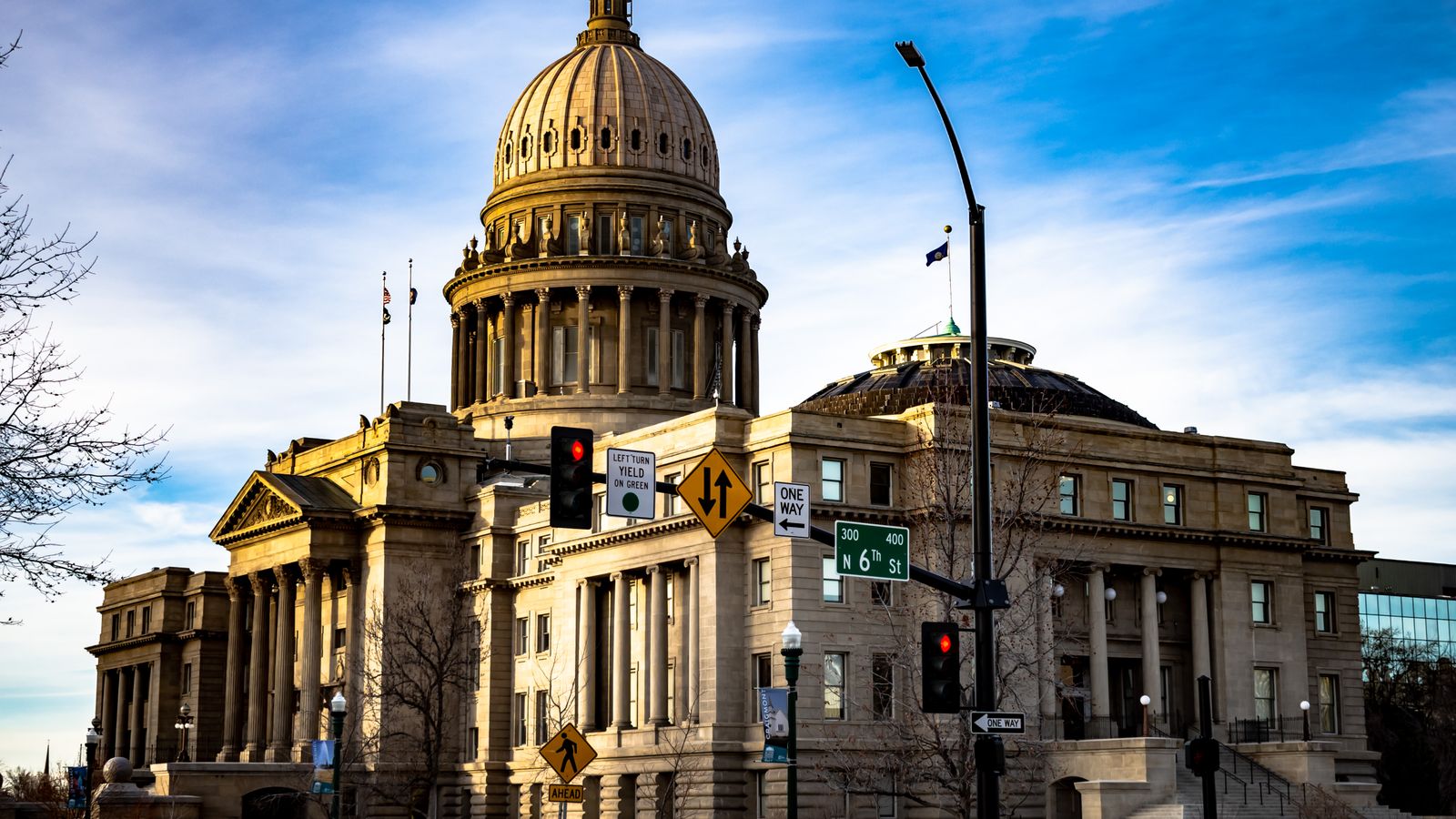
Executive Summary
Idaho lawmakers are promoting a ballot measure that would make it significantly harder for voters to legalize marijuana through future citizen initiatives. The measure, appearing on Idaho's November 2026 ballot, would require a two-thirds supermajority vote to amend the state constitution through the initiative process, up from the current simple majority. This represents a preemptive strike against cannabis legalization efforts in one of the last remaining states with comprehensive prohibition. Idaho currently maintains some of the strictest marijuana laws in the nation, with no legal access for medical or recreational use, and lawmakers are working to ensure that status remains unchanged. The ballot measure has sparked intense debate about direct democracy, states' rights, and the future of cannabis policy in conservative-leaning states. If approved, Idaho would join a small number of states that have erected supermajority barriers to constitutional amendments, effectively creating a two-tier system where legislative proposals face lower thresholds than citizen-driven initiatives.Why This Matters
The Idaho ballot measure represents a critical test case for how states can restrict direct democracy to prevent cannabis reform. Idaho is one of only three states—alongside Nebraska and Kansas—that maintains complete prohibition of marijuana in all forms, with no medical cannabis program and criminal penalties for any possession. The state's approach has created significant consequences for patients, law enforcement resources, and neighboring state economies. Approximately 1.9 million Idaho residents currently lack legal access to medical marijuana, forcing an estimated 15,000 to 25,000 patients to either relocate, travel to neighboring states, or risk criminal prosecution. Idaho shares borders with Washington, Oregon, Nevada, Montana, and Wyoming—four of which have legalized adult-use cannabis, creating a patchwork of conflicting laws that complicates enforcement and generates cross-border commerce. The economic implications are substantial. Idaho forgoes an estimated $45 million to $65 million annually in potential tax revenue from a regulated cannabis market, according to fiscal impact analyses. Meanwhile, the state spends approximately $8 million per year on marijuana-related arrests, prosecutions, and incarceration. In 2025, Idaho law enforcement made over 3,600 marijuana-related arrests, with possession charges accounting for roughly 75% of cases. For the broader cannabis industry, Idaho's ballot measure sets a precedent that could be replicated in other prohibition states. Multi-state operators and advocacy organizations have closely monitored Idaho as a potential expansion market, with several groups having invested in preliminary signature-gathering infrastructure for future legalization campaigns. A successful supermajority requirement would effectively close that pathway, forcing reform advocates to work through the legislature—a body that has repeatedly rejected even modest medical cannabis proposals. The measure also carries implications for federalism and cannabis policy nationwide. As federal rescheduling discussions continue and more states liberalize their laws, Idaho's entrenchment of prohibition creates increasingly stark contrasts in regional policy and complicates interstate commerce frameworks under potential federal reform scenarios.Background and History
Idaho's path to becoming one of America's last prohibition strongholds spans decades of legislative resistance, failed reform attempts, and constitutional maneuvering.Early Prohibition Era (1927-1990s)
Idaho first criminalized marijuana in 1927, aligning with early national prohibition efforts. The state's conservative political culture and rural character reinforced strict drug policies throughout the 20th century. Unlike many western states that began reconsidering cannabis laws in the 1970s, Idaho maintained unwavering opposition. In 1978, when neighboring Oregon decriminalized small amounts of marijuana, Idaho lawmakers responded by increasing penalties, establishing a pattern of resistance that would persist for decades. The state's initiative process, established in 1912, theoretically provided citizens a pathway to bypass legislative opposition. However, Idaho's initiative requirements—including geographic distribution requirements and signature thresholds—created significant barriers. Between 1912 and 2000, only 23 citizen initiatives qualified for the ballot, with a success rate below 40%.Medical Cannabis Attempts (2000-2015)
The first organized medical marijuana initiative effort in Idaho emerged in 2012, when advocates began collecting signatures for a constitutional amendment. The campaign, led by grassroots organizations, fell short of the required 47,432 signatures, gathering approximately 31,000. Organizers cited limited funding and active opposition from law enforcement associations as primary obstacles. In 2013, the Idaho Legislature considered House Bill 96, which would have created a limited medical cannabis program for patients with specific conditions. The bill died in committee without a floor vote, with opponents citing federal prohibition and concerns about recreational use. Similar legislative proposals in 2014 and 2015 met identical fates, never advancing beyond initial committee hearings. A more significant initiative effort launched in 2014, with the Idaho Cannabis Coalition attempting to place a medical marijuana constitutional amendment on the 2016 ballot. The campaign needed 56,192 valid signatures but submitted only 42,000 before the deadline, again falling short. Post-campaign analysis revealed that volunteer-driven signature gathering proved insufficient in Idaho's geographically dispersed population centers.The 2018-2020 Initiative Surge
The landscape shifted in 2018 when the Idaho Medical Marijuana Act campaign launched with professional signature-gathering support. The initiative proposed a constitutional amendment creating a tightly regulated medical cannabis program limited to patients with qualifying conditions and physician recommendations. Organizers submitted over 70,000 signatures in May 2020, appearing to clear the threshold with room to spare. However, Idaho Secretary of State Lawerence Denney rejected the initiative in July 2020, ruling that it violated the state constitution's single-subject rule. Denney determined that the initiative addressed both marijuana legalization and the creation of a regulatory framework—two distinct subjects. The Idaho Supreme Court upheld this decision in January 2021 in Reclaim Idaho v. Denney, establishing a precedent that would complicate future cannabis initiatives. The ruling effectively required cannabis reform advocates to split comprehensive initiatives into multiple separate measures—one to legalize, another to regulate, and potentially a third to address taxation. This fragmentation significantly increased the difficulty and cost of qualification, as each measure required separate signature-gathering campaigns.Legislative Countermeasures (2021-2023)
Recognizing the persistent threat of citizen initiatives, Idaho lawmakers began pursuing constitutional changes to further restrict the initiative process. In 2021, the legislature placed House Joint Resolution 1 on the ballot, which would have required initiatives to gather signatures from 6% of registered voters in all 35 legislative districts, up from the existing requirement of 6% statewide. Voters rejected this measure 62% to 38% in November 2021, delivering a rare defeat to initiative restriction efforts. Undeterred, legislators introduced Senate Joint Resolution 102 in 2022, proposing the two-thirds supermajority requirement for constitutional amendments via initiative. The measure passed the Senate 28-7 but stalled in the House amid concerns about voter backlash. Lawmakers tabled the proposal until after the 2022 elections. In 2023, the legislature revived the supermajority proposal as Senate Joint Resolution 101, which passed both chambers along party lines—28-7 in the Senate and 51-19 in the House. The resolution placed the measure on the November 2026 ballot as a legislatively referred constitutional amendment, requiring only a simple majority for approval despite imposing a two-thirds requirement on future citizen initiatives.Current Campaign Environment (2024-2026)
As of September 2026, the ballot measure has generated intense campaign activity. The "Protect Idaho's Constitution" committee, supported by Idaho Farm Bureau, Idaho Association of Commerce and Industry, and several Republican lawmakers, has raised approximately $2.3 million to promote the measure. Supporters argue it protects against "out-of-state special interests" and ensures only broadly supported amendments pass. Opposition has coalesced under the "Idahoans for Open Democracy" coalition, which includes Reclaim Idaho, ACLU of Idaho, and several medical marijuana advocacy groups. The opposition campaign has raised approximately $1.8 million, arguing the measure undermines direct democracy and disproportionately targets cannabis reform. Polling conducted in August 2026 showed the measure leading 52% to 41%, with 7% undecided—a margin that has narrowed from earlier surveys.Key Players
Idaho State Legislature
The Idaho Legislature, controlled by Republicans with supermajorities in both chambers, has served as the primary institutional opponent of cannabis reform. Senate President Pro Tempore Chuck Winder and House Speaker Mike Moyle have been vocal supporters of the ballot measure, framing it as necessary to preserve Idaho's conservative values. The legislature's Judiciary and Rules committees have repeatedly blocked medical marijuana bills, preventing floor votes even on modest proposals.Governor Brad Little
Governor Brad Little, a Republican elected in 2018 and reelected in 2022, has consistently opposed marijuana legalization in any form. Little has stated that cannabis remains federally illegal and that Idaho will not consider reform until federal policy changes. While not directly campaigning for the ballot measure, Little has expressed support for "protecting Idaho's constitution from hasty changes." His administration's Department of Health and Welfare has issued statements opposing medical marijuana based on federal scheduling.Reclaim Idaho
Reclaim Idaho, a grassroots advocacy organization, has emerged as the leading opposition voice against the ballot measure. The group successfully placed Medicaid expansion on Idaho's 2018 ballot and has attempted multiple cannabis initiative campaigns. Executive Director Luke Mayville has characterized the supermajority requirement as "an attack on the people's right to govern themselves." Reclaim Idaho has coordinated signature-gathering training, legal challenges, and coalition-building efforts across multiple reform campaigns.Idaho Farm Bureau and Business Interests
The Idaho Farm Bureau, representing approximately 75,000 member families, has provided significant financial and organizational support for the ballot measure. The organization has expressed concerns that cannabis legalization could complicate agricultural operations and create liability issues for farmers. The Idaho Association of Commerce and Industry has similarly backed the measure, citing concerns about workplace safety and regulatory complexity.Law Enforcement Associations
The Idaho Sheriffs' Association and Idaho Chiefs of Police Association have supported the ballot measure while maintaining opposition to cannabis reform. These organizations have testified before legislative committees that marijuana legalization would increase impaired driving, youth access, and cross-border trafficking. Canyon County Sheriff Kieran Donahue has been particularly vocal, stating that Idaho's prohibition stance protects public safety and that the initiative process should not be used to "circumvent sound policy."Medical Marijuana Advocacy Groups
Several patient advocacy organizations, including the Idaho Cannabis Coalition and Compassionate Idaho, have opposed the ballot measure while continuing to pursue legalization pathways. These groups represent patients with conditions including epilepsy, chronic pain, PTSD, and cancer who currently lack legal access to medical cannabis. Advocates have documented cases of Idaho residents relocating to neighboring states or facing criminal charges for medical use.Legal and Regulatory Framework
Idaho's cannabis prohibition is codified in Idaho Code Title 37, Chapter 27, which classifies marijuana as a Schedule I controlled substance with no accepted medical use. Under Idaho Code § 37-2732, possession of any amount of marijuana is a misdemeanor punishable by up to one year in jail and a $1,000 fine for a first offense. Possession of three ounces or more constitutes a felony under § 37-2732(c), carrying penalties of up to five years imprisonment and a $10,000 fine. Cultivation of any amount is a felony under § 37-2732B, with mandatory minimum sentences for operations involving 25 or more plants. Idaho Code § 37-2705 explicitly defines marijuana to include all parts of the Cannabis plant, with limited exceptions for industrial hemp containing less than 0.3% THC as permitted under the 2018 Farm Bill. This definition has created complications for CBD products, with Idaho law enforcement initially treating all CBD as illegal marijuana until clarifying guidance in 2019 aligned state law with federal hemp legalization. The state constitution's initiative process is governed by Article III, Section 1, which grants citizens the right to propose laws and constitutional amendments. Currently, constitutional amendments via initiative require signatures from 6% of registered voters statewide and must receive a simple majority vote to pass. The proposed ballot measure would amend Article III to require a two-thirds vote for approval of constitutional amendments initiated by citizens, while leaving legislatively referred amendments at the simple majority threshold. Idaho's single-subject rule, established in Article III, Section 16, requires that initiatives address only one subject. The Idaho Supreme Court's interpretation in Reclaim Idaho v. Denney, 497 P.3d 160 (Idaho 2021), held that cannabis legalization and regulatory framework creation constitute separate subjects, effectively requiring multiple coordinated initiatives for comprehensive reform. Federal law continues to classify marijuana as a Schedule I substance under the Controlled Substances Act, 21 U.S.C. § 812, though the DEA has proposed rescheduling to Schedule III as of 2024. Idaho officials have cited federal prohibition as justification for maintaining state-level criminalization, despite the Tenth Amendment's reservation of police powers to states and federal non-interference policies established under the Cole Memorandum and subsequent guidance.State-by-State Context
Idaho's prohibition stance places it in an increasingly isolated minority as neighboring states have embraced legalization.Idaho
Idaho maintains comprehensive prohibition with no medical or recreational cannabis programs. Possession of any amount remains criminal, with approximately 3,600 arrests annually. The state has no decriminalization provisions, expungement pathways for cannabis convictions, or legal protections for CBD products beyond federal hemp law. The November 2026 ballot measure would require a two-thirds vote for future constitutional amendments via initiative, significantly raising the bar for cannabis reform.Washington
Washington legalized recreational marijuana in 2012 through Initiative 502, which passed with 56% support. The state operates a mature regulated market with over 500 licensed retailers generating approximately $1.2 billion in annual sales and $469 million in tax revenue as of 2025. Washington's proximity to Idaho has created significant cross-border commerce, with Idaho residents accounting for an estimated 8-12% of purchases at Washington dispensaries near the border.Oregon
Oregon legalized recreational cannabis in 2014 through Measure 91, approved by 56% of voters. The state's medical marijuana program, established in 1998, serves approximately 58,000 registered patients. Oregon's market generated $1.4 billion in sales and $311 million in tax revenue in 2025. Eastern Oregon communities bordering Idaho have seen substantial economic benefits from cannabis tourism, with some border-town dispensaries reporting 30-40% of customers from Idaho.Montana
Montana voters approved recreational marijuana legalization in November 2020 through Initiative 190, which passed with 57% support. The state's adult-use market launched in January 2022, joining an existing medical program serving 38,000 patients. Montana's experience demonstrated that conservative-leaning states could successfully implement legalization, generating approximately $238 million in sales and $43 million in tax revenue in 2025. Montana shares a 559-mile border with Idaho.Nevada
Nevada legalized recreational marijuana in 2016 through Question 2, approved by 54% of voters. The state's market has become one of the nation's most robust, generating $1.3 billion in sales and $175 million in tax revenue in 2025. Nevada's program includes social equity provisions and has created approximately 12,000 direct cannabis industry jobs.Wyoming
Wyoming remains a prohibition state alongside Idaho, though it has decriminalized possession of small amounts. First-time possession of three ounces or less is a misdemeanor with a maximum $750 fine and no jail time. Wyoming has no medical marijuana program, though legislative proposals have gained more traction than in Idaho, with medical cannabis bills receiving committee hearings in 2021, 2023, and 2025.Market and Business Implications
Idaho's continued prohibition and the potential passage of the supermajority ballot measure carry significant implications for multi-state operators, ancillary businesses, and regional market dynamics. The absence of legal cannabis in Idaho creates a market void estimated at $320 million to $450 million in potential annual sales based on per-capita consumption patterns in neighboring states. Multi-state operators including Curaleaf, Green Thumb Industries, and Trulieve have identified Idaho as a priority expansion market, with several having established government affairs presence and preliminary real estate assessments in Boise, Idaho Falls, and Coeur d'Alene. If the ballot measure passes and effectively blocks initiative-based legalization, these operators would need to redirect capital and strategic planning toward legislative pathways—a significantly longer timeline. Industry analysts project that legislative legalization in Idaho is unlikely before 2030 at the earliest, given current political composition and leadership opposition. Border-state operators have benefited substantially from Idaho prohibition. Washington dispensaries in Spokane County, which borders Idaho, report that Idaho residents constitute approximately 35-40% of their customer base, generating an estimated $85 million in annual sales. Oregon dispensaries in Malheur County similarly derive 25-30% of revenue from Idaho customers. These cross-border sales represent economic leakage from Idaho's economy and tax base. The Idaho market would likely support 75-100 retail dispensaries based on population and geographic distribution, creating approximately 2,500-3,500 direct jobs and 5,000-7,000 indirect positions in cultivation, processing, testing, and ancillary services. Wholesale cannabis prices in Idaho would likely stabilize at $1,200-$1,600 per pound for quality flower, based on regional market comparisons, supporting a cultivation sector of 15-25 licensed producers. Real estate investors have taken a wait-and-see approach to Idaho cannabis properties, with limited speculative acquisition occurring. Industrial properties suitable for cultivation in Boise and Nampa have not commanded the premiums seen in legal states, though several investment groups have identified target properties for rapid deployment if legalization occurs. Banking and financial services remain complicated by federal prohibition under the Bank Secrecy Act and FinCEN guidance, though Idaho's state-chartered banks have indicated they would serve cannabis businesses if state legalization occurred. The absence of state-legal cannabis has meant Idaho financial institutions lack the compliance infrastructure and experience developed by banks in legal states. Tax revenue projections for a regulated Idaho market range from $45 million to $65 million annually, based on excise tax rates of 15-20% and sales tax application. These figures assume a mature market with both medical and adult-use programs. Revenue would likely be directed toward education, substance abuse treatment, and law enforcement based on patterns in other states. The 280E tax code provision, which prohibits federal tax deductions for businesses trafficking in Schedule I or II substances under 26 U.S.C. § 280E, would continue to impact Idaho operators even under state legalization until federal rescheduling or descheduling occurs. This creates effective tax rates of 70-85% for plant-touching businesses, significantly impacting profitability and market entry barriers.What Experts Say
Constitutional law scholars, political scientists, and cannabis policy experts have offered varied perspectives on Idaho's ballot measure and its implications for direct democracy and drug policy reform. Professor Douglas Berman of Ohio State University's Moritz College of Law, a leading expert on marijuana law and policy, has described Idaho's approach as "a transparent attempt to prevent cannabis reform through procedural barriers rather than substantive debate." Berman noted that supermajority requirements for citizen initiatives create asymmetry in democratic processes, where legislative actions face lower thresholds than citizen-driven reforms. Dr. John Hudak, a senior fellow at the Brookings Institution who studies cannabis policy, has characterized the Idaho measure as part of a broader pattern of "democratic entrenchment" in prohibition states. According to Hudak, lawmakers in Idaho, Nebraska, and other holdout states recognize that public opinion has shifted toward supporting medical marijuana access, creating pressure to erect procedural barriers before reform campaigns gain momentum. Political scientist Todd Donovan of Western Washington University, who has extensively studied initiative processes, observed that geographic and demographic factors make supermajority requirements particularly challenging in states like Idaho. Donovan's research indicates that initiative campaigns typically struggle to exceed 60% support even on popular measures, making a two-thirds threshold effectively prohibitive for controversial topics. Karen O'Keefe, director of state policies at the Marijuana Policy Project, has stated that Idaho's legislative strategy represents "a fundamental rejection of democratic principles." O'Keefe pointed to polling data showing that approximately 68% of Idaho residents support legal medical marijuana access, yet the legislature has refused to advance even modest proposals, forcing advocates toward the initiative process. Legal scholar Michael Gilbert of the University of Virginia School of Law, who specializes in direct democracy, has noted that supermajority requirements for initiatives create "constitutional stickiness" that can entrench minority preferences against majority will. Gilbert's analysis suggests that such requirements are most commonly adopted in states where legislatures fear citizen initiatives on specific topics—with cannabis being a primary driver in recent years. Dr. Rosalie Liccardo Pacula, a senior economist at the RAND Corporation who studies drug policy, has emphasized the public health implications of Idaho's prohibition stance. According to Pacula, the absence of legal medical access forces patients toward unregulated markets or opioid alternatives, potentially increasing harm. Pacula's research indicates that states with medical marijuana programs have seen 15-25% reductions in opioid prescribing rates. Former Idaho Attorney General Jim Jones, who served from 1983 to 1991, has publicly opposed the ballot measure, stating that it "undermines the people's constitutional right to check legislative power." Jones argued that Idaho's initiative process was specifically designed to allow citizens to bypass legislative obstruction on important issues, and that supermajority requirements defeat this purpose.What's Next
The November 5, 2026 election will determine whether Idaho erects a two-thirds supermajority barrier for citizen-initiated constitutional amendments, with profound implications for cannabis reform timelines and strategies. If the measure passes, cannabis reform advocates face several strategic options, none straightforward. First, they could pursue statutory initiatives rather than constitutional amendments—these would still require only simple majorities. However, Idaho Code § 37-2732 and related prohibition statutes could potentially be challenged through statutory initiatives, though legal experts debate whether the single-subject rule would require multiple coordinated measures. Second, advocates could focus on legislative lobbying and candidate recruitment, working to elect pro-reform lawmakers over multiple election cycles. This approach would require sustained funding and organization through at least 2028 and 2030 election cycles, with legislative action unlikely before 2031 given current political composition. Third, reform organizations could pursue litigation challenging the supermajority requirement itself as a violation of equal protection principles or the state constitution's guarantee of initiative rights. Such litigation would likely take 18-24 months to resolve through Idaho courts, with uncertain prospects given the state judiciary's conservative composition. If the measure fails, cannabis reform advocates would likely launch a medical marijuana initiative campaign for the 2028 ballot. Organizations including Reclaim Idaho and the Idaho Cannabis Coalition have indicated they would coordinate efforts to place multiple related measures—one establishing constitutional protection for medical use, another creating a regulatory framework, and potentially a third addressing taxation and revenue allocation. The 2028 campaign would need to begin signature gathering by early 2027 to meet Idaho's July 2028 deadline. Based on previous campaigns, organizers estimate needing $3.5 million to $4.5 million for professional signature gathering, legal compliance, and voter education. National organizations including the Marijuana Policy Project and Drug Policy Alliance have indicated willingness to provide funding if Idaho becomes viable. Federal policy changes could also impact Idaho's timeline. The DEA's proposed rescheduling of marijuana to Schedule III under the Controlled Substances Act remains under administrative review as of September 2026, with final action expected in late 2026 or early 2027. If rescheduling occurs, Idaho lawmakers may face increased pressure to align state law with federal policy, though leadership has indicated that Schedule III status would not change their opposition to legalization. The 2026 Idaho legislative session, beginning in January 2027, will likely see renewed medical marijuana proposals regardless of the ballot measure outcome. Representative Ilana Rubel, a Democrat from Boise, has pre-filed House Bill 12 for the 2027 session, which would create a limited medical cannabis program for patients with qualifying conditions. The bill faces long odds in committee but represents ongoing legislative pressure. Polling trends will be closely watched through November 2026. If the ballot measure passes narrowly—in the 50-55% range—it may indicate softening opposition to cannabis reform generally, even if the procedural barrier succeeds. Conversely, passage with 60%+ support would signal continued strong conservative resistance to marijuana policy changes.Further Reading
- Idaho Code Title 37, Chapter 27 (Uniform Controlled Substances Act): https://legislature.idaho.gov/statutesrules/idstat/Title37/T37CH27/
- Idaho Constitution Article III (Distribution of Powers): https://legislature.idaho.gov/about/idahoconstitution/
- Reclaim Idaho v. Denney, 497 P.3d 160 (Idaho 2021): https://www.isc.idaho.gov/opinions/48639.pdf
- Idaho Secretary of State Initiative and Referendum Guide: https://sos.idaho.gov/elect/inits/init.htm
- DEA Notice of Proposed Rulemaking on Marijuana Rescheduling: https://www.federalregister.gov/
- Marijuana Policy Project Idaho State Policy Page: https://www.mpp.org/states/idaho/
- RAND Corporation Drug Policy Research Center Cannabis Studies: https://www.rand.org/topics/cannabis.html
- Idaho State Police Uniform Crime Reporting Data: https://isp.idaho.gov/BCI/UCR/
- Washington State Liquor and Cannabis Board Market Data: https://lcb.wa.gov/records/frequently-requested-lists
- Oregon Liquor and Cannabis Commission Market Reports: https://www.oregon.gov/olcc/marijuana/Pages/Market-Data.aspx
Frequently asked questions
Has Idaho ever had a marijuana legalization ballot measure?
No marijuana legalization measure has appeared on Idaho's ballot. While advocacy groups have attempted signature-gathering campaigns, none have successfully qualified for the ballot. Idaho's initiative process requires signatures from 6% of registered voters in each of 18 legislative districts, creating significant logistical challenges for grassroots campaigns with limited funding.
What restrictions exist on Idaho ballot measures for marijuana?
Idaho lawmakers have proposed constitutional amendments requiring supermajority voter approval for initiative measures, which would make marijuana legalization significantly harder to achieve through direct democracy. These proposals aim to raise the threshold from simple majority to 60% or higher, similar to restrictions enacted in other conservative states to limit citizen-led policy changes.
What is the current legal status of marijuana in Idaho?
Idaho maintains complete prohibition of marijuana for any purpose, including medical use. Possession of any amount is a misdemeanor punishable by up to one year in jail and a $1,000 fine. Idaho has no decriminalization, no medical marijuana program, and no legal CBD products containing THC. The state has some of the strictest cannabis laws in the nation.
Do Idaho voters support marijuana legalization?
Public polling shows growing but mixed support for marijuana legalization in Idaho. A 2022 Boise State University poll found approximately 60% of Idahoans support medical marijuana, while recreational legalization support ranges from 45-52% depending on poll methodology. Support is strongest among younger voters and urban residents, while rural and older populations remain more opposed.
Which organizations are leading marijuana legalization efforts in Idaho?
The Idaho Cannabis Coalition and Kind Idaho have led recent legalization campaigns. Kind Idaho attempted a 2020 medical marijuana initiative but fell short of required signatures. These grassroots organizations face significant funding disadvantages compared to campaigns in other states and must navigate Idaho's geographically dispersed signature-gathering requirements across 18 legislative districts.
How does Idaho's location affect its marijuana policy?
Idaho is surrounded by states with legal cannabis markets—Oregon, Washington, Nevada, and Montana all allow adult-use marijuana. This creates enforcement challenges as Idaho residents cross state lines to purchase cannabis legally elsewhere. Idaho law enforcement has increased interdiction efforts at border crossings, and possession remains illegal even if purchased legally in neighboring states.
What would a successful Idaho marijuana ballot measure need to include?
A viable Idaho marijuana initiative would likely need to start with medical-only legalization, include strong regulatory frameworks, dedicate tax revenue to popular programs like education or veterans services, and address concerns about youth access and impaired driving. Advocates suggest a conservative, tightly regulated approach would have the best chance of success given Idaho's political culture.
When could Idaho voters see a marijuana legalization measure on the ballot?
No marijuana measure is currently qualified for Idaho's ballot. The earliest a new initiative could appear would be the 2028 general election, requiring signature gathering to begin in 2027. However, if the legislature passes supermajority requirements for initiatives, the timeline and feasibility of marijuana legalization through ballot measures would become significantly more uncertain.
What role does Idaho's legislature play in marijuana policy?
Idaho's Republican-controlled legislature has consistently opposed marijuana legalization and has blocked medical marijuana bills. Lawmakers have introduced measures to make ballot initiatives harder to pass and have rejected proposals to study medical cannabis. The legislature's opposition means citizen-led ballot measures remain the most viable path for marijuana reform in Idaho.
How do Idaho's marijuana laws compare to neighboring states?
Idaho is the only state in the Pacific Northwest with complete marijuana prohibition. Oregon, Washington, and Montana have legal recreational markets, while Nevada also allows adult use. This makes Idaho an outlier in its region, with significantly harsher penalties for possession and no legal access to cannabis for any purpose, including medical conditions.
What economic impact could marijuana legalization have on Idaho?
Economic analyses suggest legal marijuana could generate $50-100 million annually in tax revenue for Idaho based on population and consumption patterns in comparable states. However, opponents argue social costs including increased youth use and impaired driving would offset economic benefits. Idaho currently loses potential tax revenue to neighboring states where residents purchase cannabis legally.
What are the main arguments against marijuana legalization in Idaho?
Opposition centers on concerns about youth access, impaired driving, workplace safety, and conflicts with Idaho's conservative values. Law enforcement groups argue legalization would increase crime and drug abuse. Religious organizations and some medical professionals cite health risks. Many opponents believe marijuana remains a gateway drug despite evidence from legal states showing mixed or contrary results.
The cannabis newsletter you forward to your team.
Federal policy, market data, grower alerts, and the one story that matters today. Sent every weekday at 7am. Free.
No spam. Unsubscribe with one click. 21+ only.