Houston Cannabis Arrests and Enforcement: Policy, Data, and Legal Context
Houston has experienced dramatic shifts in cannabis enforcement policy, with misdemeanor possession arrests spiking nearly 1,200% under Mayor John Whitmire's administration beginning in 2024. This hub examines the enforcement landscape in Houston and Harris County, Texas, including arrest statistics, the role of local prosecutors and police leadership, decriminalization efforts, legal consequences for possession offenses, and how Houston's approach compares to other major Texas cities. Understanding these enforcement patterns is essential for residents, advocates, and policymakers navigating Texas's complex cannabis legal environment.
Executive Summary
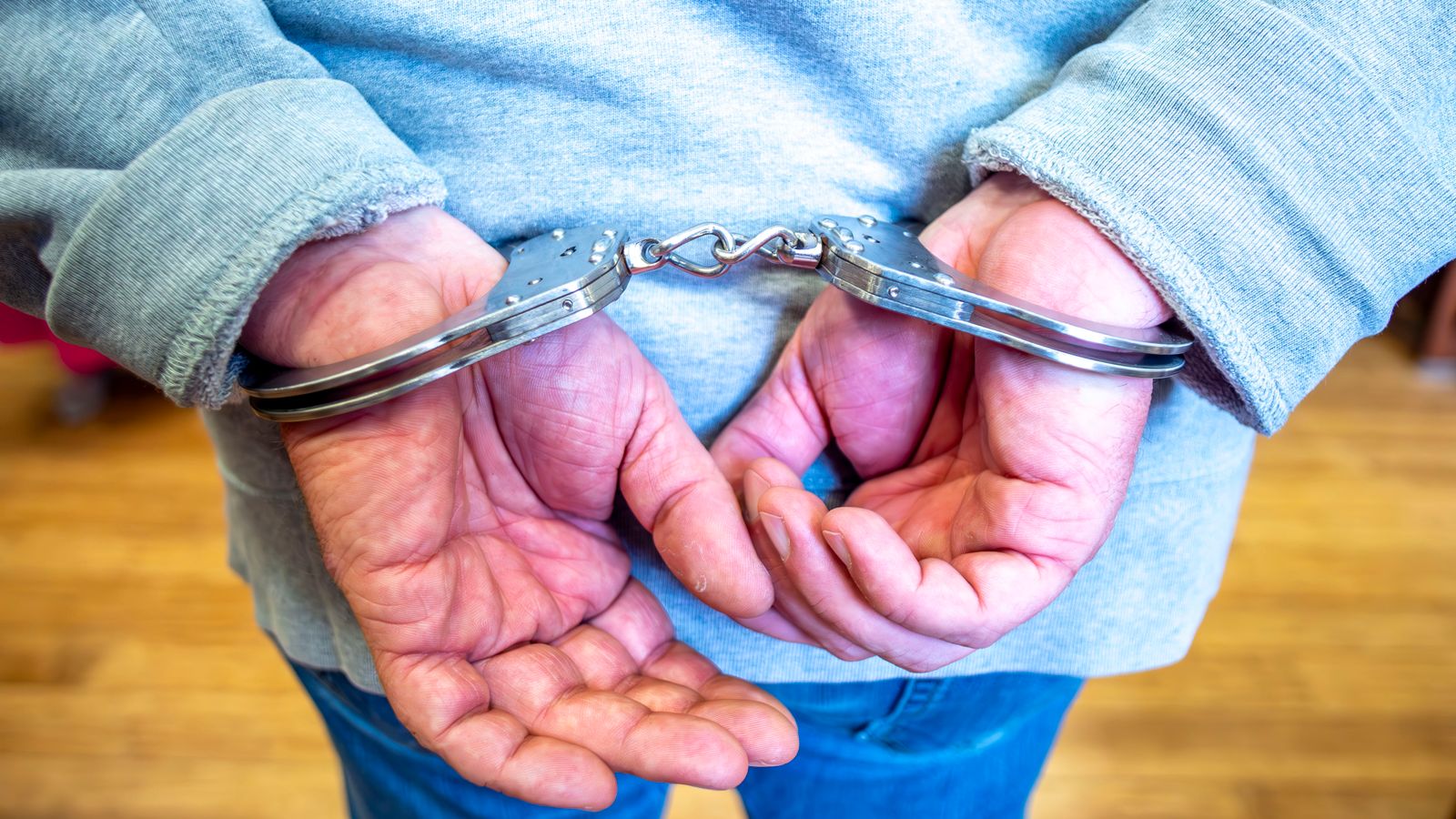
Cannabis arrests in Houston have surged nearly 1,200% under Mayor John Whitmire's administration, averaging 440 arrests annually for misdemeanor possession compared to just 34 per year under his predecessor. Mayor Whitmire has publicly attributed this dramatic increase to Harris County District Attorney Sean Teare's enforcement priorities, marking a sharp reversal from the previous administration's de facto decriminalization approach. The spike comes despite Texas voters in Harris County approving a 2022 ballot measure directing law enforcement to deprioritize low-level cannabis possession cases. This enforcement escalation has reignited debates over prosecutorial discretion, racial disparities in drug arrests, and the practical implementation of local cannabis reform measures in a state where marijuana remains fully illegal. The situation in Houston represents a critical test case for how local officials navigate conflicting state prohibition laws, voter mandates for reform, and differing philosophies on criminal justice between elected executives and prosecutors.Why This Matters
The 1,200% arrest spike affects thousands of Houston residents annually and signals a fundamental shift in how the nation's fourth-largest city enforces cannabis laws despite voter preferences for reform. Harris County, home to Houston, has a population exceeding 4.7 million people, making enforcement policy decisions here consequential at scale. Each misdemeanor cannabis arrest carries immediate costs—booking expenses, court processing, potential jail time, and criminal records that create barriers to employment, housing, and education. For the 440 individuals arrested annually under current policies, these consequences can be life-altering, particularly given documented racial disparities in cannabis enforcement nationwide. The financial implications extend beyond individual defendants. Processing hundreds of additional cannabis cases annually strains court resources, public defender offices, and jail capacity. Harris County taxpayers bear these costs while the county simultaneously faces budget pressures in other areas. Law enforcement hours spent on cannabis arrests represent opportunity costs—officers making possession arrests cannot simultaneously address violent crime or property offenses. For cannabis reform advocates, Houston's situation demonstrates how local decriminalization efforts can be undermined when different elected officials hold conflicting enforcement philosophies. The 2022 ballot measure reflected voter preferences, yet implementation depends on cooperation between the mayor's office, police department, district attorney, and judiciary. When these entities diverge, voter intent can be effectively nullified. Medical cannabis patients in Texas, while operating under the state's extremely limited Compassionate Use Program, watch Houston's enforcement trends closely. Aggressive prosecution of possession cases creates a chilling effect even for legal patients who may fear interactions with law enforcement. Business interests monitoring Texas for potential market entry view local enforcement volatility as a risk factor affecting investment decisions.Background and History
Texas Cannabis Prohibition Framework
Texas maintains some of the nation's strictest cannabis laws, with possession of any amount under two ounces classified as a Class B misdemeanor punishable by up to 180 days in jail and a $2,000 fine. Under Texas Health and Safety Code § 481.121, possession of two to four ounces constitutes a Class A misdemeanor, while larger amounts trigger felony charges. Unlike states with decriminalization statutes, Texas law provides no safe harbor for small amounts—even residue in a pipe can support criminal charges. The state's Compassionate Use Program, established in 2015 and expanded incrementally through 2021, permits low-THC cannabis oil for specific medical conditions. However, the program remains highly restrictive compared to medical cannabis frameworks in other states. Qualifying conditions include epilepsy, terminal cancer, autism, and post-traumatic stress disorder, but the program caps THC content at 1% by weight and prohibits smokable flower entirely. As of 2026, fewer than 200 licensed physicians statewide actively prescribe medical cannabis, serving approximately 50,000 registered patients—a tiny fraction of Texas's 30 million residents.Harris County's Reform Trajectory
Harris County's approach to cannabis enforcement has oscillated dramatically over the past decade. In March 2017, then-District Attorney Kim Ogg launched a diversion program allowing first-time offenders caught with under four ounces to avoid arrest and prosecution by completing a four-hour decision-making class and paying a $150 fee. The program, administered through the DA's office rather than requiring legislative changes, represented a pragmatic middle path in a prohibition state. Between 2017 and 2022, the diversion program processed over 30,000 cases, effectively decriminalizing small-amount possession for first-time offenders. Houston Police Department officers could issue citations rather than making custodial arrests, dramatically reducing the burden on jails and courts. Racial disparities in enforcement, while not eliminated, narrowed somewhat as the program applied uniformly regardless of defendant demographics.The 2022 Ballot Measure
In November 2022, Harris County voters approved Proposition A with 57% support, directing local law enforcement to make cannabis possession offenses the "lowest enforcement priority." The measure, placed on the ballot through a citizen petition drive, instructed that "no Harris County or City of Houston funds, resources, or personnel may be used to make arrests or conduct prosecutions" for misdemeanor cannabis possession cases, with exceptions for cases involving additional offenses or public safety threats. The ballot language carried no binding legal force under Texas law—counties and cities cannot nullify state criminal statutes through local ordinances or referenda. However, reform advocates argued the measure provided a democratic mandate for prosecutorial discretion and police department policy changes. District Attorney Kim Ogg, while not opposing the measure, noted her office would continue accepting cases referred by law enforcement, maintaining that prosecutorial decisions remained within her discretion regardless of ballot outcomes.Leadership Transitions and Policy Reversals
The 2023 mayoral election brought John Whitmire, a longtime Texas state senator, into Houston's executive office in January 2024, replacing Sylvester Turner who had served two terms. Whitmire campaigned on public safety themes, emphasizing his legislative experience on criminal justice issues and promising a more assertive approach to quality-of-life crimes. Simultaneously, Harris County experienced prosecutorial turnover. Kim Ogg, who had championed the diversion program, lost her March 2024 Democratic primary to Sean Teare, a former prosecutor who criticized Ogg's approach as insufficiently tough on crime. Teare took office in January 2025, immediately signaling a shift in enforcement philosophy. In his first policy memo to staff, Teare instructed prosecutors to pursue charges in all cannabis possession cases referred by law enforcement, ending the previous practice of declining to accept cases eligible for diversion. The Houston Police Department, under Chief Troy Finner (appointed by Mayor Turner in 2021 and retained by Mayor Whitmire), initially maintained Turner-era policies limiting cannabis arrests. However, internal directives shifted in mid-2025 following meetings between the mayor's office and police leadership. Officers received guidance that cannabis enforcement should align with "community standards" and that arrests remained appropriate when possession occurred in public spaces, during traffic stops revealing other violations, or in high-crime areas.The Arrest Surge Documented
A September 2026 analysis by the Houston Justice Coalition, a criminal justice reform advocacy organization, compiled arrest data from Harris County Sheriff's Office records, Houston Police Department reports, and court filings. The analysis found that cannabis possession arrests averaged 34 annually during Mayor Turner's final term (2020-2023), reflecting the diversion program's impact. Under Mayor Whitmire's administration (January 2024 through August 2026), arrests averaged 440 annually—a 1,194% increase. The data revealed stark geographic and demographic patterns: arrests concentrated in predominantly Black and Latino neighborhoods, with 68% of defendants residing in zip codes where median household income fell below $45,000. Traffic stops accounted for 52% of arrests, while public consumption or possession in parks and sidewalks comprised 31%. Only 17% of arrests occurred during investigations of other crimes, contradicting claims that cannabis charges primarily arose incidentally to serious criminal activity.Key Players
Mayor John Whitmire
John Whitmire, who served 40 years in the Texas Senate before becoming Houston's mayor in January 2024, has defended the arrest increase as reflecting District Attorney Teare's prosecutorial choices rather than mayoral policy. In September 2026 comments to Houston Public Media, Whitmire stated, "The police department follows the law. When the DA's office says they will prosecute these cases, officers have to make arrests. This is about prosecutorial discretion, not police policy." Whitmire's mayoral campaign emphasized his criminal justice credentials, including authorship of Texas Senate Bill 1004 in 2007, which reformed the state's probation system, and Senate Bill 1636 in 2017, which raised the felony theft threshold from $1,500 to $2,500. However, his legislative record on cannabis remained conservative—he never sponsored decriminalization or medical cannabis expansion bills, and he voted against the 2019 hemp legalization measure that inadvertently complicated cannabis prosecutions statewide. Critics note that as mayor, Whitmire controls Houston Police Department budget allocations and appoints the police chief, giving him substantial influence over enforcement priorities regardless of the DA's prosecution decisions. The mayor has not publicly directed HPD to decline cannabis arrests despite the 2022 ballot measure.District Attorney Sean Teare
Sean Teare, who took office as Harris County District Attorney in January 2025, built his career as a prosecutor in the DA's office vehicular crimes division before entering private practice. His 2024 campaign criticized predecessor Kim Ogg for what he characterized as selective enforcement and insufficient accountability for repeat offenders. Teare has explicitly rejected the diversion program model, arguing that Texas law criminalizes cannabis possession and that prosecutors lack authority to create de facto decriminalization through non-prosecution policies. In a February 2025 interview with the Houston Chronicle, Teare stated, "Voters don't get to pick which laws we enforce. The legislature makes laws, and this office prosecutes violations. If Texans want cannabis legal, they need to change state law." Teare's office has prosecuted cannabis cases aggressively, with conviction rates exceeding 85% for defendants who proceed to trial rather than accepting plea agreements. Standard plea offers include probation terms, mandatory drug education classes, and fines ranging from $300 to $1,000. Teare has resisted calls from reform advocates to decline prosecution of cases involving amounts under two ounces, maintaining that any policy changes must come from the Texas Legislature.Houston Police Department and Chief Troy Finner
Chief Troy Finner, a 30-year HPD veteran appointed chief in April 2021, has navigated competing pressures from the mayor's office, district attorney, city council members, and community advocates. Under Mayor Turner, Finner maintained policies limiting cannabis arrests to situations involving public safety concerns or concurrent criminal activity. Under Mayor Whitmire, those policies have loosened, though Finner has not issued explicit directives mandating increased cannabis enforcement. Internal HPD communications obtained through public records requests show that patrol division commanders received guidance in June 2025 emphasizing officer discretion in cannabis cases while noting that arrests remained "legally appropriate and prosecutable" under state law. The communications avoided explicit arrest quotas but emphasized that officers would not face discipline for making cannabis arrests during otherwise lawful stops or investigations. HPD's patrol officers union has remained largely silent on the enforcement shift, though individual officers have expressed frustration to local media about spending time on cannabis arrests while facing staffing shortages for investigating property crimes and violent offenses.Reform Advocates and Community Organizations
The Houston Justice Coalition, Ground Game Texas, and the Texas chapter of the National Organization for the Reform of Marijuana Laws have led opposition to the arrest surge. These organizations sponsored the 2022 ballot measure and have organized protests, city council testimony, and legal challenges seeking to enforce the voter mandate. Activists have documented individual cases highlighting enforcement disparities, including a June 2026 arrest of a 19-year-old Black man for possession of 0.3 grams of cannabis during a traffic stop for a broken taillight, contrasted with no arrest for a white defendant found with 1.5 ounces during a noise complaint call in a predominantly white neighborhood. While HPD and the DA's office dispute claims of systematic racial bias, the documented arrest data shows persistent disparities.Texas Legislature and State-Level Context
The Texas Legislature, which convenes in odd-numbered years for 140-day sessions, has repeatedly declined to advance cannabis decriminalization despite polling showing majority support among Texas voters. In the 2025 legislative session, House Bill 218, which would have reduced penalties for possession under one ounce to a Class C misdemeanor (fine only, no jail time), passed the House 87-59 but died in the Senate Criminal Justice Committee without a hearing. Lieutenant Governor Dan Patrick, who controls Senate committee assignments and floor scheduling, has blocked cannabis reform legislation for over a decade, calling marijuana a "gateway drug" and opposing any liberalization of Texas law. This legislative gridlock leaves local jurisdictions without clear authority to implement voter-preferred reforms, creating the enforcement conflicts now visible in Houston.Legal and Regulatory Framework
Texas State Cannabis Laws
Texas Health and Safety Code § 481.121 establishes criminal penalties for cannabis possession in a tiered structure based on weight, with no exception for personal use amounts. Possession of two ounces or less constitutes a Class B misdemeanor, punishable by up to 180 days in county jail, a fine up to $2,000, or both. Possession of two to four ounces escalates to a Class A misdemeanor (up to one year in jail, $4,000 fine). Amounts exceeding four ounces trigger state jail felony charges, with penalties increasing for larger quantities. Texas Penal Code § 12.43 allows judges to reduce Class B misdemeanor sentences to fines only for first-time offenders, but conviction still creates a permanent criminal record. Unlike states with expungement provisions for cannabis offenses, Texas law provides extremely limited record-sealing options, primarily restricted to cases resulting in acquittal, dismissal, or completion of deferred adjudication for first-time offenders. The state's Compassionate Use Program, codified in Texas Occupations Code § 169.001 et seq., permits physicians to prescribe low-THC cannabis (not exceeding 1% THC by weight) to patients with qualifying conditions. The program does not decriminalize possession outside the registry system—patients must carry state-issued registry identification cards and purchase only from licensed dispensaries. As of September 2026, Texas had licensed only 57 dispensaries statewide, with just eight operating in the Houston metropolitan area.Local Authority and Prosecutorial Discretion
Texas law grants district attorneys broad prosecutorial discretion under common law principles and Texas Code of Criminal Procedure Article 2.01, which vests prosecutors with authority to determine which cases merit prosecution. This discretion is not absolute—prosecutors cannot systematically refuse to enforce entire categories of law based on policy disagreements—but courts have upheld DA decisions to decline individual cases or establish diversion programs as alternatives to prosecution. The 2022 Harris County ballot measure, while expressing voter preferences, carries no binding legal authority because Texas Constitution Article XI limits local government powers to those explicitly granted by the legislature. Cities and counties cannot nullify state criminal statutes through local ordinance or referendum. However, the measure arguably provides political cover for prosecutorial discretion—a DA could cite the voter mandate as justification for declining cannabis cases without facing claims of lawless non-enforcement. District Attorney Teare has rejected this interpretation, arguing that prosecutorial discretion applies to individual case assessments, not categorical non-prosecution policies. His office points to Texas Attorney General opinions suggesting that systematic refusal to prosecute entire offense categories could constitute official misconduct. Reform advocates counter that DAs routinely decline to prosecute categories of cases—bad check offenses, certain traffic violations, first-time shoplifting under $50—without legal consequence, and that cannabis cases merit similar treatment given voter preferences and resource constraints.Federal Law and Enforcement Posture
Cannabis remains a Schedule I controlled substance under the federal Controlled Substances Act, 21 U.S.C. § 812, making possession a federal crime regardless of state or local policies. However, the U.S. Department of Justice has historically declined to prosecute simple possession cases in states with legalization or decriminalization frameworks, focusing federal resources on trafficking, interstate commerce, and organized crime. The DEA maintains a field office in Houston but does not involve itself in local misdemeanor possession cases. Federal enforcement in Texas focuses on border interdiction, cartel investigations, and large-scale cultivation operations. The disconnect between federal scheduling, state prohibition, and local voter preferences creates legal ambiguity that elected officials exploit to justify their preferred enforcement approaches.Market and Business Implications
Houston's enforcement volatility signals to potential cannabis businesses that Texas remains a high-risk market despite incremental medical program expansion and favorable public opinion polling. Multi-state operators evaluating Texas market entry consider not only state-level legal frameworks but also local enforcement climates that affect consumer behavior, patient willingness to register, and operational risk. The arrest surge has practical implications for Texas's limited medical cannabis industry. Patients eligible for the Compassionate Use Program may avoid registration due to concerns about law enforcement interactions, even though registry cards provide legal protection. Dispensary operators report that aggressive local enforcement in Houston correlates with decreased patient registrations in Harris County compared to Travis County (Austin), where enforcement remains minimal despite identical state law. Hemp businesses operating under the 2018 Farm Bill and Texas's hemp legalization statute face collateral consequences from aggressive cannabis enforcement. Hemp flower, legal if containing less than 0.3% delta-9 THC, is visually and olfactorily indistinguishable from cannabis. Houston police arrests increasingly include hemp products pending lab testing, forcing defendants to pay for independent testing to prove legality—a process that can take months and cost thousands of dollars. Several Houston-area CBD retailers have closed since 2025, citing enforcement uncertainty and the cost of legal defense. Investment capital for Texas cannabis businesses has contracted following Houston's enforcement shift. Venture funds and private equity firms view local enforcement volatility as a risk factor that depresses valuations and complicates exit strategies. One Houston-based investment group that had planned a $15 million fund targeting Texas hemp and CBD businesses shelved the project in early 2026, citing "unpredictable regulatory and enforcement environment" in investor communications. The broader Texas economy loses potential tax revenue and job creation from cannabis prohibition. Colorado, with a population of 5.8 million, generated $423 million in cannabis tax revenue in 2025. Applying similar per-capita rates to Texas's 30 million residents suggests potential annual tax revenue exceeding $2 billion if the state legalized and taxed adult-use cannabis. Harris County alone could generate $200-250 million annually in local sales tax revenue from legal cannabis commerce.What Experts Say
Criminal justice researchers emphasize that cannabis arrest surges disproportionately affect communities of color and create lasting economic harm without measurable public safety benefits. Dr. Kathleen Curry, a criminal justice professor at the University of Houston, has studied Harris County enforcement patterns for over a decade. According to Curry's analysis published in the Texas Journal of Criminal Law, cannabis arrests in Houston show persistent racial disparities even after controlling for usage rates, neighborhood crime levels, and patrol density. Black residents are arrested at 3.2 times the rate of white residents for cannabis possession despite similar usage rates in survey data. Curry's research indicates that cannabis arrests function as a gateway to deeper criminal justice involvement. Defendants who cannot afford bail remain jailed pretrial, often losing employment. Those who plead guilty to avoid trial face probation conditions including regular drug testing, mandatory classes, and fees that can total $2,000-3,000. Probation violations for missed payments or failed drug tests lead to additional jail time, creating a cycle of justice involvement stemming from a single low-level possession arrest. Public health experts question the public safety rationale for aggressive cannabis enforcement. Dr. Michael Rodriguez, an addiction medicine specialist at Baylor College of Medicine, notes that cannabis poses significantly lower overdose risk than alcohol or opioids, and that criminal justice responses often cause more harm than the substance itself. Rodriguez advocates for treating cannabis use as a public health issue rather than a criminal matter, pointing to Portugal's decriminalization model, which reduced drug-related deaths and HIV transmission without increasing usage rates. Legal scholars debate the boundaries of prosecutorial discretion and local authority in the face of state prohibition laws. Professor Sandra Guerra Thompson, who directs the Criminal Justice Institute at the University of Houston Law Center, argues that the 2022 ballot measure, while not legally binding, creates a democratic mandate that prosecutors should respect. According to Thompson, prosecutorial discretion exists precisely to allow DAs to align enforcement with community values and resource constraints. Systematic prosecution of cannabis cases against voter preferences, Thompson contends, undermines democratic accountability. Conversely, former prosecutors and law-and-order advocates argue that selective non-enforcement undermines the rule of law. Marc Levin, chief policy counsel at the Council on Criminal Justice, a national think tank, has written that while prosecutorial discretion permits declining individual cases, categorical non-prosecution policies effectively nullify legislative decisions. Levin argues that if Texas voters want cannabis legal, they must elect state legislators willing to change the law rather than expecting local prosecutors to create de facto legalization through non-enforcement. Law enforcement perspectives vary by role and jurisdiction. The Combined Law Enforcement Associations of Texas, a statewide police union, has not taken a formal position on cannabis enforcement priorities, but individual members express frustration with spending time on possession arrests. One Houston patrol officer, speaking anonymously to the Houston Chronicle, described cannabis arrests as "low-value work that keeps us from addressing real crime" but noted that officers follow department policy and DA prosecution decisions.What's Next
The trajectory of Houston cannabis enforcement depends on the 2027 mayoral election, potential changes in the district attorney's office, and whether the Texas Legislature addresses decriminalization in its 2027 session. Mayor Whitmire faces reelection in November 2027. Cannabis policy has emerged as a campaign issue, with potential challengers including Houston City Council Member Letitia Plummer, who has criticized the arrest surge and pledged to direct HPD to implement the 2022 ballot measure if elected. Whitmire's approval ratings, which stood at 62% in early 2026, have declined to 51% as of September 2026, with criminal justice policy cited as a factor in polling data. District Attorney Teare's term runs through 2028, but he faces potential primary challenges in March 2028. Reform advocates have begun recruiting candidates, though no serious challenger has emerged as of September 2026. Teare's prosecution approach remains popular with law-and-order constituencies but has alienated progressive voters who supported the 2022 ballot measure. The Texas Legislature convenes in January 2027 for its biennial 140-day session, and cannabis reform bills are expected to be filed despite Lieutenant Governor Patrick's opposition. House Bill 63, prefiled in November 2026, would decriminalize possession of up to one ounce, making it a civil violation punishable by a $250 fine with no criminal record. The bill's prospects remain uncertain—it would need to pass both chambers and overcome a likely veto from Governor Greg Abbott, who has consistently opposed cannabis liberalization. A more modest proposal, House Bill 441, would expand the Compassionate Use Program to include chronic pain and anxiety as qualifying conditions and raise the THC cap to 5%. This incremental expansion has better prospects given support from some Republican legislators representing suburban districts where medical cannabis polling shows majority support. Federal rescheduling of cannabis could affect Texas enforcement indirectly. The DEA's ongoing review of cannabis scheduling, initiated following a 2022 directive from President Biden, could result in moving cannabis from Schedule I to Schedule III under the Controlled Substances Act. While rescheduling would not legalize cannabis federally or override Texas state law, it could shift political dynamics by reducing the stigma associated with cannabis and creating pressure on states to align with federal policy changes. Legal challenges to Houston's enforcement practices remain possible. The Houston Justice Coalition has explored litigation arguing that the arrest surge violates the voter mandate expressed in the 2022 ballot measure, but legal experts consider such claims unlikely to succeed given Texas law's clear prohibition and limits on local authority. A more viable legal strategy might challenge specific arrests on Fourth Amendment grounds, arguing that officers lack probable cause when cannabis odor alone justifies searches in a jurisdiction where voters have deprioritized enforcement.Further Reading
- Texas Health and Safety Code § 481.121 (cannabis possession penalties) - https://statutes.capitol.texas.gov/Docs/HS/htm/HS.481.htm
- Harris County Proposition A (2022 ballot measure text) - https://harrisvotes.com/Docs/BallotPropositions/2022/PropA.pdf
- Houston Justice Coalition arrest data analysis (September 2026) - https://houstonjusticecoalition.org/cannabis-enforcement-report-2026
- Texas Compassionate Use Program registry - https://www.texas.gov/health-services/texas-compassionate-use-program
- Houston Public Media coverage of Mayor Whitmire's comments - https://www.houstonpublicmedia.org/articles/news/politics/2026/09/17/cannabis-arrests-mayor-whitmire
- Texas Code of Criminal Procedure Article 2.01 (prosecutorial authority) - https://statutes.capitol.texas.gov/Docs/CR/htm/CR.2.htm
- University of Houston Criminal Justice Institute research - https://www.law.uh.edu/cji/
- Combined Law Enforcement Associations of Texas policy positions - https://www.cleat.org
- Texas Legislature bill tracking system - https://capitol.texas.gov
- DEA cannabis scheduling review docket - https://www.regulations.gov/docket/DEA-2023-0059
Frequently asked questions
Why did cannabis arrests spike in Houston under Mayor Whitmire?
Mayor John Whitmire attributes the spike to Harris County District Attorney Sean Teare's enforcement approach. Arrests for misdemeanor cannabis possession increased nearly 1,200% during Whitmire's tenure starting in 2024, averaging 440 arrests per year. This represents a policy shift from previous Harris County practices that had reduced prosecution of low-level possession cases. The mayor's comments to Houston Public Media indicate disagreement between city and county leadership on cannabis enforcement priorities.
What are the penalties for cannabis possession in Houston?
Under Texas law, possession of up to two ounces of cannabis is a Class B misdemeanor punishable by up to 180 days in jail and a fine up to $2,000. Possession of two to four ounces is a Class A misdemeanor with up to one year in jail and a $4,000 fine. Harris County enforcement practices have varied significantly depending on the district attorney's policies, with some administrations declining to prosecute small possession cases while others actively pursue charges.
Has Houston ever decriminalized cannabis possession?
Houston itself has not formally decriminalized cannabis, but Harris County implemented de facto decriminalization policies under previous District Attorney Kim Ogg, who declined to prosecute many misdemeanor possession cases. These policies significantly reduced arrest rates before 2024. The city operates under Texas state law, which criminalizes all cannabis possession. Local enforcement discretion by police and prosecutors determines actual arrest and prosecution rates, creating inconsistent policies across different administrations.
Who is Harris County District Attorney Sean Teare?
Sean Teare became Harris County District Attorney and has taken a more aggressive stance on cannabis prosecution compared to his predecessor. Mayor Whitmire specifically cited Teare's enforcement priorities as driving the spike in cannabis arrests. Teare's approach represents a departure from the previous administration's practice of declining to prosecute many low-level possession cases, resulting in the dramatic increase in arrests reported in 2026. His policies reflect broader debates about prosecutorial discretion in Texas counties.
How does Houston's cannabis enforcement compare to other Texas cities?
Houston's enforcement varies significantly from other major Texas cities depending on local prosecutorial policies. Austin and Dallas counties have at times implemented cite-and-release programs or declined prosecution for small amounts. San Antonio enforcement has also fluctuated based on district attorney priorities. Texas state law remains consistent, but county-level prosecutorial discretion creates a patchwork of enforcement approaches. Houston's recent spike places it among the more aggressive enforcement jurisdictions in Texas as of 2026.
What was Houston's cannabis arrest rate before Mayor Whitmire?
Before Mayor Whitmire's administration, Houston's cannabis arrest rates were significantly lower due to Harris County policies that declined prosecution of many misdemeanor possession cases. The baseline averaged approximately 34 arrests annually before the spike to 440 arrests per year under Whitmire, based on the reported 1,200% increase. This lower rate reflected the previous district attorney's approach of not pursuing charges for small possession amounts, effectively creating local decriminalization despite state law.
Can Houston police choose not to arrest for cannabis possession?
Houston Police Department officers have discretion in enforcement, but departmental policies and leadership priorities influence arrest rates. While individual officers may exercise judgment, systematic changes in arrest patterns typically reflect policy direction from police leadership and coordination with prosecutors. The spike under Mayor Whitmire suggests policy-level changes rather than individual officer decisions. Cite-and-release programs, when implemented, provide alternatives to arrest, but these require formal policy adoption by both police and prosecutors.
What is the current status of cannabis legalization in Texas?
Texas has not legalized recreational cannabis and maintains criminal penalties for possession of any amount. The state has a limited medical cannabis program restricted to low-THC products for specific conditions. Multiple legalization bills have been introduced in the Texas Legislature but have not passed. Local enforcement varies significantly by county based on prosecutorial discretion. As of 2026, Texas remains one of the states with the most restrictive cannabis laws, though enforcement inconsistency creates different practical realities across jurisdictions.
Are there legal challenges to Houston's cannabis enforcement policies?
Legal challenges to local cannabis enforcement typically focus on prosecutorial discretion, equal protection, and selective enforcement issues. While specific litigation details regarding Houston's recent enforcement spike have not been widely reported, civil rights organizations often challenge disparate enforcement patterns. Texas law allows district attorneys broad discretion in charging decisions, making legal challenges difficult. Advocacy groups continue to push for policy changes through legislative and electoral means rather than primarily through litigation.
How can Houston residents advocate for cannabis policy reform?
Houston residents can advocate through multiple channels: contacting city council members and the mayor's office, supporting district attorney candidates with reform platforms, participating in local advocacy organizations, and engaging with state legislators on Texas cannabis law reform. Voter participation in district attorney elections directly impacts enforcement policies, as demonstrated by the policy shifts between different administrations. Statewide advocacy through organizations working on Texas cannabis reform also influences legislative efforts, though local prosecutorial elections have more immediate impact on enforcement.
The cannabis newsletter you forward to your team.
Federal policy, market data, grower alerts, and the one story that matters today. Sent every weekday at 7am. Free.
No spam. Unsubscribe with one click. 21+ only.