Federal Cannabis Descheduling: Policy Timeline, Legal Impact & State Changes
Federal cannabis descheduling represents the complete removal of marijuana from the Controlled Substances Act, eliminating federal criminal penalties and restrictions. Unlike rescheduling to Schedule III, descheduling would treat cannabis similarly to alcohol or tobacco, allowing interstate commerce, banking access, and full state-level regulatory control. This hub tracks the legislative history from Nixon-era prohibition through recent DEA rescheduling proposals, examining economic implications for the $30+ billion U.S. cannabis industry, international treaty obligations under UN conventions, and state-by-state regulatory adaptations following potential federal policy changes.
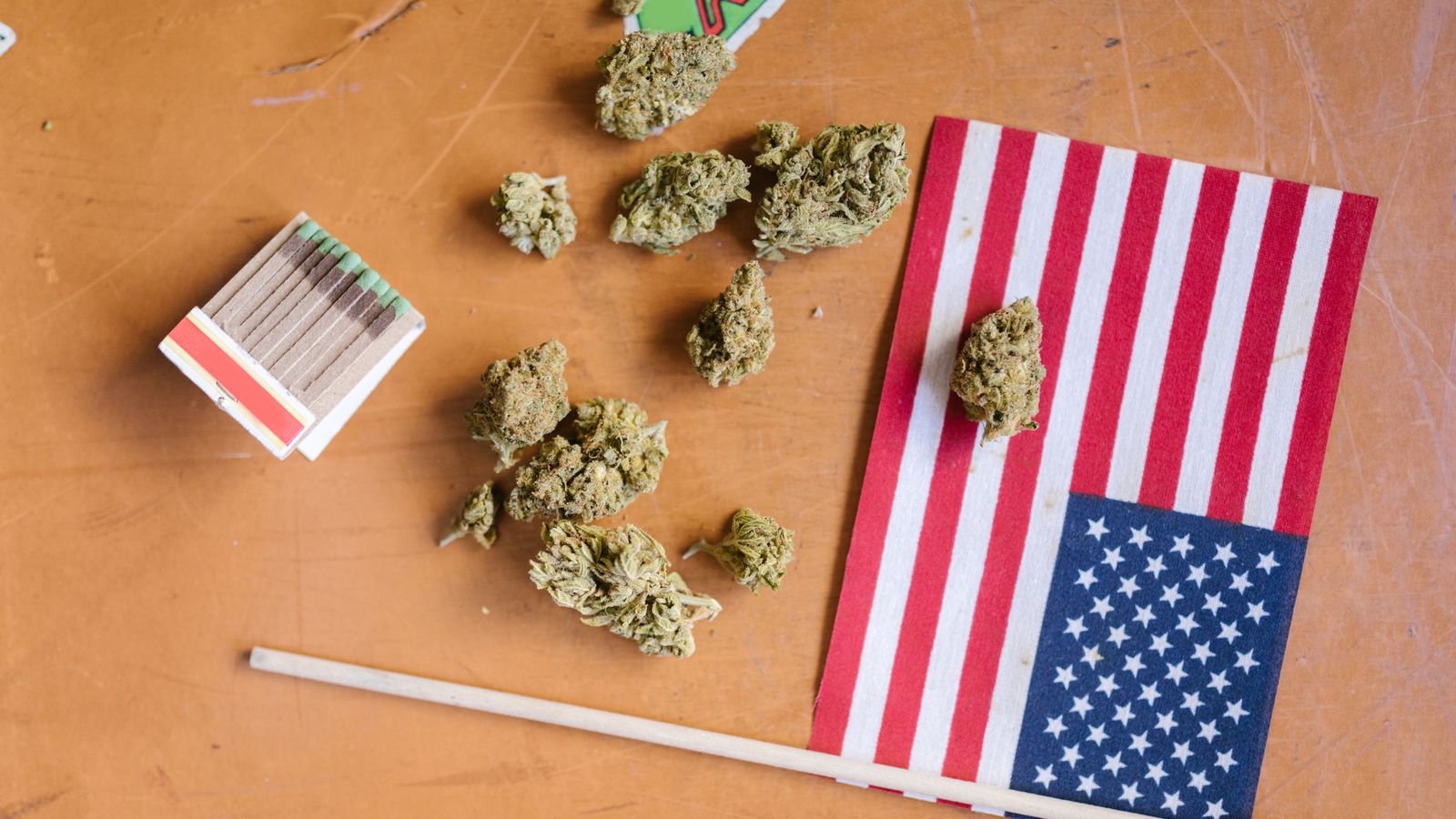
Executive Summary
Federal cannabis descheduling represents the complete removal of cannabis from the Controlled Substances Act (CSA) scheduling framework established under 21 U.S.C. § 812, eliminating all federal criminal penalties and regulatory controls. Unlike rescheduling—which moves cannabis between Schedule I through V while maintaining federal oversight—descheduling would treat cannabis similarly to alcohol or tobacco, transferring primary regulatory authority to states and potentially the Bureau of Alcohol, Tobacco, Firearms and Explosives (ATF) or a newly created agency. As of May 2026, recent reports indicate significant movement toward descheduling, with implications for interstate commerce, banking access, taxation under 26 U.S.C. § 280E, and international treaty obligations under the 1961 Single Convention on Narcotic Drugs. The policy shift affects approximately $33.6 billion in annual U.S. cannabis sales, over 428,000 industry jobs, and an estimated 55 million American cannabis consumers across 38 medical and 24 adult-use states.
Why Federal Descheduling Matters
Descheduling would fundamentally restructure a $33.6 billion industry currently operating under state-federal legal conflict. The stakes extend far beyond recreational users to encompass medical patients, military veterans, scientific researchers, financial institutions, and international trade partners.
For patients, descheduling would eliminate the research barriers that have prevented FDA approval of whole-plant cannabis medicines. Veterans Affairs physicians could finally recommend cannabis for PTSD and chronic pain without violating federal law. Researchers at universities receiving federal funding could conduct clinical trials without navigating DEA manufacturing quotas and Schedule I research protocols that currently limit annual federal cannabis production to under 7,000 kilograms.
Financial institutions face existential clarity questions. Banks currently file over 200,000 Suspicious Activity Reports annually for cannabis-related transactions under FinCEN guidance, creating compliance costs exceeding $400 million industry-wide. Descheduling would eliminate this reporting burden and open access to Federal Reserve payment systems, FDIC insurance, and conventional business loans.
The tax implications reach every operator. Section 280E of the Internal Revenue Code prohibits businesses trafficking in Schedule I or II substances from deducting ordinary business expenses. Multi-state operators currently pay effective federal tax rates of 70-90% compared to 21% for non-cannabis businesses. Descheduling would immediately restore normal tax treatment, potentially freeing $1.8-2.3 billion annually for reinvestment, wage increases, and price reductions benefiting consumers.
Interstate commerce remains the most transformative impact. The Dormant Commerce Clause currently permits states to ban imports of federally illegal substances. Descheduling would likely trigger constitutional challenges to state border restrictions, enabling California cultivators to ship to New York dispensaries and creating a truly national market with economies of scale comparable to the alcohol industry.
Background and History: The Path Toward Descheduling
Cannabis prohibition began not with the Controlled Substances Act but with the 1937 Marihuana Tax Act, which effectively criminalized possession through prohibitive taxation. Understanding the descheduling debate requires tracing eight decades of federal policy evolution.
1937-1970: The Prohibition Foundation
The Marihuana Tax Act of 1937 imposed occupational and transfer taxes on cannabis transactions, making legal compliance virtually impossible. Federal Bureau of Narcotics Commissioner Harry Anslinger led the campaign, testifying before Congress that cannabis caused insanity and violence. The Supreme Court struck down the Tax Act in 1969 in Leary v. United States, finding it violated Fifth Amendment protections against self-incrimination.
Congress responded with the Controlled Substances Act of 1970, signed by President Richard Nixon on October 27, 1970. The CSA established five schedules based on medical value, abuse potential, and safety. Cannabis was temporarily placed in Schedule I pending a comprehensive review by the National Commission on Marihuana and Drug Abuse.
1972: The Shafer Commission Recommends Decriminalization
The commission, chaired by former Pennsylvania Governor Raymond Shafer, released "Marihuana: A Signal of Misunderstanding" in March 1972. The report recommended eliminating criminal penalties for personal possession and casual distribution. President Nixon rejected the findings, and cannabis remained Schedule I. This marked the first major federal consideration of liberalized cannabis policy—a recommendation ignored for decades.
1996-2012: State Medical Programs Create Federal Conflict
California voters approved Proposition 215 on November 5, 1996, establishing the nation's first medical cannabis program. The federal response was immediate: DEA raids on dispensaries and the 2001 Supreme Court decision in United States v. Oakland Cannabis Buyers' Cooperative, which held that medical necessity is not a defense to CSA violations.
By 2009, fourteen states had medical programs. The Obama administration issued the Ogden Memo on October 19, 2009, directing federal prosecutors not to prioritize individuals in "clear and unambiguous compliance" with state medical laws. This prosecutorial discretion approach—not descheduling—defined federal policy for eight years.
2012-2016: Adult-Use Legalization Accelerates Pressure
Colorado and Washington voters approved adult-use legalization on November 6, 2012. The Cole Memo of August 29, 2013, extended non-interference guidance to adult-use states, conditioning federal restraint on state enforcement of eight priorities including preventing diversion to minors and interstate trafficking. By 2016, eight states had adult-use programs generating over $1.3 billion in annual tax revenue.
2018: The Farm Bill Creates a Hemp Exception
The Agriculture Improvement Act of 2018, signed December 20, 2018, removed hemp (cannabis with ≤0.3% delta-9 THC) from Schedule I. This created the first federal exception to cannabis prohibition since 1937, establishing precedent that cannabis scheduling could be modified legislatively without treaty renegotiation. The hemp provision demonstrated that partial descheduling was administratively feasible.
2022-2024: The Rescheduling Debate
President Biden directed HHS to review cannabis scheduling on October 6, 2022. HHS recommended rescheduling to Schedule III in August 2023, citing accepted medical use and lower abuse potential than Schedule I or II substances. The DEA published a Notice of Proposed Rulemaking on May 16, 2024, initiating the Administrative Procedure Act process for rescheduling.
Advocates criticized rescheduling as insufficient. Schedule III maintains DEA registration requirements, manufacturing quotas, and prescription mandates under the Federal Food, Drug, and Cosmetic Act. Twenty-three state attorneys general submitted comments urging full descheduling rather than rescheduling to preserve state regulatory frameworks.
2025-2026: Movement Toward Descheduling
The political landscape shifted in 2025. Bipartisan legislation including the Cannabis Administration and Opportunity Act and the States Reform Act proposed descheduling frameworks with federal excise taxes and interstate commerce provisions. Public polling showed 70% support for legalization, including majorities in 45 states.
According to reports from May 2026, the administration moved forward with descheduling rather than the previously proposed Schedule III reclassification. The decision reportedly addressed interstate travel restrictions, including TSA policies that previously prohibited cannabis on commercial flights even between legal states. This represents the most significant federal cannabis policy shift since the 1937 Marihuana Tax Act.
Key Players in the Descheduling Debate
Drug Enforcement Administration
The DEA holds statutory authority under 21 U.S.C. § 811 to schedule and deschedule substances based on HHS recommendations and eight factors including abuse potential, scientific evidence, and international treaty obligations. DEA Administrator Anne Milgram testified before Congress in 2024 that descheduling would require legislative action to address treaty compliance and create a new regulatory framework. The agency has historically opposed liberalization, citing the 1961 Single Convention requirement that parties limit cannabis to medical and scientific purposes.
Department of Health and Human Services
HHS conducts the scientific and medical evaluation required for scheduling decisions. The August 2023 recommendation to reschedule to Schedule III marked the first time HHS found accepted medical use for cannabis. The recommendation cited FDA approval of Epidiolex (cannabidiol) for epilepsy and evidence supporting use for chronic pain, nausea, and multiple sclerosis spasticity. Secretary Xavier Becerra stated the recommendation was based on "the best available evidence," though the agency stopped short of recommending full descheduling.
Multi-State Operators
Publicly traded MSOs including Curaleaf, Green Thumb Industries, Trulieve, and Verano have lobbied for descheduling to access capital markets and normal tax treatment. Curaleaf CEO Matt Darin stated in 2024 that 280E taxation "extracts $200 million annually from our operations that could fund expansion and price reductions." MSOs face effective federal tax rates of 70-85% while competing with illicit markets charging no taxes. Descheduling would enable NASDAQ and NYSE listings currently prohibited under exchange rules barring companies violating federal law.
National Organization for the Reform of Marijuana Laws
NORML has advocated for descheduling since its 1970 founding. Deputy Director Paul Armentano testified before the DEA in 2024 that rescheduling to Schedule III would "maintain federal-state conflicts and fail to address banking, research, and veterans' access." The organization submitted 42,000 public comments supporting descheduling during the NPRM comment period. NORML emphasizes that only complete descheduling resolves the conflict between state legalization and federal prohibition.
Smart Approaches to Marijuana
SAM, founded by former Congressman Patrick Kennedy, opposes both rescheduling and descheduling. The organization argues that commercialization has increased youth use, traffic fatalities, and cannabis use disorder diagnoses. SAM President Kevin Sabet stated in 2025 that descheduling would "create a predatory industry marketing high-potency products to vulnerable populations." The group advocates for decriminalization of possession without commercial legalization, citing public health concerns about products exceeding 20% THC.
American Medical Association
The AMA supports rescheduling to facilitate research but has not endorsed descheduling. The organization's 2023 policy statement called for moving cannabis to Schedule II to enable clinical trials while maintaining FDA oversight of medical claims. The AMA expressed concern that descheduling without a regulatory framework could lead to unsubstantiated health claims and products with inconsistent potency and contamination.
Legal and Regulatory Framework
Descheduling would require either legislative action by Congress or administrative rulemaking by the DEA following HHS recommendation. The legal pathways differ significantly in timeline, scope, and permanence.
Administrative Descheduling Under 21 U.S.C. § 811
The Attorney General, delegated to the DEA Administrator, may remove a substance from scheduling if HHS finds it lacks abuse potential and has no accepted medical use requiring regulation. The process requires: (1) HHS scientific and medical evaluation, (2) DEA consideration of eight factors including pharmacology, enforcement data, and treaty obligations, (3) publication of a Notice of Proposed Rulemaking, (4) public comment period, (5) final rule publication, and (6) effective date typically 30 days after publication.
The Administrative Procedure Act requires the DEA to respond to significant comments and provide reasoned analysis. Challenges to the final rule would proceed through federal district court, with appellate review in the D.C. Circuit. The entire process typically requires 18-36 months from initial HHS recommendation to final implementation.
Legislative Descheduling
Congress may amend the CSA to remove cannabis from scheduling through ordinary legislation requiring House and Senate passage and presidential signature. Legislative descheduling offers advantages including permanence (future administrations cannot reverse without new legislation), comprehensive regulatory framework creation, and resolution of ancillary issues including taxation, interstate commerce, and international treaties.
The Cannabis Administration and Opportunity Act, introduced in 2025, proposed descheduling with a 10% federal excise tax, expungement of federal cannabis convictions, Small Business Administration loan eligibility, and a Cannabis Justice Office to administer social equity grants. The States Reform Act offered an alternative framework with a 3% excise tax and explicit interstate commerce authorization. Neither bill advanced to floor votes as of early 2026.
International Treaty Obligations
The United States is party to three drug control treaties: the 1961 Single Convention on Narcotic Drugs, the 1971 Convention on Psychotropic Substances, and the 1988 Convention Against Illicit Traffic. The Single Convention requires parties to limit cannabis to medical and scientific purposes and maintain criminal penalties for unauthorized possession and distribution.
Legal scholars debate whether descheduling violates treaty obligations. Options include: (1) formal withdrawal from the Single Convention with immediate re-accession with a cannabis reservation, as Canada did in 2018, (2) reinterpretation arguing that state-regulated systems constitute "medical and scientific" purposes, or (3) accepting technical non-compliance while noting that treaties do not supersede domestic law under U.S. constitutional doctrine. Uruguay and Canada have legalized cannabis while remaining treaty parties, establishing precedent for non-compliance without international sanctions.
Constitutional Commerce Clause Implications
Descheduling would likely trigger Dormant Commerce Clause challenges to state laws prohibiting cannabis imports. In Granholm v. Heald (2005), the Supreme Court struck down state laws discriminating against out-of-state wine producers, holding that the 21st Amendment's grant of alcohol regulatory authority to states does not permit protectionist barriers. Cannabis descheduling would not include similar explicit state authority, making import bans vulnerable to constitutional challenge.
States could potentially regulate cannabis under general police powers, but restrictions must not discriminate against interstate commerce or impose undue burdens. Permissible regulations might include testing requirements, packaging standards, and licensing of in-state distributors, while per se bans on imports would likely fail constitutional scrutiny. This would fundamentally reshape the industry from 38 separate state markets to a national market with state-level consumer protection regulation.
State-by-State Status and Implications
Federal descheduling would not automatically legalize cannabis in states that prohibit it, but would eliminate federal barriers to interstate commerce and banking. State programs would continue operating under existing frameworks with significant new opportunities and challenges.
California
California operates the nation's largest cannabis market with $5.3 billion in annual sales across 1,200 licensed retailers. The state imposes a 15% excise tax and cultivation taxes of $10.08 per ounce for flower. Descheduling would eliminate 280E taxation, potentially reducing retail prices by 20-30% and improving competitiveness with illicit markets. California cultivators could export to other legal states, leveraging the state's agricultural infrastructure and climate advantages. Interstate commerce could reduce wholesale flower prices currently averaging $800-1,200 per pound to $400-600 per pound, matching outdoor cultivation costs.
New York
New York legalized adult use in 2021 but licensed only 150 dispensaries by early 2026 due to regulatory delays and litigation. The state faces competition from illicit storefronts and tribal dispensaries operating outside state oversight. Descheduling would enable New York retailers to import products from mature markets, addressing supply shortages that have limited legal market growth. The state's 13% excise tax plus 9% retail tax would remain, but access to banking and normal tax treatment would improve operator viability. New York issued over 400 conditional licenses with priority for justice-involved individuals, creating a social equity framework that could benefit from improved access to capital post-descheduling.
Texas
Texas prohibits adult-use cannabis and limits medical use to low-THC products for specific conditions. The state has not signaled intent to legalize following federal descheduling. However, descheduling would eliminate federal prosecution risk for possession, leaving only state charges. Texas law currently classifies possession of under two ounces as a Class B misdemeanor with up to 180 days jail time. Federal descheduling could increase political pressure for state reform, as neighboring states including New Mexico and Oklahoma have medical programs. Texas represents a potential market of $4-6 billion annually if legalized, based on population-adjusted comparisons to California and Colorado.
Florida
Florida operates a medical-only program with over 800,000 registered patients and $2.1 billion in annual sales. Adult-use ballot initiatives failed in 2024 but may return in 2026. Descheduling would enable Florida's 25 licensed operators to access interstate markets and conventional financing. The state's vertical integration requirement—operators must cultivate, process, and dispense—creates high barriers to entry that could face antitrust scrutiny post-descheduling. Florida's large retiree population and tourism industry position it as a major market if adult use passes, with projections of $6-8 billion in annual sales.
Ohio
Ohio voters approved adult-use legalization in November 2023, with sales beginning in August 2024. The state imposes a 10% excise tax and allows existing medical dispensaries to convert to adult-use licenses. Descheduling would benefit Ohio's 130 licensed dispensaries by eliminating 280E taxation and enabling interstate sourcing to supplement in-state cultivation. Ohio's central location positions it as a potential distribution hub for Midwest markets. The state generated $400 million in cannabis tax revenue in the first year of adult-use sales, with projections of $800 million annually by 2027.
Colorado
Colorado pioneered adult-use legalization in 2012 and generated $15.5 billion in cumulative sales through 2025. The state's mature market faces oversupply, with wholesale flower prices declining to $600-800 per pound. Descheduling would enable Colorado cultivators to export surplus production to undersupplied markets, stabilizing prices and improving operator profitability. Colorado's 15% excise tax plus 2.9% state sales tax would remain competitive in a national market. The state has 1,400 licensed dispensaries and 1,200 cultivation facilities, creating economies of scale that would advantage Colorado operators in interstate competition.
Illinois
Illinois legalized adult use in 2020 with a social equity framework allocating licenses to communities disproportionately impacted by prohibition. The state generated $1.9 billion in sales in 2025 with a 7% excise tax on sales under 35% THC and 20% on higher-potency products. Descheduling would enable Illinois social equity licensees to access conventional bank loans and SBA financing, addressing capital access barriers that have limited minority ownership. Illinois borders five prohibition states, positioning it to benefit from cannabis tourism if neighboring states maintain prohibition post-descheduling.
Market and Business Implications
Descheduling would unlock $2.3 billion in annual tax savings for operators, enable $50+ billion in institutional investment, and create a national market with wholesale price compression of 30-50%. The transformation would parallel alcohol industry consolidation following Prohibition repeal in 1933.
280E Tax Relief
Section 280E of the Internal Revenue Code prohibits businesses trafficking in Schedule I or II substances from deducting ordinary business expenses including rent, salaries, marketing, and utilities. Cannabis operators may deduct only cost of goods sold. This creates effective federal tax rates of 70-90% compared to 21% corporate rates for non-cannabis businesses. Curaleaf reported $200 million in 280E tax liability in 2024 on $1.4 billion revenue—an effective rate of 85%. Descheduling would immediately restore normal tax treatment, freeing $1.8-2.3 billion annually across the industry for reinvestment, wage increases, and price reductions. Operators could reduce retail prices by 15-25% while maintaining profitability, improving competitiveness with illicit markets.
Capital Markets Access
NASDAQ and NYSE prohibit listings of companies violating federal law. U.S. cannabis operators trade on the Canadian Securities Exchange or over-the-counter markets with limited liquidity and institutional participation. Descheduling would enable uplisting to major exchanges, accessing the $50+ trillion in U.S. institutional investment currently prohibited from cannabis exposure. Institutional ownership would provide capital for consolidation, technology investment, and national brand building. Analysts project 40-60% of current operators would be acquired within three years of descheduling, mirroring craft beer industry consolidation where major brewers acquired hundreds of independent breweries.
Banking and Payment Processing
Fewer than 700 of 4,800 U.S. banks serve cannabis clients due to Bank Secrecy Act compliance burdens and federal prosecution risk. Cannabis businesses file over 200,000 Suspicious Activity Reports annually, creating $400+ million in compliance costs. Descheduling would eliminate SAR requirements and open access to Federal Reserve payment systems, FDIC insurance, and conventional business loans. Operators could accept credit cards, reducing cash handling costs and theft risk. Small operators could access SBA 7(a) loans with 10% down payments and 10-year terms, compared to current private lending at 12-18% interest with 2-3 year terms.
Interstate Commerce and Price Compression
State-by-state licensing creates inefficient markets with wholesale flower prices ranging from $600/lb in Colorado to $2,400/lb in Illinois. Interstate commerce would enable efficient producers in California, Oregon, and Colorado to supply undersupplied markets, compressing wholesale prices to $500-800/lb nationally. Retail prices would decline 30-40% in high-price states, improving legal market competitiveness. However, cultivators in high-cost markets including Massachusetts and Illinois would face existential pressure, likely exiting or pivoting to premium craft production. The industry would consolidate around 8-12 major MSOs controlling 60-70% of national sales, with regional and craft operators serving local and premium segments.
Employment and Wages
The cannabis industry employs over 428,000 workers in cultivation, processing, retail, and ancillary services. Descheduling would enable industry participation in H-2A agricultural visa programs, addressing labor shortages in cultivation. Workers could access unemployment insurance and OSHA protections currently limited by federal illegality. However, automation and interstate competition would reduce cultivation employment by an estimated 30-40% as outdoor production in California and Oregon displaces indoor cultivation in higher-cost markets. Retail and processing employment would grow as the legal market captures share from illicit operators.
What Experts Say
Policy analysts, economists, and industry leaders have offered varied perspectives on descheduling's implications, with consensus on transformative impact but disagreement on optimal regulatory frameworks.
According to the Brookings Institution's 2025 analysis, descheduling without a federal regulatory framework could create a "race to the bottom" where states compete to attract operators through lax regulation. The report recommended federal standards for testing, labeling, and potency limits to prevent a patchwork of inconsistent state rules that would complicate interstate commerce.
The RAND Corporation projected in 2024 that descheduling would reduce retail cannabis prices by 35-50% within three years through interstate competition and tax normalization. The analysis noted that price reductions could increase consumption by 20-30%, particularly among price-sensitive youth and heavy users. RAND recommended federal excise taxes of $50-100 per ounce to maintain prices above illicit market levels while generating revenue for public health programs.
According to Cowen investment bank's 2025 equity research, descheduling would trigger consolidation where 8-12 MSOs acquire 200+ smaller operators, creating national brands comparable to Anheuser-Busch InBev and Diageo in alcohol. The analysis projected that Curaleaf, Green Thumb Industries, and Trulieve would emerge as dominant players with 40-50% combined market share by 2030.
The National Academies of Sciences, Engineering, and Medicine stated in its 2024 cannabis research review that descheduling would "eliminate the primary barrier to clinical trials" by removing DEA manufacturing quotas and Schedule I research protocols. The report noted that only 17 clinical trials of whole-plant cannabis have been conducted in the U.S. since 2000, compared to over 200 trials in Israel and Canada where cannabis is descheduled or legal nationally.
According to the American Civil Liberties Union's 2025 policy brief, descheduling must include automatic expungement of federal cannabis convictions and resentencing of individuals currently incarcerated for federal cannabis offenses. The ACLU noted that over 40,000 individuals are serving federal sentences for cannabis offenses, with average sentences of 8.5 years. The organization argued that descheduling without criminal justice reform would perpetuate the harms of prohibition for those already convicted.
What's Next: Timeline and Decision Points
The path forward depends on whether descheduling proceeds administratively through DEA rulemaking or legislatively through congressional action. Key milestones and decision points will determine implementation timeline and scope.
If the May 2026 reports of administrative descheduling are accurate, the DEA would publish a final rule in the Federal Register following completion of the Administrative Procedure Act process. The rule would typically take effect 30-60 days after publication, though the agency could specify a delayed effective date to allow operators and regulators time to adjust. Challenges to the rule would likely be filed in federal district court within 60 days of publication, with litigation potentially extending 12-24 months through appellate review.
Legislative descheduling would require House and Senate passage of comprehensive cannabis reform legislation. The Senate Judiciary Committee and House Energy and Commerce Committee would hold hearings and markup sessions, likely requiring 6-12 months to reconcile competing bills. Floor votes would require 218 House votes and 60 Senate votes to overcome filibuster, though budget reconciliation could enable passage with 51 Senate votes if descheduling is structured as a tax measure. Presidential signature would make descheduling effective on a date specified in the legislation, typically 90-180 days after enactment to allow regulatory implementation.
International treaty compliance would require either formal withdrawal and re-accession with a cannabis reservation, requiring 12 months' notice under the Single Convention, or acceptance of technical non-compliance. Canada's 2018 approach—withdrawal and immediate re-accession with a cannabis reservation—provides a template requiring coordination between the State Department and the United Nations Office on Drugs and Crime.
State-level responses would vary. Prohibition states including Idaho, Kansas, and Nebraska would likely maintain state-level bans, though federal descheduling would eliminate federal prosecution risk and potentially increase political pressure for reform. Legal states would continue operating under existing frameworks while adapting to interstate commerce and federal tax changes. States with vertical integration requirements or residency restrictions might face constitutional challenges under the Dormant Commerce Clause.
The FDA would need to determine its role in regulating cannabis products. Options include treating cannabis like dietary supplements under the Dietary Supplement Health and Education Act, creating a new regulatory category similar to tobacco under the Family Smoking Prevention and Tobacco Control Act, or maintaining current policy where only FDA-approved drugs may make medical claims. The agency has stated that CBD products are excluded from the dietary supplement framework due to FDA approval of Epidiolex, creating uncertainty about post-descheduling regulation.
Banking regulators including the Federal Reserve, FDIC, and OCC would need to issue guidance clarifying that cannabis banking no longer triggers Bank Secrecy Act suspicious activity reporting. The Financial Crimes Enforcement Network would likely rescind its 2014 cannabis banking guidance, replacing it with standard commercial banking rules. This process typically requires 60-90 days from descheduling effective date.
Further Reading and Primary Sources
- Controlled Substances Act, 21 U.S.C. § 801 et seq. — https://www.deadiversion.usdoj.gov/21cfr/21usc/
- DEA Diversion Control Division scheduling resources — https://www.deadiversion.usdoj.gov/schedules/
- HHS cannabis scheduling recommendation (August 2023) — https://www.hhs.gov/about/news/2023/08/30/hhs-recommends-rescheduling-marijuana.html
- Single Convention on Narcotic Drugs (1961) — https://www.unodc.org/unodc/en/treaties/single-convention.html
- National Academies report "The Health Effects of Cannabis and Cannabinoids" — https://nap.nationalacademies.org/catalog/24625
- Congressional Research Service "Marijuana: Medical and Retail—Selected Legal Issues" — https://crsreports.congress.gov
- Brookings Institution cannabis policy research — https://www.brookings.edu/topic/cannabis/
- RAND Corporation cannabis policy analysis — https://www.rand.org/topics/marijuana-policy.html
- State-by-state cannabis law database — https://www.mpp.org/states/
- Cannabis industry financial data and analysis — https://mjbizdaily.com/
- Federal Register for DEA rulemaking notices — https://www.federalregister.gov/agencies/drug-enforcement-administration
- Internal Revenue Code Section 280E — https://www.law.cornell.edu/uscode/text/26/280E
Update — July 21, 2026: Senate Democrats Reintroduce Comprehensive Descheduling Legislation
Senate Democrats reintroduced comprehensive cannabis descheduling legislation on July 21, 2026, marking the third consecutive Congress in which the Cannabis Administration and Opportunity Act has been filed. The bill would remove cannabis entirely from the Controlled Substances Act scheduling system, rather than reclassifying it to a lower schedule. Lead sponsors include Senate Majority Leader Chuck Schumer (D-NY), Senator Cory Booker (D-NJ), and Senator Ron Wyden (D-OR), according to statements released by their offices.
The legislation proposes federal excise taxes starting at 10% in year one and escalating to 25% by year five, with revenue directed toward restorative justice programs and Small Business Administration support for social equity applicants. The bill would establish a federal permitting system administered by a newly created Cannabis Justice Office within the Department of Justice. Automatic expungement provisions would apply to all federal cannabis convictions, with grants allocated to states for similar record-clearing initiatives.
The reintroduction comes as the Drug Enforcement Administration's proposed rescheduling to Schedule III remains stalled in administrative review, creating parallel federal pathways that differ fundamentally in tax treatment and criminal justice outcomes. Schedule III classification would maintain cannabis under the Controlled Substances Act while allowing businesses to claim standard tax deductions under Internal Revenue Code Section 280E. Complete descheduling would eliminate DEA oversight entirely but impose the new excise tax structure on all commercial transactions.
Industry analysts noted the bill faces significant procedural hurdles in a closely divided Senate, where 60 votes would be required to overcome a filibuster. No Republican co-sponsors had signed onto the legislation as of the filing date. The Congressional Budget Office has not yet released cost estimates for the current version, though previous iterations projected $8.9 billion in federal revenue over ten years from combined excise taxes and business income taxes.
For multi-state operators, the dual-track federal approach creates strategic uncertainty around capital allocation and state licensing decisions. Companies operating under state medical programs would face different compliance frameworks depending on whether Schedule III rescheduling or complete descheduling ultimately prevails, affecting everything from banking access to interstate commerce restrictions.
Update — August 5, 2026: Senate Democrats Reintroduce Comprehensive Descheduling Bill
Senate Democrats reintroduced comprehensive cannabis descheduling legislation on August 5, 2026, marking the latest congressional effort to remove cannabis entirely from the Controlled Substances Act. The bill would eliminate federal criminal penalties for cannabis possession and production while establishing a federal regulatory framework administered by the Food and Drug Administration and the Alcohol and Tobacco Tax and Trade Bureau. Unlike rescheduling proposals that maintain DEA oversight, this legislation would treat cannabis similarly to alcohol under federal law.
The measure includes automatic expungement provisions for prior federal cannabis convictions and creates a 5% federal excise tax on cannabis sales, with revenue directed toward community reinvestment programs in areas disproportionately affected by enforcement. The bill also prohibits federal agencies from denying security clearances, immigration benefits, or federal employment based solely on state-legal cannabis use. Twenty-three Democratic senators signed on as original cosponsors, according to Senate records.
The legislation faces significant obstacles in a closely divided Senate, where previous descheduling attempts failed to advance beyond committee. Republican leadership has not scheduled hearings on the measure, and no Republican senators joined as cosponsors at introduction. The bill's prospects contrast sharply with ongoing DEA rescheduling proceedings, which would move cannabis to Schedule III while preserving federal control.
For cannabis operators, the descheduling framework would eliminate Internal Revenue Code Section 280E tax penalties that currently prevent state-licensed businesses from deducting ordinary expenses. The proposal also includes Small Business Administration loan eligibility for cannabis companies and interstate commerce protections for state-licensed products. Banking provisions mirror the separate SAFER Banking Act, allowing financial institutions to serve cannabis clients without federal penalty.
Industry analysts noted the bill's introduction signals continued Democratic pressure on cannabis reform despite limited near-term passage likelihood. The legislation establishes a policy benchmark for future negotiations and maintains congressional focus on comprehensive reform rather than incremental rescheduling through administrative channels.
Frequently asked questions
What is the difference between cannabis descheduling and rescheduling?
Descheduling removes cannabis entirely from the Controlled Substances Act, eliminating all federal controls and criminal penalties. Rescheduling moves cannabis between Schedule I through V classifications while maintaining federal oversight. The DEA's 2024 proposal to move cannabis to Schedule III would reduce penalties and allow medical research but preserve federal jurisdiction. Descheduling would treat cannabis like alcohol, regulated primarily at state level with no federal criminal framework.
Has any federal legislation proposed complete cannabis descheduling?
The Marijuana Opportunity Reinvestment and Expungement (MORE) Act, passed by the House in 2020 and 2022, proposed removing cannabis from the Controlled Substances Act entirely. The Cannabis Administration and Opportunity Act introduced by Senate Majority Leader Chuck Schumer in 2022 also called for descheduling. Neither advanced to presidential signature. These bills included provisions for federal taxation, expungement of prior convictions, and reinvestment in affected communities.
What would happen to state cannabis laws if federal descheduling occurred?
Federal descheduling would not automatically legalize cannabis in all states. Each state would retain authority to prohibit, regulate, or permit cannabis under the 21st Amendment framework used for alcohol. States like Idaho and Nebraska with constitutional prohibitions would need voter referendums to change policy. Interstate commerce would become legal, potentially challenging state residency requirements for licenses. The Commerce Clause would prevent states from blocking imports from legal-state producers.
How would descheduling affect cannabis banking and financial services?
Descheduling would eliminate conflicts between state-legal cannabis businesses and federal banking regulations. The Bank Secrecy Act currently requires financial institutions to file Suspicious Activity Reports for cannabis transactions. FinCEN issued guidance in 2014 but banks face federal prosecution risk. Complete descheduling would allow normal banking services, credit card processing, and access to Small Business Administration loans. NASDAQ and NYSE could list cannabis company stocks without federal legal concerns.
What international treaty obligations affect U.S. cannabis descheduling?
The United States is party to three UN drug control treaties: the 1961 Single Convention on Narcotic Drugs, the 1971 Convention on Psychotropic Substances, and the 1988 Convention Against Illicit Traffic. These treaties require signatories to criminalize cannabis production and distribution. Canada and Uruguay maintained treaty membership while legalizing cannabis domestically. The U.S. could follow similar approaches, withdraw from treaties, or seek treaty modifications through the UN Commission on Narcotic Drugs.
Would federal descheduling change IRS tax treatment of cannabis businesses?
Yes. Internal Revenue Code Section 280E prohibits businesses trafficking Schedule I or II substances from deducting ordinary business expenses. Cannabis companies currently pay effective tax rates exceeding 70% because they can only deduct cost of goods sold. Descheduling would eliminate 280E restrictions entirely, allowing standard business deductions for rent, salaries, marketing, and other expenses. This differs from Schedule III rescheduling, which would maintain some 280E limitations for recreational sales.
How would FDA regulation work for descheduled cannabis products?
The FDA would likely regulate cannabis under the Federal Food, Drug, and Cosmetic Act, similar to its authority over dietary supplements and tobacco. The 2018 Farm Bill established this framework for hemp-derived CBD. The FDA could set manufacturing standards, require ingredient labeling, restrict health claims, and establish testing requirements. States would retain primary enforcement authority similar to alcohol regulation under the Federal Alcohol Administration Act, with FDA providing baseline national standards.
What would descheduling mean for federal employees and drug testing?
Federal workplace drug policies are governed by the Drug-Free Workplace Act of 1988 and Executive Order 12564. Descheduling would not automatically permit federal employees to use cannabis, as agencies maintain authority to prohibit substances affecting job performance. The Department of Transportation could continue prohibiting use for safety-sensitive positions under existing authority. However, agencies would need new regulatory justification beyond Controlled Substances Act scheduling to maintain blanket prohibitions.
Could descheduling be reversed by future administrations?
If accomplished through legislation like the MORE Act, descheduling would require new Congressional action to reverse, providing stability. Executive descheduling through DEA administrative action under the Controlled Substances Act could theoretically be reversed by future administrations, though political and economic disruption would be substantial. The Administrative Procedure Act requires notice-and-comment rulemaking for major regulatory changes. Once interstate commerce and banking infrastructure develops, reversal becomes practically difficult regardless of legal mechanism.
What economic impact would federal descheduling have on the cannabis industry?
Industry analysts project federal descheduling could expand the U.S. cannabis market from approximately $30 billion in 2024 to over $50 billion within five years. Eliminating 280E taxation would improve company profitability by 20-40%. Interstate commerce would enable national brands and economies of scale, potentially reducing consumer prices 15-30%. Banking access would lower capital costs and enable conventional financing. However, increased competition and corporate consolidation could disadvantage small operators who benefited from state-level market protections.
How does descheduling relate to criminal justice reform for cannabis offenses?
Federal descheduling legislation typically includes expungement provisions for prior federal cannabis convictions. The MORE Act proposed automatic expungement for non-violent federal cannabis offenses and federal funding for state expungement programs. However, most cannabis arrests occur at state level—approximately 600,000 annually according to FBI Uniform Crime Reports. Federal descheduling would not automatically expunge state convictions, though it would create political momentum for state-level reforms and eliminate future federal prosecutions.
What role would the DEA have after cannabis descheduling?
The Drug Enforcement Administration's authority derives from the Controlled Substances Act. Complete descheduling would end DEA jurisdiction over cannabis, transferring regulatory authority to agencies like the FDA, TTB (Alcohol and Tobacco Tax and Trade Bureau), and state regulators. The DEA would no longer conduct cannabis-related investigations, asset forfeitures, or eradication programs. Approximately 4,000 DEA personnel work on cannabis enforcement according to agency budget documents. These resources would likely shift to fentanyl, methamphetamine, and other controlled substance priorities.
The cannabis newsletter you forward to your team.
Federal policy, market data, grower alerts, and the one story that matters today. Sent every weekday at 7am. Free.
No spam. Unsubscribe with one click. 21+ only.