Cannabis Users and Gun Rights: Federal Law, State Conflicts, and Legal Challenges
The intersection of cannabis use and Second Amendment rights creates a complex legal landscape where federal firearms prohibitions clash with state-level marijuana legalization. Federal law prohibits cannabis users from possessing firearms, regardless of state legality, creating constitutional challenges that have reached the Supreme Court. This hub examines ATF Form 4473 requirements, the unlawful user prohibition under 18 U.S.C. § 922(g)(3), recent court decisions applying strict scrutiny to drug-related gun restrictions, state-level conflicts, and practical implications for medical and recreational cannabis consumers navigating firearms ownership.
Executive Summary
The intersection of cannabis use and Second Amendment gun rights has emerged as one of the most contentious constitutional questions in American drug policy. Federal law currently prohibits anyone who uses marijuana from purchasing or possessing firearms, creating a direct conflict between state-level cannabis legalization and federal firearms regulations. This prohibition stems from 18 U.S.C. § 922(g)(3), which bars "unlawful users" of controlled substances from gun ownership, and the ATF Form 4473 requirement that all firearm purchasers attest they are not marijuana users. With 38 states having legalized medical cannabis and 24 states permitting adult-use sales as of 2026, an estimated 55 million Americans face potential federal felony charges for exercising what many consider two fundamental constitutional rights simultaneously. Recent Supreme Court decisions applying strict scrutiny to Second Amendment restrictions have forced lower courts to reconsider whether the government can constitutionally disarm cannabis users, setting the stage for a landmark constitutional showdown that could reshape both gun rights and drug policy nationwide.Why This Matters
The cannabis-gun rights conflict affects millions of legal state-level cannabis consumers who face up to 10 years in federal prison for firearm possession. The Bureau of Alcohol, Tobacco, Firearms and Explosives estimates that approximately 4.3 million Americans who legally purchase cannabis in state-licensed dispensaries also own firearms, creating a massive enforcement gap between state and federal law. Medical cannabis patients represent a particularly vulnerable population, as many obtained recommendations specifically for conditions like PTSD, chronic pain, or seizure disorders, yet must choose between their medicine and their constitutional rights. The economic implications extend throughout the cannabis industry. Licensed cultivators, dispensary owners, and ancillary business operators in states like Colorado, California, and Michigan routinely handle large amounts of cash due to federal banking restrictions, yet cannot legally arm themselves for protection. This has contributed to over 200 documented armed robberies of cannabis businesses in 2025 alone, according to the National Cannabis Industry Association, with total losses exceeding $47 million. The legal uncertainty also creates selective enforcement risks. Federal prosecutors have discretion in charging decisions, raising concerns about discriminatory application against minorities, who are already arrested for cannabis offenses at 3.64 times the rate of white Americans despite similar usage rates, according to ACLU data. Second Amendment advocacy groups including the Firearms Policy Coalition and the Second Amendment Foundation have joined forces with cannabis reform organizations like NORML and the Marijuana Policy Project to challenge what they characterize as an unconstitutional infringement on multiple fundamental rights.Background and History
The Gun Control Act of 1968 Foundation
The federal prohibition on drug users possessing firearms originated in the Gun Control Act of 1968, enacted following the assassinations of President John F. Kennedy, Senator Robert F. Kennedy, and Dr. Martin King Jr. The original statute at 18 U.S.C. § 922(g)(3) prohibited firearm possession by any person who "is an unlawful user of or addicted to any controlled substance." Congress passed this provision amid broader concerns about crime and drug use, with limited debate about its application to cannabis specifically. When President Richard Nixon signed the Controlled Substances Act in 1970, marijuana was temporarily placed in Schedule I pending a recommendation from the Shafer Commission. Despite the commission's 1972 recommendation to decriminalize possession, marijuana remained in Schedule I, defined as having "no currently accepted medical use" and "high potential for abuse." This scheduling decision meant that any marijuana use—even in states that had decriminalized possession—qualified as "unlawful" under federal law, triggering the firearms prohibition.The ATF Form 4473 Clarification
The conflict became explicit in 2011 when the ATF issued an open letter clarifying that medical marijuana cardholders are prohibited persons under federal law. The September 21, 2011 letter from ATF Assistant Director Arthur Herbert stated unambiguously: "Any person who uses or is addicted to marijuana, regardless of whether his or her State has passed legislation authorizing marijuana use for medicinal purposes, is an unlawful user of or addicted to a controlled substance, and is prohibited by Federal law from possessing firearms or ammunition." This guidance led to the addition of a specific warning on ATF Form 4473, the federal firearms transaction record required for all gun purchases from licensed dealers. Question 21(f) asks: "Are you an unlawful user of, or addicted to, marijuana or any depressant, stimulant, narcotic drug, or any other controlled substance?" The form explicitly states: "Warning: The use or possession of marijuana remains unlawful under Federal law regardless of whether it has been legalized or decriminalized for medicinal or recreational purposes in the state where you reside."Early Legal Challenges and Wilson v. Lynch
The first major constitutional challenge reached the Ninth Circuit Court of Appeals in 2016 with Wilson v. Lynch, where the court upheld the prohibition against a Nevada medical cannabis cardholder. S. Rowan Wilson, a Nevada resident with a medical marijuana registry card, attempted to purchase a firearm in 2011 but was denied after the dealer learned of her registry status. Wilson sued, arguing the prohibition violated her Second Amendment rights. The Ninth Circuit ruled 3-0 that the law survived intermediate scrutiny, finding that Congress had reasonably concluded that marijuana use increases the risk of irrational or unpredictable behavior. The court stated: "It is beyond dispute that illegal drug users, including marijuana users, are likely as a consequence of that use to experience altered or impaired mental states that affect their judgment and that can lead to irrational or unpredictable behavior." The Supreme Court declined to hear Wilson's appeal in 2017, leaving the prohibition intact.The Post-Bruen Landscape Shift
The Supreme Court's 2022 decision in New York State Rifle & Pistol Association v. Bruen fundamentally changed Second Amendment jurisprudence and reopened the cannabis-gun rights question. Writing for a 6-3 majority, Justice Clarence Thomas established a new test for gun regulations: the government must demonstrate that the restriction is "consistent with the Nation's historical tradition of firearm regulation." The decision explicitly rejected the interest-balancing approach that lower courts had used in cases like Wilson v. Lynch. Bruen's historical test created immediate problems for the cannabis prohibition. Second Amendment scholars noted that no historical analogue existed for disarming citizens based on consumption of substances that were legal under state law. In the 18th and 19th centuries, alcohol was widely consumed, yet no laws prohibited drinkers from owning firearms. Opium and cocaine were legal and widely available until the early 20th century, again without firearm restrictions tied to their use.United States v. Daniels and Fifth Circuit Rebellion
The first major post-Bruen decision came in August 2023 when the Fifth Circuit Court of Appeals ruled in United States v. Daniels that the federal prohibition on marijuana users possessing firearms is unconstitutional. Patrick Daniels, a Mississippi resident, was pulled over in April 2022 with marijuana and two loaded firearms in his vehicle. He was charged under 18 U.S.C. § 922(g)(3) and convicted, but appealed based on Bruen. A three-judge panel ruled 3-0 that the government failed to meet its burden under Bruen's historical test. Judge Jerry Smith wrote: "In short, our history and tradition may support some limits on an intoxicated person's right to carry a gun, but it does not justify disarming a sober citizen based exclusively on his past drug usage." The Fifth Circuit noted that historical laws targeted intoxication at the time of carry, not mere status as a substance user. The Department of Justice petitioned for rehearing en banc, and in a rare move, the full Fifth Circuit voted to rehear the case. However, in March 2024, the en banc court affirmed the panel decision 10-8, with Judge James Ho writing a concurring opinion emphasizing that "the government may not disarm someone based on conduct that poses no risk of harm."Circuit Split and Supreme Court Intervention
The Fifth Circuit's Daniels decision created a direct conflict with other circuits that had upheld the prohibition, forcing the Supreme Court to grant certiorari in October 2025. The Third Circuit in United States v. Veasey (2024) and the Ninth Circuit in United States v. Harrison (2024) both upheld § 922(g)(3) convictions, finding historical analogues in laws disarming "dangerous" persons and those deemed unfit for civic responsibility. The Supreme Court heard oral arguments in Daniels v. United States on March 12, 2026. Solicitor General Elizabeth Prelogar argued that marijuana users fall within a historical tradition of disarming persons whose conduct demonstrated dangerousness or untrustworthiness. She pointed to colonial-era laws requiring loyalty oaths and Reconstruction-era laws disarming those deemed threats to public safety. Daniels' attorney, David Debold of the Firearms Policy Coalition, countered that none of these historical laws targeted sober individuals based on past substance use. He emphasized that Mississippi had decriminalized marijuana possession, meaning Daniels violated no state law, and that the federal government presented no evidence that marijuana users as a class pose heightened risks of gun violence.The June 2026 Supreme Court Decision
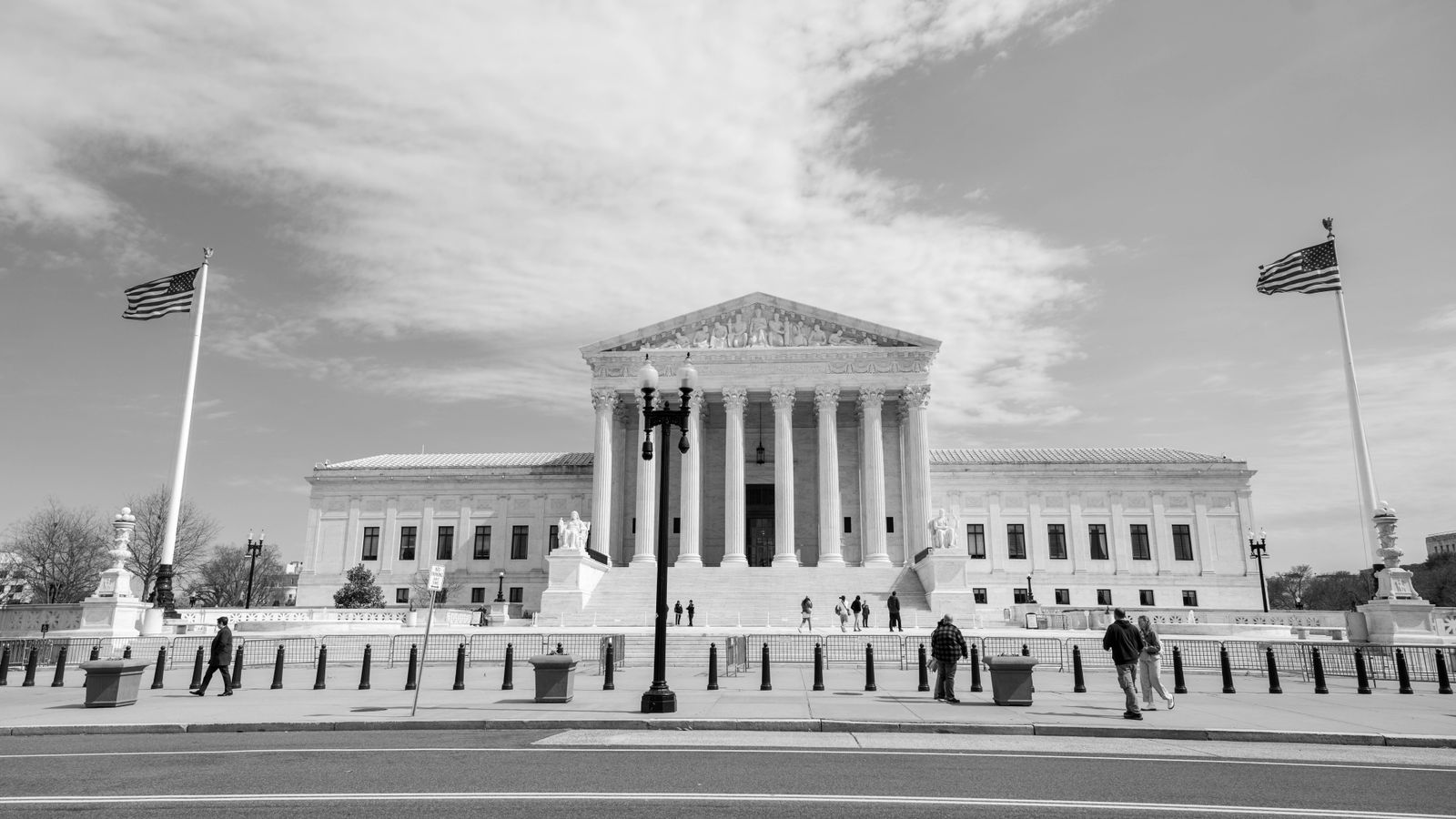
On June 18, 2026, the Supreme Court issued its decision in Daniels v. United States, ruling 6-3 that 18 U.S.C. § 922(g)(3) as applied to marijuana users violates the Second Amendment. Justice Neil Gorsuch wrote for the majority, joined by Chief Justice John Roberts and Justices Thomas, Alito, Kavanaugh, and Barrett. The Court held that the government failed to identify a historical tradition of disarming citizens based on consumption of intoxicating substances that were legal under state law. Justice Gorsuch's opinion emphasized that the Second Amendment's text protects "the people," a term of art referring to law-abiding citizens. The opinion stated: "A citizen who uses marijuana in compliance with state law, who presents no evidence of dangerousness, and who seeks to exercise a fundamental constitutional right cannot be categorically disarmed based on a federal policy disagreement with state drug laws." The decision explicitly limited its holding to marijuana users in states where such use is legal, leaving open the question of whether the prohibition could apply to users of other controlled substances or to marijuana users in states where it remains illegal. Justice Kavanaugh's concurring opinion suggested that as-applied challenges might succeed for users of other substances if the government cannot demonstrate actual dangerousness. Justice Ketanji Brown Jackson wrote a dissent joined by Justices Sotomayor and Kagan, arguing that the majority's historical analysis was too narrow and that Congress had broad authority to regulate firearms in the interest of public safety. The dissent warned that the decision would hamper federal efforts to keep guns out of the hands of drug users and could extend to other categories of prohibited persons.Key Players
Bureau of Alcohol, Tobacco, Firearms and Explosives
The ATF has served as the primary federal agency enforcing the cannabis-gun prohibition through Form 4473 requirements and criminal investigations. Under Director Steven Dettelbach, appointed in 2022, the ATF has maintained that federal law requires licensed dealers to deny sales to known marijuana users, regardless of state legalization. The agency issued updated guidance in October 2023 reiterating that medical marijuana cardholders are prohibited persons, leading to an estimated 12,000 denied firearm purchases in 2024 based on cannabis use disclosures or registry information. Following the Daniels decision, the ATF faces the complex task of revising Form 4473 and enforcement policies. The agency has not yet issued formal guidance on how dealers should handle purchases by marijuana users in legalization states, creating uncertainty for the nation's 78,000 federal firearms licensees.Department of Justice
The DOJ has defended the prohibition in court while simultaneously deprioritizing prosecution of state-compliant cannabis users under the Cole Memorandum framework. Deputy Attorney General Lisa Monaco testified before the Senate Judiciary Committee in February 2025 that federal prosecutors had brought only 127 cases under § 922(g)(3) specifically targeting marijuana users between 2020 and 2024, focusing resources on cases involving violence, large-scale trafficking, or other aggravating factors. However, the department vigorously defended the statute's constitutionality through the Daniels litigation. Following the Supreme Court's decision, Attorney General Merrick Garland issued a statement acknowledging the ruling and directing the Criminal Division to develop new enforcement guidelines that comply with the Court's holding while protecting public safety.Firearms Policy Coalition
The Firearms Policy Coalition has emerged as the leading Second Amendment organization challenging the cannabis prohibition, providing legal representation in Daniels and multiple other cases. Founded in 2014, FPC has taken an absolutist approach to gun rights, arguing that nearly all prohibited-person categories violate the Second Amendment. The organization's director of constitutional litigation, Cody Wisniewski, coordinated amicus briefs from 22 states supporting Daniels' challenge. FPC has announced plans to file additional challenges targeting the prohibition as applied to users of other substances, including psychedelics in states like Oregon and Colorado where they have been decriminalized or legalized for therapeutic use.National Organization for the Reform of Marijuana Laws
NORML has advocated for cannabis users' gun rights as part of its broader mission to end marijuana prohibition and its collateral consequences. The organization filed an amicus brief in Daniels arguing that the prohibition perpetuates stigma against cannabis users and lacks empirical support. NORML's legal director, Paul Armentano, has emphasized that no peer-reviewed research demonstrates that cannabis users commit gun violence at higher rates than non-users. NORML has also pushed for legislative solutions, supporting the Gun Rights and Marijuana Act introduced by Representative Alex Mooney in 2024, which would have exempted state-legal marijuana users from the federal prohibition. The bill died in committee but is expected to be reintroduced following the Daniels decision.National Shooting Sports Foundation
The NSSF, the firearms industry's trade association, has taken a cautious position on the cannabis-gun issue, emphasizing that dealers must comply with federal law while acknowledging the constitutional questions. The organization represents manufacturers and the 78,000 federally licensed dealers who must navigate the conflict between state cannabis laws and federal firearms regulations. NSSF General Counsel Lawrence Keane has called for congressional action to resolve the conflict, noting that dealers face potential license revocation for selling to prohibited persons but also risk state-law discrimination claims for refusing sales based solely on legal cannabis use. Following Daniels, NSSF has requested emergency guidance from ATF on Form 4473 compliance.Legal and Regulatory Framework
18 U.S.C. § 922(g)(3)
The core federal prohibition appears in 18 U.S.C. § 922(g)(3), which makes it unlawful for any person "who is an unlawful user of or addicted to any controlled substance" to possess firearms or ammunition. Violation carries a maximum penalty of 10 years imprisonment and a $250,000 fine under 18 U.S.C. § 924(a)(2). The statute does not define "unlawful user," leaving courts to develop the standard through case law. Federal courts have generally interpreted "unlawful user" to require regular, contemporaneous use rather than isolated past incidents. The Sixth Circuit's decision in United States v. Turnbull (2997) established that the government must prove use "with some regularity, and over an extended period of time" to sustain a conviction. However, the exact timeframe varies by circuit, with some courts finding that use within months of firearm possession suffices.The Controlled Substances Act Scheduling
Marijuana's placement in Schedule I of the Controlled Substances Act at 21 U.S.C. § 812 provides the foundation for treating all cannabis use as "unlawful" under federal law. Schedule I is reserved for substances with "high potential for abuse," "no currently accepted medical use in treatment in the United States," and lack of "accepted safety for use under medical supervision." The DEA has maintained marijuana in Schedule I despite 38 states recognizing medical use and extensive clinical research documenting therapeutic applications. In August 2023, the Department of Health and Human Services recommended rescheduling marijuana to Schedule III following a comprehensive review, but the DEA has not yet completed the rulemaking process. Rescheduling to Schedule III would not eliminate the firearms prohibition, as § 922(g)(3) applies to unlawful use of any controlled substance, but could affect how courts analyze the government's justifications.ATF Form 4473 Requirements
ATF Form 4473, the Firearms Transaction Record, requires all purchasers from licensed dealers to answer Question 21(f) about marijuana and controlled substance use under penalty of perjury. A false answer constitutes a felony under 18 U.S.C. § 922(a)(6), punishable by up to 10 years imprisonment. This creates a legal trap: cannabis users must either lie on the form (committing a felony) or answer truthfully and be denied the purchase. The form's instructions state: "The use or possession of marijuana remains unlawful under Federal law regardless of whether it has been legalized or decriminalized for medicinal or recreational purposes in the state where you reside." This language has remained unchanged since 2011 despite evolving state laws and is expected to be revised following the Daniels decision.State Constitutional Protections
Several state constitutions provide independent gun rights protections that may exceed the Second Amendment, creating additional legal complexity. Pennsylvania's Constitution Article I, Section 21 states that "the right of the citizens to bear arms in defense of themselves and the State shall not be questioned." The Pennsylvania Supreme Court has interpreted this as providing broader protection than the Second Amendment. In 2023, a Pennsylvania trial court ruled in Commonwealth v. Barr that the state could not enforce its own prohibited-person statute against medical marijuana cardholders based on the state constitutional provision. The Pennsylvania Attorney General has appealed, and the case remains pending before the state Supreme Court. Similar challenges are proceeding in Michigan, Oklahoma, and Montana, all of which have state constitutional gun rights provisions.State-by-State Breakdown
California
California prohibits firearm possession by persons "addicted to" narcotics under Penal Code § 29800, but does not explicitly include marijuana users in this category. The state legalized adult-use cannabis in 2016 through Proposition 64, and medical use has been legal since 1996 under Proposition 215. California does not maintain a medical marijuana registry, making it difficult for dealers to identify cardholders. However, California requires its own firearm purchase application (Form BOF 4473) in addition to the federal form, and applicants must answer similar questions about drug use. The California Department of Justice has not issued guidance on how the Daniels decision affects state-level denials, creating uncertainty for the state's estimated 3.2 million cannabis consumers who may seek to purchase firearms.Colorado
Colorado legalized adult-use cannabis in 2012 through Amendment 64 but maintains its own prohibited-person categories that include "habitual users" of controlled substances. The Colorado Bureau of Investigation, which administers the state's background check system, has historically denied purchases to known medical marijuana cardholders based on federal law. Following Daniels, Colorado Attorney General Phil Weiser issued an opinion stating that CBI should not deny purchases based solely on legal marijuana use in the absence of evidence of impairment or dangerousness. However, dealers still must comply with federal Form 4473 requirements, creating a conflict between state guidance and federal obligations. Colorado's medical marijuana registry contains approximately 78,000 active cardholders as of 2026.Florida
Florida legalized medical marijuana in 2016 through Amendment 2 but does not permit adult-use sales, and the state maintains strict firearm regulations for medical cardholders. Florida Statutes § 790.065 requires background checks for all firearm purchases and incorporates federal prohibited-person categories by reference. The Florida Department of Agriculture and Consumer Services, which issues concealed carry licenses, has historically denied applications from medical marijuana cardholders. In 2023, the Florida Supreme Court declined to hear a challenge to this policy in Norman v. Florida Department of Agriculture, leaving the denial practice in place. However, following Daniels, the department announced it would review its policy and potentially issue new licenses to previously denied medical marijuana patients. Florida's medical registry contains over 800,000 active cardholders, the third-largest in the nation.Michigan
Michigan legalized adult-use cannabis in 2018 through Proposal 1 and has taken an aggressive stance protecting cannabis users' gun rights at the state level. In 2023, the Michigan Court of Appeals ruled in People v. Carrier that the state cannot prosecute medical marijuana cardholders under Michigan's felon-in-possession statute for conduct that would be legal for non-cardholders. The court held that such selective enforcement violated equal protection. Michigan does not maintain a medical marijuana registry accessible to law enforcement or firearms dealers, making it nearly impossible for dealers to identify cardholders during transactions. The Michigan State Police issued guidance in 2024 stating that state law does not prohibit cannabis users from possessing firearms, but dealers must still comply with federal law. Michigan has approximately 425,000 medical marijuana cardholders and an estimated 2.8 million adult-use consumers.Oklahoma
Oklahoma legalized medical marijuana in 2018 through State Question 788 and has the highest per-capita medical marijuana enrollment in the nation with over 400,000 cardholders in a state of 4 million residents. Oklahoma's constitutional gun rights provision, Article II, Section 26, states that the right to bear arms is "reserved to the citizens" and "shall not be infringed." The Oklahoma Supreme Court has interpreted this as providing stronger protection than the Second Amendment. In 2024, the Oklahoma Court of Criminal Appeals ruled in Tulsa County v. Mendez that the state cannot deny concealed carry licenses to medical marijuana cardholders based solely on their registry status. The court held that such denials violated both the state constitutional gun rights provision and equal protection principles. Oklahoma has not yet revised its licensing procedures following Daniels, but advocates expect the state to lead in protecting cannabis users' gun rights.Pennsylvania
Pennsylvania legalized medical marijuana in 2016 through the Medical Marijuana Act but explicitly prohibits cardholders from obtaining concealed carry licenses under 18 Pa.C.S. § 6109(e)(1)(xiv). This provision states that sheriffs "shall not" issue licenses to individuals who are prohibited under federal law, which includes medical marijuana users. The Pennsylvania Supreme Court is currently reviewing Commonwealth v. Barr, which challenges this prohibition under the state constitution's Article I, Section 21 gun rights provision. Oral arguments were held in April 2026, with a decision expected by fall 2026. Pennsylvania has approximately 450,000 active medical marijuana cardholders, making this case one of the most significant state-level challenges to the prohibition.Texas
Texas maintains some of the nation's strictest cannabis laws, with only a limited low-THC medical program authorized under the Texas Compassionate Use Act. The program restricts access to patients with specific conditions and limits THC content to 1%, resulting in only 75,000 enrolled patients as of 2026. Texas does not prohibit medical marijuana patients from possessing firearms under state law, but the small program size has limited litigation. Texas Attorney General Ken Paxton filed an amicus brief in Daniels supporting the federal prohibition, arguing that states retain authority to determine which substances pose public safety risks and that federal firearms regulations should defer to the Controlled Substances Act scheduling. Following the Supreme Court's decision, Paxton issued a statement criticizing the ruling but acknowledging that Texas law enforcement would comply.Market and Business Implications
Cannabis Industry Security Challenges
The firearms prohibition has created acute security vulnerabilities for cannabis businesses, which handle large cash volumes due to federal banking restrictions but cannot legally arm employees. The National Cannabis Industry Association documented 237 armed robberies of dispensaries, cultivation facilities, and transport vehicles in 2025, resulting in $52 million in losses and 14 deaths. Dispensaries in California, Colorado, and Michigan have been particularly targeted, with some experiencing multiple robberies. Security companies serving the cannabis industry have faced their own legal challenges. In 2023, the Colorado Supreme Court ruled in Rocky Mountain Security v. Colorado Department of Revenue that armed security guards working at dispensaries could face federal prosecution under § 922(g)(3) if they use cannabis, even off-duty. This has created a staffing crisis for cannabis security firms, which struggle to find qualified guards willing to abstain from legal cannabis use. The Daniels decision is expected to alleviate these security challenges significantly. Industry analysts project that cannabis businesses will increase armed security staffing by 40-60% within 12 months, potentially reducing robbery incidents and insurance premiums. Publicly traded multi-state operators including Curaleaf, Trulieve, and Green Thumb Industries have announced plans to enhance armed security at high-risk locations.Insurance and Liability Considerations
Cannabis businesses face insurance premiums 3-5 times higher than comparable retail operations due to security risks and the firearms prohibition. Lloyd's of London, which underwrites approximately 35% of U.S. cannabis business insurance, charges average annual premiums of $47,000 for $1 million in general liability coverage for a typical dispensary, compared to $12,000 for a comparable pharmacy. Insurance carriers have cited the inability of cannabis businesses to maintain armed security as a primary risk factor justifying higher premiums. Following Daniels, insurance industry analysts expect premium reductions of 15-25% for cannabis businesses that implement armed security protocols. This could save the industry an estimated $180 million annually in insurance costs across the 15,000 licensed cannabis businesses nationwide. However, new liability questions have emerged. If a cannabis business employee who uses marijuana shoots someone while providing armed security, does the employer face enhanced liability for knowingly arming a cannabis user? Insurance carriers are developing new policy language to address these scenarios, and legal experts expect litigation to define the contours of employer liability in coming years.Banking and Financial Services Impact
The intersection of cannabis, guns, and banking creates additional complexity for financial institutions considering serving cannabis businesses. Under the Bank Secrecy Act, financial institutions must file Suspicious Activity Reports for transactions involving proceeds from illegal activity. While the FinCEN guidance issued in 2014 provided a safe harbor for banks serving state-legal cannabis businesses, institutions have remained cautious about potential federal enforcement. The firearms prohibition added another layer of risk: if a bank knowingly provides services to a cannabis business owner who possesses firearms, could the bank face liability for facilitating illegal activity? This theoretical risk, while never tested in court, has contributed to banks' reluctance to serve the cannabis industry. Only 755 banks and credit unions provided accounts to cannabis businesses as of 2025, leaving 70% of cannabis businesses unbanked. Financial services attorneys expect the Daniels decision to modestly increase banking access by removing one source of legal uncertainty. However, the core banking challenge—marijuana's Schedule I status—remains unchanged, and significant expansion of financial services will likely require either federal legalization or passage of the SAFE Banking Act.Investment and Capital Formation
The firearms prohibition has had subtle but measurable effects on cannabis industry investment, particularly in private equity and venture capital. Institutional investors conducting due diligence on cannabis companies routinely ask about founders' and executives' firearm ownership, as federal prosecution of a key executive could destroy enterprise value. Some private equity firms have required executives to divest firearms as a condition of investment. Cannabis industry executives have reported that the firearms issue creates additional stigma and "othering" that reinforces the industry's second-class status. One CEO of a multi-state operator told investors in 2024: "We're the only industry in America where owning a gun for home protection could land our leadership team in federal prison. That's not a normal risk factor for Walgreens or CVS." The Daniels decision removes this unique risk factor and could accelerate institutional investment in cannabis. However, analysts note that larger barriers remain, including 280E tax treatment, which prohibits cannabis businesses from deducting ordinary business expenses, and the inability to list on major stock exchanges. The firearms issue, while symbolically important, ranks below these concerns for most institutional investors.What Experts Say
Constitutional law scholars have largely welcomed the Daniels decision as a logical application of Bruen's historical test, though some express concern about broader implications for prohibited-person categories. Duke University constitutional law professor Joseph Blocher, co-director of the Duke Center for Firearms Law, said the decision was "probably correct under Bruen's framework" but noted that the historical test creates challenges for modern public safety regulations. According to Blocher, the decision "illustrates the difficulty of applying 18th-century history to 21st-century drug policy" and may force Congress to develop more tailored approaches to firearms regulation. UCLA law professor Adam Winkler, author of "Gunfight: The Battle Over the Right to Bear Arms in America," characterized the decision as "narrow but significant." Winkler noted that the Court explicitly limited its holding to state-legal marijuana users, leaving open questions about users of other substances and marijuana users in prohibition states. He predicted that lower courts would see "a flood of as-applied challenges" from persons prohibited under other subsections of § 922(g). Second Amendment advocates have celebrated Daniels as vindicating their long-held position that the right to bear arms cannot be conditioned on abstaining from legal conduct. Firearms Policy Coalition President Brandon Combs described the decision as "a watershed moment for civil rights" and argued that it "recognizes that the government cannot create second-class citizens by forcing people to choose between fundamental rights." Combs announced that FPC would file challenges to prohibitions affecting users of psychedelics in Oregon and Colorado, where therapeutic use has been legalized. Second Amendment Foundation founder Alan Gottlieb said the decision "restores the constitutional rights of millions of Americans who have been unjustly disarmed" and called on Congress to revise § 922(g)(3) to comply with the ruling. Gottlieb emphasized that the decision does not protect persons who are actually impaired while carrying firearms, only those who use cannabis when not carrying. Cannabis policy experts have emphasized that the decision removes a significant collateral consequence of marijuana use but does not address the core problem of federal prohibition. NORML Deputy Director Paul Armentano said the ruling "eliminates one of the most unjust penalties associated with cannabis consumption" but noted that "as long as marijuana remains in Schedule I, cannabis consumers will continue to face discrimination in employment, housing, child custody, and other areas." Armentano called on Congress to pass the Cannabis Administration and Opportunity Act, which would deschedule marijuana entirely. Marijuana Policy Project Executive Director Steve Hawkins characterized the decision as "a step toward treating cannabis consumers with the same dignity and respect afforded to alcohol consumers." Hawkins noted that no one suggests that a person who drinks beer on Saturday cannot buy a gun on Monday, and the same logic should apply to cannabis. However, he cautioned that the decision creates "a patchwork of rights" where cannabis users in legalization states can possess firearms but users in prohibition states cannot. Law enforcement organizations have expressed concern that the decision will hamper public safety efforts and make it more difficult to keep guns away from dangerous individuals. The National Sheriffs' Association issued a statement saying the decision "ties the hands of law enforcement" and "ignores the well-documented connection between drug use and violence." The organization called on Congress to pass legislation clarifying that marijuana users can be disarmed consistent with the Second Amendment. However, Law Enforcement Action Partnership Executive Director Major Neill Franklin, a retired Maryland State Police officer, disputed the claim that cannabis users pose heightened public safety risks. According to Franklin, "the evidence simply does not support the notion that cannabis users are more dangerous than the general population" and "this prohibition was always more about stigma than safety." Franklin noted that his organization, which represents police, prosecutors, and judges who support drug policy reform, had filed an amicus brief supporting Daniels.What's Next
The immediate priority is ATF revision of Form 4473 and enforcement guidance to comply with the Daniels decision, expected by September 2026. The ATF must determine how to modify Question 21(f) to distinguish between state-legal marijuana users (who can now possess firearms) and users in prohibition states or users of other controlled substances (who remain prohibited). Industry groups have proposed language asking whether the applicant is "an unlawful user under both state and federal law" of controlled substances other than marijuana, but civil liberties advocates argue this still creates constitutional problems. The Justice Department faces decisions about how to handle pending prosecutions under § 922(g)(3). Approximately 340 federal cases involving marijuana users charged with firearm possession are currently pending in district courts nationwide. DOJ has moved to dismiss 89 cases involving defendants in legalization states but is proceeding with cases in prohibition states and cases involving other controlled substances. Defense attorneys are filing motions to dismiss in all pending cases, arguing that Daniels should apply retroactively. Congress is considering legislative responses ranging from codifying the Daniels holding to attempting to override it through new statutory language. Representative Alex Mooney reintroduced the Gun Rights and Marijuana Act in June 2026, which would explicitly exempt state-legal marijuana users from § 922(g)(3). The bill has 87 cosponsors, including 12 Republicans,Frequently asked questions
Can medical marijuana patients legally own guns under federal law?
No. Federal law under 18 U.S.C. § 922(g)(3) prohibits any unlawful user of controlled substances from possessing firearms. Since cannabis remains a Schedule I controlled substance federally, medical marijuana cardholders are considered prohibited persons regardless of state medical cannabis laws. The ATF has issued guidance confirming that medical marijuana use disqualifies individuals from firearms ownership, and lying on Form 4473 about drug use constitutes a federal felony punishable by up to 10 years imprisonment.
What is ATF Form 4473 and how does it affect cannabis users?
ATF Form 4473 is the federal Firearms Transaction Record required for all gun purchases from licensed dealers. Question 21(f) asks: 'Are you an unlawful user of, or addicted to, marijuana or any depressant, stimulant, narcotic drug, or any other controlled substance?' Cannabis users must answer 'yes' even in legal states, which disqualifies them from purchase. Answering 'no' while using cannabis constitutes a false statement, a federal crime under 18 U.S.C. § 922(a)(6) carrying penalties up to 10 years imprisonment and $250,000 in fines.
Has the Supreme Court ruled on cannabis users' gun rights?
The Supreme Court's 2022 decision in New York State Rifle & Pistol Association v. Bruen established that gun regulations must be consistent with historical tradition to survive constitutional scrutiny. Lower courts have since applied this standard to challenge 18 U.S.C. § 922(g)(3)'s prohibition on drug users owning firearms. While the Supreme Court has not directly ruled on cannabis-specific gun rights, the Bruen framework has led multiple circuit courts to question whether blanket prohibitions on non-violent drug users can withstand strict historical analysis of Second Amendment traditions.
Which states have the most conflict between cannabis and gun laws?
States with both strong gun rights cultures and legal cannabis markets face the greatest conflicts, including Colorado, Montana, Oklahoma, Alaska, and Maine. These states have constitutional protections for firearms ownership while permitting recreational or medical marijuana. The conflict is purely federal—state laws do not prohibit cannabis users from owning guns, but federal law does. Some states like Pennsylvania have seen state courts rule that medical marijuana cardholders cannot be denied concealed carry permits based solely on their patient status, creating enforcement confusion.
What happened in the Wilson v. Garland case?
In Wilson v. Garland (5th Circuit, 2023), the court ruled that 18 U.S.C. § 922(g)(3) was unconstitutional as applied to marijuana users, finding no historical tradition of disarming citizens for substance use alone. The court applied the Bruen test and determined the government failed to demonstrate that the Founding-era tradition supported prohibiting gun ownership by non-violent individuals who use intoxicants. However, this decision was later vacated for en banc review, and the legal landscape remains unsettled across different federal circuits.
Can you lose existing guns if you become a cannabis user?
Yes. Under 18 U.S.C. § 922(g)(3), possessing firearms while being an unlawful user of controlled substances is a federal crime, regardless of when the guns were acquired. This means legally purchased firearms become illegal to possess once someone begins using cannabis. The ATF defines 'current user' broadly, and federal prosecutors have pursued cases against individuals who possessed guns and used marijuana simultaneously. Conviction carries up to 10 years imprisonment. There is no grandfather clause for previously owned firearms.
What is the 'unlawful user' definition for gun prohibition purposes?
The ATF defines an 'unlawful user' as someone who has used a controlled substance within a reasonable time period, typically interpreted as regular or recent use rather than isolated past incidents. Courts have applied various standards, but the ATF's 2011 open letter stated that marijuana use within the past year could establish prohibited status. The definition does not require addiction or impairment—any regular use of cannabis, even if legal under state law, qualifies. Possession of a medical marijuana card is considered evidence of current use.
Are there any pending federal bills to resolve this conflict?
Several bills have been introduced in Congress to address the cannabis-gun rights conflict, though none have passed as of 2026. Proposed legislation includes provisions within broader cannabis reform bills like the MORE Act and standalone measures to amend 18 U.S.C. § 922(g)(3) to exclude state-legal cannabis users. The SAFE Banking Act and similar bills have included gun rights amendments. However, the issue remains politically divisive, with gun rights advocates and cannabis reform supporters sometimes at odds over whether to prioritize firearms access or comprehensive drug policy reform.
How do law enforcement agencies handle cannabis users with guns?
Enforcement varies significantly by jurisdiction. Federal agencies like the ATF and FBI prioritize cases involving violence, trafficking, or other serious crimes rather than targeting lawful state cannabis users with firearms. However, individuals can face federal prosecution if discovered during other investigations. State and local police in legal cannabis states generally do not enforce federal gun prohibitions against cannabis users, but information can be shared with federal authorities. Medical marijuana registries are not directly accessible to firearms background check systems, but false statements on Form 4473 create prosecutable offenses.
What should cannabis users know before attempting to purchase a firearm?
Cannabis users face a legal impossibility: they cannot truthfully complete Form 4473 without disqualifying themselves, and lying constitutes a federal felony. Ceasing cannabis use does not immediately restore gun rights—the ATF considers recent use disqualifying, though no specific waiting period is defined. Medical marijuana cardholders are presumed to be current users. Private sales in states without background check requirements do not eliminate federal liability—possession itself remains illegal under 18 U.S.C. § 922(g)(3). Legal advice is essential, as this area involves conflicting federal and state laws with severe criminal penalties.
Do concealed carry permits interact with medical marijuana cards?
Most states that issue both concealed carry permits and medical marijuana cards have policies prohibiting individuals from holding both simultaneously. States like Florida, Pennsylvania, and Hawaii have revoked or denied concealed carry permits upon discovering medical cannabis registration. However, some state courts have ruled that automatic denials based solely on medical marijuana patient status violate state constitutional rights. The federal prohibition under 18 U.S.C. § 922(g)(3) applies regardless of state permit status, creating a complex three-way conflict between federal law, state firearms regulations, and state cannabis programs.
What are the penalties for cannabis users caught with firearms?
Federal prosecution under 18 U.S.C. § 922(g)(3) for unlawful possession carries up to 10 years imprisonment and fines up to $250,000. False statements on Form 4473 under 18 U.S.C. § 922(a)(6) carry identical penalties. Sentences vary based on criminal history, presence of other crimes, and prosecutorial discretion. Most cases involve plea agreements with reduced sentences. State-level penalties depend on jurisdiction—states with legal cannabis typically do not prosecute possession by cannabis users, but states without legalization may impose additional state weapons charges. Federal prosecution remains possible nationwide regardless of state law.
The cannabis newsletter you forward to your team.
Federal policy, market data, grower alerts, and the one story that matters today. Sent every weekday at 7am. Free.
No spam. Unsubscribe with one click. 21+ only.