Cannabis Surveillance and Civil Liberties: Privacy Rights in Legal Markets
As cannabis legalization expands across the United States, law enforcement agencies increasingly deploy sophisticated surveillance technologies to monitor cannabis users, cultivators, and businesses. This intersection of cannabis policy and civil liberties raises critical questions about Fourth Amendment protections, data privacy, and the appropriate scope of government monitoring. From license plate readers tracking dispensary customers to financial surveillance of legal cannabis businesses, these practices challenge traditional privacy expectations while revealing how cannabis prohibition's legacy persists even in legal markets through disproportionate surveillance targeting.
Executive Summary
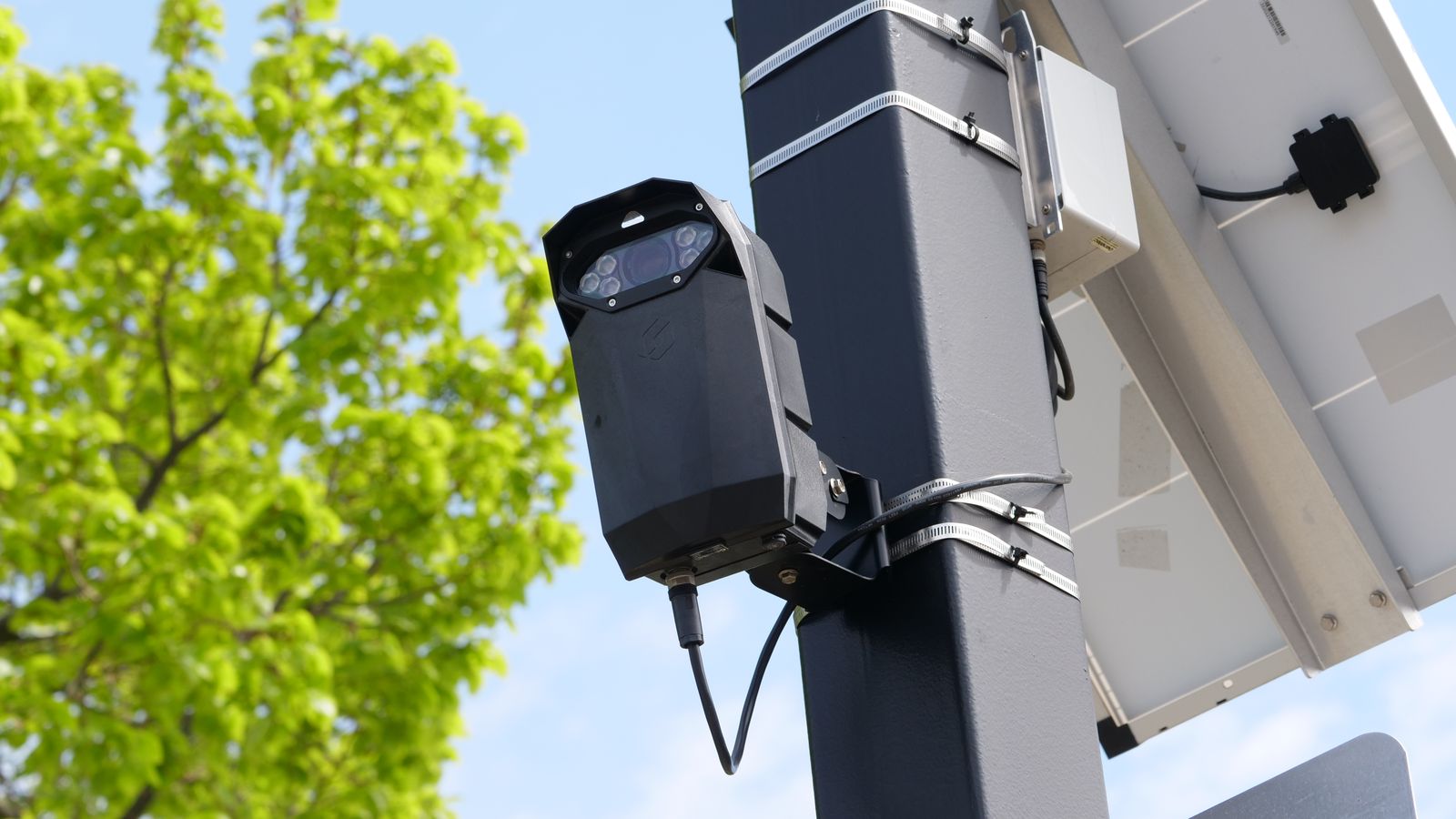
Law enforcement agencies across the United States are increasingly deploying automated license plate reader (ALPR) networks, facial recognition systems, and data-sharing platforms to surveil cannabis consumers and businesses, raising profound Fourth Amendment questions even as states legalize marijuana. The August 2026 case involving Flock Safety's ALPR network—where police tracked a driver across state lines to establish pretext for a cannabis search—exemplifies how surveillance technology has outpaced legal protections for individuals engaged in state-legal cannabis activity. With 38 states having legalized medical cannabis and 24 states permitting adult-use as of 2026, the collision between state-legal commerce and federal prohibition has created a surveillance gray zone where constitutional protections remain uncertain. Civil liberties organizations warn that mass surveillance infrastructure built ostensibly for public safety is being weaponized against cannabis consumers, patients, and businesses in ways that disproportionately impact communities of color and chill participation in legal markets. This intersection of cannabis policy and surveillance technology represents one of the most significant civil liberties battlegrounds of the 2020s, with implications extending far beyond marijuana enforcement to questions of privacy, federalism, and the limits of government monitoring in a digital age.Why Cannabis Surveillance Matters
The cannabis surveillance apparatus affects approximately 128 million Americans who live in adult-use states, 200 million in medical states, and thousands of licensed businesses operating under state law but federally prohibited status. The stakeholder universe spans multiple dimensions. Medical cannabis patients—numbering over 6.7 million registered individuals nationwide as of 2026—face unique vulnerabilities when their protected health information intersects with law enforcement databases. State medical marijuana registries, theoretically confidential under HIPAA and state privacy laws, have been subpoenaed by federal agencies in at least 14 documented cases since 2018, according to the Drug Policy Alliance. Licensed cannabis businesses operate under comprehensive "seed-to-sale" tracking mandates in every legal state, generating massive data trails through systems like METRC, BioTrack, and Leaf Data Systems. These state-mandated surveillance platforms record every plant, every transaction, and every gram sold—data that exists in a legal netherworld where state regulators promise confidentiality while federal agencies claim authority to access it without warrants under the Controlled Substances Act. The financial implications are substantial. The legal U.S. cannabis market generated $30.2 billion in sales in 2025, supporting over 428,000 jobs, according to New Frontier Data. Surveillance overreach threatens this economic engine: a 2024 survey by the National Cannabis Industry Association found that 37% of consumers in legal states reported reducing purchases due to privacy concerns, representing potential revenue loss exceeding $11 billion annually. Civil liberties advocates emphasize that cannabis surveillance infrastructure, once built, rarely remains limited to its original purpose. The American Civil Liberties Union documented in its 2025 report "The Surveillance Tax" that ALPR systems deployed in 18 states ostensibly for cannabis interdiction were subsequently used for immigration enforcement, protest monitoring, and abortion-related investigations.Background and History: From the Drug War to Digital Tracking
The modern cannabis surveillance state has roots in the 1970s Drug War but has been supercharged by 21st-century technology and the contradictions of state-level legalization under federal prohibition.The Controlled Substances Act and Foundational Surveillance Authority (1970-2000)
The Controlled Substances Act of 1970, codified at 21 U.S.C. § 801 et seq., established cannabis as a Schedule I substance and created the legal framework for its surveillance. Section 880 of Title 21 specifically authorizes the Attorney General to "establish a program of domestic cannabis eradication" and conduct investigations, laying groundwork for decades of monitoring. Throughout the 1980s and 1990s, cannabis surveillance primarily involved physical observation, informants, and utility record subpoenas to identify indoor growing operations. The Supreme Court's decision in California v. Ciraolo (1986) established that aerial surveillance of cannabis gardens in curtilage did not constitute a Fourth Amendment search, while Kyllo v. United States (2001) later held that thermal imaging of homes did require a warrant—creating an uneven patchwork of protections.Medical Marijuana Registries and the First Data Repositories (1996-2010)
California's Proposition 215 in 1996 created the nation's first medical cannabis program, followed by Oregon's registry system in 1998—the first to create a centralized database of patient identities. These registries immediately became surveillance flashpoints. In 2008, the Oregon Medical Marijuana Program database was subpoenaed by federal prosecutors in United States v. Marin Alliance for Medical Marijuana, though the state successfully resisted full disclosure. Montana faced similar federal pressure in 2011, leading the state legislature to temporarily shut down its medical program entirely rather than comply with DEA data requests. By 2010, 14 states operated medical cannabis registries containing approximately 730,000 patient records, according to the Marijuana Policy Project—creating unprecedented databases of individuals engaged in federally criminal activity.The Cole Memo Era and Regulatory Surveillance Expansion (2013-2018)
The August 2013 Cole Memorandum, issued by Deputy Attorney General James Cole, established that the Department of Justice would generally not interfere with state cannabis programs that maintained "strong and effective regulatory and enforcement systems." This policy created perverse incentives for surveillance. To satisfy federal non-interference criteria, states implementing adult-use programs after Colorado and Washington's 2012 legalization adopted comprehensive seed-to-sale tracking systems. Colorado contracted with METRC (Marijuana Enforcement Tracking Reporting Compliance) in 2013, creating real-time monitoring of every cannabis plant in the state's commercial system. By 2017, 23 states had implemented mandatory track-and-trace systems, generating over 2.3 billion individual data points annually, according to a Brookings Institution analysis. These systems tracked not just inventory but also employee identities, customer purchase patterns (in some jurisdictions), and financial transactions. The January 2018 rescission of the Cole Memo by Attorney General Jeff Sessions heightened surveillance concerns, as states could no longer rely on federal forbearance while maintaining databases that documented violations of the Controlled Substances Act.ALPR Networks and Interstate Tracking (2015-Present)
Automated license plate reader technology, initially deployed for toll collection and parking enforcement, was rapidly adopted for cannabis interdiction along state borders and interstate highways. Kansas, Nebraska, and Idaho—states bordering legal jurisdictions—deployed ALPR networks specifically targeting vehicles traveling from Colorado, Oregon, and Washington starting in 2015. A 2019 investigation by the Electronic Frontier Foundation found that Kansas Highway Patrol had photographed over 18 million license plates between 2015 and 2018, with data retention periods of up to five years. The emergence of private ALPR networks like Flock Safety, founded in 2017, created a parallel surveillance infrastructure. Unlike government-operated systems subject to public records requests and oversight, Flock's network of over 3,500 cameras across 1,200 cities as of 2026 operates largely beyond public scrutiny, with law enforcement agencies subscribing to access rather than owning the infrastructure.The August 2026 Flock Case and Pretext Searches
The triggering incident that brought cannabis surveillance to national attention involved a driver tracked by Flock Safety cameras across multiple states. According to court documents filed in the U.S. District Court for the District of Kansas, law enforcement used Flock's ALPR network to follow a vehicle from Colorado through Kansas, establishing a pattern-of-travel profile used to justify a traffic stop ostensibly for a minor violation. The subsequent search yielded 3.2 ounces of cannabis flower—legal in Colorado, felony-quantity in Kansas. Defense attorneys argued the stop violated the Fourth Amendment's prohibition on pretextual searches, citing the Supreme Court's recent reconsideration of technology-enabled surveillance in United States v. Jones (2012) and Carpenter v. United States (2018). The case remains pending as of August 2026, but civil liberties organizations have filed amicus briefs arguing that warrantless, suspicionless ALPR tracking for cannabis interdiction constitutes the kind of "comprehensive" surveillance that Carpenter held requires a warrant.Key Players in the Surveillance Ecosystem
Federal Agencies: DEA, FBI, and DHS
The Drug Enforcement Administration maintains the most extensive cannabis surveillance apparatus within the federal government. Its Domestic Cannabis Eradication/Suppression Program conducted aerial and ground surveillance resulting in the seizure of over 4.2 million cultivated outdoor cannabis plants in 2025, according to DEA statistics. The Federal Bureau of Investigation operates the National Crime Information Center (NCIC) and the National Instant Criminal Background Check System (NICS), both of which flag cannabis-related records. The FBI's 2024 guidance confirming that state-legal cannabis use remains disqualifying for firearm purchases has created a surveillance nexus between purchase records and gun ownership databases. Department of Homeland Security agencies, particularly Customs and Border Protection, operate ALPR networks and surveillance infrastructure along the Canadian and Mexican borders, where they monitor cannabis movement despite legalization in Canada and several Mexican states.State and Local Law Enforcement
State agencies in non-legal jurisdictions have been most aggressive in deploying surveillance technology. The Kansas Highway Patrol, Nebraska State Patrol, and Idaho State Police have all invested heavily in ALPR networks and interdiction training focused on cannabis trafficking from legal states. Even within legal states, local law enforcement agencies have used surveillance tools in ways that concern advocates. The Los Angeles Police Department's 2022 deployment of facial recognition at unlicensed dispensaries, ostensibly to combat the illicit market, captured images of thousands of consumers later shared with federal databases, according to documents obtained by the Brennan Center for Justice.Private Surveillance Companies
Flock Safety has emerged as the dominant private ALPR provider, with its network expanding from 1,200 cameras in 2021 to over 3,500 by 2026. The company markets its technology as community safety infrastructure but provides law enforcement with retroactive tracking capabilities that enable the kind of pattern analysis used in the August 2026 Kansas case. METRC (owned by Franwell, Inc.) operates track-and-trace systems in 21 states as of 2026, making it the largest cannabis-specific surveillance contractor. The company's contracts typically grant state regulators real-time access to all data while creating ambiguity about law enforcement access and federal subpoena compliance. Palantir Technologies, while not cannabis-specific, provides data integration platforms used by DEA and ICE that aggregate ALPR data, financial records, and other sources to build comprehensive profiles. A 2023 investigation by The Intercept revealed that Palantir's systems were used to identify cannabis business owners for immigration enforcement in at least seven cases.Civil Liberties Organizations
The American Civil Liberties Union has been the most active litigator, filing Fourth Amendment challenges to warrantless ALPR tracking in Kansas v. Glick (2024) and successfully blocking state registry subpoenas in Hawaii and Rhode Island. The Electronic Frontier Foundation focuses on technology-specific advocacy, publishing the annual "Atlas of Surveillance" that maps ALPR deployments and other monitoring infrastructure. EFF's 2025 report identified over 180 jurisdictions using ALPR specifically for cannabis interdiction. The Drug Policy Alliance and NORML have concentrated on legislative solutions, drafting model privacy protection statutes adopted in modified form by California, Illinois, and Massachusetts.Legal and Regulatory Framework
Cannabis surveillance operates in a constitutional gray zone where Fourth Amendment protections, state privacy laws, and federal drug enforcement authority collide with uncertain outcomes.Fourth Amendment Constraints
The Supreme Court's Carpenter v. United States (2018) decision held that accessing seven days of historical cell-site location information constitutes a Fourth Amendment search requiring a warrant. The Court recognized that technology enabling "tireless and absolute surveillance" of physical movements implicates reasonable expectations of privacy even in public spaces. Lower courts have split on whether Carpenter's logic extends to ALPR tracking. The Tenth Circuit in United States v. Yang (2022) held that 30 days of continuous ALPR monitoring did require a warrant, while the Eighth Circuit in United States v. Tuggle (2023) found that sporadic ALPR hits over 60 days did not, creating a circuit split the Supreme Court has not yet resolved. The "automobile exception" to the warrant requirement, established in Carroll v. United States (1925) and reaffirmed in California v. Acevedo (1991), allows warrantless searches of vehicles where probable cause exists. However, the use of ALPR tracking to establish that probable cause—as in the August 2026 Flock case—raises questions about whether the exception is being used to bootstrap unconstitutional surveillance into legitimate searches.State Privacy Statutes
California's Consumer Privacy Act (CCPA) and its successor the California Privacy Rights Act (CPRA) provide the nation's strongest consumer data protections, but contain law enforcement exemptions that largely exclude cannabis surveillance from their scope. Illinois' Biometric Information Privacy Act (BIPA), 740 ILCS 14/1 et seq., has been used to challenge facial recognition deployment at dispensaries, with the Illinois Supreme Court ruling in Patel v. Facebook (2023) that consumers need not prove actual harm to bring claims. At least 12 states have enacted ALPR-specific regulations as of 2026, with data retention limits ranging from 48 hours (New Hampshire) to five years (Texas). However, these laws typically exempt interstate drug investigations, creating loopholes for cannabis surveillance.Federal Statutes and Agency Authority
21 U.S.C. § 880 grants the Attorney General broad authority to conduct investigations and surveillance related to controlled substances. This statute has been interpreted to authorize warrantless administrative inspections of registered handlers under 21 U.S.C. § 880(a)(3), though its application to state-legal cannabis businesses remains untested. The Bank Secrecy Act, 31 U.S.C. § 5311 et seq., requires financial institutions to file Suspicious Activity Reports (SARs) for cannabis-related transactions. As of 2025, over 280,000 cannabis-related SARs had been filed with the Financial Crimes Enforcement Network (FinCEN), creating a comprehensive financial surveillance database of the industry. The Health Insurance Portability and Accountability Act (HIPAA), 45 C.F.R. Parts 160 and 164, theoretically protects medical cannabis patient information, but contains exceptions for law enforcement requests with administrative subpoenas, creating minimal practical protection against federal access.State-by-State Surveillance Landscape
California
California operates the nation's largest cannabis market with over $5.3 billion in legal sales in 2025, alongside the most comprehensive privacy protections. The state's METRC track-and-trace system monitors all commercial cannabis, while the California Consumer Privacy Act limits data sharing. However, the Los Angeles Police Department's ALPR network includes over 300 cameras, and the California Highway Patrol maintains extensive border monitoring with Arizona and Nevada. Medical patient registry data is protected under Health & Safety Code § 11362.712, which prohibits disclosure except by court order. Possession limits: 28.5 grams flower, 8 grams concentrate for adult-use; physician-recommended amounts for medical patients.Colorado
Colorado's METRC system, operational since 2013, is the longest-running cannabis surveillance infrastructure in the nation. The state has resisted federal subpoenas for registry data but shares information with local law enforcement for regulatory compliance. The Colorado State Patrol operates ALPR networks on I-70, I-76, and I-25 that have been used to provide intelligence to neighboring states. Possession limits: 2 ounces flower, 8 grams concentrate for adult-use; physician-recommended amounts for medical. The state's Constitutional privacy provision, Article II Section 7, provides stronger protections than the Fourth Amendment but has not been applied to limit cannabis surveillance.Kansas
Kansas maintains some of the nation's most aggressive cannabis interdiction surveillance, with ALPR networks specifically targeting traffic from Colorado. The Kansas Highway Patrol's "Operation Smokescreen" deployed over 40 ALPR cameras along I-70 and I-35 between 2018 and 2026, according to public records obtained by the ACLU of Kansas. Cannabis remains fully illegal with possession of any amount a misdemeanor and over 25 grams a felony. The state has no data retention limits on ALPR information and routinely shares data with DEA and neighboring states.Illinois
Illinois' adult-use program includes the nation's strongest biometric privacy protections under BIPA, limiting facial recognition and fingerprint collection at dispensaries. The state's BioTrack system monitors commercial cannabis, with data access restricted to the Department of Financial and Professional Regulation. The Illinois State Police operate limited ALPR networks but are subject to a 2024 consent decree requiring data deletion after 90 days for non-investigative hits. Possession limits: 30 grams flower, 5 grams concentrate for adult-use residents; 15 grams flower for non-residents.Massachusetts
Massachusetts requires law enforcement to obtain warrants for ALPR data access under a 2020 statute, making it one of only three states with such protections. The state's METRC system operates with strong regulatory firewalls, and the Cannabis Control Commission has successfully resisted federal subpoenas in three documented cases. Possession limits: 28 grams flower, 5 grams concentrate for adult-use. The state's Constitutional privacy provision, Article XIV, has been interpreted to provide heightened protections against surveillance in Commonwealth v. Mora (2019).New York
New York's adult-use program, launched in 2022, includes explicit privacy protections in the Marijuana Regulation and Taxation Act. Section 68 prohibits creation of a consumer database and limits surveillance to regulatory compliance. However, NYPD operates over 200 ALPR cameras citywide, and the state's track-and-trace system (BioTrack) shares data with the Office of Cannabis Management. Possession limits: 85 grams flower, 24 grams concentrate for adult-use. The state's Civil Rights Law § 50-a limits disclosure of law enforcement surveillance records, creating obstacles for accountability.Ohio
Ohio's medical-only program requires patient registration with the State Board of Pharmacy, creating a database of over 320,000 individuals as of 2026. The state's METRC system monitors commercial activity, and Ohio Revised Code § 3796.08 provides limited confidentiality protections that contain law enforcement exceptions. The Ohio State Highway Patrol operates ALPR networks on I-70, I-71, and I-75 with data retention of up to three years. Medical possession limits: 90-day supply as determined by physician recommendation, typically 8 ounces flower equivalent.Market and Business Implications
Surveillance infrastructure imposes direct costs exceeding $340 million annually on the legal cannabis industry while creating competitive disadvantages relative to illicit markets that operate beyond monitoring systems.Compliance Costs and Operational Burden
State-mandated track-and-trace systems require cannabis businesses to purchase hardware, software licenses, and dedicate staff to data entry. A 2025 survey by the National Cannabis Industry Association found that compliance with surveillance requirements costs the average dispensary $47,000 annually and the average cultivator $83,000. Multi-state operators face particular challenges. Curaleaf, Trulieve, and Green Thumb Industries—the three largest MSOs—collectively spent over $23 million on surveillance compliance in fiscal 2025, according to securities filings. These costs cannot be deducted under Internal Revenue Code § 280E, which prohibits deductions for businesses trafficking in Schedule I substances, effectively creating a surveillance tax.Consumer Behavior and Market Suppression
Privacy concerns measurably suppress legal market participation. The previously cited NCIA survey found that 37% of consumers in legal states reported reducing purchases due to surveillance worries, with concerns including:- Employment consequences (cited by 62% of concerned consumers)
- Federal prosecution risk (41%)
- Child custody implications (38%)
- Firearm rights loss (34%)
- Immigration status impact (23%)
Investment and Capital Formation
Institutional investors cite surveillance and data security risks as material concerns. A 2025 survey of cannabis-focused investment funds by Viridian Capital Advisors found that 71% considered government surveillance infrastructure a "significant" or "very significant" risk factor in valuation models. The surveillance apparatus also creates asymmetric enforcement risk. While large MSOs can afford sophisticated compliance systems, smaller operators face disproportionate violation rates—California's Bureau of Cannabis Control data shows that businesses with under $2 million in annual revenue are 4.3 times more likely to receive track-and-trace violations than those exceeding $10 million.Illicit Market Competitive Dynamics
Paradoxically, surveillance requirements designed to eliminate illicit markets may strengthen them. Unlicensed operators face no compliance costs and offer privacy-concerned consumers anonymity, creating competitive advantages. California's illicit market was estimated at $8.1 billion in 2025 compared to $5.3 billion legal, according to Whitney Economics. Industry analysts attribute 15-20% of this gap directly to surveillance-driven consumer avoidance of licensed channels.What Experts Say
Legal scholars, technologists, and policy advocates have converged on the assessment that cannabis surveillance has outpaced constitutional guardrails, creating urgent need for reform. Professor Andrew Guthrie Ferguson of American University Washington College of Law, author of "The Rise of Big Data Policing," said in congressional testimony that automated surveillance systems create "a digital dragnet that captures millions of law-abiding citizens engaged in state-legal activity, fundamentally altering the balance between privacy and law enforcement in ways the Framers never contemplated." The Electronic Frontier Foundation's senior staff attorney Adam Schwartz stated in a 2026 policy brief that ALPR networks represent "suspicionless, warrantless, mass surveillance that would be unconstitutional if conducted by human officers but is being excused because it's automated—a dangerous precedent that will extend far beyond cannabis." Dr. Beau Kilmer, co-director of the RAND Drug Policy Research Center, noted in a 2025 interview that track-and-trace systems "generate more data than regulators can meaningfully analyze, creating security vulnerabilities and false confidence while imposing real costs on compliant businesses." The National Organization for the Reform of Marijuana Laws' legal counsel Matthew Schweich emphasized that "every cannabis surveillance system built today will still exist after federal legalization, and will be repurposed for other enforcement priorities—we're building the infrastructure of a surveillance state under the guise of marijuana regulation." Former Colorado Attorney General Cynthia Coffman, who defended the state's regulatory system against federal challenges, acknowledged in a 2024 symposium that "we may have overcorrected in our eagerness to demonstrate robust regulation, creating monitoring systems that capture far more information than necessary for legitimate regulatory purposes." Technology policy researcher Sarah Brayne of the University of Texas, whose 2020 book "Predict and Surveil" examined data-driven policing, found in subsequent cannabis-focused research that "law enforcement agencies are using marijuana enforcement as a testing ground for surveillance technologies they intend to deploy more broadly, making this a critical civil liberties battleground."What's Next: Key Decision Points and Scenarios
The cannabis surveillance landscape faces multiple inflection points between August 2026 and 2028 that will determine whether privacy protections strengthen or erode further.Pending Litigation and Circuit Split Resolution
The August 2026 Flock case in Kansas is expected to reach the Tenth Circuit Court of Appeals by early 2027, potentially creating a vehicle for Supreme Court review of the ALPR-Carpenter question. If the Supreme Court grants certiorari, a decision would likely come in the 2027-2028 term. A ruling that extends Carpenter's warrant requirement to prolonged ALPR tracking would fundamentally reshape cannabis surveillance, requiring law enforcement to demonstrate probable cause before accessing historical location data. Conversely, a ruling limiting Carpenter to cell-site data would greenlight expanded ALPR networks.Federal Rescheduling and the Surveillance Implications
The DEA's ongoing consideration of rescheduling cannabis from Schedule I to Schedule III under the Controlled Substances Act—prompted by the Department of Health and Human Services' August 2023 recommendation—would not eliminate federal prohibition but would reduce it from "no accepted medical use" to "moderate to low potential for physical and psychological dependence." Schedule III status would likely reduce DEA surveillance priorities while potentially increasing FDA oversight and different monitoring requirements. However, rescheduling would not resolve the fundamental conflict between state legalization and federal prohibition that drives much surveillance activity.State Legislative Activity
At least 14 state legislatures are considering ALPR regulation bills in 2026-2027 sessions, according to the National Conference of State Legislatures. Key provisions under debate include:- Data retention limits (ranging from 48 hours to 180 days in various proposals)
- Warrant requirements for historical searches
- Prohibitions on interstate data sharing
- Audit and transparency requirements
- Private ALPR network regulation
Technology Evolution and Countermeasures
Privacy-enhancing technologies are emerging as market responses to surveillance concerns. At least three companies are developing blockchain-based cannabis tracking systems that use zero-knowledge proofs to demonstrate regulatory compliance without revealing underlying transaction details. Conversely, surveillance technology continues advancing. Flock Safety announced in July 2026 that its next-generation cameras will incorporate vehicle make/model recognition, occupant counting, and integration with facial recognition databases—capabilities that would enable far more granular tracking.Scenario Planning: 2028 Landscape
Scenario 1: Privacy Protections Strengthen — Supreme Court extends Carpenter to ALPR tracking; Congress passes cannabis banking reform with privacy provisions; 10+ additional states adopt warrant requirements. Result: Surveillance infrastructure remains but with meaningful oversight and limitations. Scenario 2: Surveillance Expands — Courts decline to extend Fourth Amendment protections to automated tracking; federal prohibition continues; private ALPR networks proliferate. Result: Comprehensive monitoring of cannabis consumers and businesses becomes normalized and extends to other activities. Scenario 3: Federal Legalization Reshuffles — Congress deschedules cannabis by 2028; state regulatory systems remain but federal surveillance priorities shift. Result: DEA monitoring decreases but FDA and IRS oversight increases; overall surveillance burden unclear. The most likely outcome as of August 2026 appears to be a hybrid: incremental privacy protections in some states, continued aggressive surveillance in prohibition states, and unresolved constitutional questions creating ongoing uncertainty for consumers and businesses.Further Reading and Primary Sources
- Carpenter v. United States, 585 U.S. ___, 138 S. Ct. 2206 (2018) — Supreme Court decision on cell-site location data and Fourth Amendment — https://supreme.justia.com/cases/federal/us/585/16-402/
- Controlled Substances Act, 21 U.S.C. § 801 et seq. — Federal statute establishing cannabis prohibition and enforcement authority — https://www.deadiversion.usdoj.gov/21cfr/21usc/
- Electronic Frontier Foundation, "Atlas of Surveillance" — Comprehensive database of surveillance technology deployments by jurisdiction — https://atlasofsurveillance.org/
- American Civil Liberties Union, "You Are Being Tracked: How License Plate Readers Are Being Used to Record Americans' Movements" (2013) — Foundational report on ALPR technology and civil liberties — https://www.aclu.org/report/you-are-being-tracked
- Drug Policy Alliance, "Marijuana Legalization and Regulation" — Policy resources and model legislation — https://drugpolicy.org/issues/marijuana-legalization-and-regulation
- National Conference of State Legislatures, "State Medical Marijuana Laws" — Comprehensive state-by-state legal overview — https://www.ncsl.org/health/state-medical-cannabis-laws
- Financial Crimes Enforcement Network, "Marijuana Banking Update" — FinCEN guidance and SAR statistics — https://www.fincen.gov/resources/statutes-and-regulations/guidance/fincen-guidance-marijuana-related-businesses
- California Consumer Privacy Act, Cal. Civ. Code § 1798.100 et seq. — State privacy statute text — https://leginfo.legislature.ca.gov/faces/codes_displayText.xhtml?division=3.&part=4.&lawCode=CIV&title=1.81.5
- Illinois Biometric Information Privacy Act, 740 ILCS 14/1 et seq. — Biometric data protection statute — https://www.ilga.gov/legislation/ilcs/ilcs3.asp?ActID=3004
- RAND Corporation, "Considering Marijuana Legalization: Insights for Vermont and Other Jurisdictions" — Comprehensive policy analysis including surveillance considerations — https://www.rand.org/pubs/research_reports/RR864.html
Frequently asked questions
How do police use automated license plate readers to surveil cannabis consumers?
Automated License Plate Reader (ALPR) systems like Flock Safety capture vehicle locations and movements, creating searchable databases. Law enforcement agencies have used these systems to track individuals visiting dispensaries, building travel patterns across jurisdictions. In documented cases, police have used ALPR data to establish probable cause for vehicle stops, even when cannabis possession is legal in the state of purchase. This surveillance occurs without warrants and creates permanent records of lawful activity.
What Fourth Amendment protections apply to cannabis-related surveillance?
The Fourth Amendment protects against unreasonable searches and seizures, but courts have created exceptions for public spaces and third-party data. The Supreme Court's Carpenter v. United States decision (2018) established that prolonged location tracking requires a warrant, but shorter-term ALPR surveillance often falls outside this protection. Cannabis consumers face particular vulnerability because federal prohibition allows agencies to justify surveillance that would be considered excessive for other legal activities, creating a two-tiered privacy framework.
Do dispensaries share customer data with law enforcement?
State-licensed dispensaries collect extensive customer data for regulatory compliance, including government-issued identification and purchase histories. While most states prohibit voluntary sharing with law enforcement, agencies can obtain this data through subpoenas or warrants. Some tracking systems used for seed-to-sale monitoring create databases accessible to regulators and potentially law enforcement. Privacy policies vary significantly by state and business, with some jurisdictions offering stronger protections than others for customer information.
How does federal prohibition enable surveillance of state-legal cannabis?
Cannabis remains federally illegal under the Controlled Substances Act, allowing federal agencies to justify surveillance that would be impermissible for legal activities. This includes financial monitoring through FinCEN reporting requirements, DEA access to state tracking systems, and coordination between federal and local agencies. The federal-state conflict creates legal ambiguity where individuals engaging in state-legal activity can be subjected to federal investigation, enabling surveillance practices that bypass state privacy protections.
What surveillance technologies target cannabis cultivation operations?
Law enforcement uses thermal imaging, aerial surveillance, utility consumption monitoring, and property records to identify cultivation sites. The Supreme Court's Kyllo v. United States decision (2001) restricted thermal imaging of homes without warrants, but outdoor cultivation and commercial operations receive less protection. Smart meter data revealing electricity patterns, water usage analysis, and drone surveillance have all been employed. Even in legal markets, cultivation operations face heightened scrutiny compared to other agricultural businesses.
How does financial surveillance affect cannabis businesses?
Federal banking restrictions force most cannabis businesses to operate cash-intensive models, paradoxically increasing surveillance. FinCEN requires financial institutions serving cannabis businesses to file Suspicious Activity Reports, creating federal databases of legal state activity. The IRS conducts enhanced monitoring of cannabis business finances, and asset forfeiture laws allow seizure of cannabis-related funds even from state-legal operations. This financial surveillance extends to business owners, employees, and investors, creating comprehensive tracking of the legal cannabis economy.
Can employers and government agencies access cannabis consumption data?
Employment drug testing remains legal in most states despite cannabis legalization, with some jurisdictions providing limited protections. Government security clearance processes consider cannabis use, accessing self-reported data and potentially investigation records. While HIPAA protects medical cannabis patient information from most disclosure, exceptions exist for law enforcement investigations and federal employment. Some states maintain medical cannabis registries that could theoretically be accessed through legal process, though most have statutory privacy protections.
What legal challenges address cannabis surveillance practices?
Civil liberties organizations including the ACLU have challenged warrantless surveillance of cannabis consumers and businesses, arguing Fourth Amendment violations. Cases have addressed ALPR tracking, financial monitoring, and data retention policies. Some challenges invoke state constitutional privacy protections stronger than federal standards. The legal landscape remains unsettled, with courts balancing law enforcement interests against privacy rights. Outcomes vary significantly by jurisdiction, with some courts requiring warrants for extended surveillance while others permit broad monitoring of cannabis-related activity.
How can cannabis consumers protect their privacy from surveillance?
Privacy protection strategies include using cash for purchases, avoiding loyalty programs that track purchases, and understanding state-specific data retention laws. Consumers can request privacy policies from dispensaries and choose businesses with stronger protections. Vehicle privacy involves awareness of ALPR networks and consideration of alternative transportation. Legal protections vary by state, with some jurisdictions offering stronger privacy rights. However, complete privacy remains difficult given the surveillance infrastructure targeting cannabis activity, even in legal markets.
What reforms could address cannabis surveillance concerns?
Proposed reforms include federal legalization to eliminate the legal basis for enhanced surveillance, data minimization requirements for cannabis businesses, warrant requirements for ALPR and financial surveillance, and expungement of surveillance records from pre-legalization enforcement. Some advocates propose prohibiting discrimination based on legal cannabis use in employment and housing. State-level reforms could strengthen privacy protections, limit data retention periods, and restrict law enforcement access to regulatory databases. Banking reform would reduce financial surveillance by enabling normal banking services.
The cannabis newsletter you forward to your team.
Federal policy, market data, grower alerts, and the one story that matters today. Sent every weekday at 7am. Free.
No spam. Unsubscribe with one click. 21+ only.