Cannabis Search and Seizure Law: Your Rights During Police Stops
Cannabis search and seizure law governs when police can legally search vehicles, homes, and persons based on marijuana odor or possession. Fourth Amendment protections vary dramatically by state, with some jurisdictions treating cannabis smell as probable cause while others prohibit warrantless searches. Understanding your rights during traffic stops, home searches, and arrests is essential as legalization creates a patchwork of conflicting state and federal standards. This hub covers probable cause standards, warrantless search exceptions, state-by-state variations, and practical guidance for protecting your constitutional rights during cannabis-related police encounters.
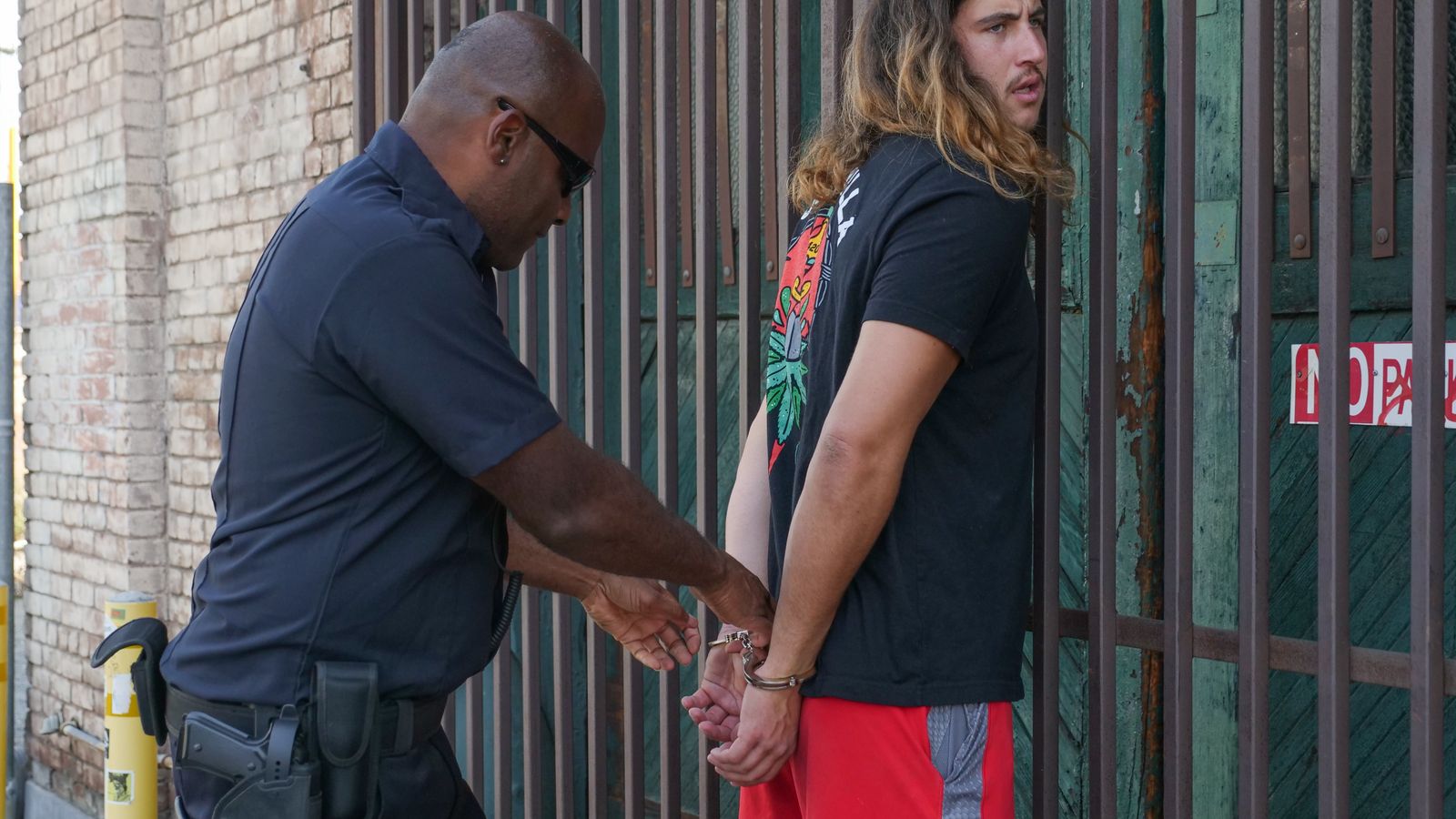
Executive Summary
Cannabis odor remains a legally sufficient basis for warrantless searches in many U.S. jurisdictions, despite widespread legalization and decriminalization. The North Carolina Supreme Court's August 2026 ruling reaffirmed that police officers may conduct vehicle searches based solely on the smell of cannabis, even as 38 states have legalized medical use and 24 have authorized adult recreational programs. This decision highlights the persistent tension between evolving state cannabis laws and Fourth Amendment search-and-seizure doctrine. Law enforcement agencies continue to cite cannabis odor as probable cause for searches, while defense attorneys and civil liberties advocates argue that legalization has eroded the evidentiary value of smell alone. The legal landscape varies dramatically by state: some jurisdictions have explicitly prohibited odor-based searches following legalization, while others maintain pre-legalization standards. For cannabis operators, patients, and consumers, understanding search-and-seizure law remains critical to protecting constitutional rights and avoiding criminal liability. This hub examines the constitutional framework, state-by-state variations, recent case law, and practical implications for stakeholders across the cannabis ecosystem.Why Cannabis Search and Seizure Law Matters
Search-and-seizure rules determine whether millions of cannabis-related police encounters result in criminal charges or constitutional violations. The FBI reported approximately 317,000 cannabis-related arrests in 2025, with possession accounting for 88% of cases. Each encounter begins with a legal question: did officers have constitutional authority to search? The answer affects patients carrying medical cannabis, recreational users transporting legal purchases across city boundaries, and operators moving product between licensed facilities. Financial stakes run into billions of dollars. Civil asset forfeiture connected to cannabis searches generated an estimated $1.2 billion in state and federal seizures in 2025, according to the Institute for Justice. Defendants facing charges from odor-based searches often accept plea bargains rather than challenge search legality, creating precedent that reinforces police authority. For licensed operators, a single illegal search can trigger regulatory investigations, license suspensions, and investor flight—even when criminal charges fail. Patient access hangs in the balance. Approximately 5.8 million registered medical cannabis patients nationwide risk search and seizure when traveling outside their home states or into jurisdictions where officers dispute medical documentation. The Americans for Safe Access Foundation documented 2,847 cases in 2025 where medical patients faced vehicle searches despite carrying valid registry cards, with 63% occurring in states with legal medical programs. Civil rights organizations identify cannabis search-and-seizure practices as a persistent driver of racial disparities. ACLU data shows Black Americans are 3.64 times more likely than white Americans to be arrested for cannabis possession, despite similar usage rates. Traffic stops citing cannabis odor disproportionately affect minority communities, with searches yielding contraband in only 18-22% of cases according to Stanford Open Policing Project analysis.Constitutional Framework: The Fourth Amendment and Probable Cause
The Fourth Amendment prohibits unreasonable searches and seizures, requiring warrants supported by probable cause—but the "automobile exception" permits warrantless vehicle searches when officers have probable cause to believe the vehicle contains contraband. The U.S. Supreme Court established the automobile exception in Carroll v. United States, 267 U.S. 132 (1925), recognizing that vehicles' mobility creates exigent circumstances justifying warrantless searches. The Court expanded this doctrine in United States v. Ross, 456 U.S. 798 (1982), holding that probable cause to search a vehicle extends to all containers within that might conceal the object of the search. Cannabis odor entered Fourth Amendment jurisprudence as courts recognized that trained officers could identify cannabis smell and that such detection indicated the presence of contraband. In jurisdictions where cannabis possession remained fully illegal, courts consistently held that odor alone established probable cause. The Seventh Circuit ruled in United States v. Edmonds, 240 F.3d 55 (7th Cir. 2001), that "the smell of marijuana alone can provide probable cause for a search." Legalization disrupted this framework. When states began authorizing medical cannabis in the 1990s and recreational use in 2012, defense attorneys argued that odor no longer reliably indicated criminal activity. Courts split on whether smell retained evidentiary value when legal possession became possible. The plain view doctrine intersects with odor-based searches. Officers may seize contraband in plain view during lawful encounters, but "plain smell" occupies contested legal territory. Some courts treat odor as equivalent to visual observation, while others require additional corroborating evidence before permitting searches. Federal law adds complexity. Cannabis remains a Schedule I controlled substance under the Controlled Substances Act, 21 U.S.C. § 812, meaning federal officers retain authority to search based on odor regardless of state law. The Rohrabacher-Farr Amendment prohibits the Department of Justice from spending funds to prevent states from implementing medical cannabis laws, but does not restrict federal search authority. State constitutions provide independent search-and-seizure protections. Several state supreme courts have interpreted their constitutions to require higher probable cause standards than the Fourth Amendment. The Massachusetts Supreme Judicial Court's 2011 decision in Commonwealth v. Cruz, 459 Mass. 459, held that cannabis odor alone cannot justify a warrantless search where the defendant might possess legal amounts under state decriminalization law.Historical Evolution: From Prohibition to Patchwork Legalization
The Prohibition Era (1937-1996)
The Marihuana Tax Act of 1937 initiated federal cannabis prohibition, criminalizing possession and transfer. Courts uniformly treated cannabis odor as evidence of criminal activity. Police training programs taught officers to identify cannabis smell, and testimony about odor became routine in probable cause hearings. The Controlled Substances Act of 1970 classified cannabis as Schedule I, reinforcing its status as contraband with no accepted medical use. Search-and-seizure case law from this period established that officers needed no warrant to search vehicles when they smelled cannabis. State courts across all 50 jurisdictions adopted this standard. The "plain smell" doctrine emerged as an analog to plain view, with appellate courts holding that odor provided the same constitutional justification as visual observation of contraband.Medical Cannabis and the First Cracks (1996-2012)
California's Compassionate Use Act of 1996 created the first legal medical cannabis program, immediately raising Fourth Amendment questions. Could officers search patients carrying legal medicine? California courts initially held that odor still justified searches because officers could not immediately determine whether possession was legal or exceeded authorized amounts. The California Supreme Court addressed this in People v. Strasburg, 148 P.3d 1052 (Cal. 2006), holding that medical cannabis patients could raise an affirmative defense but that odor remained probable cause for the initial search. This framework—search first, verify legality later—became the template for medical states. By 2012, 18 states had enacted medical cannabis laws, but search-and-seizure doctrine evolved slowly. Most courts maintained that odor justified searches because illegal possession remained possible. The Michigan Supreme Court ruled in People v. Kazmierczak, 817 N.W.2d 336 (Mich. 2012), that medical registry cards did not eliminate probable cause from cannabis odor.Recreational Legalization and Doctrinal Upheaval (2012-2020)
Colorado and Washington legalized adult recreational use in 2012, forcing courts to reconsider whether odor indicated criminal activity when possession of small amounts became legal. The Colorado Supreme Court confronted this in People v. McKnight, 2019 CO 36, holding that odor of cannabis alone does not provide probable cause to search a vehicle because legal possession is common. Massachusetts followed with Commonwealth v. Overmyer, 469 Mass. 16 (2014), ruling that where the electorate has decriminalized possession of one ounce or less, odor alone cannot support probable cause without additional evidence of criminal quantity. The Vermont Supreme Court reached a similar conclusion in State v. Zullo, 2020 VT 15. Other states rejected this reasoning. The Pennsylvania Superior Court held in Commonwealth v. Barr, 266 A.3d 25 (Pa. Super. 2021), that odor remains probable cause even after medical legalization because officers cannot determine legality by smell alone. Illinois, despite legalizing recreational use in 2020, saw appellate courts split on whether odor justified searches.The Current Patchwork (2020-2026)
As of August 2026, 24 states have legalized recreational cannabis and 38 have medical programs, but search-and-seizure law remains fragmented. The North Carolina Supreme Court's August 2026 decision exemplifies the continuing divide: states without legalization maintain traditional odor-as-probable-cause rules, while legal states split between those requiring additional evidence and those preserving officer discretion. Federal circuit courts have not resolved the split. The Ninth Circuit, covering multiple legal states, has suggested in dicta that state legalization may affect probable cause analysis, but has not issued a definitive ruling. The D.C. Circuit continues to apply traditional standards in federal prosecutions.Key Players in Search and Seizure Litigation
Law Enforcement Agencies and Training Bodies
The International Association of Chiefs of Police maintains that cannabis odor remains a valuable investigative tool and probable cause indicator. The organization's 2024 policy paper argued that legalization does not eliminate illegal markets, and officers must retain authority to investigate odor. Police training academies continue teaching odor recognition, with Advanced Roadside Impaired Driving Enforcement (ARIDE) programs emphasizing smell as a DUI indicator. The Drug Enforcement Administration provides training to state and local agencies on cannabis identification. DEA guidance documents, while not binding on state courts, influence police practices and prosecutor arguments. The agency's position remains that federal Schedule I status makes all cannabis contraband, supporting odor-based searches.Civil Liberties Organizations
The American Civil Liberties Union has challenged odor-based searches in multiple jurisdictions, arguing that legalization eliminates the reliability of smell as a contraband indicator. The ACLU's 2025 report "Smoke and Mirrors" documented 847 cases where searches based solely on odor yielded no criminal charges, characterizing the practice as pretextual. The National Organization for the Reform of Marijuana Laws Legal Committee files amicus briefs in state supreme court cases, advocating for heightened probable cause standards in legal jurisdictions. NORML's model statute language, adopted by advocacy groups in 12 states, explicitly prohibits searches based solely on odor. The Institute for Justice focuses on civil asset forfeiture cases arising from cannabis searches. The organization's 2026 litigation docket includes 34 cases challenging vehicle and cash seizures following odor-based searches that produced no criminal convictions.State Supreme Courts
State high courts function as final arbiters of search-and-seizure law under state constitutions. The Massachusetts Supreme Judicial Court, Colorado Supreme Court, and Vermont Supreme Court have led the movement toward restricting odor-based searches. The Pennsylvania Supreme Court, Florida Supreme Court, and North Carolina Supreme Court have preserved traditional standards. These decisions create binding precedent within each state but do not affect federal courts or other jurisdictions. The resulting patchwork means identical police conduct may be constitutional in North Carolina but unconstitutional in Colorado.Defense Bar and Legal Clinics
The National Association of Criminal Defense Lawyers provides training on challenging odor-based searches, emphasizing cross-examination of officer training and reliability of smell identification. Public defender offices in legal states routinely file suppression motions arguing that odor cannot establish probable cause. Law school clinics at institutions including Harvard, University of Denver, and Vermont Law School have developed search-and-seizure litigation projects focused on cannabis cases. These clinics provide free representation while building appellate records to challenge existing precedent.State-by-State Legal Landscape
Search-and-seizure rules for cannabis vary dramatically across jurisdictions, with outcomes depending on state legalization status, court precedent, and statutory language.California
California legalized recreational cannabis in 2016 through Proposition 64, but courts have not definitively ruled that odor alone is insufficient for probable cause. The California Supreme Court's pre-legalization precedent in People v. Strasburg remains influential. Lower courts split: some hold that odor plus additional factors (furtive movements, time of day, high-crime area) establish probable cause, while others require evidence of illegal quantity or activity. Possession limits allow 28.5 grams of flower and 8 grams of concentrate; odor combined with visible amounts exceeding these limits supports searches.Colorado
Colorado's Supreme Court established in People v. McKnight that odor alone does not justify vehicle searches post-legalization. Officers must articulate additional facts suggesting illegal possession (amounts exceeding one ounce, evidence of distribution, consumption in vehicle). This standard applies statewide. However, officers may still conduct searches based on odor combined with other indicators, and the "totality of circumstances" test gives officers significant discretion.Massachusetts
The Massachusetts Supreme Judicial Court held in Commonwealth v. Cruz and Commonwealth v. Overmyer that cannabis odor cannot support probable cause for vehicle searches following 2008 decriminalization of possession under one ounce. This rule strengthened after 2016 recreational legalization. Officers must observe additional evidence of criminal activity. Massachusetts provides the strongest protection against odor-based searches among legal states.New York
New York legalized recreational cannabis in 2021 through the Marijuana Regulation and Taxation Act. The statute explicitly states that odor alone does not constitute probable cause for search. New York courts have enforced this provision, suppressing evidence from searches based solely on smell. However, odor combined with other factors—such as observation of smoking while driving or possession exceeding three ounces—supports searches.Pennsylvania
Pennsylvania maintains a medical-only program. The Superior Court ruled in Commonwealth v. Barr that cannabis odor remains probable cause despite medical legalization. Officers may search vehicles based on smell alone. Medical patients carrying valid registry cards may raise affirmative defenses after search and seizure, but cannot prevent the initial intrusion.Florida
Florida's medical cannabis program does not restrict odor-based searches. The Florida Supreme Court has not addressed whether medical legalization affects probable cause analysis. District courts of appeal uniformly hold that odor justifies warrantless vehicle searches. Florida's possession limits for medical patients (2.5 ounces of smokable flower per 35 days) create frequent search scenarios when patients carry multiple containers.Illinois
Illinois legalized recreational use in 2020. Appellate courts have issued conflicting decisions on whether odor alone suffices for probable cause. The Illinois Supreme Court has not resolved the split. The Cannabis Regulation and Tax Act does not explicitly address search and seizure. Lower courts in Cook County tend to require additional evidence beyond odor, while downstate courts maintain traditional standards.Michigan
Michigan legalized recreational cannabis in 2018. The Michigan Supreme Court has not overruled its pre-legalization decision in People v. Kazmierczak. Appellate courts split on whether odor alone justifies searches, with outcomes varying by judicial district. The Michigan Court of Appeals is currently considering consolidated cases that may establish statewide standards.North Carolina
North Carolina prohibits all recreational use and has no medical program. The state Supreme Court's August 2026 decision reaffirmed that cannabis odor provides probable cause for warrantless searches. This ruling aligns with traditional Fourth Amendment doctrine in prohibition states. Officers may search vehicles, persons, and containers based solely on smell, with no requirement for corroborating evidence.Ohio
Ohio's medical program began in 2019, and voters approved recreational legalization in 2023 with implementation ongoing. Courts have not yet established clear standards for odor-based searches post-legalization. Pre-legalization precedent allowed searches based on odor alone. Defense attorneys are challenging this standard, but appellate decisions remain pending.Texas
Texas prohibits recreational use and maintains a limited medical program (low-THC only). Courts uniformly hold that cannabis odor establishes probable cause for searches. The Texas Court of Criminal Appeals has rejected arguments that hemp legalization (under 0.3% THC per the 2018 Farm Bill) undermines odor as probable cause, reasoning that officers cannot distinguish hemp from cannabis by smell but may search to make that determination.Vermont
Vermont legalized recreational possession in 2018 and retail sales in 2022. The Vermont Supreme Court ruled in State v. Zullo that odor of cannabis, without more, does not provide probable cause to search a vehicle. Officers must articulate specific facts indicating illegal activity beyond mere possession. Vermont provides strong Fourth Amendment protections comparable to Massachusetts.Washington
Washington legalized recreational use in 2012. The Washington Supreme Court has not issued a definitive ruling on odor-based searches post-legalization. The Court of Appeals has split, with Division One (Seattle) requiring additional evidence beyond odor, while Division Two (Spokane) allows searches based on smell alone. The state legislature has not enacted statutory restrictions on odor-based searches.Legal and Regulatory Framework
Search-and-seizure law for cannabis operates at the intersection of federal constitutional minimums, state constitutional protections, and statutory provisions that may expand or restrict police authority. The Fourth Amendment establishes the federal constitutional floor. The U.S. Supreme Court's automobile exception doctrine, articulated in Carroll v. United States and refined in United States v. Ross, permits warrantless vehicle searches when officers have probable cause to believe the vehicle contains contraband. Federal courts have not ruled that state cannabis legalization eliminates probable cause from odor, leaving the question to state courts interpreting state law. The Controlled Substances Act, 21 U.S.C. § 801 et seq., classifies cannabis as Schedule I, defining it as having high abuse potential and no accepted medical use. This federal classification means cannabis remains contraband under federal law regardless of state legalization. Federal officers—including DEA agents, FBI, and Border Patrol—may conduct searches based on cannabis odor without regard to state law. The Supremacy Clause, U.S. Const. art. VI, cl. 2, ensures federal law preempts conflicting state provisions. State constitutions provide independent search-and-seizure protections. Fourteen state constitutions contain provisions interpreted to require higher probable cause standards than the Fourth Amendment. The Massachusetts Constitution's Article 14, for example, has been read to prohibit searches based on conduct that state law has decriminalized. State courts may interpret their constitutions to provide greater protection than federal minimums but cannot offer less. State cannabis legalization statutes sometimes include search-and-seizure provisions. New York's Marijuana Regulation and Taxation Act explicitly states that odor alone does not constitute probable cause. Virginia's Cannabis Control Authority statute contains similar language. These provisions bind state and local officers but do not restrict federal agents. Decriminalization statutes create ambiguity. When states reduce possession penalties to civil infractions (as 27 states have done for small amounts), courts must determine whether odor indicating a civil violation supports a criminal search. Most courts hold that officers may search to determine whether possession exceeds decriminalized amounts, but Massachusetts and Vermont reject this reasoning. The 2018 Farm Bill, 7 U.S.C. § 1639o, legalized hemp (cannabis with ≤0.3% THC), complicating odor-based searches. Hemp and high-THC cannabis are visually and olfactorily identical. Defense attorneys argue that officers cannot establish probable cause by smell alone because legal hemp is indistinguishable from illegal cannabis. Courts have split: some require field testing before searches, while others allow searches to make the THC determination. Probable cause standards require a "fair probability" that contraband or evidence of a crime will be found, as established in Illinois v. Gates, 462 U.S. 213 (1983). This totality-of-circumstances test gives officers discretion to weigh multiple factors. Odor frequently serves as one factor among several: time of day, location, driver behavior, visible paraphernalia, and officer training all contribute to the probable cause calculus. Reasonable suspicion, a lower standard than probable cause, justifies investigative stops under Terry v. Ohio, 392 U.S. 1 (1968). Officers may conduct brief detentions based on reasonable suspicion of criminal activity. Cannabis odor often provides reasonable suspicion for a traffic stop, even in legal states, because consumption while driving remains illegal everywhere. The stop may then reveal additional facts establishing probable cause for a search. Consent searches bypass probable cause requirements. Officers may request consent to search, and voluntary consent validates an otherwise unconstitutional search. Courts scrutinize whether consent was truly voluntary, examining coercion, knowledge of the right to refuse, and circumstances of the encounter. The odor of cannabis does not eliminate the need for voluntary consent, but officers frequently obtain consent during odor-based encounters.Market and Business Implications
Search-and-seizure uncertainty creates operational risks and compliance costs for licensed cannabis businesses, while civil asset forfeiture threatens capital flows across the industry. Licensed operators transporting product between facilities face search risks in every jurisdiction. Multi-state operators moving cannabis from cultivation sites to processing facilities to dispensaries must navigate varying legal standards. A transport vehicle stopped in Pennsylvania may be searched based on odor alone, even if the operator holds valid licenses and manifests. The resulting seizure can trigger regulatory violations, license suspensions, and product loss. Banking restrictions compound search-and-seizure risks. Federal prohibition prevents most banks from serving cannabis businesses, forcing operators to handle large cash volumes. Civil asset forfeiture laws allow police to seize cash suspected of drug-trafficking connections, even without criminal charges. The Institute for Justice documented $347 million in cannabis-related cash seizures in 2025, with only 23% resulting in criminal convictions. Operators must prove legitimate business sources to recover seized funds, a process taking months or years. Insurance markets respond to search-and-seizure risks by excluding coverage or charging premium rates. Cannabis business insurance policies typically exclude losses from law enforcement seizures. Operators cannot insure against the financial impact of product confiscation, creating unhedgeable risk. This gap affects business valuations and capital raising, as investors discount cash flows for seizure probability. Interstate commerce remains prohibited under federal law, but state-legal transport across state lines occurs in practice. Operators moving product from Oregon to California, or from Massachusetts to New York, risk federal interdiction. Border Patrol checkpoints in the Southwest routinely search vehicles based on cannabis odor, seizing state-legal product as federal contraband. The Ninth Circuit's jurisdiction covers multiple legal states, but federal officers apply federal law regardless of state authorization. Ancillary businesses face derivative risks. Armored car services, security providers, and logistics companies serving cannabis clients may have vehicles searched based on residual odor. Equipment leasing companies have seen vehicles seized after lessees transported cannabis, triggering civil forfeiture against the vehicle owner. These risks increase costs throughout the supply chain. Real estate transactions encounter search-and-seizure complications. Property owners leasing to cannabis tenants risk civil forfeiture of real property under 21 U.S.C. § 881, which authorizes seizure of property used to facilitate drug trafficking. While the Rohrabacher-Farr Amendment limits DOJ enforcement against state-compliant medical operators, it does not prevent seizure actions. Title insurance companies exclude cannabis-related risks, and lenders require additional protections. Capital markets price search-and-seizure risk into cannabis equity valuations. Public cannabis companies trading on Canadian exchanges report search-and-seizure incidents as material events affecting operations. A single high-value product seizure can move stock prices, particularly for smaller operators with limited inventory buffers. Institutional investors conducting due diligence assess jurisdictional search-and-seizure standards as operational risk factors. Tax implications flow from search-and-seizure outcomes. Internal Revenue Code Section 280E prohibits cannabis businesses from deducting ordinary business expenses, but seized product creates additional tax complications. Operators cannot deduct the value of seized inventory as a business loss, yet may owe taxes on revenue from product later confiscated. This creates cash flow mismatches and effective tax rates exceeding 70% for some operators.What Experts Say
Legal scholars, law enforcement officials, and civil rights advocates offer sharply divergent views on whether cannabis odor should continue to justify searches in an era of widespread legalization. Professor John Hudak of the Brookings Institution has argued that maintaining odor-based search authority in legal states undermines the policy goals of legalization. According to Hudak's 2025 analysis, permitting searches based on the smell of a legal substance creates a two-tiered system where cannabis users face investigative scrutiny that alcohol consumers do not. He noted that officers do not search vehicles based on the odor of beer, even though open container laws and DUI statutes create similar regulatory frameworks. The National District Attorneys Association maintains that odor remains probative of illegal activity even in legal states. In a 2024 policy statement, the organization contended that legal possession limits, consumption restrictions, and continuing black markets mean cannabis odor still indicates potential criminal conduct. Prosecutors argue that eliminating odor as a probable cause factor would hamper enforcement of impaired driving laws and illegal distribution. Professor Erin Murphy of New York University School of Law has written extensively on how legalization should affect Fourth Amendment analysis. Murphy's 2023 article in the Yale Law Journal argued that probable cause requires a reasonable belief that evidence of a crime will be found, and when possession is legal, odor alone cannot support that belief. She compared cannabis odor to the smell of alcohol—detectable but insufficient for a search absent additional evidence of illegal conduct. The Fraternal Order of Police has opposed statutory restrictions on odor-based searches. In testimony before state legislatures considering such provisions, FOP representatives have argued that officers need flexibility to investigate suspicious circumstances and that odor provides valuable corroboration of other indicators. The organization's position emphasizes officer safety, contending that searches based on totality of circumstances including odor may reveal weapons or other contraband. Sam Kamin, professor at the University of Denver Sturm College of Law and a leading cannabis law scholar, has noted the federalism tensions inherent in search-and-seizure disputes. According to Kamin's 2025 congressional testimony, the conflict between state legalization and federal prohibition creates uncertainty that disadvantages both law enforcement and citizens. He has advocated for federal rescheduling to resolve the doctrinal inconsistencies. The American Bar Association's Criminal Justice Section issued a resolution in 2024 recommending that states with legal cannabis programs adopt statutory provisions clarifying that odor alone does not constitute probable cause. The resolution cited racial disparities in odor-based searches and the erosion of public trust in law enforcement when legal conduct triggers investigative detention. Defense attorney organizations including the National Association of Criminal Defense Lawyers have emphasized the pretextual nature of many odor-based searches. NACDL's 2025 training materials note that studies show odor-based searches yield contraband in fewer than one in five cases, suggesting officers use smell as justification for investigative fishing expeditions. The organization advocates for requiring corroborating evidence beyond odor.What's Next: Legal and Legislative Developments
Multiple state supreme courts will issue search-and-seizure decisions in 2026-2027, while legislative efforts to restrict odor-based searches advance in at least eight states. The Michigan Supreme Court has scheduled oral argument for October 2026 in consolidated cases addressing whether cannabis odor alone justifies vehicle searches post-legalization. The court's decision will establish statewide standards and may influence other jurisdictions. Briefs filed by the Michigan Attorney General argue for maintaining officer discretion, while amicus briefs from NORML and ACLU advocate for requiring additional evidence. Pennsylvania's legislature is considering House Bill 1393, which would prohibit searches based solely on cannabis odor in vehicles. The bill has bipartisan support and passed the House Judiciary Committee in July 2026. If enacted, Pennsylvania would join New York and Virginia in statutorily restricting odor-based searches despite maintaining criminal prohibition of recreational use. The U.S. Department of Health and Human Services recommended in August 2023 that DEA reschedule cannabis from Schedule I to Schedule III. DEA initiated rulemaking in May 2024, with a Notice of Proposed Rulemaking published in the Federal Register. If finalized, rescheduling would classify cannabis alongside anabolic steroids and ketamine, acknowledging medical use but maintaining criminal penalties for unauthorized possession. This change would not directly affect state search-and-seizure law but could influence judicial analysis of whether odor indicates criminal activity. The Illinois Supreme Court has accepted review in People v. Molina, a case presenting the question of whether cannabis odor provides probable cause after recreational legalization. The court's decision, expected in early 2027, will resolve the current split among Illinois appellate districts. The outcome will affect the Chicago metropolitan area's 9.5 million residents and provide guidance to other states with recent legalization. Federal circuit courts may address search-and-seizure questions in the context of suppression motions in federal prosecutions. The Ninth Circuit has several pending cases involving searches of vehicles in California and Oregon based on cannabis odor. While federal courts apply federal law in federal prosecutions, circuit decisions may offer persuasive authority to state courts analyzing similar issues. Ballot initiatives for recreational legalization are pending in 2026 in Florida, North Dakota, and South Dakota. If approved, these states will join the 24 with legal adult use, potentially triggering search-and-seizure litigation similar to that seen in Colorado, Massachusetts, and Vermont. Florida's proposed constitutional amendment includes language stating that odor alone does not constitute probable cause, which would bind Florida courts if the measure passes. The National Conference of State Legislatures is developing model legislation on cannabis search and seizure for consideration by member states. The draft model statute, circulated in July 2026, includes provisions requiring officers to articulate specific facts beyond odor before conducting searches. At least five state legislatures have requested the model language for potential introduction in 2027 sessions. Civil rights litigation challenging odor-based searches continues in federal district courts under 42 U.S.C. § 1983. Plaintiffs argue that searches based solely on the smell of a legal substance violate Fourth Amendment rights and seek damages and injunctive relief. The Southern District of New York is currently considering class certification in a case involving New York City Police Department stop-and-search practices pre-dating the 2021 legalization statute.Practical Guidance for Patients, Consumers, and Operators
Understanding your rights during police encounters and taking proactive compliance steps can reduce search-and-seizure risks, though outcomes remain jurisdiction-dependent. Medical patients should carry registry cards and maintain cannabis in original dispensary packaging with labels showing THC content and purchase date. In states where odor alone does not justify searches, clearly identifying yourself as a registered patient may prevent escalation. However, in states like Pennsylvania and Florida where odor remains probable cause, registry cards provide an affirmative defense only after search and seizure occur. Recreational consumers must know possession limits in their jurisdiction and neighboring states. Transporting cannabis across state lines violates federal law even between two legal states. Possession limits vary from one ounce in Colorado to 2.5 ounces in Oregon to five ounces in Nevada. Exceeding limits converts legal possession to criminal conduct and provides probable cause for search. Operators transporting product should maintain complete manifests, licensing documentation, and vehicle placards identifying the transport as state-authorized. While these measures do not prevent searches in all jurisdictions, they provide evidence of legal activity that may influence officer decisions and support suppression motions if searches occur. GPS tracking and real-time inventory systems create audit trails demonstrating compliance. All individuals should understand that consent searches waive Fourth Amendment protections. Officers may request consent even when they lack probable cause. You may refuse consent to search, though refusal does not prevent searches supported by probable cause. Clearly stating "I do not consent to a search" creates a record for potential suppression motions. If a search occurs, do not physically resist or interfere with officers. Note the circumstances: officer names and badge numbers, time and location, whether officers stated reasons for the search, and what questions they asked. Request a copy of any incident report or citation. This information is critical for defense attorneys evaluating suppression motions. Consult an attorney before answering questions beyond providing identification and vehicle documentation. The Fifth Amendment protects against self-incrimination. Statements made during searches—such as admitting to recent consumption or acknowledging ownership of cannabis—can defeat suppression motions and provide evidence for prosecution. Operators should conduct regular legal audits of transport routes, identifying jurisdictions with unfavorable search-and-seizure precedent. Alternative routing may reduce risk exposure. Insurance coverage for product loss, while limited, should be maximized. Contractual provisions with customers should address risk allocation for seizures during transport.Further Reading and Primary Sources
- U.S. Supreme Court: Carroll v. United States, 267 U.S. 132 (1925) — https://supreme.justia.com/cases/federal/us/267/132/
- U.S. Supreme Court: United States v. Ross, 456 U.S. 798 (1982) — https://supreme.justia.com/cases/federal/us/456/798/
- Massachusetts Supreme Judicial Court: Commonwealth v. Cruz, 459 Mass. 459 (2011) — https://www.mass.gov/courts
- Colorado Supreme Court: People v. McKnight, 2019 CO 36 — https://www.courts.state.co.us/
- Controlled Substances Act, 21 U.S.C. § 801 et seq. — https://www.deadiversion.usdoj.gov/21cfr/21usc/
- Fourth Amendment, U.S. Constitution — https://constitution.congress.gov/constitution/amendment-4/
- ACLU Report: "
Update — September 16, 2026: Ontario Court Rules THC Warning Sticker Justifies Warrantless Vehicle Search
The Ontario Court of Appeal ruled that a visible THC warning sticker on a vehicle provides sufficient grounds for police to conduct a warrantless search, according to a decision published in Law Times. The ruling clarified that officers who observe cannabis-related labeling affixed to a car's exterior may proceed with a search based on reasonable suspicion of possession, even without obtaining a warrant or observing additional indicators of impairment.
The court's decision centered on whether the sticker alone constituted reasonable grounds under Section 8 of the Canadian Charter of Rights and Freedoms, which protects against unreasonable search and seizure. The appellate panel held that the sticker created an objectively reasonable inference that cannabis was present in the vehicle, satisfying the threshold for a lawful search incident to investigation. Defense counsel argued the sticker was decorative expression rather than evidence of possession, but the court rejected that interpretation, noting that THC warning labels are mandated under federal cannabis packaging regulations and signal the presence of a controlled substance.
The ruling has immediate operational implications for cannabis consumers and retailers in Ontario. Drivers displaying any cannabis-related packaging, labels, or promotional materials on their vehicles now face heightened search risk during traffic stops, even if no odor or open containers are present. Legal experts said the decision expands police authority beyond the traditional "plain view" doctrine, which previously required officers to observe the substance itself rather than mere packaging indicators.
This matters because the precedent may influence search-and-seizure protocols in other Canadian provinces and could prompt challenges at the Supreme Court level. Cannabis advocacy groups warned that the ruling disproportionately affects medical patients who transport legally purchased products, as prescription containers often bear identical warning labels. Operators of licensed retail stores said they would advise customers to remove all branded packaging from view during transport to avoid triggering searches that could delay deliveries or result in product confiscation pending verification of legal purchase.
Frequently asked questions
Can police search my car if they smell cannabis?
It depends on your state. In prohibition states and North Carolina (as of 2026), cannabis odor alone provides probable cause for warrantless vehicle searches. However, states like Massachusetts, Pennsylvania, and Maryland have ruled that marijuana smell cannot justify searches where possession is legal or decriminalized. The automobile exception to the Fourth Amendment's warrant requirement allows searches when officers have probable cause to believe a vehicle contains contraband, but legal cannabis complicates this standard.
What is the plain smell doctrine in cannabis cases?
The plain smell doctrine allows police to search without a warrant when they detect contraband odors in plain olfactory range, similar to the plain view doctrine. Traditionally applied to cannabis, this doctrine is eroding in legal states. Courts in Colorado, Vermont, and other legalized jurisdictions have ruled that because legal cannabis smells identical to illegal cannabis, odor alone cannot establish probable cause. Officers must identify additional factors suggesting illegal possession, such as quantity exceeding legal limits or evidence of impaired driving.
Do I have to consent to a search if police ask?
No. You always have the right to refuse consent to searches under the Fourth Amendment. Police may ask for consent even without probable cause, but you can politely decline. Clearly state 'I do not consent to searches' without physically resisting. If officers proceed anyway, they must rely on other legal justifications like probable cause, exigent circumstances, or search incident to arrest. Never consent, as anything found can be used against you, and consent waives your ability to challenge the search later.
Can police search my home based on cannabis smell?
Generally no, without a warrant. Homes receive the highest Fourth Amendment protection. While exigent circumstances (imminent destruction of evidence, emergency aid) may justify warrantless entry, cannabis odor alone rarely qualifies. In legal states, smell provides no basis for home searches. Even in prohibition states, officers typically need a warrant based on corroborating evidence beyond odor. If police enter your home without consent or a warrant, immediately state your objection and contact an attorney, but do not physically resist.
What is probable cause in cannabis search cases?
Probable cause exists when facts and circumstances would lead a reasonable officer to believe a crime has been committed. For cannabis, this traditionally included odor, visible marijuana, paraphernalia, or admission of possession. Post-legalization, the standard has shifted. Courts now require additional evidence beyond smell in legal states—such as quantity suggesting illegal distribution, consumption in prohibited locations, or impaired driving indicators. The totality of circumstances matters, and officers must articulate specific, articulable facts supporting their belief that illegal activity occurred.
What are my rights during a cannabis-related traffic stop?
You must provide license, registration, and insurance, but you have the right to remain silent beyond basic identification. You can refuse field sobriety tests in most states (though refusal may have license consequences). Politely decline to answer questions about cannabis use or possession. Keep hands visible, don't reach for items without announcing, and clearly state if you're refusing consent to search. If arrested, invoke your right to an attorney immediately. Document the stop details, officer names, and witness information as soon as safely possible.
How does cannabis legalization affect search and seizure law?
Legalization fundamentally changes probable cause analysis. States like Massachusetts and Pennsylvania have explicitly ruled that marijuana odor cannot justify searches where possession is legal. However, this creates a patchwork: neighboring states may have opposite rules. Federal law still prohibits cannabis, creating conflicts at borders, airports, and federal property. Officers must now distinguish legal from illegal possession based on quantity, location, packaging, or other factors. This complexity has led to suppression of evidence in many cases where searches relied solely on cannabis smell.
What should I do if evidence was found during an illegal search?
Immediately contact a criminal defense attorney experienced in Fourth Amendment cases. Your lawyer can file a motion to suppress evidence obtained through illegal searches, potentially resulting in case dismissal. Document everything you remember about the search: officer statements, whether you consented, what justification was given, and any witnesses. Do not discuss the case with anyone except your attorney. The exclusionary rule prohibits illegally obtained evidence from being used in court, making suppression motions powerful defense tools in cannabis cases with questionable search legality.
Are there exceptions to warrant requirements for cannabis searches?
Yes. The automobile exception allows warrantless vehicle searches with probable cause due to mobility. Search incident to lawful arrest permits searching the arrestee and immediate surroundings for weapons and evidence. Exigent circumstances (emergency, imminent evidence destruction) justify immediate action. The plain view doctrine allows seizure of visible contraband. Consent searches require voluntary permission. Inventory searches of impounded vehicles follow standardized procedures. However, these exceptions are narrowing in legal states, where courts scrutinize whether officers had legitimate grounds beyond cannabis odor to invoke these exceptions.
How do medical cannabis cards affect search and seizure?
Medical cannabis cards provide legal defense for possession within state limits but don't prevent searches. Officers may still investigate whether possession exceeds medical limits, involves illegal distribution, or violates consumption restrictions. Cards offer no federal protection, as cannabis remains federally illegal. During stops, inform officers of your medical status and present your card, but this doesn't eliminate probable cause if officers observe evidence of illegal activity. Medical patients should carry only amounts permitted by their state program and keep cannabis in original, labeled packaging to demonstrate compliance.
What is the current federal position on cannabis searches?
Federal law still classifies cannabis as a Schedule I controlled substance, giving federal agents authority to search and seize regardless of state legalization. However, congressional appropriations riders have restricted DEA enforcement against state-compliant medical cannabis operations since 2014. Federal officers at borders, airports, national parks, and federal buildings maintain full search authority. The conflict between state and federal law creates uncertainty, particularly in interstate travel. Federal courts apply traditional probable cause standards without state legalization considerations, though prosecution priorities have shifted away from personal possession cases.
How can I protect my Fourth Amendment rights during cannabis encounters?
Stay calm and polite but assert your rights clearly. State 'I do not consent to searches' if asked. Invoke your right to remain silent beyond providing identification. Don't volunteer information about cannabis possession or use. If arrested, immediately request an attorney and stop answering questions. Document everything: officer names, badge numbers, witnesses, exact statements made, and search circumstances. Never physically resist, even if you believe the search is illegal—challenge it in court later. Know your state's specific laws regarding possession limits, consumption locations, and medical cannabis protections before encounters occur.
The cannabis newsletter you forward to your team.
Federal policy, market data, grower alerts, and the one story that matters today. Sent every weekday at 7am. Free.
No spam. Unsubscribe with one click. 21+ only.