Cannabis Prisoner Advocacy: Organizations, Clemency Efforts & Reform
Cannabis prisoner advocacy encompasses grassroots organizations, legal campaigns, and policy reform efforts working to free individuals incarcerated for cannabis offenses and support their families. Groups like Freedom Grow, Last Prisoner Project, and NORML coordinate clemency petitions, provide commissary funds, facilitate legal representation, and lobby for expungement laws. As legalization spreads, advocates highlight the injustice of continued incarceration for acts now legal in many states, pushing for presidential pardons, state-level sentence reviews, and automatic record clearing to address the war on drugs' disproportionate impact on communities of color.
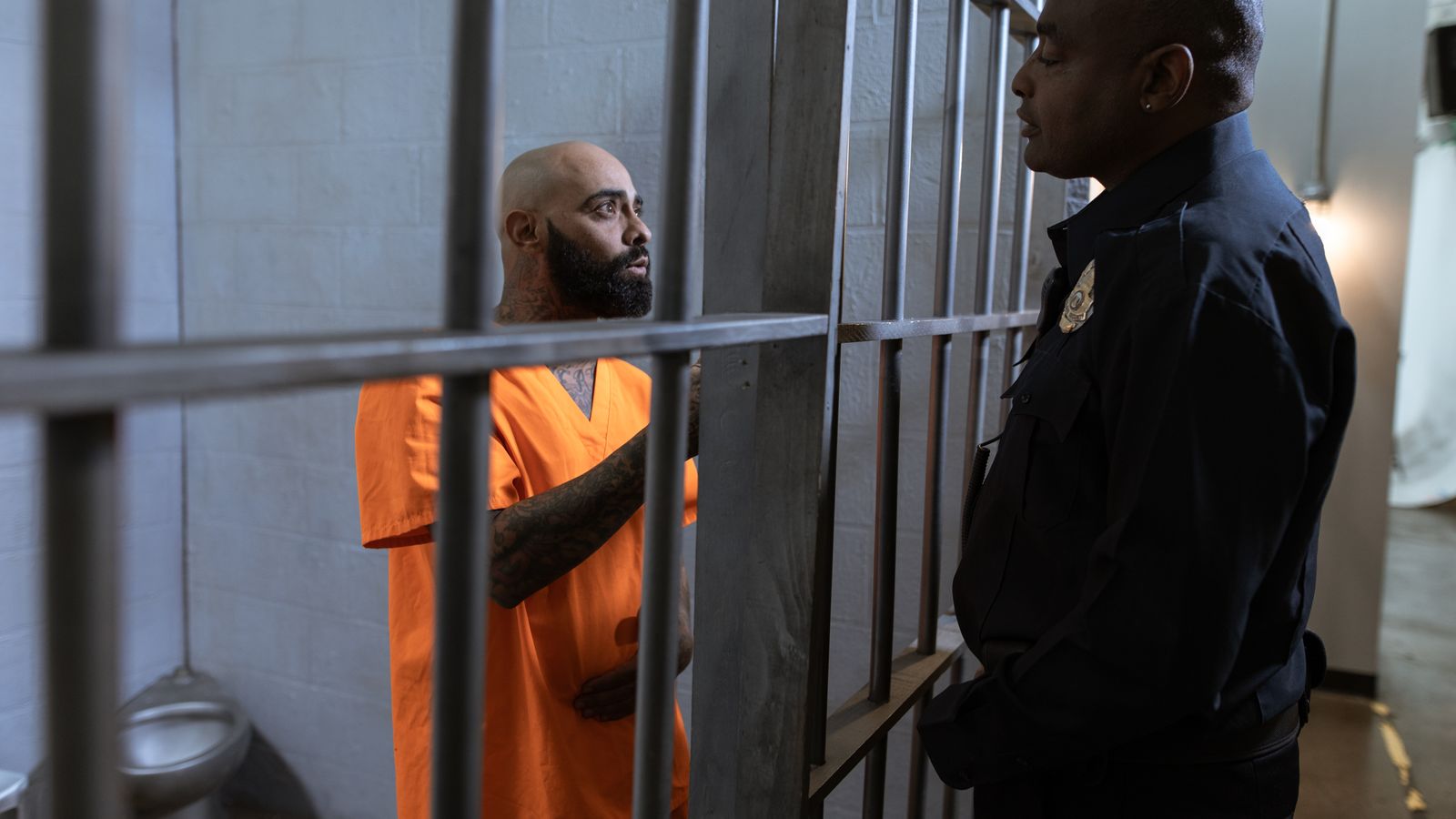
Executive Summary
More than 40,000 individuals remain incarcerated in the United States for cannabis-related offenses as of 2026, even as 38 states have legalized medical marijuana and 24 have legalized adult-use cannabis. Cannabis prisoner advocacy represents a growing movement to secure clemency, expungement, and reentry support for those serving sentences for conduct that is now legal or decriminalized in many jurisdictions. Organizations like Freedom Grow, the Last Prisoner Project, and the Weldon Project work to provide direct support to incarcerated individuals and their families while lobbying for systemic reforms at federal and state levels. The movement has achieved significant victories, including presidential pardons for federal simple possession offenses in October 2022 and state-level mass expungements in Illinois, New York, and California. However, advocates face persistent challenges: federal prohibition under the Controlled Substances Act continues to block relief for many prisoners, state expungement processes remain slow and bureaucratic, and cannabis industry profits rarely flow back to those most harmed by prohibition. As the legal cannabis market approaches $50 billion in annual sales, the gap between industry prosperity and prisoner justice has become a central equity debate in drug policy reform.Why Cannabis Prisoner Advocacy Matters
The human cost of cannabis prohibition has disproportionately fallen on Black and Latino communities, who are arrested for cannabis offenses at rates 3.64 times higher than white Americans despite similar usage rates. According to the American Civil Liberties Union, police made more than 6.1 million cannabis arrests between 2010 and 2018, with 89 percent for possession alone. These arrests have resulted in decades-long sentences under mandatory minimum laws, particularly for distribution and cultivation offenses that now constitute legal business operations in regulated markets. The financial stakes are substantial. Incarceration costs taxpayers approximately $35,000 per prisoner annually, meaning cannabis prisoners cost federal and state governments more than $1.4 billion each year. Families of incarcerated individuals lose an average of $13,600 in income and assets during a loved one's imprisonment, according to research from the Ella Baker Center for Human Rights. Children with incarcerated parents face higher rates of poverty, housing instability, and educational disruption. For the cannabis industry, prisoner advocacy represents both a moral imperative and a business legitimacy challenge. Operators generate revenue from activities that resulted in life sentences for others, creating what advocates call "cannabis gentrification." Several states have attempted to address this through social equity licensing programs, but fewer than 15 percent of licensed cannabis businesses nationwide are owned by individuals from communities disproportionately harmed by prohibition, according to Marijuana Policy Project data from 2025. Patients and consumers increasingly demand that cannabis companies support prisoner advocacy. A 2025 survey by New Frontier Data found that 67 percent of cannabis consumers consider a company's social justice commitments when making purchasing decisions, and 43 percent would pay a premium for products that fund expungement or reentry programs.Background and History: From War on Drugs to Reform Movement
Cannabis prisoner advocacy emerged directly from the failures and inequities of the War on Drugs, launched by President Richard Nixon in 1971 and dramatically escalated under President Ronald Reagan in the 1980s.The Controlled Substances Act and Mandatory Minimums (1970-1986)
The Controlled Substances Act of 1970, codified at 21 U.S.C. § 801 et seq., classified cannabis as a Schedule I controlled substance, defined as having no accepted medical use and high potential for abuse. This classification placed cannabis in the same category as heroin and LSD, triggering criminal penalties for possession, distribution, and cultivation. The Anti-Drug Abuse Act of 1986 established mandatory minimum sentences for drug offenses, including five-year minimums for distribution of 100 kilograms of cannabis and ten-year minimums for 1,000 kilograms. These mandatory minimums removed judicial discretion and resulted in sentences grossly disproportionate to the conduct involved. A 1991 case in Alabama resulted in a life sentence without parole for a man convicted of possessing 2.8 pounds of cannabis, his third drug offense under the state's habitual offender law.Three Strikes Laws and Sentencing Disparities (1990s)
The 1994 Violent Crime Control and Law Enforcement Act encouraged states to adopt "three strikes" laws, which imposed life sentences for third felony convictions. Many states classified cannabis distribution as a qualifying felony, resulting in life sentences for non-violent drug offenses. By 2000, more than 2,000 individuals were serving life sentences for non-violent cannabis offenses in federal and state prisons, according to research by Families Against Mandatory Minimums. During this period, racial disparities in cannabis enforcement became statistically undeniable. A 2000 study published in the Journal of Criminal Law and Criminology found that Black Americans represented 13 percent of cannabis users but 30 percent of cannabis arrests and 58 percent of those incarcerated for cannabis offenses in state prisons.Medical Marijuana Movement and Cognitive Dissonance (1996-2012)
California's passage of Proposition 215 in 1996, establishing the nation's first medical marijuana program, created a fundamental tension: conduct legal under state law remained a federal felony. This tension intensified as additional states adopted medical marijuana laws throughout the 2000s. Patients and caregivers operating legally under state law faced federal prosecution, including the high-profile case of Ed Rosenthal, convicted in 2003 of federal cultivation charges despite operating in compliance with California's medical marijuana law. The Obama administration's 2009 Ogden Memo and 2013 Cole Memo established prosecutorial discretion policies that deprioritized federal enforcement against state-compliant medical marijuana operations, but these policies did not extend to those already incarcerated. Advocates began organizing around the cognitive dissonance of legal cannabis businesses operating while thousands remained imprisoned for identical conduct.Formation of Advocacy Organizations (2010-2019)
The Last Prisoner Project launched in 2019 as the first national nonprofit exclusively focused on cannabis prisoner clemency and reentry. Founded by criminal justice reform advocates, cannabis industry leaders, and drug policy experts, the organization established a legal clinic to file clemency petitions and provided direct financial support to prisoners and their families. By 2020, the Last Prisoner Project had identified more than 40,000 individuals incarcerated for cannabis offenses in the United States. Smaller grassroots organizations emerged to fill gaps in support services. The Weldon Project, founded in 2017, focused on providing commissary funds and legal research assistance to cannabis prisoners. Freedom Grow, established in 2020 as an all-volunteer 501(c)(3) nonprofit, concentrated on direct family support and community education.Presidential Pardons and Federal Reform Efforts (2022-2026)
On October 6, 2022, President Joe Biden issued a proclamation pardoning all federal offenses of simple possession of marijuana under 21 U.S.C. § 844. The pardons applied to approximately 6,500 individuals with federal simple possession convictions and removed barriers to employment, housing, and education for those affected. However, the pardons did not apply to distribution, cultivation, or possession with intent to distribute offenses, leaving the vast majority of cannabis prisoners unaffected. In December 2022, President Biden signed the Medical Marijuana and Cannabidiol Research Expansion Act, the first standalone cannabis reform bill to become federal law. While the act expanded research access, it did not address sentencing reform or clemency for existing prisoners. The Drug Enforcement Administration's August 2024 Notice of Proposed Rulemaking to reschedule cannabis from Schedule I to Schedule III under the Controlled Substances Act represented the most significant federal policy shift in cannabis history. However, rescheduling would not automatically trigger release or resentencing for those convicted under Schedule I penalties, requiring separate legislative action or individual clemency petitions.State-Level Expungement and Resentencing (2019-2026)
Illinois became the first state to include automatic expungement provisions in its adult-use legalization law, the Cannabis Regulation and Tax Act, which took effect January 1, 2020. The law required automatic expungement of approximately 770,000 cannabis possession and low-level distribution records and established a process for resentencing those currently incarcerated. By December 2025, Illinois had expunged more than 500,000 records and granted resentencing to 142 individuals serving sentences for conduct now legal under state law. New York's Marijuana Regulation and Taxation Act, enacted March 31, 2021, included provisions for automatic expungement of marijuana convictions and established the Office of Cannabis Management with a social equity mandate. The law directed 40 percent of cannabis tax revenue to a community reinvestment fund supporting communities disproportionately impacted by prohibition. California's Assembly Bill 1793, signed in September 2018, required prosecutors to review and dismiss or resentence cannabis convictions eligible for relief under Proposition 64, which legalized adult-use cannabis in 2016. By mid-2025, California had dismissed or reduced more than 200,000 cannabis convictions, though advocates noted that the process remained slower than promised and required significant nonprofit legal assistance to navigate.Key Players in Cannabis Prisoner Advocacy
The Last Prisoner Project
The Last Prisoner Project operates the most comprehensive cannabis prisoner clemency program in the United States, with a legal team that has filed more than 300 clemency petitions and secured release for 47 individuals as of April 2026. The organization maintains a database of cannabis prisoners, provides direct financial assistance averaging $800 per month to prisoners and their families, and coordinates pro bono legal representation through a network of more than 200 volunteer attorneys. The organization's funding comes primarily from cannabis industry donations, including partnerships with multistate operators Curaleaf, Trulieve, and Green Thumb Industries. In 2025, the Last Prisoner Project raised $4.2 million and distributed $1.8 million in direct prisoner and family support.Freedom Grow
Freedom Grow expanded its mission in May 2026 under new leadership from Bill and Jeff Levers, founders of Beard Bros Pharms, a California-based cannabis brand. The organization operates as an all-volunteer 501(c)(3) nonprofit, directing 100 percent of donations to prisoner commissary accounts, family emergency funds, and legal research materials. According to the organization's 2025 annual report, Freedom Grow supported 87 cannabis prisoners and their families with an average of $650 per household in direct assistance. The organization's expansion strategy includes retail-driven fundraising through point-of-sale donation prompts at dispensaries, national community events, and partnerships with cannabis brands that commit a percentage of product sales to prisoner support. Freedom Grow's model emphasizes grassroots community activation rather than large institutional grants.The Weldon Project
The Weldon Project, named after cannabis prisoner Corvain Cooper who received clemency in January 2021, focuses on providing commissary funds and legal research assistance to cannabis prisoners serving life sentences. The organization maintains relationships with 34 lifers in federal and state custody, providing monthly commissary deposits and coordinating legal research through law school clinics. Founder Amy Povah, herself a former federal prisoner who received clemency from President Bill Clinton in 2000 for a cannabis conspiracy conviction, brings direct experience to the organization's advocacy work. The Weldon Project has been particularly effective at securing media coverage for individual prisoner cases, generating public pressure for clemency consideration.Drug Policy Alliance
The Drug Policy Alliance, founded in 2000 through a merger of the Lindesmith Center and the Drug Policy Foundation, advocates for drug policy reform at federal and state levels. The organization's criminal justice reform program focuses on ending mandatory minimum sentences, expanding compassionate release provisions, and securing retroactive application of sentencing reforms. The Drug Policy Alliance played a central role in drafting expungement provisions for state legalization laws in New York, New Jersey, and Connecticut. The organization's 2025 budget of $18 million supported lobbying, litigation, and public education campaigns across 15 states.Marijuana Policy Project
The Marijuana Policy Project, founded in 1995, focuses primarily on legalization advocacy but maintains a criminal justice reform program that tracks cannabis prisoner populations and advocates for clemency and expungement. The organization publishes an annual report on cannabis arrests and incarceration, providing data that advocates use to support reform efforts. The Marijuana Policy Project's state-level lobbying has successfully included expungement provisions in legalization bills in Virginia, Maryland, and Missouri, though implementation has varied significantly across jurisdictions.NORML Legal Committee
The National Organization for the Reform of Marijuana Laws maintains a legal committee that provides pro bono representation for cannabis prisoners seeking clemency, expungement, or resentencing. The committee coordinates more than 150 volunteer attorneys nationwide and has filed amicus briefs in federal appeals challenging mandatory minimum sentences and sentencing disparities. NORML's legal committee secured a significant victory in 2023 when the U.S. Court of Appeals for the Sixth Circuit ruled in United States v. Jackson that a defendant's post-conviction state legalization of cannabis could be considered as a mitigating factor in compassionate release motions under 18 U.S.C. § 3582(c)(1)(A).Legal and Regulatory Framework
Cannabis prisoner advocacy operates within a complex legal framework spanning federal sentencing law, state expungement statutes, clemency procedures, and constitutional challenges to disproportionate sentences.Federal Sentencing and Clemency
Federal cannabis prisoners are sentenced under 21 U.S.C. § 841, which establishes mandatory minimum sentences based on drug quantity. Distribution of 100 kilograms or more of cannabis triggers a five-year mandatory minimum, while 1,000 kilograms or more triggers a ten-year mandatory minimum. Prior felony drug convictions double these minimums to ten and twenty years respectively. The First Step Act of 2018, codified at 18 U.S.C. § 3582(c)(1)(A), expanded compassionate release provisions to allow prisoners to petition courts directly for sentence reductions based on "extraordinary and compelling reasons." Federal courts have split on whether state legalization of cannabis constitutes an extraordinary and compelling reason, with the Sixth Circuit allowing consideration in United States v. Jackson (2023) while the Fifth Circuit rejected it in United States v. Shkambi (2024). Presidential clemency remains the most direct path to release for federal cannabis prisoners. Article II, Section 2 of the U.S. Constitution grants the president unlimited clemency power for federal offenses. Clemency petitions are processed through the Office of the Pardon Attorney in the Department of Justice, though presidents may grant clemency outside this formal process. President Biden's October 2022 pardons for simple possession offenses marked the first categorical cannabis clemency in U.S. history, but did not extend to distribution or cultivation offenses.State Expungement Statutes
State expungement laws vary dramatically in scope and implementation. Illinois' Cannabis Regulation and Tax Act requires automatic expungement without requiring individuals to file petitions or pay fees, covering possession of up to 500 grams and low-level distribution offenses. By contrast, Florida requires individual petitions, court hearings, and fees averaging $500 per case, creating significant barriers for those with limited resources. California's approach under Proposition 64 and Assembly Bill 1793 places the burden on prosecutors to identify eligible cases and file dismissal or resentencing motions. This prosecutorial review model has resulted in uneven implementation across the state's 58 counties, with some district attorneys proactively reviewing cases while others have taken minimal action. New York's automatic expungement provisions in the Marijuana Regulation and Taxation Act apply to possession and low-level sale offenses, but exclude convictions involving sale to minors or sale near schools. The law also establishes a process for individuals to petition for resentencing of current sentences for conduct now legal under state law.Resentencing and Retroactivity
Resentencing provisions allow courts to reduce sentences for individuals currently incarcerated when the underlying conduct has been decriminalized or penalties have been reduced. California Penal Code § 1170.18, enacted through Proposition 47 in 2014, established a model for retroactive application of sentencing reforms that several states have adapted for cannabis offenses. The constitutional principle of retroactivity derives from the Ex Post Facto Clause, which prohibits laws that retroactively increase punishment for past conduct. However, the Supreme Court has held that the Ex Post Facto Clause does not require retroactive application of more lenient penalties, meaning resentencing depends on explicit statutory authorization or judicial discretion. Several state supreme courts have addressed whether cannabis legalization creates a constitutional right to resentencing. The Illinois Supreme Court held in People v. Aguilar (2021) that the Cannabis Regulation and Tax Act's resentencing provisions were mandatory, not discretionary, requiring courts to resentence eligible individuals. By contrast, the Pennsylvania Supreme Court ruled in Commonwealth v. Sutton (2022) that the state's medical marijuana law did not create a right to resentencing for those convicted under prior prohibition statutes.Collateral Consequences and Expungement
Cannabis convictions trigger collateral consequences beyond incarceration, including barriers to employment, housing, education, professional licensing, and immigration status. The National Inventory of Collateral Consequences of Conviction, maintained by the Council of State Governments, identifies more than 40,000 state and federal collateral consequences, with drug convictions triggering an average of 643 separate restrictions per jurisdiction. Expungement removes or seals criminal records, eliminating many collateral consequences. However, expungement does not restore all rights: federal law under 18 U.S.C. § 922(g) prohibits firearm possession by anyone convicted of a felony punishable by more than one year imprisonment, and federal courts have held that state expungement does not eliminate this federal prohibition. Immigration consequences present particularly severe barriers. Under the Immigration and Nationality Act at 8 U.S.C. § 1227(a)(2)(B)(i), any drug conviction except a single offense of simple possession of 30 grams or less of cannabis constitutes a deportable offense for non-citizens. State expungement does not eliminate federal immigration consequences, meaning non-citizens with expunged cannabis convictions remain deportable.State-by-State Breakdown of Prisoner Advocacy Efforts
Cannabis prisoner populations and expungement progress vary dramatically across states based on legalization status, sentencing laws, and implementation of relief provisions.California
California maintains the largest state cannabis prisoner population, with approximately 1,200 individuals incarcerated for cannabis offenses as of January 2026 despite adult-use legalization in 2016. The state has processed more than 200,000 expungements and resentencings under Proposition 64 and Assembly Bill 1793, but advocates note that implementation has been inconsistent across counties. Los Angeles County has dismissed or reduced more than 75,000 cases, while some rural counties have processed fewer than 100 cases. Possession limits under California law allow up to 28.5 grams in public and unlimited amounts on private property for adults 21 and older.Illinois
Illinois has achieved the most comprehensive expungement implementation, with more than 500,000 automatic expungements completed by December 2025. The state has granted resentencing to 142 individuals serving sentences for conduct now legal under the Cannabis Regulation and Tax Act. Approximately 80 individuals remain incarcerated for cannabis offenses in Illinois, primarily for distribution quantities exceeding the law's resentencing thresholds. Adult possession limits are 30 grams of flower, 5 grams of concentrate, and 500 milligrams of THC in infused products.New York
New York's automatic expungement process has cleared approximately 160,000 cannabis convictions since the Marijuana Regulation and Taxation Act took effect in March 2021. The state has granted resentencing to 87 individuals currently incarcerated. Approximately 200 individuals remain in New York state custody for cannabis offenses, primarily for large-scale distribution. Adult possession limits are 3 ounces of flower and 24 grams of concentrate.Florida
Florida maintains one of the largest state cannabis prisoner populations, with approximately 2,400 individuals incarcerated for cannabis offenses as of February 2026. The state has no adult-use legalization and limited medical marijuana provisions that do not include expungement or resentencing. Possession of more than 20 grams remains a felony punishable by up to five years imprisonment. Advocacy organizations have focused on individual clemency petitions to the governor, with limited success: Governor Ron DeSantis granted clemency to three cannabis prisoners between 2019 and 2025.Texas
Texas incarcerates approximately 1,800 individuals for cannabis offenses, with no medical or adult-use legalization. The state enacted limited hemp and low-THC CBD provisions in 2019, but these have not triggered expungement or resentencing. Possession of up to two ounces remains a Class B misdemeanor punishable by up to 180 days in jail and a $2,000 fine, while possession of more than two ounces is a felony. Texas prisoner advocacy has focused on legislative reform rather than executive clemency, with bills to decriminalize possession failing in the 2023 and 2025 legislative sessions.Oklahoma
Oklahoma legalized medical marijuana in 2018 but maintains approximately 900 individuals in state custody for cannabis offenses. The state has no automatic expungement provisions, requiring individual petitions and court hearings. Possession limits for medical patients are 3 ounces on their person, 8 ounces at their residence, and 1 ounce of concentrate. Non-patients face felony charges for any possession amount.Michigan
Michigan legalized adult-use cannabis in 2018 and has processed approximately 45,000 expungements through a combination of automatic and petition-based processes. Approximately 150 individuals remain incarcerated for cannabis offenses in Michigan, primarily for distribution offenses that exceed the state's legal limits. Adult possession limits are 2.5 ounces in public and 10 ounces at home, with cultivation of up to 12 plants allowed.Market and Business Implications
The legal cannabis industry generated $29.8 billion in sales in 2025, yet fewer than 2 percent of licensed operators contribute to prisoner advocacy or expungement programs, creating a legitimacy gap that social equity advocates increasingly challenge. Cannabis multistate operators have faced pressure from investors, consumers, and advocacy organizations to support prisoner clemency and expungement. Curaleaf, the nation's largest MSO by revenue with $1.4 billion in 2025 sales, committed $1 million over three years to the Last Prisoner Project in 2021. Trulieve, the second-largest MSO with $1.1 billion in 2025 revenue, established a $500,000 annual grant program for prisoner advocacy organizations in 2022. However, these commitments represent a tiny fraction of industry revenue. A 2025 analysis by the Drug Policy Alliance found that the 15 largest MSOs contributed a combined $4.2 million to prisoner advocacy in 2024, representing 0.03 percent of their collective $14 billion in revenue. By contrast, these same companies spent an estimated $180 million on lobbying and political contributions in 2024. Social equity licensing programs in 18 states attempt to prioritize licenses for individuals from communities disproportionately harmed by prohibition, but implementation has been troubled. Illinois' social equity program, considered the most robust, has issued 185 social equity licenses as of March 2026, representing 28 percent of all adult-use licenses. However, many social equity licensees have sold to larger operators or entered management agreements that transfer effective control, leading advocates to question whether the programs achieve their stated goals. The Internal Revenue Code Section 280E continues to create financial pressure that advocates argue reduces industry capacity to support social justice initiatives. Section 280E prohibits businesses trafficking in Schedule I or Schedule II controlled substances from deducting ordinary business expenses, resulting in effective tax rates of 70 percent or higher for cannabis operators. The DEA's proposed rescheduling of cannabis to Schedule III would eliminate 280E liability, potentially freeing capital for social equity investments, though the rulemaking process remains pending as of May 2026. Consumer activism has emerged as a market force pressuring companies to support prisoner advocacy. The "Smoke Them Out" campaign, launched in 2024 by a coalition of advocacy organizations, publishes an annual scorecard rating cannabis brands on their social justice commitments. Brands receiving failing grades have faced consumer boycotts and social media campaigns, with some reporting sales declines of 15 to 20 percent in markets where the campaign is active.What Experts Say
Criminal justice reform advocates, industry leaders, and policy experts emphasize that cannabis legalization without prisoner relief perpetuates the injustices of prohibition rather than correcting them. Sarah Gersten, executive director and general counsel of the Last Prisoner Project, has stated that the organization's primary challenge is the disconnect between state legalization and federal prohibition. According to Gersten, approximately 2,800 individuals remain in federal custody for cannabis offenses, and federal clemency remains the only path to release for most. She has noted that the Biden administration's 2022 pardons for simple possession affected only 6,500 individuals with federal convictions, none of whom were actually incarcerated at the time, leaving those serving sentences for distribution and cultivation without relief. Weldon Angelos, founder of The Weldon Project and Mission Green, served 13 years of a 55-year federal sentence for cannabis distribution before receiving clemency in 2016. Angelos has emphasized that many cannabis prisoners are serving sentences longer than those imposed for violent crimes, creating what he describes as a moral crisis for the legal cannabis industry. He has advocated for mandatory industry contributions to prisoner advocacy as a condition of licensing. Kassandra Frederique, executive director of the Drug Policy Alliance, has stated that expungement and resentencing provisions in state legalization laws often fail to reach those most in need due to bureaucratic complexity, lack of legal representation, and exclusions for prior convictions. According to Frederique, automatic expungement is essential because petition-based systems place the burden on individuals who often lack resources to navigate the legal process. Dasheeda Dawson, a cannabis business consultant and former advisor to Portland's Cannabis Policy Oversight Team, has argued that social equity programs must include prisoner reentry support, not just licensing preferences. Dawson has noted that formerly incarcerated individuals face barriers to cannabis licensing in many states due to conviction-based exclusions, creating a paradox where those most harmed by prohibition are excluded from the legal market. Steven Hawkins, former executive director of the U.S. Cannabis Council, has stated that the industry's legitimacy depends on addressing the legacy of prohibition. According to Hawkins, cannabis companies benefit from the same activities that resulted in incarceration for others, creating an obligation to support clemency and expungement efforts. He has proposed that states require cannabis licensees to contribute 1 percent of gross revenue to social equity funds that include prisoner support.What's Next: Timeline and Scenarios
Cannabis prisoner advocacy faces critical decision points in 2026 and 2027 as federal rescheduling proceeds, state legalization expands, and presidential clemency opportunities emerge. The DEA's rescheduling process represents the most significant near-term development. The Notice of Proposed Rulemaking published in August 2024 triggered a public comment period that closed in December 2024, with more than 43,000 comments submitted. The DEA must review comments and issue a final rule, a process that typically takes 12 to 18 months. If cannabis is rescheduled to Schedule III, it would not automatically trigger release or resentencing for those convicted under Schedule I penalties, but it could strengthen legal arguments for compassionate release and clemency. The 2026 election cycle will determine control of Congress and state legislatures, affecting prospects for federal sentencing reform and state expungement legislation. Several federal bills pending in the 119th Congress address cannabis prisoner relief, including the Cannabis Administration and Opportunity Act, which would require resentencing for federal cannabis prisoners, and the Harnessing Opportunities by Pursuing Expungement Act, which would create a federal expungement process for cannabis convictions. Neither bill has advanced beyond committee consideration as of May 2026. State ballot initiatives in 2026 include adult-use legalization measures in Florida, Ohio, and Arkansas. Advocacy organizations are working to ensure that these initiatives include robust expungement and resentencing provisions, learning from implementation challenges in earlier states. The Florida initiative, if it qualifies for the November 2026 ballot, includes automatic expungement for possession and cultivation offenses and establishes a resentencing process for those currently incarcerated. Presidential clemency opportunities will depend on the outcome of the 2024 presidential election and the priorities of the next administration. Advocacy organizations have prepared clemency petitions for more than 200 federal cannabis prisoners, prioritizing those serving life sentences or sentences exceeding 20 years for non-violent offenses. A change in administration in January 2025 could result in either expanded clemency or a more restrictive approach depending on the president's drug policy positions. Litigation challenging mandatory minimum sentences and sentencing disparities continues in federal courts. The Supreme Court's 2024 decision in United States v. Jackson, which held that district courts have broad discretion to consider post-conviction legal changes in compassionate release motions, has opened new avenues for cannabis prisoners to seek sentence reductions. Advocates expect dozens of additional compassionate release motions in 2026 based on state legalization and federal rescheduling.Further Reading and Primary Sources
- Last Prisoner Project — https://www.lastprisonerproject.org — Comprehensive database of cannabis prisoners, clemency petition resources, and direct support programs
- Freedom Grow — https://www.freedomgrow.org — All-volunteer prisoner support organization with family assistance programs and retail fundraising initiatives
- The Weldon Project — https://www.theweldonproject.org — Focus on life-sentenced cannabis prisoners with commissary support and legal research assistance
- Drug Policy Alliance Criminal Justice Reform — https://drugpolicy.org/issues/criminal-justice-reform — Policy analysis, state legislation tracking, and expungement implementation reports
- NORML Legal Committee — https://norml.org/legal — Pro bono legal representation, amicus briefs, and clemency petition assistance
- American Civil Liberties Union, A Tale of Two Countries: Racially Targeted Arrests in the Era of Marijuana Reform (2020) — https://www.aclu.org/report/tale-two-countries-racially-targeted-arrests-era-marijuana-reform — Comprehensive analysis of racial disparities in cannabis enforcement
- Marijuana Policy Project, Cannabis Arrests and Incarceration Annual Report (2025) — https://www.mpp.org — State-by-state data on cannabis prisoner populations and expungement progress
- U.S. Sentencing Commission, Federal Offenders in Prison (2024) — https://www.ussc.gov — Official statistics on federal cannabis prisoner populations and sentence lengths
- National Inventory of Collateral Consequences of Conviction — https://niccc.nationalreentryresourcecenter.org — Searchable database of employment, housing, and licensing restrictions triggered by drug convictions
- Controlled Substances Act, 21 U.S.C. § 801 et seq. — https://www.govinfo.gov — Full text of federal drug scheduling and penalty statutes
- First Step Act of 2018, 18 U.S.C. § 3582(c)(1)(A) — https://www.govinfo.gov — Compassionate release provisions and extraordinary and compelling reasons standard
- Illinois Cannabis Regulation and Tax Act, 410 ILCS 705 — https://www.ilga.gov — Model automatic expungement and resentencing provisions
- New York Marijuana Regulation and Taxation Act, N.Y. Cannabis Law § 1 et seq. — https://www.nysenate.gov — Automatic expungement provisions and social equity licensing framework
- California Proposition 64 and Assembly Bill 1793 — https://leginfo.legislature.ca.gov — Prosecutorial review model for expungement and resentencing
- Presidential Proclamation on Simple Possession of Marijuana (October 6, 2022) — https://www.whitehouse.gov — Full text of Biden administration categorical pardons for federal simple possession offenses
Frequently asked questions
What is cannabis prisoner advocacy?
Cannabis prisoner advocacy refers to organized efforts by nonprofits, activists, and legal groups to free individuals incarcerated for cannabis offenses and support their families. Advocates provide commissary funds, legal assistance, and reentry resources while lobbying for clemency, pardons, and expungement laws. Organizations like Last Prisoner Project and Freedom Grow coordinate campaigns highlighting the injustice of continued imprisonment for acts now legal in many jurisdictions.
How many people are currently incarcerated for cannabis offenses in the United States?
Precise current figures fluctuate, but the Last Prisoner Project estimates thousands remain incarcerated specifically for cannabis offenses, with tens of thousands more serving sentences for charges including cannabis components. Federal Bureau of Prisons data historically showed hundreds of federal inmates with cannabis as primary offense. State-level incarceration varies widely, with some states maintaining harsh penalties while others have legalized and begun release programs.
What organizations lead cannabis prisoner advocacy efforts?
Last Prisoner Project focuses on clemency campaigns and legal representation for cannabis prisoners. Freedom Grow provides direct family support and commissary funds through volunteer networks. NORML advocates for policy reform and expungement. Marijuana Policy Project lobbies for legislative changes. The Weldon Project specializes in federal clemency petitions. These groups coordinate with criminal justice reform organizations and cannabis industry partners to fund advocacy work.
Has any president granted clemency specifically for cannabis offenses?
President Biden issued pardons in October 2022 for federal simple marijuana possession offenses, affecting thousands with prior convictions but few actively incarcerated individuals, as most federal cannabis prisoners face trafficking charges. Previous administrations granted individual clemencies: President Obama commuted sentences for several nonviolent cannabis offenders, and President Trump pardoned specific cases. Advocates continue pressing for broader categorical relief for distribution and cultivation offenses.
What is the Last Prisoner Project's clemency process?
Last Prisoner Project identifies incarcerated individuals serving disproportionate sentences for cannabis offenses, then coordinates pro bono legal teams to prepare clemency petitions, sentence reduction motions, or appeals. They prioritize nonviolent offenders, those with excessive sentences compared to current laws, and cases demonstrating rehabilitation. The organization also advocates directly to governors and the president's pardon attorney, while providing reentry support for those released.
Do state legalization laws automatically free cannabis prisoners?
No. Legalization typically applies prospectively, not retroactively. Most states require separate legislative action or executive clemency for sentence review. California's Proposition 64 included automatic expungement provisions for eligible prior convictions. Illinois' legalization law created a clemency review board. However, many states with legal cannabis have not systematically addressed existing sentences, leaving advocates to pursue individual petitions and lobby for comprehensive resentencing legislation.
How does Freedom Grow support cannabis prisoners and families?
Freedom Grow operates as an all-volunteer nonprofit providing direct commissary deposits to incarcerated individuals, enabling purchase of food, hygiene products, and communication services. They support families through fundraising events, community connections, and awareness campaigns. The organization partners with cannabis businesses for retail-driven fundraising, hosts advocacy events, and coordinates letter-writing campaigns. Their model emphasizes grassroots community activation rather than large institutional infrastructure.
What is expungement and how does it help former cannabis offenders?
Expungement legally erases or seals criminal records, allowing individuals to truthfully state they have no conviction when applying for jobs, housing, or education. For cannabis offenses, expungement removes barriers to employment in legal cannabis industries and other sectors. Some states offer automatic expungement for eligible cannabis convictions; others require petition processes. Advocates push for streamlined, fee-free expungement to address the estimated millions with cannabis records nationwide.
Why do advocates emphasize racial justice in cannabis prisoner campaigns?
Despite similar usage rates across racial groups, Black Americans have historically been arrested for cannabis offenses at nearly four times the rate of white Americans, according to ACLU analysis. This disparity persists even in legalized states. Cannabis prisoner populations disproportionately comprise people of color serving lengthy sentences while predominantly white-owned businesses profit from legalization. Advocates frame clemency and expungement as essential racial justice measures addressing war on drugs inequities.
Can cannabis businesses contribute to prisoner advocacy efforts?
Yes. Many cannabis companies partner with advocacy nonprofits through percentage-of-sales donations, branded fundraising products, event sponsorships, and employee volunteer programs. Some state social equity programs direct licensing fees toward expungement services. Organizations like Freedom Grow coordinate retail partnerships where dispensaries host fundraising campaigns. Industry trade groups increasingly incorporate prisoner advocacy into corporate social responsibility platforms, though advocates call for more substantial financial commitments from profitable operators.
What challenges do released cannabis prisoners face during reentry?
Released individuals often face employment barriers from criminal records, housing discrimination, loss of professional licenses, and federal benefit restrictions. Many states prohibit those with drug convictions from working in legal cannabis industries. Advocates provide reentry services including job placement, expungement assistance, housing support, and mentorship. Organizations emphasize that successful reintegration requires not just release but comprehensive record clearing and access to economic opportunities in the industries built around their former offenses.
How can individuals support cannabis prisoner advocacy?
Individuals can donate to organizations like Last Prisoner Project, Freedom Grow, or NORML's clemency campaigns. Writing letters to incarcerated individuals, contacting elected officials about clemency and expungement legislation, and supporting cannabis businesses that contribute to advocacy efforts all help. Volunteers can assist with legal research, fundraising events, or family support programs. Advocates encourage purchasing from brands with transparent prisoner support commitments and amplifying clemency petitions on social media.
The cannabis newsletter you forward to your team.
Federal policy, market data, grower alerts, and the one story that matters today. Sent every weekday at 7am. Free.
No spam. Unsubscribe with one click. 21+ only.