Cannabis Arrests and Enforcement History in the United States
This hub traces how U.S. cannabis enforcement evolved from the Marihuana Tax Act of 1937 through the Controlled Substances Act, the 1980s drug war, and today's patchwork of legalization and decriminalization. It explains where arrest data comes from, including the FBI's Uniform Crime Reporting program, how possession arrests have dominated the totals, and how enforcement has fallen unevenly across racial groups according to ACLU and other analyses. It also covers expungement, sentencing reform, and the gap between state and federal law, giving readers a fact-based foundation for understanding decades of cannabis enforcement.
Executive Summary
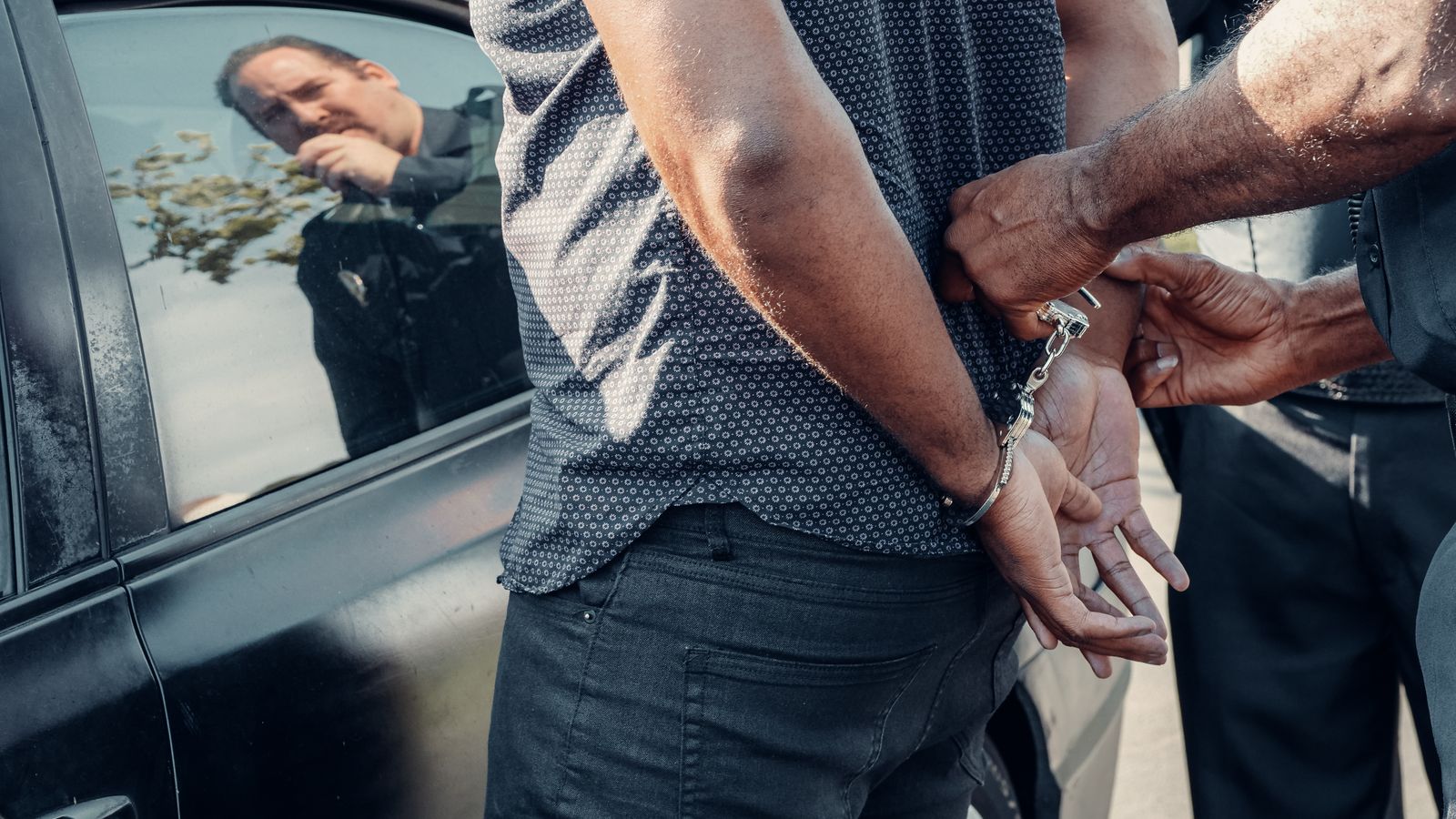
U.S. law enforcement made roughly 21 million marijuana arrests across three decades, and the overwhelming majority were for simple possession, not sale or trafficking. That figure, which resurfaced in a September 2026 stupidDOPE retrospective, tracks closely with the FBI's Uniform Crime Reporting (UCR) program, which has logged marijuana law violations every year since the early 1990s.
The pattern is consistent across the record. Arrests climbed through the 1990s, peaked at about 870,000 in 2007 according to FBI UCR data, and fell sharply after states began legalizing adult use. Racial disparities persisted throughout: an American Civil Liberties Union analysis of 2010 data found that Black Americans were 3.73 times more likely than white Americans to be arrested for marijuana possession, despite comparable usage rates reported in federal surveys.
Enforcement is not over. Federal law still classifies marijuana as a Schedule I substance under 21 U.S.C. § 812, and the Controlled Substances Act (CSA) remains the foundation for prosecution, even as the DEA and the Department of Justice have pursued rescheduling to Schedule III. Dozens of states have decriminalized or legalized, but possession, public consumption, driving, and unlicensed sales still generate arrests in nearly every jurisdiction.
This hub documents the history, the data, the legal machinery, the people and institutions involved, the state-level patchwork, and the business consequences, including how convictions and 280E tax treatment still shape the legal industry. It is the evergreen reference for readers who need to understand what cannabis enforcement actually looked like, what it cost, and what it looks like now.
Why This Matters
Marijuana enforcement shaped the lives of millions of Americans, consumed billions in public dollars, and still determines who can work in, invest in, or own a piece of the legal cannabis industry.
Three stakeholder groups carry the weight of this history.
People with records
A marijuana arrest, even without conviction, can trigger consequences that outlast the case: lost federal student aid eligibility, denied housing, employment barriers, immigration consequences, and child custody complications. Convictions compound these effects. For the roughly 21 million arrests tallied over three decades, the documented harms extend well beyond jail time.
Taxpayers and public agencies
An ACLU report, The War on Marijuana in Black and White (2013), estimated that states spent over $3.6 billion per year enforcing marijuana possession laws based on 2010 data. Police hours, court dockets, public defender time, and incarceration costs all drew from the same budgets that fund other public safety priorities.
The legal industry
Operators, investors, and regulators now manage the legacy of enforcement. Social equity licensing programs in states like California, New York, and Illinois exist specifically because of enforcement disparities. Meanwhile, multi-state operators (MSOs) still pay federal taxes under Internal Revenue Code Section 280E, which bars deductions for businesses trafficking in Schedule I or II substances, a direct statutory descendant of the same classification that drove the arrests.
The scale matters for policy today. Every rescheduling proposal, expungement bill, and federal banking debate sits on top of this enforcement record.
Background and History
Marijuana enforcement evolved from a patchwork of state taxes and local bans in the early twentieth century into a nationwide criminal regime that peaked in the 2000s and began unwinding only after 2012.
1910s-1930s: State bans and the Marihuana Tax Act
Colorado, California, and other states began restricting cannabis in the 1910s and 1920s, often tied to anti-immigrant sentiment toward Mexican migrants. Congress followed with the Marihuana Tax Act of 1937, which did not outlaw cannabis outright but imposed a transfer tax and registration requirements that made lawful commerce impractical. The American Medical Association opposed the law at the time, according to the historical record of the 1937 congressional hearings.
1950s-1960s: Mandatory minimums and shifting culture
The Boggs Act (1951) and Narcotic Control Act (1956) set mandatory minimum sentences for drug offenses, including marijuana. By the mid-1960s, cannabis use spread among college students and the counterculture, and arrests rose accordingly. In Leary v. United States (1969), the Supreme Court struck down the Marihuana Tax Act on Fifth Amendment self-incrimination grounds, forcing Congress to rewrite the federal framework.
1970: The Controlled Substances Act
Congress responded with the Controlled Substances Act of 1970, which placed marijuana in Schedule I under 21 U.S.C. § 812, defined as a substance with a high potential for abuse, no accepted medical use, and no accepted safety for use under medical supervision. Congress also created the National Commission on Marihuana and Drug Abuse, known as the Shafer Commission. In its 1972 report, the commission recommended decriminalizing possession for personal use. President Richard Nixon rejected the recommendation.
1971-1973: The DEA and the "war on drugs"
Nixon declared drug abuse "public enemy number one" in 1971. The Drug Enforcement Administration (DEA) was established in 1973, consolidating federal drug enforcement under a single agency. The Schedule I classification stayed in place, and the DEA became the primary federal body responsible for enforcing it.
1973-1978: The first decriminalization wave
Oregon became the first state to decriminalize possession of small amounts in 1973. Ten states followed by 1978, including California, Ohio, and New York, replacing criminal penalties with civil fines for small-quantity possession. This early wave stalled as federal rhetoric hardened in the 1980s.
1980s: Escalation and mandatory minimums
The Reagan administration expanded the federal drug war. The Anti-Drug Abuse Act of 1986 created mandatory minimum sentences keyed to drug quantity, including marijuana plant counts, and the 1988 follow-up act extended them. The National Organization for the Reform of Marijuana Laws (NORML), founded in 1970, spent these years lobbying against the trend with limited legislative success.
1990s: The arrest surge
FBI UCR data shows marijuana arrests rising steadily through the 1990s. By 1992, arrests numbered roughly 342,000 annually; by the end of the decade, they had approached 700,000. Aggressive "broken windows" and quality-of-life policing in major cities, most prominently New York City, drove much of the increase through low-level possession stops. This is the period the stupidDOPE retrospective identifies as the foundation of the 21-million-arrest tally.
At the same time, state voters began challenging prohibition. California's Proposition 215 (1996) legalized medical cannabis, the first such law in the nation, and a wave of medical programs followed in the late 1990s and 2000s.
2001-2007: The peak
FBI data places the peak in 2007, with approximately 872,000 marijuana arrests, around 89 percent of them for possession. For context, that figure exceeded the total number of arrests for all violent crimes combined in the same year, a comparison drawn repeatedly by reform advocates citing UCR data. In Gonzales v. Raich (2005), the Supreme Court held that Congress could regulate even home-grown medical marijuana under the Commerce Clause, affirming federal supremacy over state medical programs.
2009-2013: The federal softening
The Obama Justice Department issued the Ogden Memo (2009), advising federal prosecutors not to focus resources on patients complying with state medical laws. In November 2012, voters in Colorado and Washington approved the first adult-use legalization measures. In August 2013, Deputy Attorney General James Cole issued the Cole Memo, laying out eight enforcement priorities and signaling federal tolerance of state-regulated markets that avoided those priorities.
2014-2018: Legalization spreads, disparities persist
Adult-use sales began in Colorado in January 2014. Oregon, Alaska, and Washington, D.C. followed, then California, Massachusetts, Nevada, and Maine. Arrest totals fell, but racial disparities in the remaining arrests did not close. The 2013 ACLU report and subsequent updates found that disparities persisted or widened in many states even as overall arrest rates declined. Attorney General Jeff Sessions rescinded the Cole Memo in January 2018, though no mass federal crackdown followed.
2018-2025: Hemp, expungement, and rescheduling
The 2018 Farm Bill legalized hemp and removed it from the CSA, creating a federal carve-out that spawned the hemp-derived THC market and new enforcement disputes. In 2022, President Joe Biden pardoned all prior federal simple-possession convictions and urged governors to follow, and he directed a review of marijuana's scheduling. The Department of Health and Human Services recommended Schedule III in 2023, and the DOJ published a notice of proposed rulemaking (NPRM) in 2024 to move marijuana to Schedule III, triggering an administrative hearing process before a DEA administrative law judge (ALJ) that became tangled in procedural disputes.
2026: A retrospective moment
The September 2026 stupidDOPE piece frames the 21-million figure as a cumulative accounting of the era, a reminder that even as the industry matures, the human cost of the enforcement regime is largely a matter of historical record rather than resolved policy.
Key Players
Enforcement, reform, and regulatory institutions each played distinct roles in generating, documenting, and now unwinding the arrest record.
Federal Bureau of Investigation (UCR Program)
The FBI's Uniform Crime Reporting program is the primary national source for arrest counts. It aggregates data voluntarily submitted by thousands of local agencies, so totals are estimates, and participation gaps, particularly after the FBI's transition to the National Incident-Based Reporting System (NIBRS) in 2021, have complicated year-over-year comparisons.
Drug Enforcement Administration (DEA)
The DEA enforces the CSA, sets scheduling procedures alongside HHS, and conducts the administrative hearings required under the statute. It has historically resisted rescheduling petitions, and its ALJ process is central to the current Schedule III effort.
Department of Justice
The DOJ sets federal prosecutorial priorities. Policy memos from the Ogden, Cole, and Sessions eras show how much federal enforcement posture varies with the administration, even when the underlying statute does not change.
Food and Drug Administration and HHS
The FDA, on behalf of HHS, performs the eight-factor scientific and medical evaluation that underpins scheduling decisions. Its 2023 recommendation to move marijuana to Schedule III was the first federal health-agency finding of accepted medical use in this context.
American Civil Liberties Union
The ACLU's 2013 and 2020 reports remain the most cited analyses of racial disparities in marijuana arrests, relying on FBI UCR data and Census population figures at the county and state level.
NORML and the Drug Policy Alliance
NORML, founded in 1970, and the Drug Policy Alliance have run state ballot campaigns, litigation, and public education efforts for decades and contributed to the data infrastructure that makes the 21-million figure possible to discuss.
Law enforcement associations
Groups such as the International Association of Chiefs of Police and the National Sheriffs' Association have generally opposed legalization, citing impaired driving, youth access, and black-market persistence. Their positions are documented in public testimony and policy statements.
Multi-state operators and trade groups
MSOs and trade associations lobby for rescheduling, 280E relief, and banking access through the SAFER Banking Act or similar proposals. Their interest in clearing criminal-record barriers has aligned them, in some states, with social equity advocates.
Legal and Regulatory Framework
Federal law still criminalizes marijuana through the Controlled Substances Act, while state laws create a divergent patchwork of legalization, decriminalization, and continued prohibition.
Controlled Substances Act
Marijuana is listed in Schedule I at 21 U.S.C. § 812(c). Simple possession is a misdemeanor under 21 U.S.C. § 844, punishable by up to one year in prison for a first offense. Distribution and manufacture fall under 21 U.S.C. § 841, with penalties scaled by weight, from up to five years for under 50 kilograms to ten-year mandatory minimums for 1,000 kilograms or more.
Scheduling procedure
Under 21 U.S.C. § 811, the Attorney General may reschedule a substance after receiving a scientific and medical evaluation from HHS and following formal rulemaking. The 2024 NPRM to move marijuana to Schedule III initiated this process. Moving to Schedule III would end the Schedule I classification, but it would not legalize recreational use, and it would leave unlicensed sale and possession federally prohibited without a prescription or FDA approval.
Key case law
- Leary v. United States (1969): struck down the Marihuana Tax Act on self-incrimination grounds.
- Gonzales v. Raich (2005): upheld federal power to regulate intrastate, noncommercial marijuana cultivation under the Commerce Clause.
- Carlson v. Commissioner / Harborside (2018): the tax court's treatment of 280E, affirming that dispensaries cannot deduct ordinary business expenses, with limited exceptions for cost of goods sold.
Federalism and the appropriations rider
Since 2014, Congress has attached the Rohrabacher-Farr (now Joyce-Blumenauer) amendment to appropriations bills, barring the DOJ from using funds to interfere with state medical marijuana programs. Courts have read it to limit prosecutions of compliant medical operators, though it must be renewed each fiscal year and does not cover adult-use markets.
Expungement and clemency
Federal clemency is governed by the presidential pardon power under Article II. State expungement is governed by state statute, with mechanisms ranging from automatic record clearing to petition-based processes that require applicants to initiate the request.
State-by-State Breakdown
State approaches range from full adult-use legalization with automatic expungement to criminal prohibition, and the arrest rate that survives in each state tracks that policy spectrum. The table below summarizes representative states; always confirm current statutory limits before relying on any figure.
| State | Status | Adult Possession Limit | Key Date | Record Relief |
|---|---|---|---|---|
| California | Adult-use legal | 28.5 g flower / 8 g concentrate | Prop 64, Nov 2016; sales Jan 2018 | Prop 64 allowed resentencing; AB 1793 required automatic review |
| New York | Adult-use legal | 3 oz flower / 24 g concentrate | MRTA signed Mar 2021 | Automatic expungement of eligible convictions |
| Colorado | Adult-use legal | 2 oz | Amendment 64, Nov 2012; sales Jan 2014 | Pardons and sealing mechanisms enacted |
| Ohio | Adult-use legal | 2.5 oz flower / 15 g concentrate | Issue 2, Nov 2023 | Sealing available by petition |
| Massachusetts | Adult-use legal | 1 oz in public / 10 oz at home | Question 4, Nov 2016 | Sealing and expungement pathways |
| Texas | Prohibited, limited medical (low-THC) | No legal possession; criminal penalties | Compassionate Use Program since 2015 | Limited; some local cite-and-release policies |
California
California's Proposition 215 started the medical era in 1996, and Proposition 64 legalized adult use in 2016. California has historically accounted for a large share of national arrest totals, and post-legalization reductions there pulled national numbers down significantly. The state also built one of the more extensive record-clearing mechanisms in the country, though implementation lagged in some counties.
New York
New York City was a focal point of the 1990s possession-arrest surge. Following the Marihuana Regulation and Taxation Act (MRTA) in 2021, the state created automatic expungement and a social equity licensing framework prioritizing people with prior cannabis convictions, though rollout of licensed retail has faced litigation and delays.
Colorado
Colorado's 2012 Amendment 64 made it a first mover. State data has shown that possession arrests fell steeply after legalization, though Colorado Department of Public Safety reports have noted that disparities in remaining marijuana arrests between Black and white residents persisted.
Ohio
Ohio decriminalized minor possession in 1975 but retained criminal penalties for larger amounts for decades. Voters approved adult-use legalization through Issue 2 in November 2023, and the legislature has since amended parts of the initiated statute, illustrating the tension between ballot initiatives and legislative control.
Massachusetts
Massachusetts decriminalized possession of up to one ounce in 2008 via ballot question, then legalized adult use in 2016. It remains a reference case for how decriminalization alone sharply reduces arrests without fully ending disparities in enforcement of remaining offenses.
Texas
Texas maintains criminal penalties for possession of marijuana and has historically ranked among the states with the highest absolute arrest counts. Several cities have adopted cite-and-release or non-prosecution policies for low-level possession, but state law has not changed, and local policy can be overridden by the state.
Market and Business Implications
The enforcement record shapes today's cannabis economy through social equity licensing, 280E tax burdens, banking restrictions, and the unresolved status of people with prior convictions in the workforce.
280E and MSO economics
Section 280E of the Internal Revenue Code denies deductions and credits to any trade or business consisting of trafficking in Schedule I or II controlled substances. Plant-touching MSOs routinely report effective tax rates well above those of comparable non-cannabis retailers, because they cannot deduct rent, payroll, marketing, and other ordinary expenses beyond cost of goods sold. Rescheduling to Schedule III would remove marijuana from 280E's reach, which investors have treated as a major earnings catalyst. This is the clearest line from the enforcement-era classification to current corporate financials.
Social equity programs
States including California, New York, and Illinois created licensing preferences for applicants harmed by past enforcement. Results have been mixed: operators have reported capital shortfalls, real estate access problems, and delays, and several programs have faced litigation. For investors, these programs create both a compliance obligation and a pipeline of smaller, undercapitalized licensees that often seek acquisition or partnership.
Banking and capital access
Because marijuana remains federally illegal, banks face regulatory risk under the Bank Secrecy Act when serving cannabis clients. Many operators rely on cash-heavy operations and specialty financial providers, raising costs and security risks. Proposals like the SAFER Banking Act would create a safe harbor, but passage has repeatedly stalled in the Senate.
Employment and licensing screens
Prior marijuana convictions can still disqualify applicants from licenses or employment in some jurisdictions, though most adult-use states have moved to limit or eliminate that screen for cannabis-specific offenses. Operators should verify state rules on background checks, as they differ widely.
Wholesale pricing read
Wholesale flower prices in mature markets such as Oregon and California have fallen significantly as supply expanded, and arrest data offers a parallel signal: as legal supply scales, illicit-market enforcement shifts from consumer possession toward unlicensed cultivation and sales. Operators in mature markets should expect enforcement attention to concentrate on unlicensed retail and diversion rather than on consumers.
What Experts Say
Researchers, advocates, and law enforcement groups agree on the basic arrest numbers but disagree sharply on what they imply for policy.
The ACLU, in its 2013 and 2020 reports, concluded that marijuana enforcement has been applied with stark racial disparities, noting that survey data show similar usage rates across racial groups. The organization has urged legalization paired with expungement and reinvestment of tax revenue in affected communities.
Drug Policy Alliance analysts have argued that the cumulative arrest count understates the harm, since each arrest carries downstream collateral consequences in employment, housing, and education that are not captured in the UCR tally.
Law enforcement associations have taken a more cautious position. The International Association of Chiefs of Police has expressed concern about impaired driving and the lack of reliable roadside tests for THC impairment, and has historically opposed legalization while acknowledging that low-level possession arrests consume substantial resources.
Academic criminologists generally caution that UCR data count arrests, not individuals, so the 21-million figure includes repeat arrests of the same people and may not equal 21 million unique individuals. They also note that UCR participation is voluntary and incomplete, so the true number could differ from published estimates.
The most defensible reading of the record is that arrests peaked in the mid-2000s, fell as states legalized or decriminalized, and remain unevenly distributed by race and geography, according to a consistent body of FBI and ACLU data.
What's Next
The next several years will turn on the DEA rescheduling hearing, congressional action on banking and expungement, and state-level implementation of record-clearing laws.
Decision points to watch
- DEA rescheduling process: The NPRM to move marijuana to Schedule III depends on completion of the ALJ hearing and a final rule. Procedural challenges and administration priorities determine timing.
- Appropriations riders: The Joyce-Blumenauer protections must be renewed each fiscal year. A lapse would expose state medical programs to federal enforcement risk.
- Federal banking legislation: The SAFER Banking Act and related proposals remain pending, with passage depending on Senate floor time and bundling with other legislation.
- State expungement deadlines: Several states have statutory timelines for automatic record clearing. Missed deadlines generate litigation and advocacy pressure.
- Data releases: Annual FBI UCR and NIBRS releases will show whether arrests continue to decline and whether racial disparities narrow.
Scenarios
- Schedule III finalized: 280E no longer applies, MSO margins improve, and federal criminal exposure for licensed operators narrows. Unlicensed sale and possession remain federally illegal.
- Rescheduling stalls: The status quo persists, 280E burdens continue, and the industry leans on state-level action and ballot measures.
- Congressional legalization or decriminalization: A federal statute could override the scheduling process entirely, though no bill has cleared both chambers to date.
Whichever path unfolds, the arrest record remains the baseline against which reforms will be measured, and each new dataset will either confirm or complicate the story the 21-million figure tells.
Further Reading
- FBI Uniform Crime Reporting Program, Crime Data Explorer: https://cde.ucr.cjis.gov/
- ACLU, The War on Marijuana in Black and White (2013): https://www.aclu.org/report/report-war-marijuana-black-and-white
- ACLU, A Tale of Two Countries: Racially Targeted Arrests in the Era of Marijuana Reform (2020): https://www.aclu.org/report/tale-two-countries-racially-targeted-arrests-era-marijuana-reform
- Controlled Substances Act, 21 U.S.C. § 801 et seq.: https://www.law.cornell.edu/uscode/text/21/chapter-13
- DEA Diversion Control Division, Controlled Substance Schedules: https://www.deadiversion.usdoj.gov/schedules/
- Shafer Commission, Marihuana: A Signal of Misunderstanding (1972): https://www.ncjrs.gov/pdffiles1/Digitization/142937NCJRS.pdf
- Internal Revenue Code § 280E: https://www.law.cornell.edu/uscode/text/26/280E
- NORML, State Laws and Penalties: https://norml.org/laws/
- Drug Policy Alliance, Marijuana Legalization and Regulation: https://drugpolicy.org/issues/marijuana-legalization-and-regulation/
Frequently asked questions
How many people have been arrested for marijuana in the United States?
The FBI's Uniform Crime Reporting program records marijuana arrests annually, and cumulative totals since the early 1990s run to many millions. Arrests peaked at roughly 800,000 or more per year in the late 2000s and early 2010s, with the large majority for possession. Exact totals depend on the years counted and on UCR's reliance on voluntary agency reporting, so figures are estimates.
When did federal cannabis prohibition begin?
The Marihuana Tax Act of 1937 effectively criminalized cannabis nationwide through taxation and registration requirements. The Controlled Substances Act of 1970 then placed marijuana in Schedule I, the category for drugs with no accepted medical use and high abuse potential. That classification remains in force at the federal level, though rescheduling proceedings have been discussed in recent years.
What share of marijuana arrests are for possession?
According to FBI UCR data analyzed by groups such as the ACLU and NORML, roughly 85 to 90 percent of marijuana arrests in recent decades were for possession rather than sale or manufacture. This pattern held through most of the 1990s, 2000s, and 2010s, which is why possession policy changes have such a large effect on total arrest counts.
Are there racial disparities in marijuana arrests?
Yes. The ACLU's 2013 report 'The War on Marijuana in Black and White' found Black Americans were nearly four times more likely than white Americans to be arrested for possession, despite similar usage rates in national surveys. Later analyses have found disparities persisting in many jurisdictions, including some that legalized, though the size varies widely by state and county.
How did the 1980s drug war change cannabis enforcement?
The Anti-Drug Abuse Acts of 1986 and 1988 raised penalties and mandatory minimums for drug offenses, and federal funding incentives encouraged state and local drug enforcement. Marijuana arrests rose through the 1990s, climbing steadily as a share of all drug arrests. Cannabis-specific penalties varied by quantity and by state law.
Did state legalization reduce marijuana arrests?
Generally yes. States that legalized adult use, such as Colorado and Washington, saw sharp drops in marijuana possession arrests after implementation, according to state data and Drug Policy Alliance analyses. Decriminalization without full legalization has also reduced arrests in several states, though some enforcement continues for public consumption, underage possession, and unlicensed sales.
What is the difference between decriminalization and legalization?
Decriminalization removes or reduces criminal penalties for small-quantity possession, often replacing arrest with a civil fine, but sales generally remain illegal. Legalization creates a lawful, regulated market for production and retail sale. Both change enforcement patterns, but legalization typically produces a larger and more durable drop in cannabis arrests.
What is marijuana expungement?
Expungement or record sealing clears or limits access to past cannabis convictions. Many states that legalized have enacted automatic or petition-based relief for eligible offenses, and some conduct record reviews. Eligibility rules vary by state, offense type, and quantity. Federal convictions are separate and are handled through presidential pardons or the courts.
Does federal law still criminalize cannabis in legal states?
Yes. Cannabis remains a Schedule I controlled substance under federal law even where states have legalized it. Federal enforcement priorities have shifted over time, notably through the 2013 Cole Memo, and appropriations riders have limited Justice Department interference with state medical programs. Federal prohibition still affects banking, interstate commerce, and federal employment.
Where does marijuana arrest data come from?
The main national source is the FBI's Uniform Crime Reporting program, which compiles arrest counts voluntarily submitted by law enforcement agencies. Other sources include state court and corrections data, the U.S. Sentencing Commission for federal cases, and survey data from SAMHSA's National Survey on Drug Use and Health. Coverage gaps and reporting changes can affect comparisons across years.
The cannabis newsletter you forward to your team.
Federal policy, market data, grower alerts, and the one story that matters today. Sent every weekday at 7am. Free.
No spam. Unsubscribe with one click. 21+ only.