Abandoned Cannabis Grow Sites — Environmental Impact and Remediation
Abandoned cannabis cultivation sites represent a growing environmental and public safety challenge across North America. Following market consolidation and the end of the initial legalization boom, thousands of outdoor and indoor grow operations have been left derelict, contaminating soil and water with pesticides, fertilizers, and irrigation infrastructure. This hub examines the scope of abandonment, ecological damage from illicit and legal operations, cleanup costs, regulatory gaps, and emerging remediation strategies as communities grapple with the legacy of unsustainable cultivation practices.
Executive Summary
Hundreds of abandoned cannabis cultivation sites across the United States represent a growing environmental and economic crisis as the industry consolidates following the collapse of the "green rush" that began in the mid-2010s. These derelict properties—concentrated primarily in California, Oregon, and Oklahoma—contain contaminated soil, irrigation infrastructure, unpermitted structures, and in some cases hazardous chemicals left behind by operators who ceased operations amid falling wholesale prices, regulatory burdens, and market oversaturation. As of May 2026, California alone estimates more than 800 abandoned grow sites on private and public lands, with cleanup costs projected to exceed $150 million statewide. The crisis affects rural counties disproportionately, straining local budgets and creating public health risks from pesticide residue, water diversion damage, and illegal dumping. Federal and state agencies have struggled to coordinate remediation efforts, while property owners face liens and cleanup orders they cannot afford to satisfy. The abandoned site phenomenon illustrates the darker consequences of rapid cannabis legalization without adequate infrastructure planning or market stabilization mechanisms.
Why This Matters
Abandoned cannabis grow sites create cascading harms affecting taxpayers, neighboring landowners, water systems, and the legal cannabis industry's reputation. In Humboldt County, California—the historic heart of American cannabis cultivation—county officials reported in April 2026 that abandoned sites now outnumber active permitted operations in some watersheds. The county has spent $4.2 million since 2024 on emergency abatement actions, funds diverted from road maintenance and public safety budgets.
Environmental stakeholders face immediate threats. The California Department of Fish and Wildlife documented in March 2026 that abandoned grow sites in the Emerald Triangle have contaminated at least 47 miles of salmon-bearing streams with sediment and pesticide runoff. Carbofuran and brodifacoum—rodenticides banned for cannabis use—persist in soil at concentrations exceeding EPA safety thresholds at 62% of tested abandoned sites.
For the legal cannabis industry, abandoned sites undermine the sector's environmental credibility. Multi-state operators investing in sustainable cultivation face unfair competition from the legacy of unregulated operations, while state regulators struggle to enforce compliance when enforcement budgets cannot cover cleanup of defunct businesses. Property values in affected rural areas have declined 15-30% according to real estate assessments in southern Oregon's Jackson County.
The financial scale is substantial. Oklahoma, which issued more than 8,000 cultivation licenses between 2018 and 2022, estimates 1,200 grow operations ceased without proper decommissioning. The state's cleanup liability exceeds $80 million, but the Cannabis Remediation Fund established in 2024 contains only $3.7 million. Federal disaster relief remains unavailable because cannabis remains a Schedule I controlled substance under the Controlled Substances Act, 21 U.S.C. § 812.
Background and History: From Green Rush to Abandonment Crisis
The abandoned grow site crisis emerged from the collision between rapid legalization, speculative investment, and market oversupply that characterized cannabis policy from 2016 through 2025.
The Green Rush Era (2016-2020)
California's passage of Proposition 64 in November 2016 triggered a cultivation boom across the West Coast. The measure legalized adult-use cannabis and established a regulatory framework under the Medicinal and Adult-Use Cannabis Regulation and Safety Act (MAUCRSA). Wholesale cannabis prices in California averaged $1,800 per pound in early 2017, incentivizing thousands of cultivators to enter the market.
Oregon experienced similar dynamics following its 2014 legalization. By 2018, the state had licensed more than 2,300 outdoor cultivation sites, producing an estimated 1.1 million pounds annually against in-state demand of approximately 340,000 pounds. The Oregon Liquor and Cannabis Commission issued a moratorium on new outdoor licenses in May 2018, but existing operations continued expanding.
Oklahoma's medical cannabis program, approved by voters in June 2018 through State Question 788, created the nation's most permissive licensing system. The state imposed no residency requirements and minimal application barriers, issuing 8,147 cultivation licenses by December 2020—more than Colorado, Washington, and Oregon combined. This attracted out-of-state capital and created a speculative bubble in rural land prices.
Market Collapse and Consolidation (2020-2023)
Wholesale prices began sustained decline in 2019. California outdoor-grown flower dropped from $1,200 per pound in January 2019 to $400 per pound by December 2020. Oregon prices fell to $250 per pound for outdoor flower by mid-2021. The COVID-19 pandemic initially boosted retail demand, but supply continued outpacing consumption.
Small and mid-sized cultivators faced a cost-price squeeze. California's regulatory compliance costs—including track-and-trace systems, testing requirements, and cultivation taxes under the Cannabis Tax Law—averaged $300,000 to $500,000 annually for farms producing 1,000 to 5,000 pounds. When wholesale revenue fell below operating costs, operators faced a choice: continue losing money, sell to larger competitors, or abandon operations.
The first wave of abandonments occurred in 2021-2022. Humboldt County reported 127 cultivation sites with expired permits and no contact information on file by August 2021. By January 2022, that number reached 284. Many operators had leased land, installed infrastructure, and obtained permits, but lacked capital to complete proper decommissioning when operations became unprofitable.
Regulatory Response and Enforcement Gaps (2022-2024)
California enacted Assembly Bill 1894 in September 2022, requiring cultivators to post $10,000 performance bonds to cover potential cleanup costs. The measure applied only to new license applicants, exempting the thousands of existing operations. By the time the law took effect in January 2023, many at-risk operators had already ceased operations.
Oregon's legislature passed House Bill 4016 in February 2023, establishing a $15 million Cannabis Site Remediation Fund financed by a 0.5% tax on wholesale transactions. However, declining transaction volumes meant the fund collected only $2.1 million in its first year, far below projected cleanup needs.
Oklahoma took a different approach, conducting a license audit in 2023 that identified 1,847 cultivation licenses with no reported activity for 12 consecutive months. The Oklahoma Medical Marijuana Authority (OMMA) revoked these licenses but lacked statutory authority to compel site remediation. Property owners—often absentee landlords who had leased to cultivators—received cleanup orders they contested in administrative proceedings.
The Current Crisis (2024-2026)
By 2024, the abandoned site problem had reached crisis proportions in key cultivation regions. The California Department of Cannabis Control reported in June 2024 that 812 licensed cultivation sites had "inactive" status with evidence of abandonment, including unpaid taxes, disconnected utilities, and overgrown properties. An additional 300 to 500 unlicensed sites operated during the transition period from 2016 to 2018 and were never formally permitted.
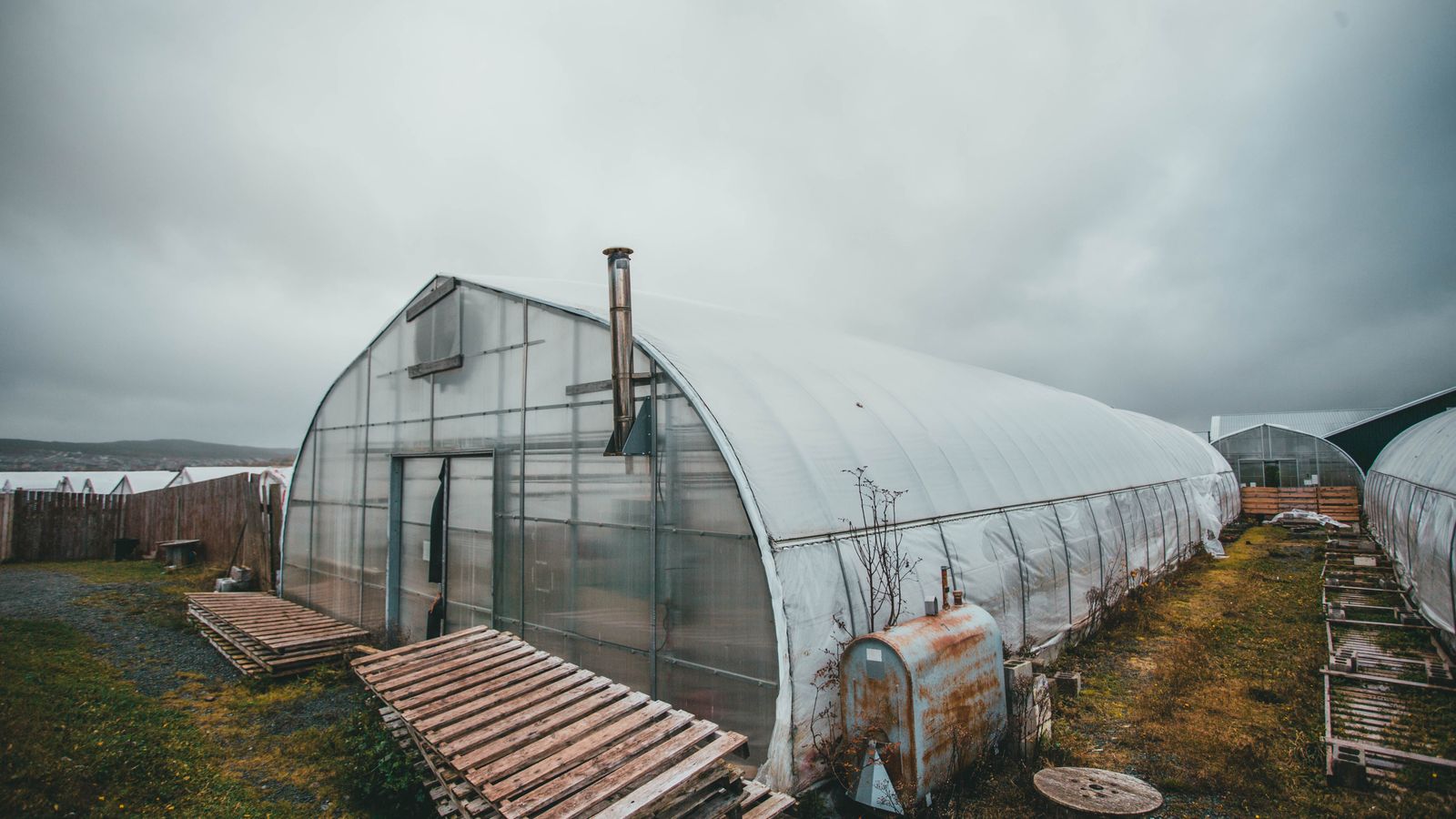
The Times-Standard investigation published in May 2026 documented conditions at 43 abandoned sites across Humboldt, Trinity, and Mendocino counties. Reporters found irrigation ponds filled with stagnant water breeding mosquitoes, greenhouse structures with collapsed roofs containing asbestos, and open containers of pesticides and fertilizers exposed to weather. At one site in southern Humboldt County, investigators discovered 240 pounds of carbofuran—enough to kill every mammal within a five-mile radius if it entered the watershed.
The phrase "green rush is over" entered common usage in cannabis industry discourse in late 2025, reflecting the sector's maturation from speculative boom to consolidated commodity market. Multi-state operators now control approximately 65% of legal cannabis production in mature markets, while small independent cultivators have largely exited or operate at minimal scale.
Key Players and Stakeholders
California Department of Cannabis Control (DCC)
The DCC, formed in July 2021 through consolidation of three predecessor agencies, holds primary regulatory authority over cannabis cultivation in California. Director Nicole Elliott testified before the California Assembly Budget Committee in March 2026 that the agency's enforcement division has 47 field inspectors responsible for monitoring more than 6,000 active licenses and investigating abandoned sites. The DCC has issued 284 notices of violation for site abandonment since January 2024 but collected only $1.8 million in fines, as most violators are judgment-proof entities with no recoverable assets.
County Governments in Cultivation Regions
Humboldt County, Trinity County, and Mendocino County—California's Emerald Triangle—bear disproportionate cleanup burdens. Humboldt County Planning Director John Ford said in April 2026 that the county has spent $4.2 million on emergency abatements since 2024, using general fund dollars intended for other services. The county has placed liens on 89 properties but expects to recover less than 20% of costs through foreclosure sales.
Jackson County, Oregon allocated $1.2 million in its 2025-2026 budget for cannabis site remediation, according to county administrator Danny Jordan. The county has prioritized sites with immediate water contamination risks, completing cleanup of 12 properties as of May 2026.
Oklahoma Medical Marijuana Authority (OMMA)
OMMA Director Adria Berry reported in February 2026 that the agency had identified 1,203 cultivation facilities with evidence of abandonment, including 847 with revoked licenses and 356 with expired licenses and no renewal application. OMMA lacks dedicated enforcement staff for site remediation, relying instead on county health departments to pursue abatement through local nuisance ordinances.
Environmental Organizations
The California Department of Fish and Wildlife's Cannabis Enforcement Unit has documented environmental damage at abandoned sites since 2018. Senior Environmental Scientist Mourad Gabriel published research in March 2026 showing that rodenticide contamination from abandoned grows has killed 127 fishers, 83 Pacific martens, and 41 northern spotted owls in the Emerald Triangle since 2022. Gabriel's team has prioritized sites within critical habitat for threatened species.
The Waterkeeper Alliance's Northern California chapter has filed suit against 14 property owners under the Clean Water Act, 33 U.S.C. § 1251 et seq., seeking remediation of sites discharging sediment and pollutants into tributaries of the Eel River and Mattole River watersheds.
Multi-State Operators and Industry Groups
The California Cannabis Industry Association (CCIA) has advocated for state-funded cleanup programs financed through general obligation bonds rather than industry-specific taxes. CCIA spokesperson Lindsay Robinson said in May 2026 that legal operators should not bear financial responsibility for legacy illegal operations that predated licensing systems. The organization supports AB 2847, pending legislation that would appropriate $100 million in state funds for abandoned site remediation.
Legal and Regulatory Framework
Abandoned cannabis cultivation sites exist in a complex legal space where state cannabis regulations, environmental statutes, property law, and federal drug policy intersect.
Under California law, the Medicinal and Adult-Use Cannabis Regulation and Safety Act (Business and Professions Code § 26000 et seq.) requires cultivators to maintain sites in compliance with environmental standards even after ceasing operations. Section 26060.1 authorizes the DCC to issue cleanup orders and impose administrative penalties up to $30,000 per violation. However, the statute provides no mechanism for state-funded cleanup when violators lack assets.
The California Environmental Quality Act (CEQA), Public Resources Code § 21000 et seq., requires environmental review before cannabis cultivation permits are issued, but does not mandate decommissioning plans. Assembly Bill 1894 (2022) amended Business and Professions Code § 26050.2 to require performance bonds for new licenses, but exempted existing licensees through a grandfather clause.
Oregon's cannabis regulations, codified in Oregon Revised Statutes Chapter 475C, grant the Oregon Liquor and Cannabis Commission authority to revoke licenses for non-compliance but do not explicitly address site remediation. House Bill 4016 (2023) created a remediation fund but left enforcement to county governments under existing nuisance abatement procedures in ORS 105.555.
Oklahoma's medical marijuana program operates under Oklahoma Statutes Title 63, Section 420 et seq., which grants OMMA authority to regulate licensees but provides limited tools for addressing abandoned sites. Property owners may be liable under the Oklahoma Environmental Quality Act, 27A O.S. § 2-6-101 et seq., if contamination poses imminent threats to public health.
Federal law complicates remediation efforts. Because cannabis remains a Schedule I controlled substance under 21 U.S.C. § 812, federal environmental cleanup funds are unavailable for cannabis-related contamination. The Comprehensive Environmental Response, Compensation, and Liability Act (CERCLA), 42 U.S.C. § 9601 et seq., could theoretically apply to hazardous substance releases at grow sites, but EPA has declined to exercise jurisdiction over state-legal cannabis operations.
Property law creates additional challenges. When cultivators lease land and abandon operations, landlords may face cleanup liability under state environmental statutes even if they did not participate in cultivation. California courts have held in cases such as People v. Conaway (2021) that property owners have an affirmative duty to remediate environmental damage caused by tenants' cannabis operations.
State-by-State Breakdown
California
California faces the nation's largest abandoned grow site problem, with an estimated 800 to 1,100 derelict cultivation properties as of May 2026. The crisis concentrates in the Emerald Triangle—Humboldt, Mendocino, and Trinity counties—where decades of unregulated cultivation preceded Proposition 64's 2016 passage. Humboldt County alone has identified 347 abandoned sites, including 284 with expired cultivation licenses and 63 unlicensed operations from the pre-legalization era.
State law requires cultivators to post $10,000 performance bonds under Business and Professions Code § 26050.2, but this applies only to licenses issued after January 2023. The California Department of Cannabis Control has collected $5.2 million in bonds from 520 new licensees, but these funds remain insufficient for large-scale remediation. The state's Cannabis Tax Fund, which finances regulatory operations, contained $186 million as of March 2026 but faces competing demands from enforcement, research, and social equity programs.
California's cleanup costs range from $50,000 for small outdoor sites to $500,000 for large mixed-light operations with extensive infrastructure. Sites with soil contamination requiring excavation and disposal can exceed $1 million. The state has completed remediation of 47 high-priority sites since 2024, spending an average of $180,000 per property.
Oregon
Oregon's abandoned site inventory includes approximately 380 former cultivation operations, concentrated in Jackson, Josephine, and Douglas counties in the southern part of the state. The Oregon Liquor and Cannabis Commission revoked 412 cultivation licenses for non-compliance between January 2023 and April 2026, though not all revoked licenses correspond to abandoned physical sites.
Jackson County has taken the most aggressive remediation approach, using county general funds and the state's Cannabis Site Remediation Fund to clean 12 properties at a total cost of $1.4 million. The county prioritizes sites within 1,000 feet of waterways or residential areas. Oregon law allows counties to place liens on properties for cleanup costs under ORS 105.555, but recovery rates have been low—Jackson County has collected only $180,000 of $1.4 million in liens placed since 2024.
Oregon's Cannabis Site Remediation Fund, established by House Bill 4016 (2023), collected $3.8 million through March 2026 from a 0.5% wholesale tax. The Oregon Department of Environmental Quality administers the fund, awarding grants to counties on a competitive basis. Demand exceeds available funding by approximately 4-to-1 based on county applications submitted in the 2025 funding cycle.
Oklahoma
Oklahoma's abandoned grow site crisis stems from the state's uniquely permissive licensing system, which issued 8,147 cultivation licenses between 2018 and 2022 with minimal barriers to entry. The Oklahoma Medical Marijuana Authority identified 1,203 cultivation facilities with evidence of abandonment as of February 2026, including properties with disconnected utilities, overgrown vegetation, and unpaid property taxes.
Unlike California and Oregon, Oklahoma has not established a dedicated remediation fund. The state's approach relies on county health departments to pursue nuisance abatement under local ordinances. This has created uneven enforcement—Oklahoma County and Tulsa County have active abatement programs, while rural counties lack resources to address the problem.
Oklahoma's cleanup challenge is complicated by the prevalence of out-of-state investors who purchased land during the green rush and subsequently abandoned properties when operations became unprofitable. County assessors in Grady County, Stephens County, and Garvin County reported in March 2026 that 15% to 25% of properties with abandoned grows are owned by LLCs registered in California, Colorado, or Nevada with no local contact information.
Other States
Washington State has experienced fewer abandonments due to earlier market maturation and stricter initial licensing caps. The Washington State Liquor and Cannabis Board reported 23 cultivation licenses revoked for abandonment since 2022, primarily small indoor operations in leased warehouse space. Cleanup costs have been lower because most sites lack the environmental contamination associated with outdoor cultivation.
Colorado's regulated market, operational since 2014, has seen approximately 90 cultivation license surrenders or revocations since 2022, but the state's Marijuana Enforcement Division requires decommissioning plans before licenses can be terminated. This has prevented large-scale abandonment, though compliance is imperfect.
Michigan, which launched adult-use sales in 2019, has identified 47 abandoned cultivation sites as of April 2026, primarily in rural counties in the northern Lower Peninsula and Upper Peninsula. The state's Cannabis Regulatory Agency has proposed regulations requiring $25,000 performance bonds for outdoor cultivation licenses larger than 10,000 square feet.
Market and Business Implications
The abandoned grow site crisis reflects and accelerates the cannabis industry's consolidation from fragmented cottage operations to corporate-dominated commodity production.
Wholesale cannabis prices have declined 75% to 85% from peak levels in most mature markets. California outdoor-grown flower averaged $280 per pound in April 2026, down from $1,800 per pound in early 2017. Oregon outdoor flower traded at $180 per pound, while Oklahoma prices fell to $220 per pound. These prices fall below the cost of production for most small-scale cultivators, who face per-pound costs of $300 to $500 when accounting for labor, compliance, testing, and taxes.
Multi-state operators have consolidated market share through acquisitions and organic growth. Companies such as Curaleaf, Green Thumb Industries, and Trulieve now operate cultivation facilities exceeding 100,000 square feet with per-pound production costs below $150 through economies of scale, automation, and vertical integration. These operators have acquired distressed cultivation assets at steep discounts—often 10% to 20% of replacement cost—and absorbed the cleanup costs as part of acquisition expenses.
The abandoned site phenomenon has created a secondary market in distressed cannabis real estate. Specialized buyers purchase properties with cleanup liens, remediate sites to minimum standards, and resell for alternative agricultural use. This market remains thin due to financing challenges—federal prohibition under the Controlled Substances Act prevents most banks from lending on properties with cannabis-related liens, limiting buyers to cash purchasers.
For remaining small cultivators, abandoned sites create competitive disadvantages. Legal operators investing in sustainable practices and environmental compliance face unfair competition from the legacy of unregulated operations. When abandoned sites contaminate watersheds or create public health hazards, the entire industry faces reputational damage that undermines efforts to position legal cannabis as environmentally responsible.
The crisis has also affected ancillary businesses. Irrigation equipment suppliers, greenhouse manufacturers, and agricultural service providers that extended credit to cultivators during the green rush have written off millions in unpaid invoices. Equipment financing companies have repossessed and liquidated cultivation infrastructure, flooding the secondary market and depressing prices for new equipment sales.
Tax revenue implications are substantial. California collected $1.1 billion in cannabis tax revenue in fiscal year 2024-2025, down from $1.3 billion in 2022-2023, partly due to cultivation business failures. Counties that relied on cannabis permit fees and property taxes from cultivation operations face budget shortfalls as operations cease and properties become tax-delinquent.
What Experts Say
Environmental scientists emphasize the long-term ecological damage from abandoned sites. Mourad Gabriel, senior environmental scientist with the California Department of Fish and Wildlife, said in March 2026 that rodenticide contamination persists in soil for three to seven years after application, creating ongoing risks to wildlife even after cultivation ceases. Gabriel's research has documented bioaccumulation of anticoagulant rodenticides in predator species, with 78% of tested fishers in the Emerald Triangle showing detectable levels of brodifacoum or diphacinone.
Cannabis industry analysts view the abandonment crisis as an inevitable consequence of market oversupply. Beau Whitney, senior economist at Whitney Economics, said in April 2026 that mature cannabis markets require 60% to 70% fewer cultivation licenses than most states initially issued. Whitney projects that California's sustainable cultivation capacity is approximately 2,500 to 3,000 licenses, compared to more than 6,000 currently active licenses, suggesting further consolidation ahead.
Legal scholars note the federal-state conflict that complicates cleanup efforts. Robert Mikos, professor at Vanderbilt Law School and cannabis law expert, said in February 2026 that the Controlled Substances Act's Schedule I classification prevents states from accessing federal environmental cleanup funds under CERCLA and the Resource Conservation and Recovery Act. Mikos argues that administrative rescheduling to Schedule III, proposed by the DEA in 2024, would not resolve this issue because cultivation would remain federally prohibited under the Drug Enforcement Administration's interpretation of the Single Convention on Narcotic Drugs.
Local government officials emphasize the fiscal burden on rural counties. Humboldt County Supervisor Rex Bohn said in May 2026 that the county has exhausted its capacity to fund cleanups from general revenues and needs state or federal assistance to address the remaining 300-plus abandoned sites within county jurisdiction. Bohn noted that many property owners are judgment-proof, making cost recovery through liens ineffective.
Environmental advocates call for mandatory decommissioning plans and increased bonding requirements. Jennifer Carah, senior scientist at the Nature Conservancy's California chapter, said in March 2026 that performance bonds should be scaled to site size and risk level, ranging from $25,000 for small outdoor operations to $250,000 for large mixed-light facilities with extensive water infrastructure. Carah's research estimates that adequate bonding would have prevented $80 million to $120 million in public cleanup costs if implemented before the 2021-2023 abandonment wave.
What's Next: Timeline and Scenarios
The abandoned cannabis grow site crisis will likely worsen before improving, with 300 to 500 additional site abandonments projected across California, Oregon, and Oklahoma through 2027.
In the near term, California's Assembly Bill 2847, pending in the legislature as of May 2026, would appropriate $100 million in general fund dollars for a Cannabis Site Remediation Program administered by the Department of Cannabis Control. The bill faces opposition from fiscal conservatives who argue that cannabis tax revenues, not general funds, should finance cleanup. A floor vote is expected in June 2026, with implementation beginning in fiscal year 2026-2027 if passed.
Oregon's Cannabis Site Remediation Fund will receive an estimated $4.5 million in fiscal year 2026-2027 based on current wholesale transaction volumes. The Oregon Department of Environmental Quality plans to prioritize 35 to 40 high-risk sites for cleanup, focusing on properties within critical salmon habitat in the Rogue River and Umpqua River watersheds. County governments will continue handling lower-priority sites through local abatement procedures.
Oklahoma faces a decision point in November 2026, when voters will consider State Question 835, a ballot measure that would impose a 2% wholesale tax dedicated to environmental remediation and law enforcement. The measure requires a 60% supermajority for passage. If approved, the tax would generate an estimated $12 million to $15 million annually, providing the first dedicated funding stream for Oklahoma's cleanup efforts.
Federal policy changes could significantly affect state remediation capacity. The Drug Enforcement Administration's proposed rule to reschedule cannabis to Schedule III under the Controlled Substances Act remains under review as of May 2026, with a final decision expected in late 2026 or early 2027. Rescheduling would not legalize cultivation under federal law but could allow states to access certain federal environmental programs. However, legal experts debate whether CERCLA and other cleanup statutes would apply to cannabis-related contamination even after rescheduling.
Market dynamics suggest continued consolidation will produce additional abandonments. As wholesale prices stabilize at commodity levels—$200 to $300 per pound for outdoor flower—cultivators with per-pound costs above $250 will face ongoing losses. Analysts project that 15% to 25% of currently active cultivation licenses in California, Oregon, and Oklahoma will become inactive by December 2027, potentially adding 400 to 600 sites to the abandonment inventory.
Three scenarios could emerge over the next three to five years. In an optimistic scenario, state legislatures appropriate sufficient funds for systematic remediation, implement mandatory decommissioning plans for all new licenses, and establish industry-financed insurance pools to cover future cleanup costs. This would require $300 million to $400 million in combined state funding across affected states.
In a muddling-through scenario, states continue piecemeal cleanup of high-priority sites while lower-risk properties remain abandoned indefinitely. This approach—the current trajectory—leaves hundreds of sites unremediated, creating long-term environmental liabilities and property blight in rural areas.
In a pessimistic scenario, state budget constraints and political opposition to cannabis-related spending prevent adequate funding, while continued market consolidation produces additional abandonments faster than existing sites are cleaned. This could result in 1,500 to 2,000 abandoned cultivation sites across the United States by 2030, with total cleanup costs exceeding $500 million.
Further Reading and Primary Sources
- California Department of Cannabis Control, Annual Report 2025 — https://cannabis.ca.gov/about-us/annual-report/
- California Department of Fish and Wildlife, Cannabis Enforcement Unit Research Publications — https://wildlife.ca.gov/Conservation/Cannabis
- Oregon Liquor and Cannabis Commission, Licensing Statistics and Reports — https://www.oregon.gov/olcc/marijuana/Pages/Marijuana-Licensing.aspx
- Oklahoma Medical Marijuana Authority, License Database and Enforcement Actions — https://omma.ok.gov/
- Humboldt County Planning and Building Department, Cannabis Program — https://humboldtgov.org/1408/Cannabis-Program
- California Legislative Information, Assembly Bill 2847 (2026) — https://leginfo.legislature.ca.gov/
- Oregon State Legislature, House Bill 4016 (2023) — https://olis.oregonlegislature.gov/
- U.S. Drug Enforcement Administration, Notice of Proposed Rulemaking on Cannabis Rescheduling — https://www.federalregister.gov/
- Controlled Substances Act, 21 U.S.C. § 812 — https://www.govinfo.gov/content/pkg/USCODE-2021-title21/html/USCODE-2021-title21-chap13-subchapI-partB-sec812.htm
- Comprehensive Environmental Response, Compensation, and Liability Act (CERCLA), 42 U.S.C. § 9601 et seq. — https://www.epa.gov/superfund/superfund-cercla-overview
- California Environmental Quality Act (CEQA), Public Resources Code § 21000 et seq. — https://opr.ca.gov/ceqa/
- Whitney Economics, Cannabis Market Reports and Analysis — https://whitneyeconomics.com/
- Nature Conservancy California, Cannabis and Conservation Research — https://www.nature.org/en-us/about-us/where-we-work/united-states/california/
- Times-Standard (Eureka, CA), Cannabis Industry Coverage Archive — https://www.times-standard.com/
Frequently asked questions
What causes cannabis grow sites to be abandoned?
Sites are abandoned due to market oversupply driving prices below profitability, operators unable to afford licensing fees, enforcement actions against illicit grows, bankruptcy of legal operators, and consolidation favoring large-scale producers. The initial legalization boom created unsustainable cultivation capacity that collapsed as markets matured and competition intensified.
Where are most abandoned cannabis grow sites located?
Concentrations exist in California's Emerald Triangle (Humboldt, Mendocino, Trinity counties), southern Oregon, rural Washington, and on public lands including national forests. Illicit sites often occupy remote watersheds, while abandoned legal operations cluster in agricultural zones that experienced rapid permit issuance followed by market contraction.
What environmental damage do abandoned grow sites cause?
Sites contaminate streams with carbofuran, brodifacoum, and other banned rodenticides that poison wildlife. Fertilizer runoff causes algal blooms. Plastic irrigation tubing and trash persist for decades. Soil compaction and vegetation clearing increase erosion. Water diversions deplete streams during critical low-flow periods, harming salmon and other aquatic species.
How much does it cost to clean up an abandoned cannabis grow site?
Costs range from $50,000 for small sites to over $500,000 for large operations requiring hazardous waste removal, soil remediation, and habitat restoration. California's Department of Fish and Wildlife estimates cleanup backlogs exceeding $100 million. Limited state and federal funding leaves most sites unaddressed for years.
Who is responsible for cleaning up abandoned cannabis sites?
Responsibility falls on property owners, but many sites occupy public land or properties with absentee owners. State fish and wildlife agencies, environmental protection departments, and land management agencies share jurisdiction. Tribal governments address sites on reservation lands. Enforcement is complicated when operators cannot be identified or have no assets.
What happens to abandoned indoor cannabis grow facilities?
Indoor facilities leave behind mold contamination from high humidity, electrical hazards from improvised wiring, structural damage from equipment weight, and chemical residues. Buildings often become blighted properties attracting vandalism. Remediation requires mold abatement, electrical system replacement, and HVAC restoration before structures can be reoccupied or demolished.
Are abandoned grow sites a public health risk?
Yes. Pesticide contamination threatens drinking water supplies in rural areas. Rodenticides accumulate in predators including owls and fishers. Unstable structures pose injury risks to hikers and hunters. Illegal sites sometimes contain booby traps. Mold in indoor facilities causes respiratory problems for neighboring properties and future occupants.
What policies could prevent future site abandonment?
Proposed solutions include mandatory cleanup bonds before licensing, stricter environmental impact reviews, cultivation caps to prevent oversupply, tax incentives for sustainable practices, and streamlined permit transfers to keep viable sites operational. Some jurisdictions now require decommissioning plans as part of initial permit applications.
How do abandoned cannabis sites compare to other agricultural abandonment?
Cannabis sites cause disproportionate damage due to intensive pesticide use on illicit grows, remote locations complicating cleanup, and rapid boom-bust cycles preventing gradual transition. Unlike traditional agriculture, many cannabis operations lacked long-term planning or environmental compliance, leaving concentrated contamination rather than diffuse impacts.
Can abandoned grow sites be restored to natural habitat?
Restoration is possible but requires years of effort. Successful projects remove infrastructure, remediate contaminated soil, replant native vegetation, and restore natural hydrology. California's Integral Ecology Research Center has pioneered restoration protocols. However, limited funding means most sites receive only minimal cleanup, leaving lasting ecological damage.
What role do illicit grows play in site abandonment?
Illicit operations account for the majority of abandoned sites on public lands and cause the most severe environmental damage due to use of banned pesticides and lack of waste management. Enforcement raids often leave sites unremediated. Operators vanish, making accountability impossible. Legalization reduced but did not eliminate illicit cultivation.
How are communities addressing the abandoned grow site crisis?
Counties are forming task forces combining law enforcement, environmental agencies, and nonprofits. Grant programs fund volunteer cleanup efforts. Some jurisdictions use nuisance abatement laws to force property owner remediation. Tribal governments are developing their own cleanup protocols. However, the scale of abandonment far exceeds available resources.
The cannabis newsletter you forward to your team.
Federal policy, market data, grower alerts, and the one story that matters today. Sent every weekday at 7am. Free.
No spam. Unsubscribe with one click. 21+ only.