Maine Recalls Cannabis Concentrate Over Unsafe Butane Levels
State regulators pulled a concentrate product from shelves after testing revealed residual solvent levels above safety thresholds.
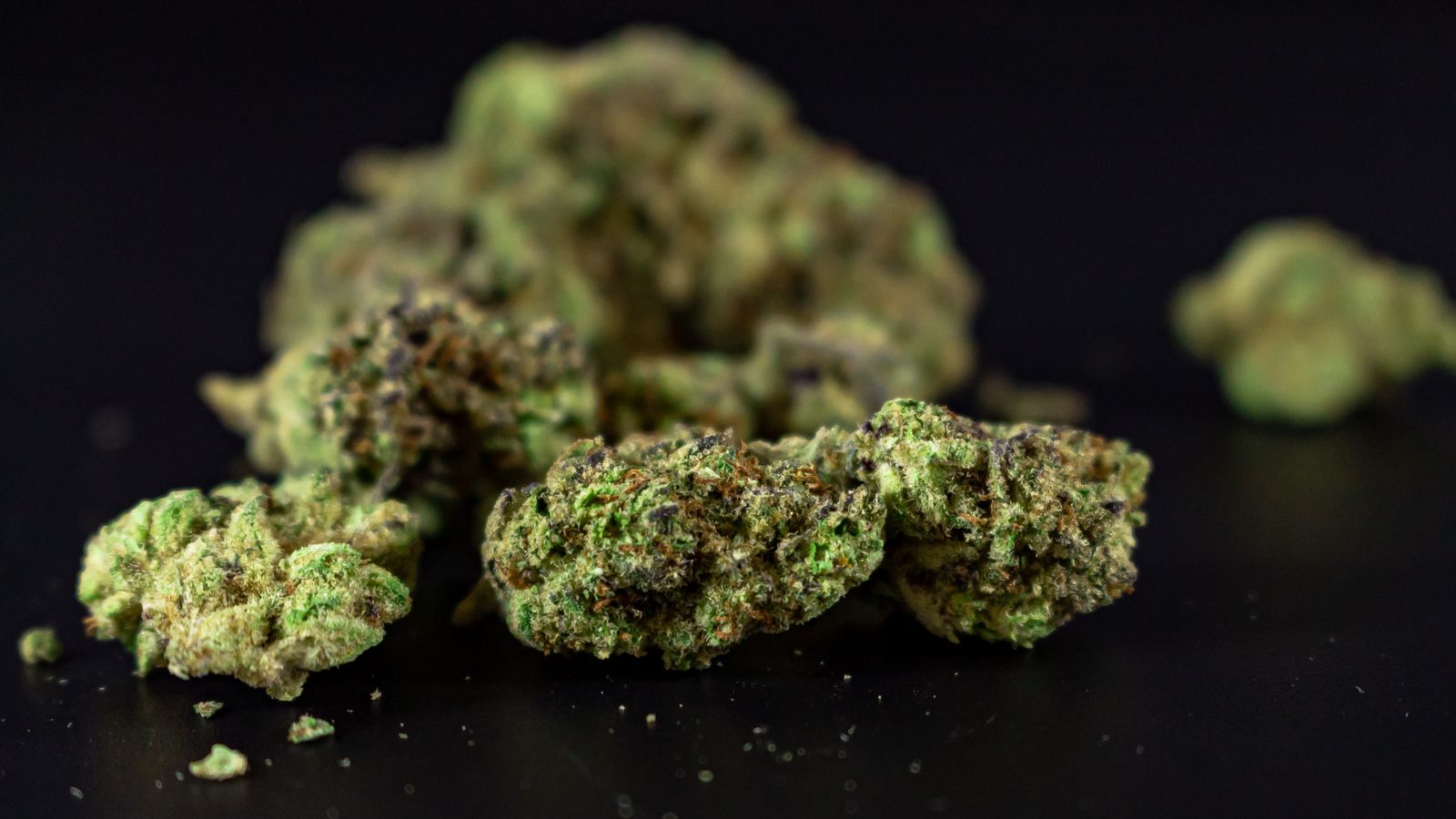
Detailed close-up of cannabis flowers, showcasing texture and color against a black backdrop.
Recall Targets Single Concentrate SKU
Maine's Office of Cannabis Policy (OCP) ordered the immediate removal of a cannabis concentrate product from retail shelves after third-party lab results showed residual butane levels above the state's 5,000 parts-per-million threshold. The recall, issued September 18, applies to a specific batch of concentrate distributed to adult-use dispensaries across Maine.
State regulations require all cannabis extracts produced using hydrocarbon solvents—including butane and propane—to undergo residual solvent testing before retail sale. Maine's action limit for butane sits at 5,000 ppm. That matches standards adopted by most regulated markets.
The OCP didn't disclose the manufacturer's name, the affected batch identifier, or the number of units subject to recall in its initial public notice. The agency instructed dispensaries to pull the product and notify customers who purchased it within the past 30 days.
Residual Solvent Standards in Regulated Markets
Butane and propane are the most common extraction solvents used to produce cannabis concentrates, including shatter, wax, and live resin. Both are classified as Class 3 residual solvents under International Council for Harmonisation guidelines, meaning they pose low toxic risk at specified concentration limits.
Maine adopted its 5,000 ppm action level in 2020 when the adult-use program launched. California and Colorado enforce identical thresholds. Michigan and Illinois set stricter limits at 3,000 ppm and 500 ppm, respectively.
Residual solvent failures typically stem from incomplete purging during post-extraction processing. Industry-standard vacuum ovens can reduce butane to undetectable levels when operated correctly, but equipment malfunction or operator error can leave concentrations above regulatory ceilings.
Testing Protocol and Enforcement Timeline
Maine requires all cannabis products to pass independent laboratory testing for potency, pesticides, heavy metals, microbials, and residual solvents before reaching retail. The state maintains a roster of seven ISO-accredited labs authorized to conduct compliance testing.
The OCP's recall notice didn't specify which lab detected the butane overage or whether the product had cleared an initial compliance test before re-testing flagged the violation. State rules allow for re-testing when results fall near action limits. Failing a confirmatory test triggers automatic recall.
Dispensaries must remove recalled products within 24 hours of notification and submit disposal documentation to the OCP within 10 business days. Patients and consumers who purchased the affected concentrate can return it to the point of sale for a full refund.
Health Risk Assessment for Butane Exposure
Short-term inhalation of butane at concentrations above occupational exposure limits can cause dizziness, headache, and respiratory irritation, but the health risk from consuming a concentrate with 5,000+ ppm residual butane remains debated. The American Herbal Pharmacopoeia notes that typical concentrate consumption involves heating the product to vaporization, which further volatilizes residual solvents before inhalation.
No peer-reviewed studies have documented adverse health outcomes linked to cannabis concentrates with residual solvent levels in the 5,000–10,000 ppm range. State action limits function as precautionary thresholds rather than established toxicity floors.
Maine's Department of Health and Human Services hasn't issued a public health advisory related to the recall. That suggests the agency doesn't view the contamination as an acute risk to consumers who may have already used the product.
Recall Frequency and Program Oversight
This marks the third product recall issued by Maine's OCP in 2026, following two earlier actions for microbial contamination in flower products. The state's adult-use program, which began retail sales in October 2020, has averaged 12–15 recalls per year since launch.
Maine's testing failure rate for residual solvents sits below 2% across all concentrate categories, according to OCP data through Q2 2026. Pesticide and microbial failures account for the majority of compliance test rejections.
The state doesn't publish manufacturer-specific failure data, but repeat violators face escalating penalties under OCP enforcement guidelines, including license suspension for manufacturers with three or more recalls within a 12-month period.
What Operators and Consumers Should Watch
The OCP is expected to release the full recall details—including manufacturer identity, batch numbers, and retail distribution list—within 72 hours of the initial notice. Dispensaries that sold the affected product must post recall notifications at point-of-sale and contact customers via email or text if contact information is available.
For background on Maine's testing and recall protocols, see the CannIntel topic hub on Maine's cannabis program.
Consumers who purchased concentrates in Maine during the past 30 days should check the OCP's public recall registry and retain purchase receipts for refund eligibility. The next compliance data release from the OCP is scheduled for October 15. It'll cover Q3 2026 testing outcomes.
For complete background, history, and our ongoing coverage of this story:
Open the CannIntel topic hub →Frequently asked questions
What is the health risk of butane in cannabis concentrates?
Short-term butane inhalation can cause dizziness and respiratory irritation at high concentrations, but no studies have linked concentrate consumption at 5,000+ ppm residual solvent levels to documented adverse health outcomes. State action limits serve as precautionary thresholds rather than established toxicity floors.
How does Maine's butane limit compare to other states?
Maine's 5,000 ppm action level matches California and Colorado standards. Michigan enforces a stricter 3,000 ppm limit, while Illinois sets the ceiling at 500 ppm. Most regulated markets adopt limits between 500 and 5,000 ppm based on ICH Class 3 solvent guidelines.
What should consumers do if they purchased the recalled concentrate?
Check Maine's Office of Cannabis Policy public recall registry for batch numbers and retail locations. Consumers who purchased the affected product can return it to the dispensary for a full refund. Retain purchase receipts and contact the dispensary if unsure whether your product is included.
How common are residual solvent failures in Maine's cannabis program?
Residual solvent failures account for less than 2% of compliance test rejections in Maine through Q2 2026. Pesticide and microbial contamination drive the majority of test failures, with the state averaging 12–15 product recalls per year since adult-use sales began in 2020.
Sources
The cannabis newsletter you forward to your team.
Federal policy, market data, grower alerts, and the one story that matters today. Sent every weekday at 7am. Free.
No spam. Unsubscribe with one click. 21+ only.
Related from News

THCA Hemp Crackdown Intensifies as Three States Move to Close Loophole
Kentucky, Montana, and Virginia advance emergency rules targeting intoxicating hemp products this week.

Toronto man acquitted in choking attack after cannabis-psychosis defense
Ontario court accepts psychiatric testimony that defendant experienced cannabis-induced psychosis or sleepwalking during assault on child.

Hong Kong Customs Seizes Record HK$125M Marijuana Shipment, Arrests Three
The maritime seizure marks Hong Kong's largest cannabis bust by value, underscoring persistent smuggling despite the city's zero-tolerance stance.
More from the newsroom

Australia Parliament Passes Medicinal Cannabis Driving Laws
New legislation replaces zero-tolerance THC threshold with impairment-based standard for prescribed medical users.
21 Million Cannabis Arrests Over Three Decades Documented in New Analysis
Enforcement data spanning 1990-2020 reveals the cumulative scale of prohibition's human cost before state-level reforms.

Minnesota Cities Explore Municipal Cannabis Dispensaries Under New Law
Local governments weigh public-ownership models as state's adult-use market opens.