High-Potency THC Products Fuel State Regulatory Debates Over Psychosis Risk
Lawmakers in multiple states are weighing potency caps and labeling requirements as medical literature links concentrates above 20% THC to psychiatric harm.
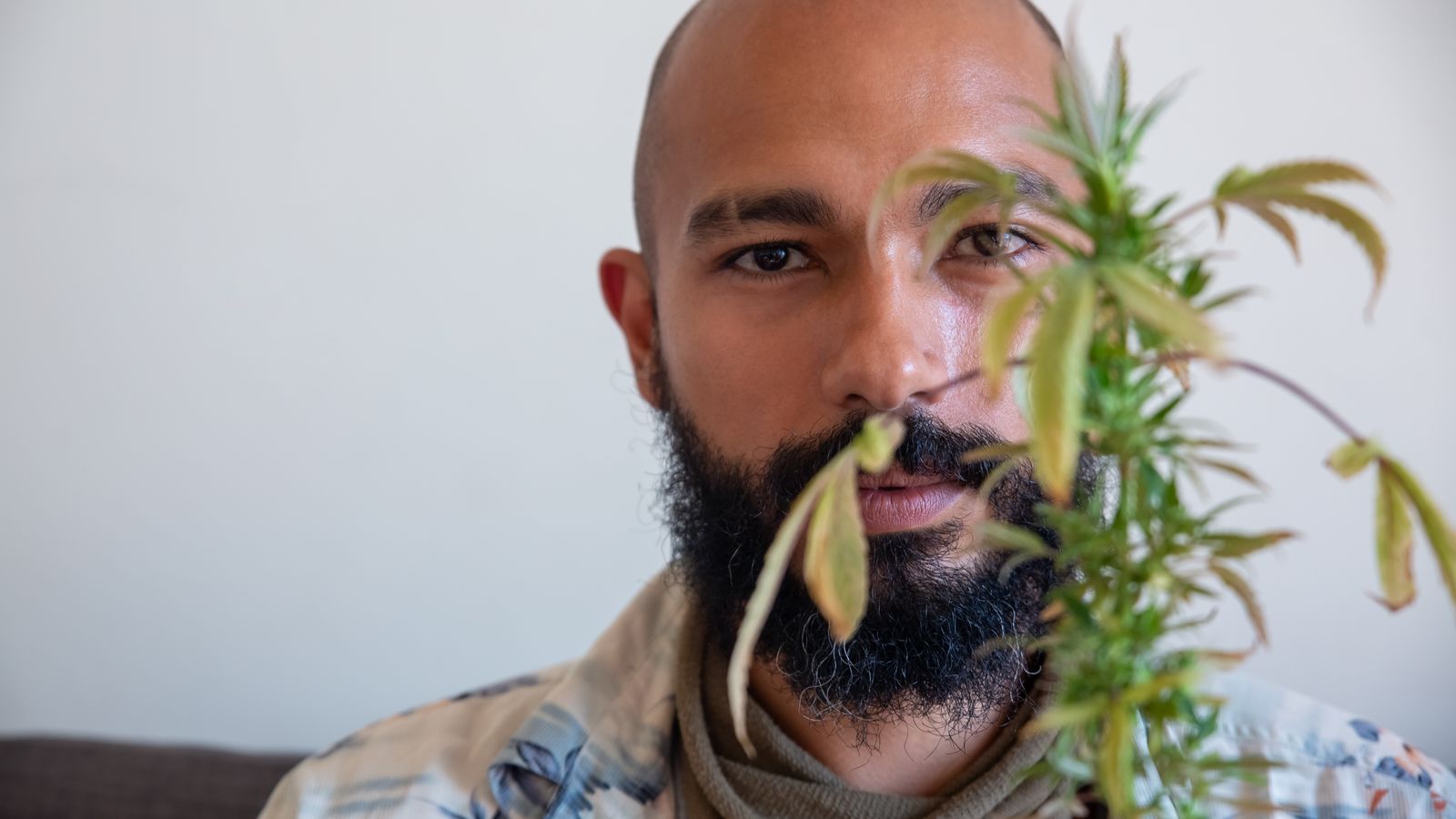
Close-up of a bald bearded man with a cannabis plant partially obscuring his face.
The Potency Arms Race and Its Psychiatric Toll
Cannabis products now routinely exceed 70% THC, a tenfold increase from legacy-market flower, and public health researchers are raising alarms about psychosis and addiction rates among daily users. Concentrates—wax, shatter, live resin, distillate cartridges—have become the fastest-growing category in adult-use markets. In Colorado, concentrates accounted for 41% of total sales in 2025, up from 28% in 2020, according to state revenue data.
The psychiatric literature is catching up. A 2024 meta-analysis in The Lancet Psychiatry found that daily use of cannabis above 20% THC was associated with a fourfold increase in first-episode psychosis compared to non-users. Adolescent and young-adult users showed the steepest risk curve. The same study flagged cannabis use disorder (CUD) rates climbing in states with legal high-potency retail access.
Vermont banned concentrates above 60% THC in 2023. Washington's now considering a 35% cap on all retail products, with a floor vote expected in July 2026. Minnesota's legislature debated—but tabled—a tiered tax structure that would've penalized products above 25% THC.
What Lawmakers Are Proposing
At least six states have introduced bills in 2026 to cap THC potency, mandate psychiatric warning labels, or restrict concentrate sales to medical patients only. The proposals vary widely:
- Washington HB 1847: 35% THC cap on all products, with exceptions for medical cardholders. Passed House committee 9-4 in May.
- Colorado SB 112: Mandatory packaging inserts citing psychosis risk for products above 50% THC. Signed into law April 2026; takes effect January 2027.
- Oregon HB 2903: Proposed ban on vape cartridges above 70% THC. Died in committee.
- Minnesota SF 450: Tiered excise tax: 10% for flower, 25% for concentrates above 60% THC. Tabled after industry pushback.
The common thread? Legislators citing constituent stories of young adults hospitalized with cannabis-induced psychosis after months of daily dabbing or cart use. One Washington sponsor, Rep. Tina Orwall, told the Seattle Times her office had fielded over 200 emails from parents describing psychiatric crises tied to concentrate use.
The Science Driving the Debate
Epidemiological data from Denmark, the Netherlands, and Colorado show that markets dominated by high-potency products correlate with higher rates of psychosis diagnoses and emergency-department visits for cannabis hyperemesis syndrome. A 2025 study from the University of Colorado School of Medicine tracked ER admissions in Denver from 2019 to 2024. Visits coded for "cannabis-related psychosis" rose 340% over that span. The steepest climb? Ages 18-25.
The mechanism is dose-dependent. THC is a partial agonist at CB1 receptors in the prefrontal cortex and hippocampus—regions involved in reality testing and memory. Chronic high-dose exposure, especially during adolescence, appears to dysregulate dopamine signaling in ways that mirror schizophrenia pathology. Genetic vulnerability (particularly the AKT1 and COMT gene variants) amplifies risk, but even users without family history show elevated psychosis rates at the high end of the dose-response curve.
Daily use of 70%+ THC concentrates delivers a cannabinoid load equivalent to smoking 7-10 joints of legacy-market flower in a single session—an exposure profile the endocannabinoid system wasn't designed to handle.
CBD, once thought to buffer THC's psychiatric effects, is nearly absent in most concentrates. The entourage effect that tempers whole-plant flower doesn't apply to distillate or isolate-based vapes.
Industry Pushback and Economic Stakes
Cannabis trade groups argue that potency caps are scientifically arbitrary, that responsible-use education is the better path, and that black markets will fill any retail gap. The National Cannabis Industry Association released a statement in May opposing Washington's 35% cap, calling it "a blunt instrument that ignores individual tolerance, product diversity, and consumer choice."
Economic stakes are real. Concentrates command higher margins than flower—gross margins of 50-60% versus 30-40% for flower, according to data from cannabis analytics firm Headset. A potency cap that eliminates live resin, rosin, and high-test distillate could shave 15-20% off dispensary revenue in mature markets.
Some MSOs have floated compromise frameworks: age-gating concentrates to 25+, mandatory point-of-sale counseling, or a two-tier system where medical patients get full access and adult-use customers face caps. None have gained legislative traction yet.
The Cultivar and Consumption Angle
The potency debate has a cultivar dimension—legacy landraces and balanced hybrids are being priced out by THC-maximalist breeding, and consumers are losing access to chemically diverse options. Strains like Durban Poison, Acapulco Gold, and Malawi Gold—sativas that rarely break 18% THC but deliver complex terpene profiles and THCV content—have all but vanished from dispensary menus.
Breeders chasing THC numbers have deprioritized minor cannabinoids (CBG, CBC, THCV) and terpene richness. The result? A retail landscape where "Gelato" and "Wedding Cake" cuts all test north of 28% THC but taste nearly identical, and where consumers dose by THC percentage rather than desired effect.
Some craft cultivators are pushing back. Emerald Spirit Botanicals in Humboldt County and East Fork Cultivars in Oregon have built brands around lower-THC, high-terpene flower. Their argument: a 14% Tangie with 3% total terps delivers a more nuanced, less anxiogenic experience than a 32% distillate-infused pre-roll. Early sales data suggest a small but growing consumer segment agrees—"craft cannabis" sales grew 22% year-over-year in Oregon in 2025, per OLCC data.
What to Watch
The next 18 months will determine whether potency regulation becomes a national norm or a patchwork of state experiments. Washington's HB 1847 faces a floor vote in July; if it passes, expect California, Illinois, and New York to introduce similar bills by year-end. The FDA has signaled it may issue guidance on THC concentration limits if cannabis is rescheduled to Schedule III, though that timeline remains uncertain.
For operators, the risk isn't just regulatory—it's reputational. If high-potency products become the next vaping crisis, with front-page stories of hospitalized teens, the political will for federal reform could evaporate. The industry's best play may be self-regulation: voluntary potency labeling, dosing education, and a return to chemically diverse, lower-dose options that don't require a psychiatric disclaimer.
For the full policy and medical context on this issue, see the CannIntel topic hub on high-potency THC health risks.
Frequently asked questions
What THC percentage is considered high-potency?
Public health researchers generally define high-potency cannabis as products exceeding 20% THC. Most concentrates—wax, shatter, live resin, distillate vapes—range from 70-90% THC, while legacy-market flower averaged 10-15% THC.
Which states are considering THC potency caps?
Washington, Colorado, Minnesota, and Oregon introduced potency-cap or labeling bills in 2026. Vermont banned concentrates above 60% THC in 2023. Washington's 35% cap faces a legislative vote in July 2026.
What is the evidence linking high-potency THC to psychosis?
A 2024 Lancet Psychiatry meta-analysis found daily use of cannabis above 20% THC was associated with a fourfold increase in first-episode psychosis. Denver ER data showed cannabis-related psychosis visits rose 340% from 2019 to 2024, concentrated among young adults using concentrates.
Why do concentrates have higher margins than flower?
Concentrates command gross margins of 50-60% versus 30-40% for flower, according to Headset analytics. Extraction processes add value, and consumers pay premium prices for convenience and potency, making concentrates the fastest-growing retail category.
Are there cannabis strains with lower THC and better safety profiles?
Yes. Legacy landraces like Durban Poison, Acapulco Gold, and Malawi Gold rarely exceed 18% THC but offer diverse terpene and minor-cannabinoid profiles. Craft cultivators market these as less anxiogenic alternatives to high-THC concentrates.
Sources
The cannabis newsletter you forward to your team.
Federal policy, market data, grower alerts, and the one story that matters today. Sent every weekday at 7am. Free.
No spam. Unsubscribe with one click. 21+ only.
Related from Medical

Slate Feature Challenges Millennial Cannabis Narrative Amid Health Warnings
Opinion piece highlights gap between legalization-era messaging and emerging research on long-term use risks.

Teen Cannabis Use Disrupts Brain Reward System, New Study Finds
Adolescent marijuana consumption interferes with dopamine signaling in the ventral striatum, researchers report.

Kentucky Expands Medical Cannabis to 15 More Conditions
Blue Sage dispensary launches patient drives as state broadens qualifying list ahead of January rollout.
More from the newsroom

Curaleaf Launches Premium Flower in Germany as Market Matures
U.S. MSO debuts Select Elite brand in German pharmacies, signaling shift from medical-only access to premium consumer positioning.

Pre-Flower vs Week One: What's Actually Happening Inside
The flip doesn't start flowering. Here's the hormonal cascade, metabolic shift, and structural changes between photoperiod switch and true week one.

Illinois Bans Intoxicating Hemp Sales to Minors Under New Law
Gov. Pritzker signed legislation prohibiting minor access to intoxicating hemp products and expanding cannabis equity oversight.