Wisconsin Democrat Sets Marijuana Legalization as Funding Plan
A Democratic candidate for Wisconsin governor said the state should legalize marijuana to pay for education and healthcare expansion, but legislative math still blocks the path.
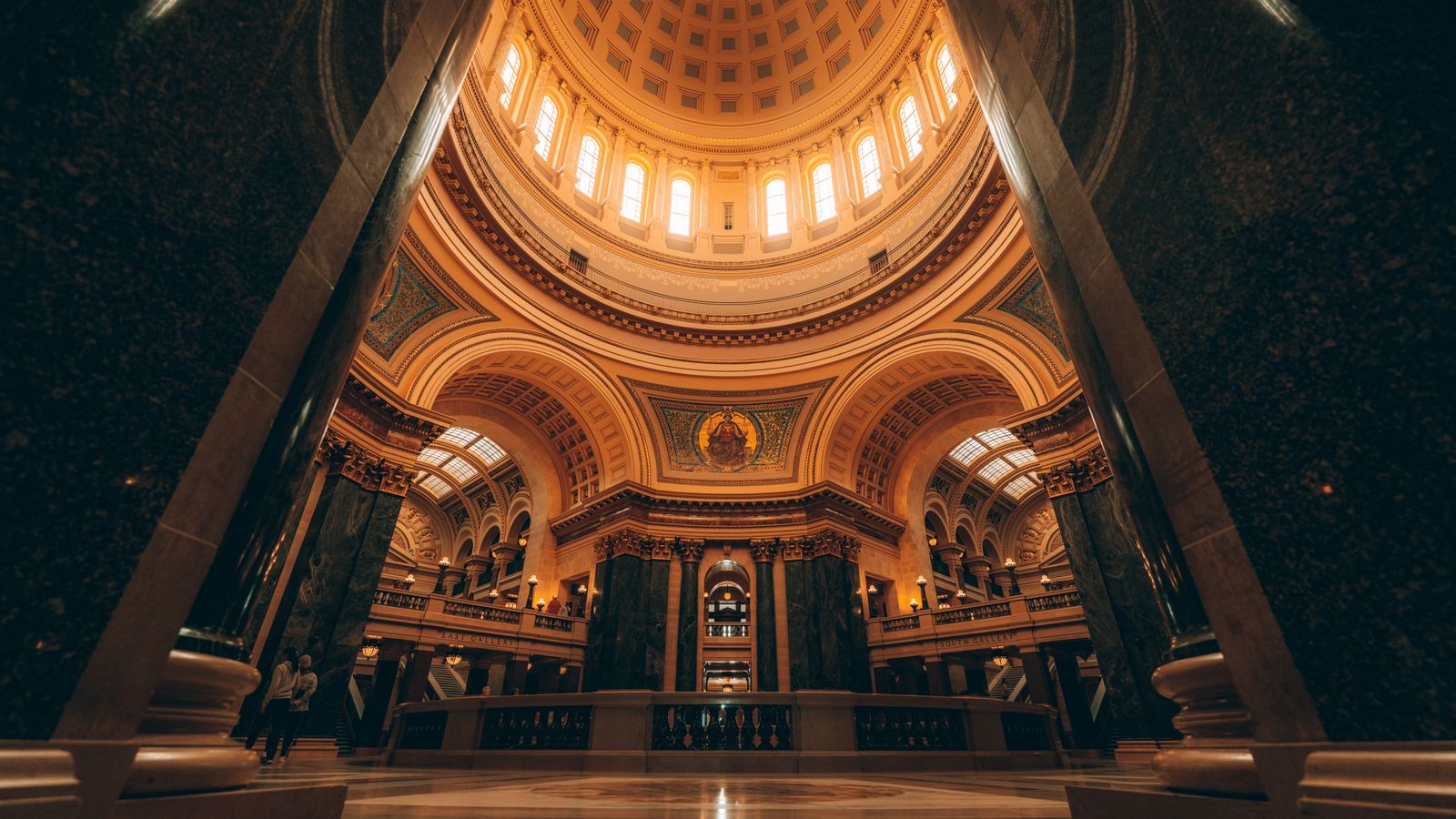
Stunning view of a grand dome interior with intricate architecture and warm lighting.
Candidate ties legalization to schools and healthcare
A Democratic candidate for Wisconsin governor said the state should legalize marijuana and use the proceeds to fund education and healthcare expansion, according to Marijuana Moment on Oct. 12.
The pitch frames cannabis as a revenue tool first and a criminal justice reform second. That's a familiar sequence in Democratic campaigns, and it fits an election year when the governor's office is open. Incumbent Democrat Tony Evers is not seeking a third term.
What CannIntel has to work with is Marijuana Moment's headline and summary. It doesn't include the candidate's tax rate, licensing structure, revenue projections or the specific healthcare programs the money would support. We haven't independently reviewed the campaign's full policy materials, and we won't guess at numbers the candidate hasn't put on the record.
Those omissions matter. A legalization plan with no tax rate or dollar estimate is a position, not a budget.
The governor can't legalize alone
Wisconsin has no citizen ballot initiative, so adult-use legalization can only happen if both chambers of the Legislature pass a bill and the governor signs it.
That structural fact does more to shape the outlook than any campaign pledge. States such as Michigan and Illinois took different routes to legalization, and Wisconsin's route is the narrower one. Voters can weigh in only through advisory referendums, which don't bind lawmakers.
Evers has already tested the budget route. He has proposed legalizing and taxing adult-use cannabis in state budget requests, and Republican lawmakers removed the language each time before it reached his desk. A new Democratic governor would likely run the same play and meet the same wall unless the Legislature changes hands.
- Required: passage by the Wisconsin Assembly and Senate.
- Required: signature from the governor.
- Not available: a statewide citizen-initiated ballot measure.
Not easy. The chamber arithmetic, not the governor's race, is the real gatekeeper.
Neighboring markets keep the pressure on
Wisconsin borders Illinois, Michigan and Minnesota, all of which have adult-use cannabis, which gives legalization advocates a cross-border revenue argument.
Shoppers from Wisconsin can buy legally in those states, and the tax dollars from those sales stay there. Supporters of in-state legalization have long made that point. It's the logic behind the candidate's funding pitch, even if the campaign's own figures aren't yet public.
Nor does Wisconsin run a comprehensive medical cannabis program, which leaves the state with fewer legal on-ramps than most of the Midwest. Iowa, to the west, also lacks adult-use legalization, so Wisconsin isn't alone in holding out. But it's increasingly surrounded, and a state that has watched three neighbors build licensed markets can't treat legalization as a distant hypothetical when it writes its next budget.
The revenue case still has to survive scrutiny. Cannabis tax receipts tend to ramp slowly, and states that earmarked them for schools or healthcare have often found collections smaller than early projections. That's the test any Wisconsin plan will face once numbers appear.
What operators and investors should watch
The campaign matters to operators only if it shifts control of the Legislature or forces Republican leaders to take a public position before the November general election.
Multistate operators have little reason to commit capital to Wisconsin without a statute, a license cap and a tax rate. None of those exist. For now, the candidate's statement is a signal about Democratic messaging, not a market-opening event.
Four items would change that read:
- A published tax and revenue estimate from the campaign.
- A named legislative sponsor and bill number for a legalization measure.
- Any public statement from Republican legislative leaders on adult-use cannabis.
- Results in the Assembly and Senate races, which decide whether a bill can move.
For the full timeline and prior legislative attempts, see the CannIntel topic hub on Wisconsin marijuana legalization.
The next signal: the November general election results, followed by the governor's next budget request, which is where Wisconsin legalization has died before.
Frequently asked questions
Is marijuana legal in Wisconsin?
No. Wisconsin has not legalized adult-use cannabis, and it lacks a comprehensive medical cannabis program. Neighboring Illinois, Michigan and Minnesota have adult-use markets, while Iowa also has not legalized adult-use cannabis.
Can Wisconsin voters legalize marijuana by ballot measure?
No. Wisconsin has no citizen-initiated statewide ballot process. Legalization would require passage by the Assembly and Senate and a signature from the governor. Advisory referendums are possible but don't bind lawmakers.
What did the Wisconsin governor candidate propose?
According to Marijuana Moment, a Democratic candidate for governor said Wisconsin should legalize marijuana to fund education and healthcare expansion. The available summary doesn't specify tax rates, revenue estimates or program details.
Has Gov. Tony Evers tried to legalize cannabis in Wisconsin?
Evers has included cannabis legalization proposals in state budget requests, and Republican lawmakers removed them. He is not seeking another term, which leaves the next governor's budget as the next major vehicle.
Sources
The cannabis newsletter you forward to your team.
Federal policy, market data, grower alerts, and the one story that matters today. Sent every weekday at 7am. Free.
No spam. Unsubscribe with one click. 21+ only.
Related from Laws

Idaho Sets Nov. 3 Vote on Legislature's Sole Power to Legalize Marijuana
A ballot question would decide whether only lawmakers, not voters, can legalize marijuana in Idaho, a state with no adult-use or medical market.

Wholesaler Settles for $2M Over Illegal THC Product Sales
A wholesaler agreed to a $2 million settlement over illegal THC products, but the public record is thin on who, where and what was sold.

North Carolina's $3B Hemp Sector Faces Federal THC Ban Deadline
A federal redefinition of hemp takes effect Nov. 12, 2026, and North Carolina's roughly $3 billion industry is bracing for the cutoff.
More from the newsroom
Tilray Beverage Growth vs. Cannabis Weakness: The Tax Read
Kalkine Media asks whether Tilray's beverage business can offset cannabis softness; a tax and segment-level reading shows what the answer depends on.

Illinois Cannabis Use Rises While State Tax Revenue Dips
The Chicago Sun-Times reported Oct. 12 that Illinois consumption is climbing as cannabis tax collections slip, a split with consequences for state budgets and operators.
High Times Profiles Brute's Roots' Slow Pheno Bet in South Jersey
High Times Magazine profiled Brute's Roots on Oct. 12, framing the South Jersey operation's strategy around patience and phenotype selection.