Judges Pause Trump Cannabis Order as Utah Braces for Shortages
Courts halted a federal directive that Utah patients and licensed pharmacies feared could thin the state's medical cannabis supply, leaving the program in limbo.
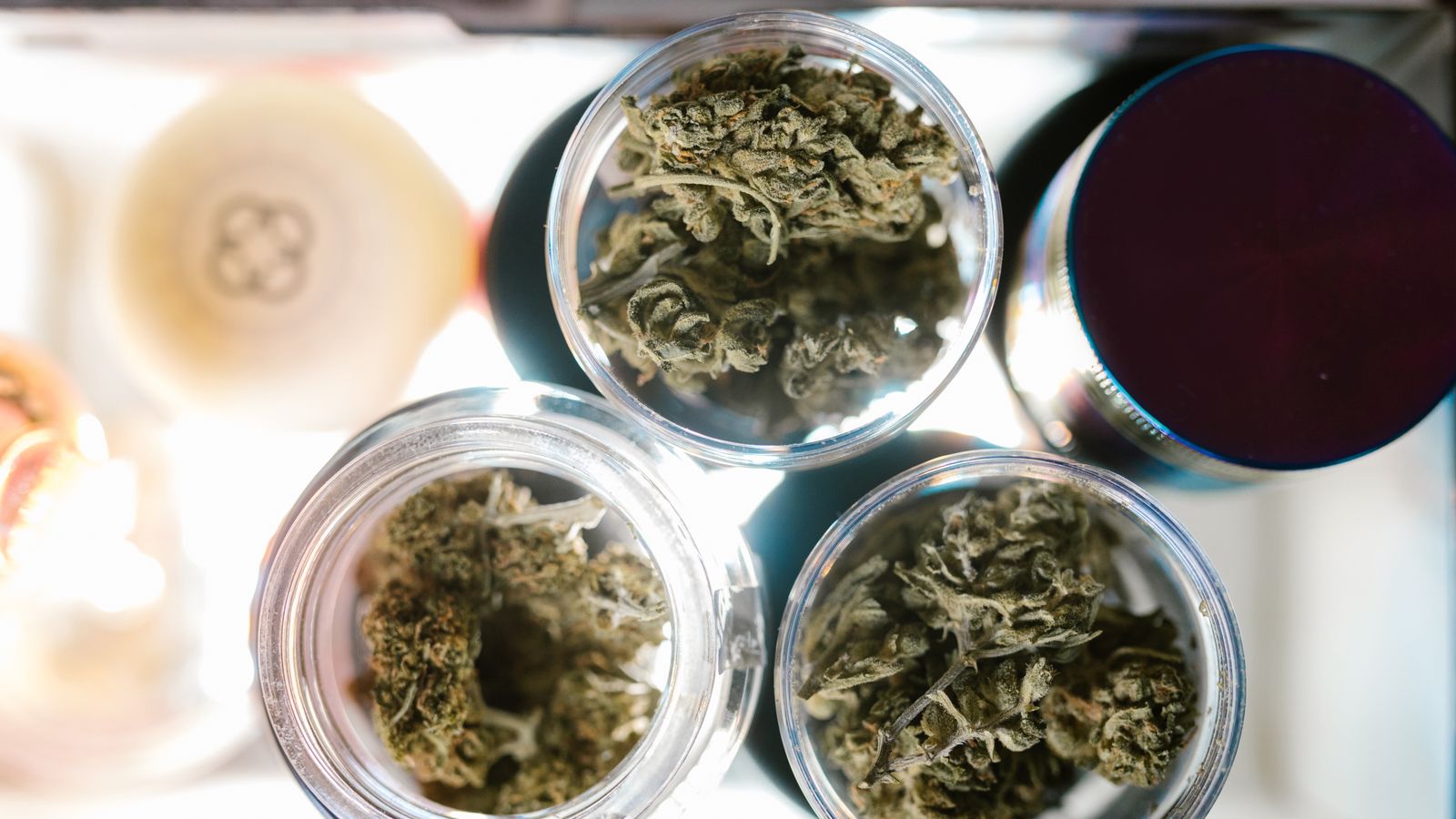
Close-up of cannabis buds in jars from above, highlighting marijuana storage.
Judges paused the order before Utah's supply chain felt its full effect
A federal court pause has frozen the Trump cannabis executive order, delaying any direct hit on Utah's medical cannabis market.
The Salt Lake Tribune reported Nov. 26, 2026, that Utah patients could face shortages of medical cannabis under the order and that judges had intervened to hit pause. What CannIntel received is the headline and summary of that report, not the underlying court filings. The order's text, the court of jurisdiction and the docket number aren't in the material available here, and this story won't guess at them.
The headline does establish a sequence. The order created a supply risk. A court stopped it before that risk could be measured in empty shelves.
Why a federal order can reach a state-legal program
Utah's medical program operates under state law, but cannabis remains a Schedule I controlled substance under 21 U.S.C. § 812, so federal action can still ripple through it.
Utah's Medical Cannabis Act allows qualified patients to buy from licensed state dispensaries. Those licensees depend on cultivation, processing, testing and banking arrangements that sit uneasily beside federal law, and any federal directive touching production, transport or financial access lands on those links first.
Utah is an unusual test case. The program is tightly capped, with a limited number of licensed pharmacies and a closed-loop structure run through the Utah Department of Agriculture and Food and the Utah Department of Health and Human Services. A small, regulated market has less slack to absorb a disruption than a large adult-use state like California or Colorado. Supply narrows, and patients feel it fast.
What the pause does and does not settle
A pause is interim relief, not a ruling on the merits, so the underlying legal question stays open.
Courts typically pause an executive action when challengers show a likelihood of success and a risk of harm before the case is decided. That standard governs the stay itself. It doesn't decide whether the order survives. Operators and patients should read the pause as a holding pattern.
The distinction matters for planning. A licensed Utah pharmacy can't treat a paused order as a repealed one. Inventory decisions, supplier contracts and patient communications all have to account for the possibility that the pause lifts on appeal or that the order returns in revised form.
Neither the order's operative language nor the court's reasoning has been reviewed for this story, so the scope of the pause is the first thing to confirm when the filings surface.
The operator and patient exposure if the order returns
The risk is concentrated in a closed Utah supply chain with few licensed participants and limited ability to source product from elsewhere.
Utah patients hold state medical cards and buy only from in-state licensed pharmacies, which carry product from in-state licensed cultivators. Interstate sourcing isn't a release valve. If cultivation or processing capacity gets constrained, there's nowhere to reroute.
Patients worry about access to the specific products and dosing forms their providers have recommended. Operators face revenue concentrated in a program with a hard ceiling on licenses and little room to diversify. Investors tracking small regulated markets have seen this pattern before: federal policy shocks hit capped state programs harder than open ones.
The math is hard to argue with. The same tight regulation that gives Utah's program its stability also strips away its shock absorbers.
For full background on the executive action and the litigation around it, see the CannIntel topic hub on the Trump cannabis executive order. Related federal exposure runs through the DEA scheduling process and the unresolved 280E tax burden on plant-touching businesses.
Next up: the appeal. Whether the pause holds past the first appellate review will decide if Utah's regulators and licensees need a shortage plan or can stand down. Watch the court docket and any guidance from the Utah Department of Agriculture and Food in the coming weeks.
Frequently asked questions
Why could a Trump executive order cause medical cannabis shortages in Utah?
According to the Salt Lake Tribune, the order created a supply risk for Utah patients. Utah's program is small and closed-loop, with licensed in-state pharmacies relying on in-state cultivators, so a federal constraint on production or related activity could quickly thin available product.
Did the court strike down the Trump cannabis order?
No. Judges paused the order, which is interim relief. A pause preserves the status quo while the case proceeds and does not decide whether the order is lawful. The order could return if the pause is lifted on appeal.
Is medical cannabis still available to Utah patients right now?
Based on the reporting, the court pause means the order's potential supply effects haven't taken hold. Utah's licensed pharmacies continue to operate under state law, though federal Schedule I status under 21 U.S.C. § 812 remains unchanged.
Who regulates Utah's medical cannabis program?
The Utah Department of Agriculture and Food oversees cultivation and processing, while the Utah Department of Health and Human Services handles patient cards and the pharmacy side of the program under the Medical Cannabis Act.
Sources
The cannabis newsletter you forward to your team.
Federal policy, market data, grower alerts, and the one story that matters today. Sent every weekday at 7am. Free.
No spam. Unsubscribe with one click. 21+ only.
Related from Laws

Study Finds Germany's Cannabis Legalization Not Tied to Higher Use
A study reported by Forbes found no link between Germany's legalization and increased consumption, but the signal omits the data, authors and methodology needed to weigh it.

DEA Registration: Why Denial vs. Withdrawal Matters for Applicants
A Legal 500 analysis of DEA medical marijuana registration separates a formal denial from a withdrawn application, a distinction with real consequences for future filings.

Charlotte THC Crackdown Leaves Enforcement Gap as Shops Weigh Risk
A new North Carolina THC crackdown raises a practical question in Charlotte: which agency will enforce it, and whether retailers will test it.
More from the newsroom

Canada Posts Record Seizures of Export-Bound Cannabis, Toronto Star Reports
The Toronto Star says border enforcement hit a record last year, a signal that Canada's export-diversion problem is now a trade-credibility problem for licensed producers.

Indiana Hemp THC Faces Federal Cutoff as Deadline Nears
With weeks left before federal hemp law changes, Indiana retailers, processors and consumers face a market reset that state lawmakers have not yet resolved.

Indiana Lawmakers From Both Parties Draft MMJ Bills for 2027
A Democrat and a Republican are each drafting medical cannabis legislation for Indiana's 2027 session, but GOP supermajority control of both chambers still decides the outcome.