NSW Proposes Medical Cannabis Driving Exemption Under Road Transport Act
New South Wales considers statutory defense for prescribed medical cannabis patients who test positive for THC but show no impairment.
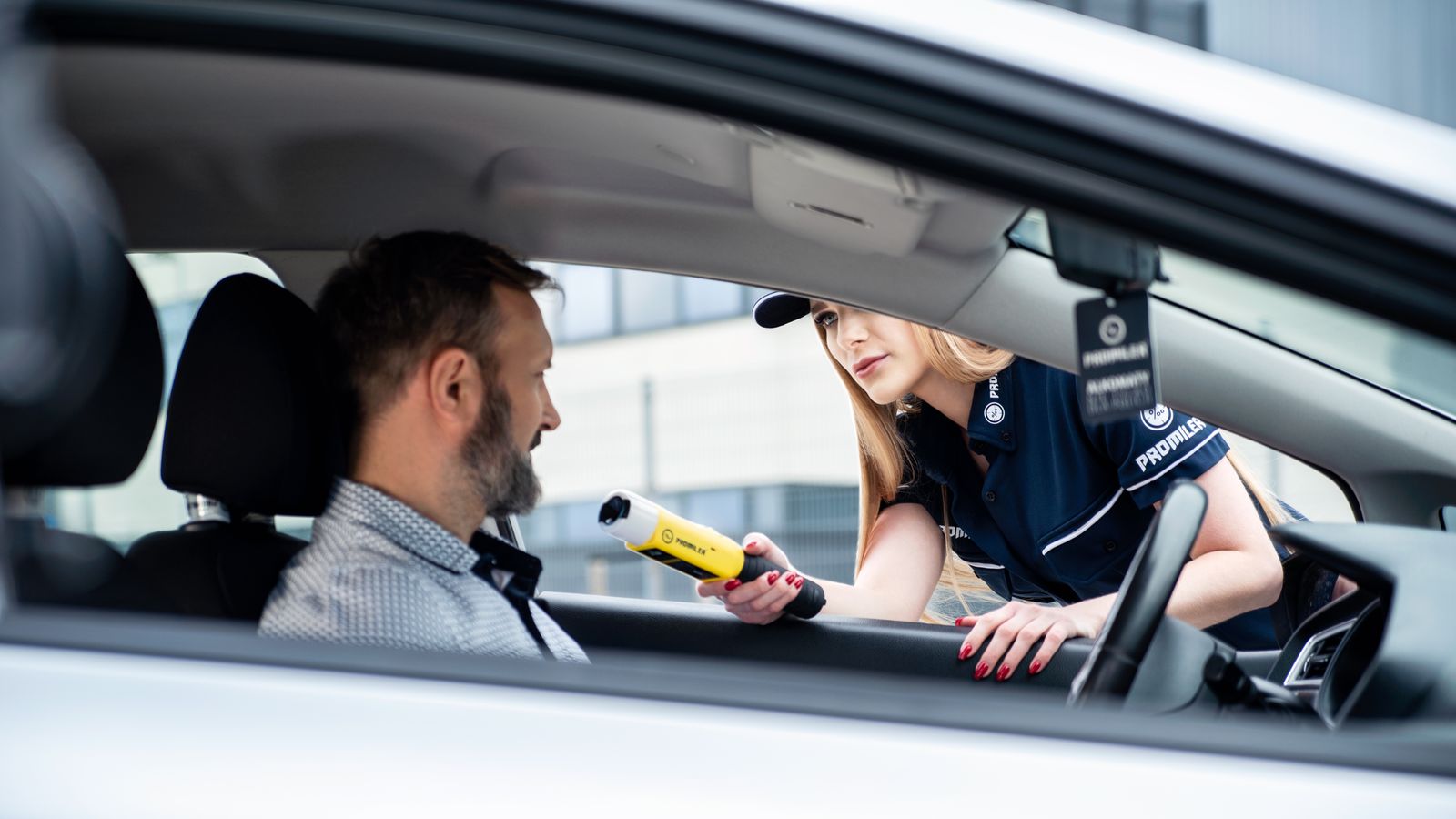
A police officer conducts a breathalyzer test on a male driver during a road safety check.
Statutory Defense Framework Under Road Transport Act 2013
The proposed amendment creates a two-prong defense: lawful prescription and no impairment. Under the draft language circulated by Transport for NSW, a driver who tests positive for delta-9-tetrahydrocannabinol would avoid conviction if they produce evidence of a valid Therapeutic Goods Administration Special Access Scheme Category B approval or an Authorised Prescriber prescription, and if a Drug Recognition Expert assessment or subsequent behavioral testing shows no functional impairment. The burden of proof shifts to the defendant. Both elements must be established by a preponderance standard.
The reform addresses a longstanding conflict between the Therapeutic Goods Act 1989 (Cth) and state road-safety statutes. Medical cannabis has been federally legal since 2016. Yet NSW's Road Transport Act imposes per se liability for any detectable THC concentration. Approximately 14,000 NSW residents hold active prescriptions as of June 2026, according to TGA data. The current regime treats these patients identically to recreational users.
Impairment Testing Protocols and Evidentiary Standards
NSW Police would deploy Drug Recognition Experts trained in the 12-step DRE protocol developed by the International Association of Chiefs of Police. The protocol includes pupil dilation measurement, divided-attention tasks, Romberg balance testing, and horizontal gaze nystagmus examination. A DRE officer's certification requires 72 hours of classroom instruction and field evaluations under supervision. The proposed statute doesn't specify a minimum number of evaluations required for admissibility, leaving that question to case law.
The critical question is whether a DRE assessment alone constitutes sufficient evidence of impairment, or whether the prosecution must corroborate with blood-concentration data or third-party observation.
Victoria's model, enacted in 2024 under the Road Safety Act 1986 (Vic), requires both a negative DRE finding and a blood THC concentration below 5 nanograms per milliliter. NSW's draft omits a numeric threshold. It relies solely on behavioral assessment. This divergence creates interstate inconsistency for patients who cross the Murray River.
Compliance Burdens and Documentation Requirements
Patients must carry verifiable prescription documentation at all times while driving. The draft regulation specifies that acceptable proof includes a TGA approval letter bearing the patient's name and the prescribing physician's Australian Health Practitioner Regulation Agency registration number, or a pharmacy-dispensed label with matching identifiers. Digital copies stored on a smartphone are explicitly permitted, but the device must be accessible without unlocking if the driver is incapacitated. Failure to produce documentation within 48 hours of a roadside test triggers a rebuttable presumption of unlawful use.
The administrative cost falls entirely on patients. Unlike alcohol, where a breathalyzer reading is dispositive, THC detection requires a two-stage process: oral fluid screening at roadside, followed by confirmatory gas chromatography-mass spectrometry at a certified laboratory. Average processing time is 14 days. During that window, a patient's license may be suspended pending results. The proposed reform doesn't alter this suspension protocol.
Political and Enforcement Timeline
The bill is expected to be introduced in the NSW Legislative Assembly in October 2026, with a vote anticipated before the summer recess in December. Transport Minister Jo Haylen has stated publicly that the government holds the numbers in the lower house, but crossbench support in the Legislative Council remains uncertain. The NSW Police Association hasn't taken a formal position, though internal correspondence obtained under freedom-of-information requests indicates concerns about officer liability if a DRE assessment is later challenged in court.
If enacted, the reforms would take effect 90 days after royal assent, allowing time for DRE training rollout. NSW Police currently employ 47 certified DRE officers statewide. The budget appropriation for 2026-27 allocates funding for an additional 120 certifications, concentrated in the Sydney metropolitan area and the Hunter region, where prescription density is highest. For full background on this story, see the CannIntel topic hub on Australia Medical Cannabis Driving Laws.
The next signal: whether the Legislative Council will demand a numeric THC threshold as a condition of passage, aligning NSW with Victoria's framework. That debate will center on whether behavioral impairment testing alone meets the evidentiary standard required by the Road Transport Act's strict-liability structure.
For complete background, history, and our ongoing coverage of this story:
Open the CannIntel topic hub →Sources
The cannabis newsletter you forward to your team.
Federal policy, market data, grower alerts, and the one story that matters today. Sent every weekday at 7am. Free.
No spam. Unsubscribe with one click. 21+ only.
Related from Laws
AG Blanche Says DOJ Won't Interfere With State-Legal Cannabis
Attorney General Todd Blanche said the Justice Department isn't seeking to interfere with state-legal marijuana operators, but no written policy or rule change accompanied the reported remarks.

Blanche Says Lucas Charges Aren't Aimed at State Cannabis Laws
The attorney general framed the federal case against Virginia's Senate president pro tem as conduct-based, not a move against state marijuana policy.

DOJ indicts Virginia lawmaker, six others over hemp THC shop
Federal prosecutors charged a Virginia state lawmaker and six others over a hemp THC operation, testing where hemp ends and marijuana begins.
More from the newsroom

Virginia Senator Faces Federal Marijuana and Fraud Charges
Marijuana Moment reported Oct. 22 that a top Virginia senator faces federal marijuana and fraud charges; the counts, court and named defendant await confirmation.

New Jersey Bill Extending Hemp Drink Sales Advances
A bill to extend New Jersey hemp drink sales moved forward Oct. 22, but the public record behind the headline is thin.

Survey of 7,913 German Patients Finds Pharmacy Cannabis Preferred
A survey of 7,913 German medicinal cannabis patients, nearly 90% with experience of both channels, points to the illegal market as a major source of stress.