NSW Passes Marijuana Driving Law Despite Fierce MP Opposition
New South Wales legislature approved revised cannabis-impairment driving standards over objections from crossbench and opposition members.
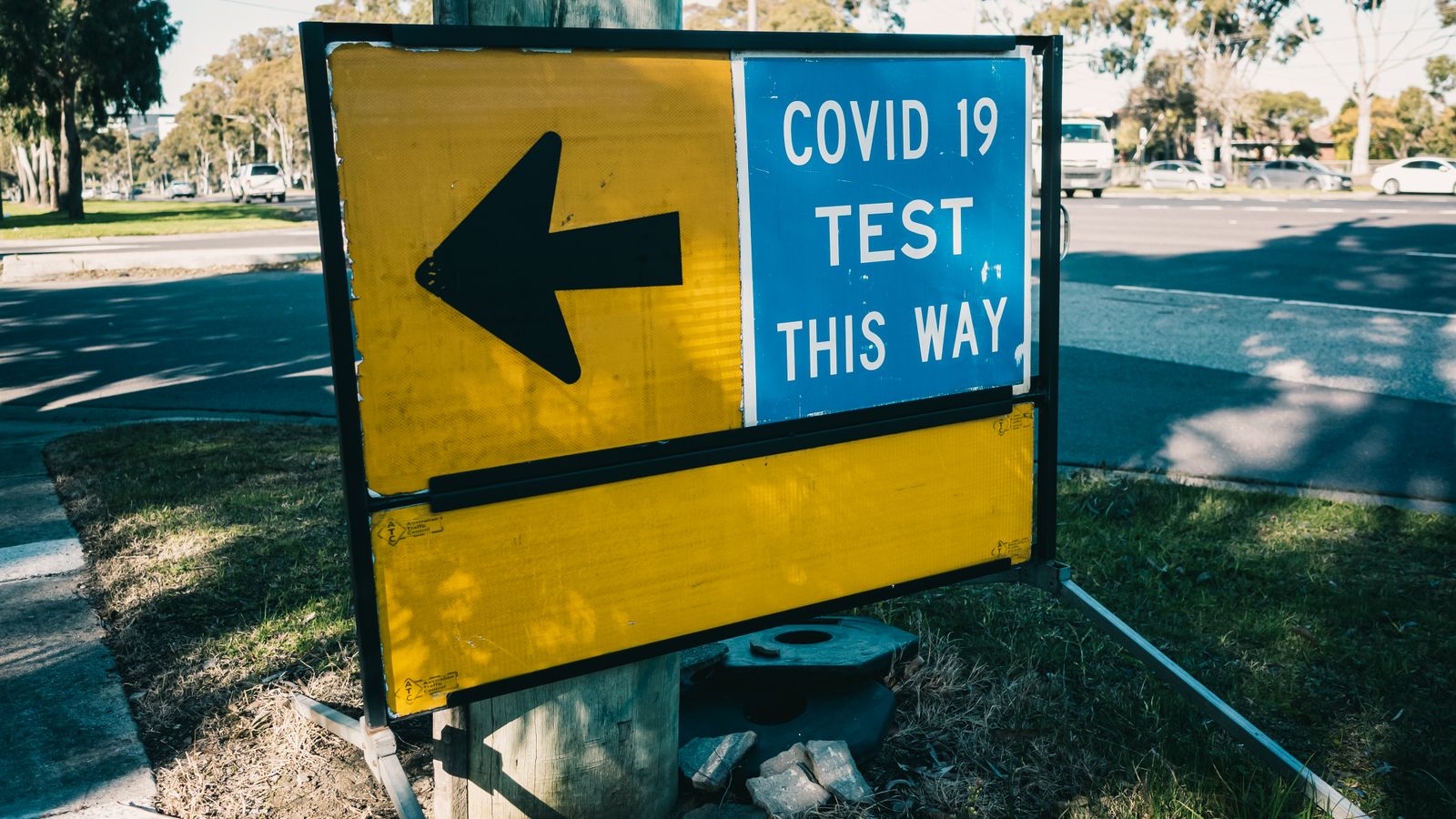
Outdoor view of a COVID-19 testing directional sign with an arrow pointing left.
Legislative Vote Advances Revised Cannabis Driving Standards
The NSW Parliament approved the marijuana driving bill in a floor vote on September 17, 2026, with government members citing public-safety imperatives. The legislation modifies existing roadside drug-testing protocols and establishes new threshold standards for THC detection in drivers. Transport Minister Jo Haylen said the bill represents "common sense reform" that balances road safety with evolving cannabis policy.
Weeks of committee hearings and stakeholder consultation preceded the vote. Government whips secured passage with support from the Labor caucus, overcoming resistance from Greens and several independent crossbenchers.
Opposition Focuses on Scientific Validity of Impairment Tests
Crossbench MPs challenged the bill's reliance on oral-fluid testing technology, arguing current roadside devices can't reliably measure active impairment. Greens justice spokesperson Sue Higginson told the chamber that oral-fluid tests detect THC metabolites days after consumption—long after psychoactive effects have ceased. Independent MP Alex Greenwich echoed concerns that the framework penalizes medical cannabis patients who drive sober.
Critics pointed to jurisdictions including Montana and Michigan that have adopted nanogram-per-milliliter blood-concentration thresholds rather than binary presence-absence tests. NSW's bill doesn't specify a numerical impairment standard.
Medical Cannabis Patients Face Uncertainty Under New Framework
The legislation doesn't create an explicit exemption for authorized medical cannabis users. That leaves an estimated 300,000 NSW patients in legal limbo. Patients prescribed THC formulations under the Therapeutic Goods Administration's Special Access Scheme may test positive on roadside screens even when not impaired, according to testimony from the Australian Medical Association.
Transport for NSW has indicated it'll issue guidance for medical users, but the statute itself contains no safe-harbor provision. Patient advocates warned the ambiguity may deter compliance with prescribed treatment regimens.
Enforcement Timeline and Penalty Structure
Roadside enforcement under the new standards begins October 1, 2026. Penalties range from license suspension to criminal charges for repeat offenses. First-time offenders face an automatic three-month disqualification and a fine of up to AUD 2,200. Drivers who return a positive oral-fluid test are subject to immediate license suspension pending laboratory confirmation.
NSW Police will deploy mobile drug-testing units statewide. Officers can conduct random stops without reasonable suspicion, mirroring protocols for alcohol breath testing.
Broader Context in Australian Cannabis-Driving Policy
NSW joins Victoria, Queensland, and South Australia in enforcing zero-tolerance cannabis driving laws. Tasmania and the Northern Territory are reviewing similar frameworks. The patchwork of state policies has prompted calls for national harmonization, but federal transport ministers haven't advanced uniform standards.
For full background on this story, see the CannIntel topic hub on NSW marijuana driving laws. The debate reflects broader tensions as Australia expands medical cannabis access while maintaining prohibitionist roadside-testing regimes inherited from the 1990s.
What's next? Whether patient advocacy groups and medical bodies can secure regulatory carve-outs through administrative rulemaking before the October enforcement date.
Frequently asked questions
When does the new NSW marijuana driving law take effect?
Roadside enforcement under the revised standards begins October 1, 2026. NSW Police will deploy mobile drug-testing units statewide with authority to conduct random oral-fluid tests without reasonable suspicion.
Does the law exempt medical cannabis patients?
The statute does not create an explicit exemption for authorized medical cannabis users. Transport for NSW has indicated it will issue guidance, but the law itself offers no safe-harbor provision for patients prescribed THC under the TGA Special Access Scheme.
What penalties apply for a positive marijuana driving test?
First-time offenders face automatic three-month license disqualification and fines up to AUD 2,200. Repeat offenses carry criminal charges. Drivers who test positive are subject to immediate suspension pending laboratory confirmation.
Why did some MPs oppose the bill?
Opposition centered on the scientific validity of oral-fluid testing, which detects THC metabolites days after consumption rather than measuring active impairment. Critics argued the framework penalizes sober drivers, particularly medical cannabis patients.
Sources
The cannabis newsletter you forward to your team.
Federal policy, market data, grower alerts, and the one story that matters today. Sent every weekday at 7am. Free.
No spam. Unsubscribe with one click. 21+ only.
Related from Laws

California DCC Says DEA Won't Answer Rescheduling Questions
State regulator reports federal agency remains silent on key implementation details months after Schedule III move.

Iowa AG Sand Declines to Back Recreational Cannabis at Town Hall
Brenna Bird's successor sidesteps legalization question, citing federal Schedule I status and legislative authority.

Federal Hemp THC Ban Extension Gives Operators Chemistry Problem
The extended compliance window shifts the burden from legal to technical, forcing hemp manufacturers to reformulate or exit.
More from the newsroom

Latinas in Cannabis Summit Returns to L.A. Sept. 26
Fourth annual gathering convenes entrepreneurs, cultivators, and executives for a day of networking and cultural celebration.

Missouri Recalls Pre-Rolled Joints After Mold Found in Testing
State regulators ordered the removal of contaminated cannabis products from dispensary shelves following failed microbial safety tests.
Trulieve Doubles Florida Investment as Federal Legalization Stalls
The MSO is accelerating state-level expansion while federal reform remains gridlocked in Congress.