North Carolina Hemp Businesses Face Federal Ban as DEA Finalizes Rule
Federal intoxicating hemp prohibition threatens $1.8 billion North Carolina industry built on 2018 Farm Bill loophole.

Detailed view of green cannabis leaves in natural sunlight.
DEA Rule Targets Hemp-Derived Intoxicants Under Controlled Substances Act
The DEA's forthcoming final rule will classify delta-8 THC, delta-10 THC, THCA, THC-O, and HHC as Schedule I controlled substances, closing the 2018 Farm Bill loophole that permitted their sale. Expected to publish in the Federal Register by June 2026 according to the DEA's spring regulatory agenda, the rule interprets the Agricultural Improvement Act of 2018 to exclude synthetically derived or chemically converted cannabinoids from the definition of legal hemp. On a strict reading of the Controlled Substances Act and the 2018 Farm Bill, the DEA maintains that Congress intended to legalize only naturally occurring cannabinoids in hemp containing no more than 0.3 percent delta-9 THC by dry weight. Isomerization—the chemical conversion of CBD into delta-8 THC or other intoxicating analogs—counts as synthetic manufacture subject to CSA scheduling, the agency argues.
The rule follows a February 2025 notice of proposed rulemaking that drew more than 43,000 public comments. Most opposed the ban. DEA Administrator Anne Milgram stated in March 2026 that the final rule would proceed despite industry objections, citing public health concerns and the absence of FDA approval for intoxicating hemp products. The agency's legal rationale rests on 21 U.S.C. § 802(6), which defines a controlled substance to include any chemical variant unless explicitly exempted by statute.
North Carolina Industry Scale and Economic Footprint
North Carolina hosts an estimated 1,200 licensed hemp retailers, 340 processors, and 780 cultivators operating under state hemp program rules, generating $1.8 billion in annual revenue according to the North Carolina Industrial Hemp Association. The state's hemp sector employs approximately 14,500 workers across retail, manufacturing, cultivation, and distribution roles. North Carolina ranks fourth nationally in hemp acreage under cultivation, with 22,000 licensed acres in 2025, much of it dedicated to THCA flower production for the intoxicating market.
State regulators license hemp operations under a USDA-approved plan authorized by the 2018 Farm Bill. The North Carolina Department of Agriculture and Consumer Services oversees this framework. State law permits the sale of hemp-derived products containing delta-9 THC concentrations below 0.3 percent, but doesn't explicitly regulate delta-8 THC, THCA, or other analogs. North Carolina General Statute § 106-568.51 defines industrial hemp by reference to the federal definition in 7 U.S.C. § 1639o, creating a regulatory gap that allowed intoxicating hemp products to proliferate without state-level cannabinoid-specific restrictions.
Federal Preemption and State Regulatory Authority
The DEA's classification authority under the CSA preempts state hemp laws, meaning North Carolina can't authorize the sale of substances federally scheduled as controlled substances regardless of state statute. Federal law overrides conflicting state law. That's the Supremacy Clause. Once the DEA schedules delta-8 THC and related cannabinoids, possession, distribution, and manufacture become federal crimes under 21 U.S.C. § 841, carrying penalties of up to five years imprisonment for first offenses involving commercial quantities.
North Carolina Attorney General Josh Stein issued a May 2026 advisory opinion clarifying that state law enforcement agencies would be required to enforce federal scheduling once the rule takes effect, absent a conflict-of-law carve-out from the General Assembly. Stein's opinion noted that North Carolina doesn't have a state-level analog to California's or Colorado's marijuana legalization frameworks that explicitly bar state resources from enforcing federal cannabis prohibition. North Carolina General Statute § 90-95 incorporates the federal controlled substance schedules by reference, meaning the DEA's scheduling action automatically updates state criminal statutes.
Industry Response and Legal Challenge Prospects
The U.S. Hemp Roundtable and the Hemp Industries Association announced plans to file a petition for review in the U.S. Court of Appeals for the D.C. Circuit within 60 days of the rule's publication, challenging the DEA's statutory interpretation of the 2018 Farm Bill. Congress intended to legalize all cannabinoids derived from compliant hemp plants, the trade groups argue, and the DEA's synthetic-cannabinoid carve-out contradicts legislative history and plain statutory text. The petition will likely invoke the Administrative Procedure Act's arbitrary-and-capricious standard under 5 U.S.C. § 706(2)(A), arguing that the DEA failed to adequately consider the economic impact on state-licensed hemp businesses and ignored the FDA's ongoing regulatory process for hemp-derived products.
Legal experts assess the industry's likelihood of success as low. The DEA's Chevron deference—the judicial doctrine requiring courts to defer to agency interpretations of ambiguous statutes—was weakened by the Supreme Court's 2024 decision in Loper Bright Enterprises v. Raimondo, but the agency retains substantial authority to classify substances under the CSA. The Fifth Circuit's 2023 ruling in Hemp Industries Association v. DEA upheld the agency's authority to regulate synthetically derived cannabinoids, providing precedent for the current rule. Injunctive relief pending appeal is unlikely unless the petitioners can demonstrate irreparable harm and a substantial likelihood of success on the merits.
Tax Treatment and IRC § 280E Implications
Hemp businesses selling intoxicating cannabinoids that become Schedule I substances will lose the ability to deduct ordinary business expenses under Internal Revenue Code § 280E, which disallows deductions for trafficking in controlled substances. Section 280E applies to businesses trafficking in Schedule I or Schedule II substances as defined by the CSA, regardless of state-law authorization. The IRS has historically applied 280E to state-legal marijuana dispensaries. Effective tax rates exceed 70 percent for many operators.
North Carolina hemp retailers currently deduct rent, payroll, advertising, and cost of goods sold as ordinary business expenses under IRC § 162. Once delta-8 THC and THCA are scheduled, those deductions disappear for any business deriving revenue from the sale of scheduled cannabinoids. The IRS's position, articulated in Chief Counsel Advice 201504011, treats each product line separately for 280E purposes, meaning a business selling both legal CBD products and scheduled intoxicants must allocate expenses and may deduct only those attributable to non-scheduled goods. The compliance burden and tax liability increase will render many small retailers economically nonviable.
State Legislative Options and Federal Reform Prospects
North Carolina legislators could preemptively ban intoxicating hemp products to avoid federal enforcement conflicts, or they could enact a non-enforcement directive shielding state-licensed operators from state-level prosecution. The General Assembly's 2026 session, which convenes in January, will likely consider emergency legislation addressing the DEA rule. Representative John Bradford, chair of the House Agriculture Committee, indicated in a May 2026 statement that the legislature is evaluating both a state-level ban to align with federal law and a limited immunity provision for operators who cease sales within 90 days of the rule's effective date.
Federal legislative relief remains uncertain. The Hemp and Hemp-Derived CBD Consumer Protection and Market Stabilization Act of 2025, introduced by Representative Chellie Pingree, would explicitly legalize delta-8 THC and other hemp-derived cannabinoids and direct the FDA to establish regulatory standards. The bill has 47 cosponsors but hasn't advanced out of committee. Senate Majority Leader Amy Klobuchar hasn't committed to floor time for hemp reform, and the Biden administration's position on intoxicating hemp remains aligned with the DEA's scheduling action.
Enforcement Timeline and Operator Compliance Obligations
The DEA rule will take effect 30 days after Federal Register publication, at which point possession and sale of scheduled cannabinoids become federal crimes, and state-licensed operators must cease distribution or face criminal liability. The DEA's standard enforcement posture for newly scheduled substances includes a 90-day grace period for businesses to dispose of existing inventory, but the agency hasn't confirmed whether such a period will apply to intoxicating hemp products. The rule's preamble, released in draft form in April 2026, doesn't reference a compliance window.
North Carolina hemp businesses holding inventory of delta-8 THC, THCA flower, or other affected products will face immediate write-offs once the rule takes effect. Retailers can't legally sell scheduled substances. Interstate transport for disposal triggers federal trafficking liability under 21 U.S.C. § 841. The North Carolina Industrial Hemp Association estimates that statewide inventory of affected products totals $340 million at wholesale value. Operators have no federal mechanism to seek reimbursement for unsaleable stock, and state law doesn't provide compensation for regulatory takings absent a constitutional challenge.
For complete background, history, and our ongoing coverage of this story:
Open the CannIntel topic hub →Frequently asked questions
What is the DEA's legal basis for banning delta-8 THC and THCA?
The DEA interprets the 2018 Farm Bill to exclude synthetically derived or chemically converted cannabinoids from the definition of legal hemp. Under 21 U.S.C. § 802(6), the agency classifies isomerized cannabinoids—such as delta-8 THC produced by converting CBD—as synthetic controlled substances subject to CSA scheduling. The rule treats only naturally occurring cannabinoids in compliant hemp as exempt.
Can North Carolina override the federal ban with state legislation?
No. The Supremacy Clause mandates that federal law preempts conflicting state law. Once the DEA schedules delta-8 THC and related cannabinoids, North Carolina cannot authorize their sale regardless of state statute. State law enforcement agencies must enforce federal scheduling unless the General Assembly enacts a non-enforcement directive, which would not shield operators from federal prosecution.
How does IRC § 280E affect hemp businesses after the ban?
Section 280E disallows tax deductions for businesses trafficking in Schedule I or II controlled substances. Hemp retailers selling scheduled cannabinoids lose the ability to deduct rent, payroll, and advertising, resulting in effective tax rates exceeding 70 percent. Businesses must allocate expenses between legal and scheduled product lines, increasing compliance costs and rendering many operators economically nonviable.
What happens to existing inventory of delta-8 THC and THCA products?
Operators must cease sales within 30 days of the rule's effective date or face federal criminal liability under 21 U.S.C. § 841. The DEA has not confirmed a grace period for inventory disposal. North Carolina businesses hold an estimated $340 million in wholesale inventory of affected products, with no federal reimbursement mechanism or state compensation for unsaleable stock.
What is the timeline for the DEA rule taking effect?
The DEA expects to publish the final rule in the Federal Register by June 2026. The rule takes effect 30 days after publication, at which point possession, distribution, and manufacture of scheduled cannabinoids become federal crimes. Industry groups plan to file a petition for review in the D.C. Circuit within 60 days of publication, but injunctive relief is unlikely.
Sources
The cannabis newsletter you forward to your team.
Federal policy, market data, grower alerts, and the one story that matters today. Sent every weekday at 7am. Free.
No spam. Unsubscribe with one click. 21+ only.
Related from Laws
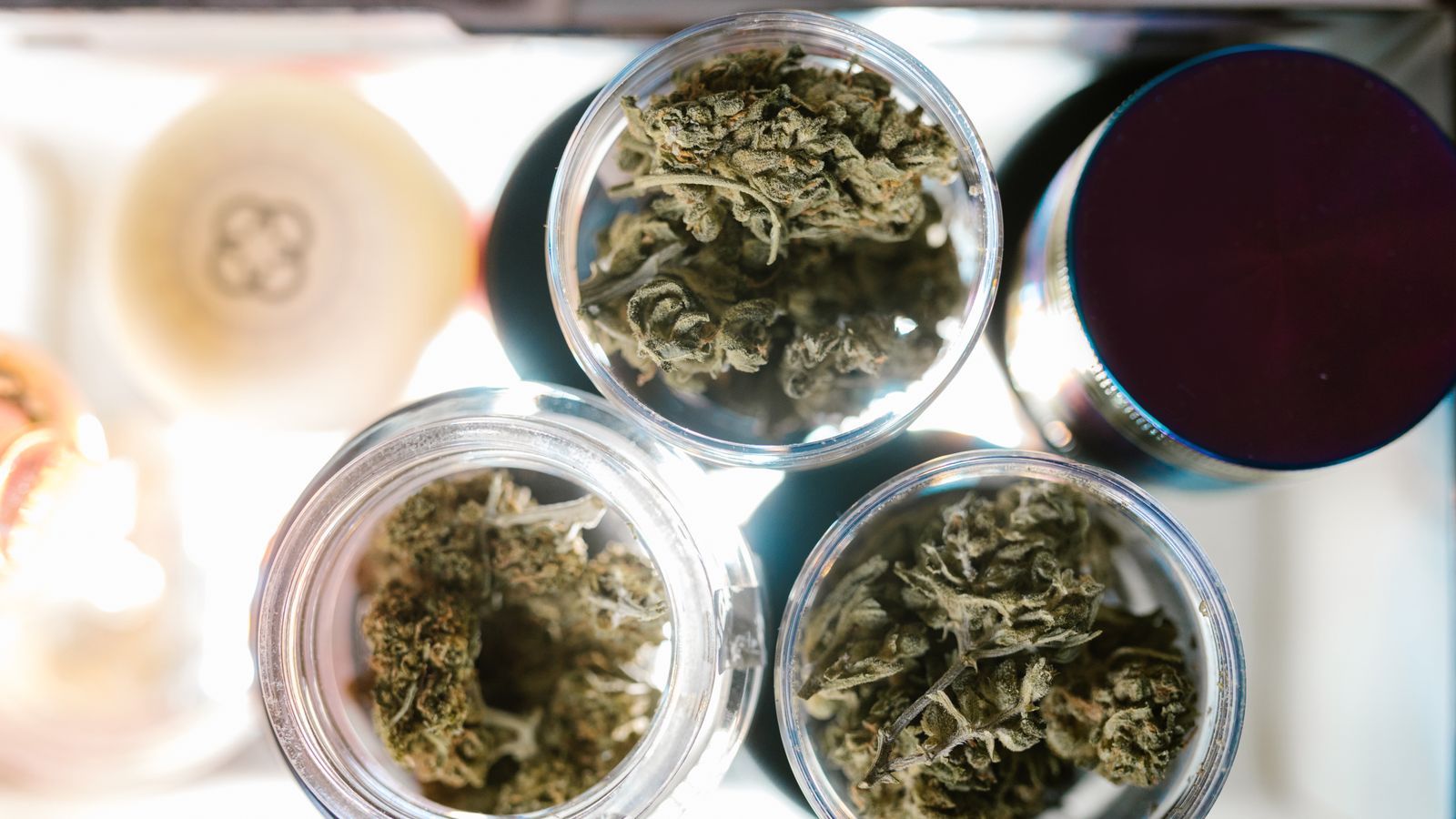
Thailand Cannabis Market Survives New Restrictions, Sales Steady
Six months after Thailand's medical-only cannabis law took effect, retail sales and dispensary counts remain near pre-regulation highs.

TSA Updates Marijuana Guidelines, Clarifies Federal Enforcement Role
Agency revises language on cannabis screening procedures but maintains federal prohibition stance at checkpoints.

TSA Medical Cannabis Rule Collides With Texas Marijuana Ban
Federal screening policy allows medical cannabis in carry-on, but Texas law criminalizes possession at airports.
More from the newsroom
Innovative Industrial Properties Posts Q1 Revenue Gain as Occupancy Holds
Cannabis REIT reports first-quarter results with rental income growth and stable tenant base despite sector headwinds.
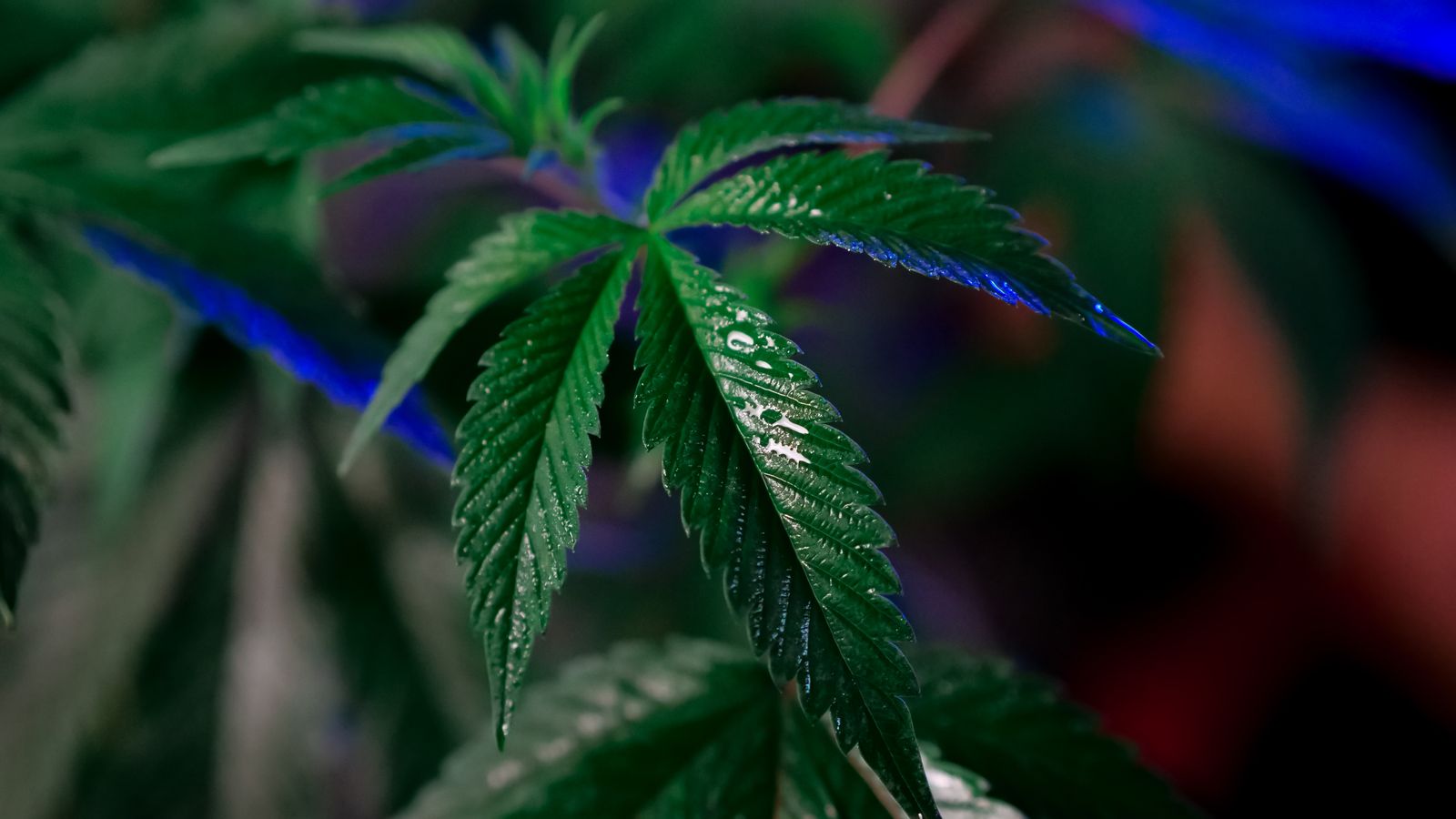
Flushing Cannabis: The Science Behind Pre-Harvest Watering
Commercial growers spend two weeks flushing before harvest, but peer-reviewed research shows minimal impact on cannabinoids, terpenes, or combustion quality.

Ohio Increases Penalty for Selling Cannabis to Minors Under New Law
State raises criminal sanctions for dispensaries and individuals who sell adult-use cannabis to anyone under 21.