NORML Urges 6th Circuit to Reconsider Marijuana Illegality Ruling
The marijuana reform group pressed the federal appeals court covering Ohio, Michigan, Kentucky and Tennessee to revisit a decision on cannabis's legal status, Law360 reported.

Judge signing documents at desk with focus on gavel, representing law and justice.
NORML wants a second look from the 6th Circuit
NORML asked the 6th U.S. Circuit Court of Appeals to reconsider its ruling on marijuana's federal illegality, according to a Law360 report published Oct. 16.
That headline is the one fact CannIntel can confirm today. The excerpt available to us doesn't name the case, the panel, the date of the underlying decision or the procedural vehicle NORML used.
We won't guess at them. Details will be added as the filing is reviewed.
What we don't know yet
The Law360 excerpt doesn't say whether NORML is a party, an amicus, or what relief it wants. That matters. A party's petition and an outside group's supporting brief carry different weight and different odds.
Nor does it say whether NORML is asking the original panel to revise its reasoning or the full court to rehear the case en banc. Under Federal Rule of Appellate Procedure 40, those requests travel together in a single petition, so the distinction is easy to blur in a headline.
Why reconsideration requests are a steep climb
Federal appeals courts grant rehearing sparingly, and en banc review is reserved for questions of exceptional importance or conflicts within the circuit. Most petitions die quietly.
Not this one, necessarily. A ruling that speaks to marijuana's illegality under federal law invites the kind of broad legal question en banc review exists for. Still, the base rate is the base rate, and advocates filing these petitions know it.
The one verified fact: per Law360, a leading marijuana reform group has asked a federal appeals court to revisit what it said about cannabis's legal status, and the court hasn't yet answered.
Why the 6th Circuit's footprint matters
The 6th Circuit covers Ohio, Michigan, Kentucky and Tennessee, a mix of adult-use, medical and prohibition states. Michigan and Ohio run regulated adult-use markets. Kentucky and Tennessee run differently, and operators in all four states answer to the same federal circuit law.
That's the practical stake. A circuit-level statement on marijuana's illegality can ripple into criminal defenses, firearms cases, banking disputes and contract enforcement. Operators and their lenders read these decisions closely, and they read them for what's said in passing as much as for the holding.
The hemp angle: where this gets messy
Any federal statement about marijuana's illegality lands on top of the hemp line, which the 2018 Farm Bill drew at 0.3% delta-9 THC by dry weight. Hemp is outside the Controlled Substances Act's definition of marijuana. Cannabis above that threshold isn't.
The chemistry is where the fights live. THCA converts to delta-9 THC through decarboxylation, so a flower that tests under 0.3% delta-9 on paper can exceed it once heated. Whether regulators measure delta-9 alone or total THC (THCA adjusted for conversion) decides if a product is lawful hemp or federally illegal marijuana.
Congress has since moved toward total-THC thinking. A spending law enacted in November 2025 rewrote the hemp definition, with the change set to take effect in November 2026. Courts, though, haven't uniformly caught up. If the 6th Circuit's language reaches this boundary, it could shape how hemp-derived THCA flower is treated in Ohio, Kentucky, Michigan and Tennessee. We can't say yet whether it does.
Rescheduling runs on a separate track
The DEA's effort to move marijuana to Schedule III, begun with a 2024 NPRM, is a different process from this court fight. A court ruling on illegality doesn't reschedule anything. Only the executive branch or Congress can do that.
But the tracks interact. Schedule III would lift marijuana out of 280E, the tax provision that denies ordinary business deductions to Schedule I and II traffickers. It wouldn't make state-licensed sales federally legal. A court describing marijuana as illegal, and a regulator describing it as lower-risk, can both be right at once. That's an awkward place for compliance officers to sit.
For full background on this story, see the CannIntel topic hub on the Sixth Circuit marijuana illegality ruling.
What to watch next
The first signal is the court's docket: whether the 6th Circuit orders a response or simply denies the request. An order calling for a response would be a notable tell. A one-line denial would end the matter at this level.
Watch also for who else files. Additional amicus briefs from state regulators, hemp trade groups or defense lawyers would show how far the industry thinks the ruling reaches. This is unsettled, and expect enforcement to vary across the four states until the circuit speaks again.
Sources
The cannabis newsletter you forward to your team.
Federal policy, market data, grower alerts, and the one story that matters today. Sent every weekday at 7am. Free.
No spam. Unsubscribe with one click. 21+ only.
Related from Laws

Austin advocates see opening for Texas legalization after election
Local advocates say November results revive the case for adult-use legalization in Texas, but the signal supplies no vote counts, bill numbers or named officials.

Oklahoma Supreme Court strikes petition law hampering marijuana campaign
Justices tossed a state petition law that complicated the recreational marijuana ballot drive, removing a procedural hurdle for adult-use advocates.
Hamilton City Council approves marijuana dispensary proposals
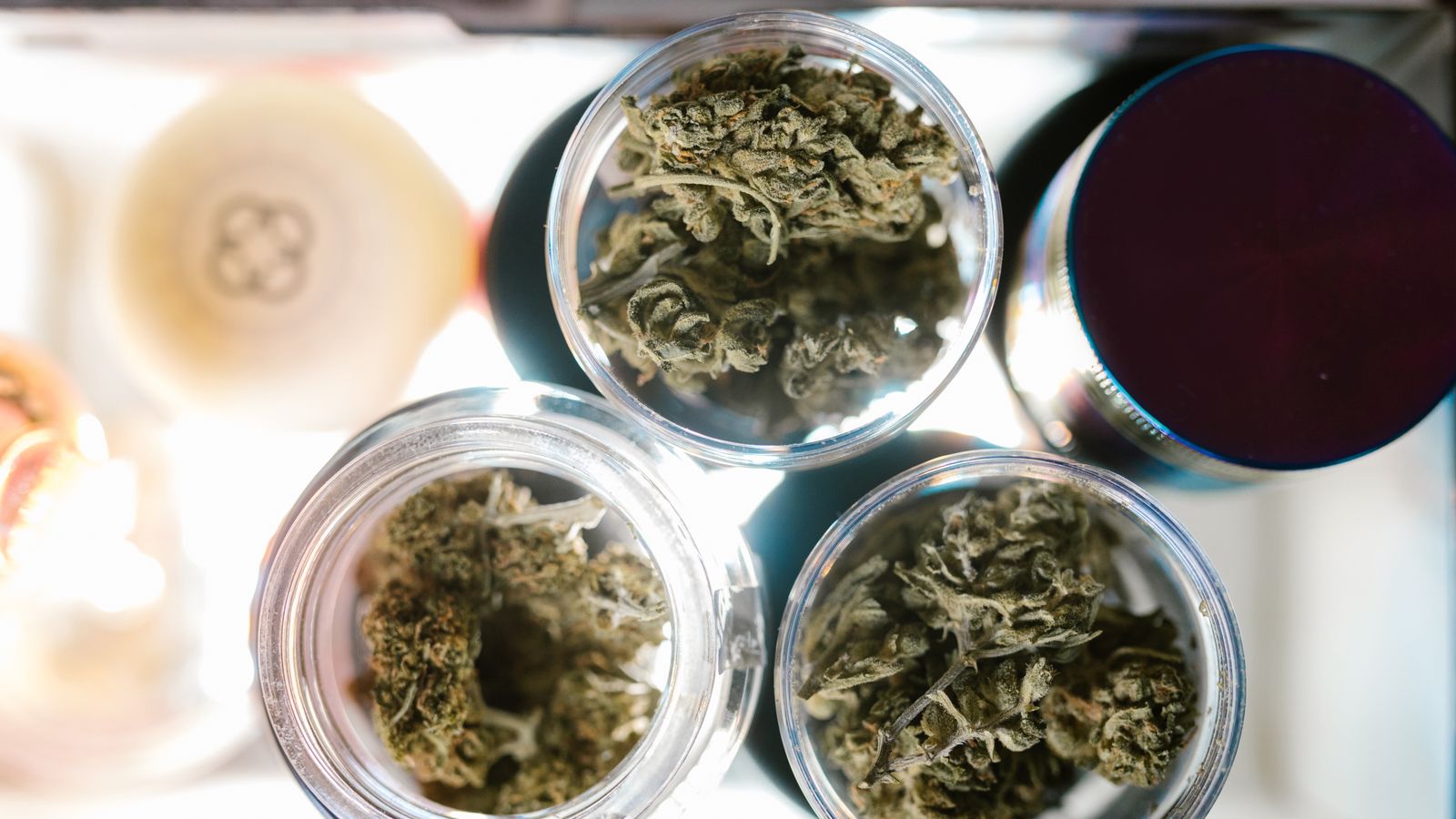
Council action in the Butler County seat adds local sign-off to Ohio's adult-use retail buildout, though the signal supplies few specifics.
More from the newsroom

Vicente LLP Sets Webinar on DEA Registration Denials for Cannabis
The law firm's session targets operators weighing next steps after DEA registration denials and questions over whether applicants complied on time, a gap the signal does not fully detail.

Oregon health officials update review of cannabis health effects
State health officials refreshed their review of cannabis health effects, weighing risks against benefits, according to NPR for Oregonians coverage published Nov. 11.
Texas Lt. Gov.-elect Goodwin Puts Marijuana on 2027 Agenda
Vikki Goodwin, Texas's lieutenant governor-elect, listed marijuana alongside education, gambling and Medicaid as priorities ahead of the 2027 legislative session, according to KSAT.