No on 8 Campaign Releases First Ads Focused on Public Health
Opposition to California's Proposition 8 cannabis repeal launches television spots emphasizing regulated market safety and youth protection.
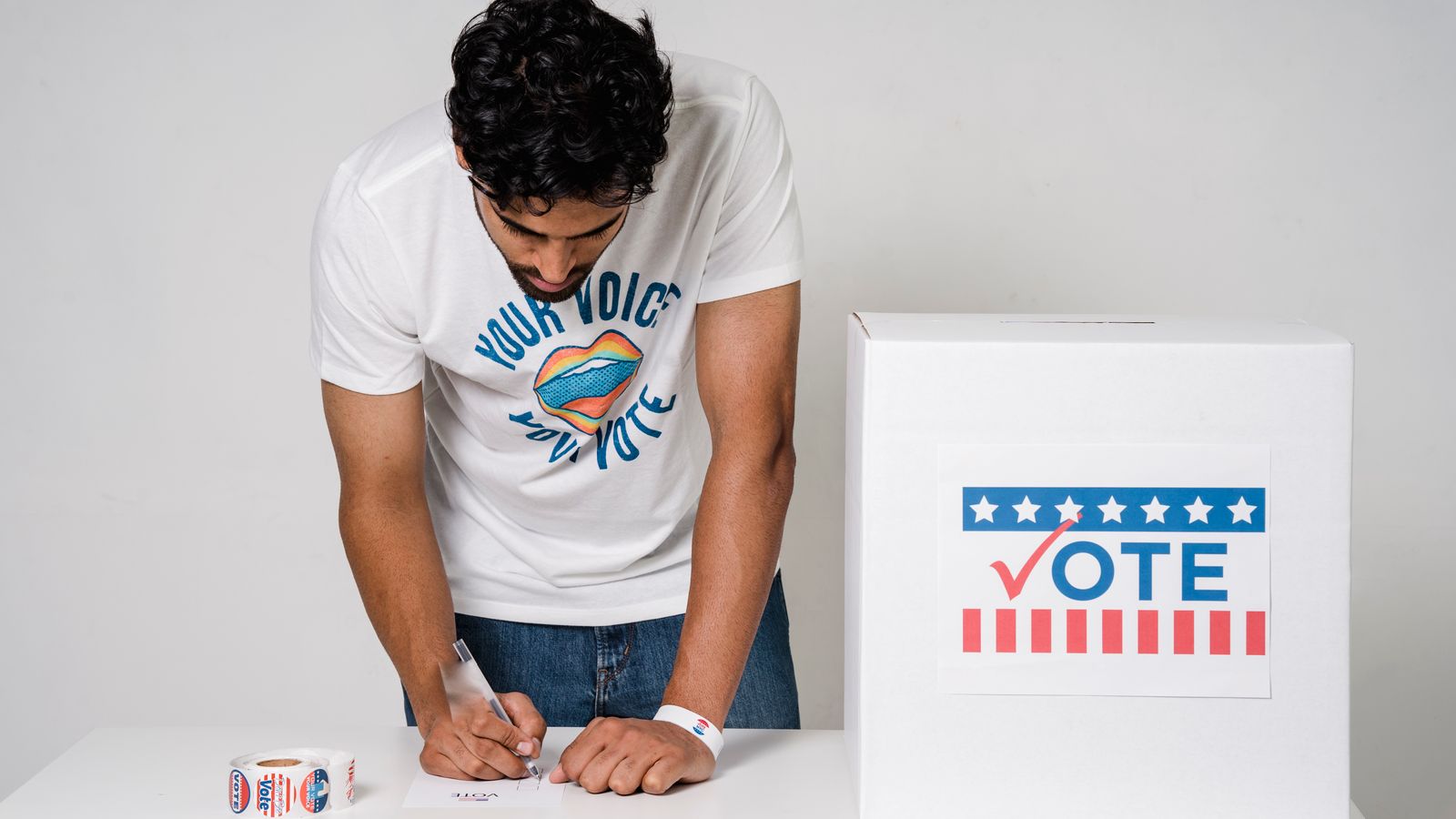
A man writes on a paper to cast his vote next to a ballot box in a studio setting.
Campaign Launches Television Spots Six Weeks Before Election Day
The No on 8 coalition released two 30-second television spots on September 29, 2026, targeting voters in Los Angeles, San Francisco, and Sacramento media markets. The campaign's press release says the ads will run through October 15 with an initial buy estimated at $2.3 million. The spots feature testimonials from a pediatrician and a former law enforcement official. Both argue that repeal would eliminate testing standards and age verification systems established under the Adult Use of Marijuana Act.
The first ad opens with footage of licensed dispensary operations, including ID scanners and product labels showing THC content and testing dates. A voiceover states that Proposition 8 would "erase eight years of regulation overnight." The second spot focuses on youth access, citing California Department of Public Health data showing a 14% decline in teen cannabis use since 2016.
Public Health Frame Dominates Messaging Strategy
The campaign is anchoring its argument on regulated market safeguards rather than criminal justice or tax revenue, a departure from the 2016 legalization playbook. Both ads avoid mentioning the cannabis industry or business interests. They emphasize laboratory testing requirements, child-resistant packaging, and the elimination of unlicensed sellers.
The ads position repeal as a rollback of consumer protection standards that have been operational for nearly a decade, not as a threat to industry revenue.
This framing reflects internal polling conducted by the No on 8 coalition in August 2026, which found that 62% of likely voters view "product safety and testing" as the most important aspect of cannabis regulation, ahead of tax revenue (18%) and criminal justice reform (12%). The campaign didn't release the full polling memo, but a summary was shared with major donors in early September.
Proposition 8 Would Reinstate Prohibition, Eliminate Licensing
If approved, Proposition 8 would repeal California Health and Safety Code Section 11362.1 and related statutes enacted by Proposition 64 in 2016. The measure's text, filed with the California Secretary of State in March 2026, doesn't replace the Adult Use of Marijuana Act with alternative regulations. Cannabis possession, cultivation, and sale would revert to their pre-2016 criminal status under Health and Safety Code Sections 11357 and 11358.
The Department of Cannabis Control oversees approximately 1,200 licensed retailers and 800 licensed cultivators. It would lose its statutory authority. The state's track-and-trace system, Metrc, would be defunded. All active licenses would expire on the measure's effective date, which the Legislative Analyst's Office estimates as December 15, 2026, if the measure passes.
For full background on this ballot fight, see the CannIntel topic hub on the Proposition 8 repeal campaign.
Polling Shows Tight Race With High Undecided Share
A September 22 poll by the Public Policy Institute of California found 48% of likely voters oppose Proposition 8, 44% support it, and 8% remain undecided. The margin is within the poll's 3.5-point error range. Support for repeal is strongest among voters over 65 (54% yes) and weakest among voters 18-34 (38% yes). Geographically, the Central Valley shows the highest support for repeal (52% yes), while the Bay Area shows the lowest (36% yes).
The Yes on 8 campaign, backed by a coalition of religious organizations and parent groups, hasn't yet launched paid television advertising. Its most recent FEC filing, covering through September 15, showed $1.8 million in total contributions, compared to $6.4 million raised by the No on 8 coalition. That disparity suggests the opposition will dominate airwaves in the final stretch.
What to Watch: Competing Ad Buys and Debate Schedule
The No on 8 campaign plans a second ad flight starting October 20, according to a media buyer familiar with the reservation. Yes on 8 has scheduled its first television spot for October 5, per filings with Los Angeles broadcast stations. Both campaigns have agreed to a televised debate on October 12, hosted by the Los Angeles Times and broadcast statewide. That forum will be the first direct clash between the two sides with a mass audience.
The outcome will hinge on turnout among younger voters, who supported Proposition 64 by a 71-29 margin in 2016 but historically vote at lower rates in midterm cycles. Early voting begins October 7.
For complete background, history, and our ongoing coverage of this story:
Open the CannIntel topic hub →Frequently asked questions
What does California's Proposition 8 do?
Proposition 8 would repeal the Adult Use of Marijuana Act passed in 2016, returning cannabis possession, cultivation, and sale to criminal prohibition. It does not replace the law with alternative regulations. All state licenses and the Department of Cannabis Control would be eliminated.
When is the vote on Proposition 8?
California voters will decide Proposition 8 on November 5, 2026. Early voting begins October 7. If the measure passes, it takes effect in mid-December 2026, according to the Legislative Analyst's Office.
Who is funding the No on 8 campaign?
The No on 8 coalition has raised $6.4 million through September 15, 2026, primarily from licensed cannabis operators, trade associations, and labor unions. The campaign has not disclosed individual donor names above the $1,000 reporting threshold.
What happens to cannabis licenses if Proposition 8 passes?
All state-issued cannabis licenses would expire on the measure's effective date, estimated as December 15, 2026. The Department of Cannabis Control would lose statutory authority, and the Metrc track-and-trace system would be defunded. Licensed businesses would have no legal pathway to operate.
How close is the Proposition 8 race?
A September 22 poll by the Public Policy Institute of California found 48% oppose Proposition 8, 44% support it, and 8% undecided. The 4-point gap is within the poll's margin of error, making the race a toss-up six weeks before Election Day.
Sources
The cannabis newsletter you forward to your team.
Federal policy, market data, grower alerts, and the one story that matters today. Sent every weekday at 7am. Free.
No spam. Unsubscribe with one click. 21+ only.
Related from Laws

DEA and FDA Drug Scheduling Process Faces Accountability Criticism
Libertarian analysis argues federal drug-ban procedures lack transparency and consistent review standards.

Pennsylvania Advances Bill Allowing Medical Marijuana in Hospitals
Terminally ill patients could use medical cannabis in Pennsylvania hospitals under legislation advancing through the state legislature.

Missouri HB 2641 Brings Hemp Cannabinoid Sales to Dispensaries
New law authorizes licensed cannabis retailers to sell hemp-derived products under state oversight for the first time.
More from the newsroom

Jersey City Cannabis Board Withdraws Support for Tyson.20 Dispensary
The Jersey City Cannabis Control Board reversed its endorsement of a proposed retail site while approving a separate manufacturing facility.

Cannabis Voters Urged to Mobilize Ahead of November Ballot Measures
Advocates warn that low turnout among cannabis supporters could decide legalization outcomes in Florida, North Dakota, and South Dakota.

First National Study Counts 110,000 Medical Cannabis Caregivers
New research provides the first comprehensive estimate of designated caregivers dispensing medical cannabis to patients across U.S. state programs.