Heights Report Puts Newton's Cannabis Revenue Fight in Focus
Boston College's student newspaper examined how cannabis money and community concerns collide in Newton, a test of Massachusetts' local-control model.
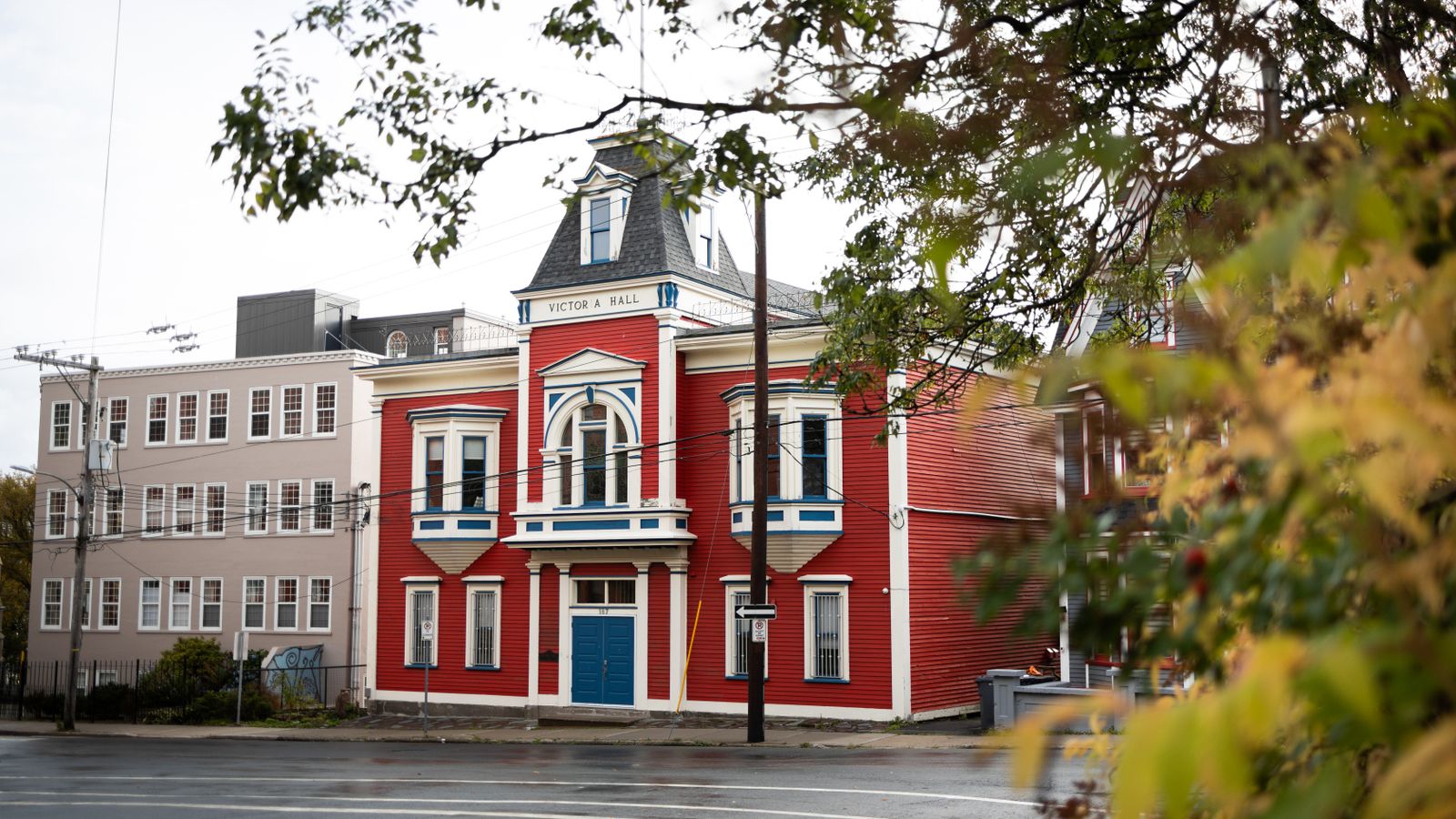
Beautiful red historic building with striking blue accents, showcasing unique architectural design in an urban setting.
The Heights Frames Newton's Debate as Money Versus Community
The Heights titled its report "Money, Marijuana, and Newton: The Garden City's Double-Edged Fight Over Cannabis," and the headline tells you where the tension sits. Money on one edge. Community concerns on the other.
CannIntel's signal carries only that headline and the publication name. We haven't independently confirmed the report's specifics, so this story doesn't attribute details to it that we can't verify.
What we can do is lay out the legal frame that every Massachusetts city, Newton included, operates inside.
State Law Caps What a City Can Collect
Massachusetts General Laws Chapter 94G limits a host community agreement to 3% of gross sales for a maximum of five years. That ceiling is the first thing any city council weighing a retail license has to price in.
On top of that, a municipality can adopt a local tax of up to 3% on retail sales. The state adds its own excise tax of 10.75% plus the standard sales tax.
- Host community agreement: up to 3% of gross sales, five-year term
- Local option tax: up to 3%
- State excise: 10.75%, collected separately
Run the numbers. A city's take is real but bounded, and it scales with how many shops it permits.
The Cleanest Read: Revenue Is a Weak Lever, Zoning Is a Strong One
The cleanest read on Newton's fight is that cities can't raise the price of cannabis, but they can control the supply of storefronts. Fee caps are set in Boston. Zoning and licensing pace are set locally.
That's why debates like this one rarely turn on the percentage. They turn on how many licenses, where, and under what conditions. A city that wants more revenue has one real option: approve more stores. A city worried about neighborhood impact has the opposite one.
A city can't negotiate past the 3% cap, so every local cannabis argument is really an argument about how many stores to allow and where.
Local Control Cuts Both Ways
Massachusetts lets municipalities restrict or ban retail through local votes and zoning, which makes every city its own market. Under Chapter 94G, communities that backed the 2016 legalization ballot question face a higher bar to ban sales outright than those that opposed it.
Licensing sits with the state's Cannabis Control Commission, but it doesn't override a host city's zoning. An operator can hold a state license and still have no place to open.
That's the double edge. Cities get bargaining power. Operators get uncertainty.
What Operators Should Take From It
Operators in Massachusetts should treat every host community agreement as a negotiation over siting, hours, and community commitments, not over the fee percentage. The cap leaves little room on price.
Existing license holders benefit when a city limits new entrants, since scarcity protects their sales, while prospective entrants face the reverse, and investors weighing Massachusetts exposure should underwrite municipal politics as a distinct risk, separate from state-level regulation.
What Residents and Patients Should Watch
For residents, the practical questions are where stores can locate and what the city does with the money. Revenue isn't automatically earmarked, and the state law requires fees to relate to costs a host community imposes.
For patients and adult-use consumers, a restrictive local posture means longer drives and fewer choices. For neighbors, it means more say over what opens on their street. Both are legitimate outcomes of the same system.
This isn't a Newton quirk. It's how Massachusetts built its market. For full background on this story, see the CannIntel topic hub on Massachusetts local cannabis regulation.
What We Can't Yet Confirm
CannIntel hasn't verified Newton-specific figures, votes, or official positions, and we're not supplying any. The Heights' full reporting is the primary source for those details.
Newton officials, license holders, and any pending applicants would need to be named and quoted directly before this becomes a full local story. We'll update when we have them. The next signal to watch: any Newton city council or zoning action on cannabis licensing, and whether it changes the number of permitted storefronts in a city that sits inside Greater Boston's competitive market.
Frequently asked questions
What is the maximum host community agreement fee in Massachusetts?
Under Massachusetts General Laws Chapter 94G, a host community agreement can't exceed 3% of a cannabis establishment's gross sales, and the agreement's term can run no longer than five years. Fees must also relate to costs the host community imposes.
Can Massachusetts cities tax cannabis sales?
Yes. A municipality can adopt a local tax of up to 3% on retail cannabis sales. That sits on top of the state's 10.75% cannabis excise tax and the standard state sales tax.
Can a Massachusetts city ban cannabis stores?
Yes, through local ballot votes and zoning, though the threshold differs depending on how the community voted on the 2016 legalization question. The Cannabis Control Commission licenses operators but doesn't override local zoning.
What did The Heights report about Newton?
The Heights, Boston College's student newspaper, published a report titled 'Money, Marijuana, and Newton: The Garden City's Double-Edged Fight Over Cannabis.' CannIntel has verified only the headline, so readers should consult the original for specifics.
Sources
The cannabis newsletter you forward to your team.
Federal policy, market data, grower alerts, and the one story that matters today. Sent every weekday at 7am. Free.
No spam. Unsubscribe with one click. 21+ only.
Related from Laws

Massachusetts Sets Nine Statewide Ballot Questions for Nov. 3
Nantucket Current reported nine statewide questions will go to Massachusetts voters on Nov. 3, framing the state's 2026 cannabis ballot fight under Article 48 rules.
Manassas CBD store closes after Virginia law change bars most products
A Northern Virginia retailer is shutting down because most of its inventory no longer clears state law, WUSA9 reported.

NORML Urges Appeals Court to Revisit Curaleaf $31.8M Verdict Ruling
The marijuana reform group asked a federal appeals court to reconsider a decision wiping out a $31.8 million verdict against Curaleaf subsidiaries.
More from the newsroom
New York cannabis retailers shrink orders as payment enforcement tightens
MJBizDaily reports licensed New York dispensaries are buying less product as payment rules are enforced more tightly, a cash-flow squeeze with 280E implications.

AZmarijuana.com Reports Teen Use Fell in Adult-Use States
A published report says youth cannabis use declined significantly in legalization states, but the underlying survey, figures and time frame weren't available for verification.

Study of 3,744 Medical Marijuana Patients Reports Two-Year Pain Gains
A two-year study of 3,744 medical marijuana patients reported gains in chronic pain, sleep and quality of life, but the product data that would make it useful is missing from the summary.