Monaco Bans THC Derivatives and Mushroom Edibles in Sovereign Order
The principality adds synthetic cannabinoids and psilocybin-containing products to its controlled substances list effective immediately.
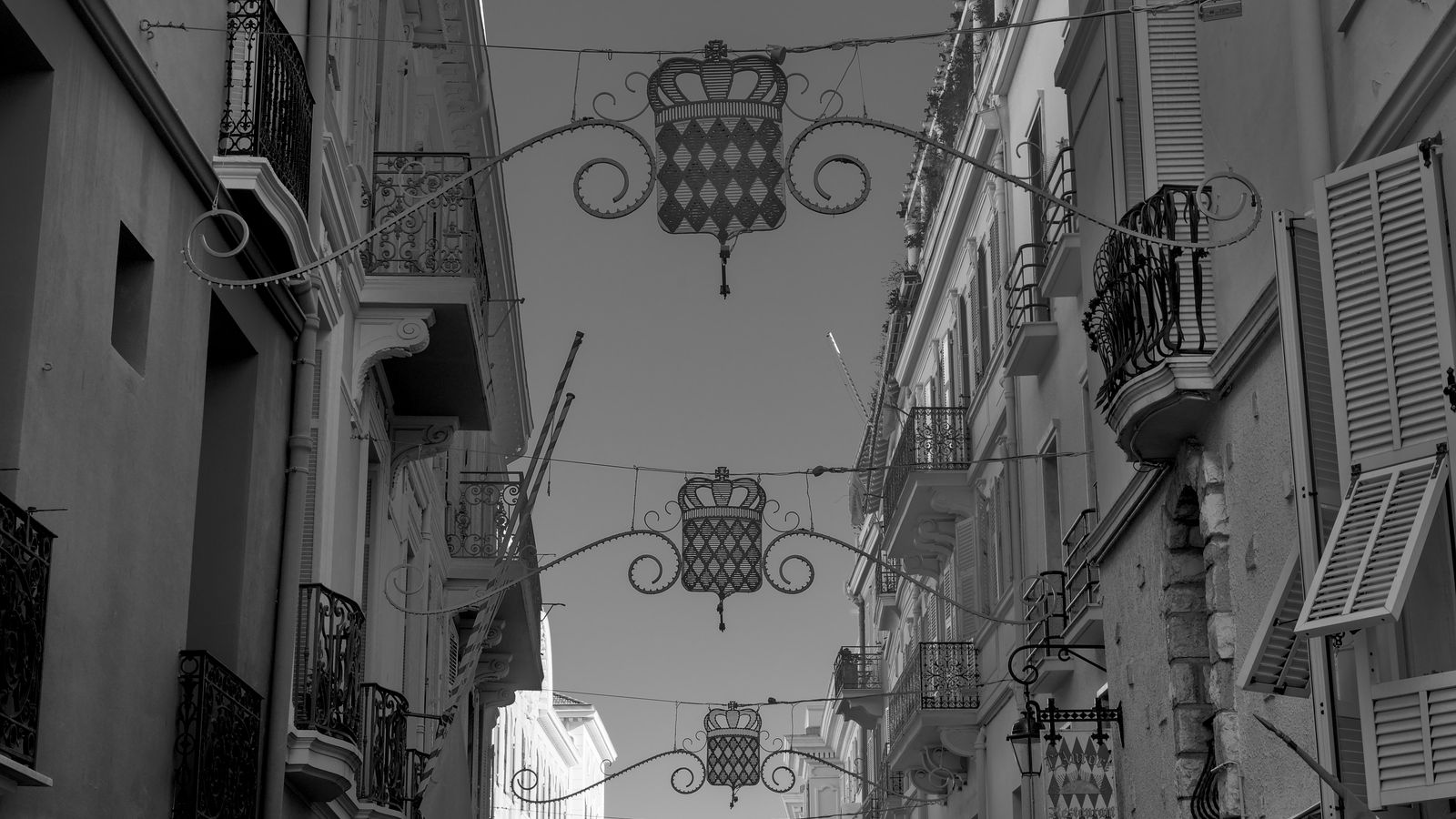
Black and white view of a decorative street adorned with flags in Monaco.
Sovereign Order Targets Semi-Synthetic Cannabinoids
Monaco's Department of the Interior published Sovereign Order No. 9.847 on August 9, expanding the principality's narcotics schedule to include delta-8-tetrahydrocannabinol, hexahydrocannabinol (HHC), and tetrahydrocannabiphorol (THCP). The order amends Monaco's 1970 Law on Narcotic Substances, which previously listed only delta-9-THC by name. Semi-synthetic cannabinoids derived from hemp had operated in a legal gray zone since 2023, when two boutique retailers in Monte Carlo began stocking delta-8 vape cartridges marketed as wellness products.
The new rule defines controlled THC analogs as "any tetrahydrocannabinol isomer or homolog exhibiting psychoactive properties, whether naturally occurring or synthetically derived." Possession penalties mirror those for delta-9-THC: up to one year imprisonment and a €9,000 fine for personal use quantities under 10 grams.
Psilocybin Edibles Added to Prohibited List
The same order classifies "any food product containing psilocybin or psilocin, including but not limited to chocolates, gummies, or baked goods" as Schedule I narcotics. Monaco's Public Security Department said it seized 47 packages of psilocybin chocolate bars at the Port Hercules customs checkpoint between January and July 2026, all shipped from Netherlands-based online vendors. Monaco doesn't permit any medical or research exemptions for psilocybin; the substance remains banned in all forms under the 1971 UN Convention on Psychotropic Substances, to which Monaco is a signatory.
Retailers have 30 days to surrender existing inventory to the Department of Health Affairs for destruction. No compensation.
Enforcement Extends to Cross-Border E-Commerce
Monaco's customs authority will block inbound shipments of products containing the newly listed substances, according to an August 9 directive from the Directorate of Judicial Services. Office des Timbres, the principality's postal service, will flag parcels with sender addresses matching known delta-8 or psilocybin distributors in France, Belgium, and the Netherlands. Monaco shares a customs union with France but maintains independent narcotics enforcement.
The order applies retroactively to pending prosecutions; at least three cases involving delta-8 possession are now subject to the updated penalty schedule.
Legal Framework Mirrors French Approach
Monaco's move follows France's May 2025 decree banning HHC and THCP under Article R. 5132-86 of the Public Health Code. The principality typically harmonizes drug policy with its larger neighbor but maintains separate legislative procedures. Monaco's sovereign orders require only the signature of Prince Albert II. They don't pass through the National Council, the principality's 24-member parliament.
No Medical Cannabis Program in Place
Monaco doesn't recognize medical cannabis prescriptions, even those issued by French physicians under that country's 2021 experimental program. Princess Grace Hospital administers the principality's healthcare system and doesn't stock cannabis-derived pharmaceuticals. Epidiolex, the FDA-approved cannabidiol epilepsy treatment, is available only through a named-patient import process requiring prior approval from the Health Affairs Department.
Retail Impact Concentrated in Monte Carlo District
Two Monte Carlo retailers—Botanic Wellness and Riviera Hemp Co.—had stocked delta-8 products since late 2023. Both businesses are registered as tobacco and supplement vendors under Monaco's commercial licensing system. Neither responded to inquiries by press time. Monaco's retail cannabis market is negligible; the principality has a resident population of approximately 38,000 and prohibits recreational cannabis in all forms.
What Operators Should Monitor
The order took effect upon publication in the Journal de Monaco on August 9. No grace period. Monaco's Directorate of Judicial Services hasn't issued guidance on how the retroactive penalty clause will apply to cases filed before the order's publication. We'll be watching whether other European microstates—Andorra, Liechtenstein, San Marino—follow Monaco's lead on semi-synthetic cannabinoid bans. For background on European THC-analog regulations, see the CannIntel topic hub on international cannabis regulations.
Sources
The cannabis newsletter you forward to your team.
Federal policy, market data, grower alerts, and the one story that matters today. Sent every weekday at 7am. Free.
No spam. Unsubscribe with one click. 21+ only.
Related from Laws
Bipartisan Bill Exempts Hemp THC Drinks From Federal Ban
New legislation would carve out hemp beverages from the looming recriminalization, regulating them like alcohol instead.

Senate Hemp THC Vote Fractures Partisan Lines in Rare Coalition Split
A procedural vote on intoxicating hemp products broke traditional Republican and Democratic blocs, signaling deepening rifts over cannabis policy.

Hochul Signs Bill Expanding Microbusiness, Dispensary Pathways in NY
New law loosens ownership restrictions and creates new licensing routes for small operators in New York's cannabis market.
More from the newsroom

Delaware Adult-Use Sales Miss First-Year Projections by Wide Margin
State regulators overestimated demand, infrastructure readiness, and consumer shift from medical to recreational channels.

THC Drug Eliminated Nightmares in 37% of PTSD Patients, German Trial Finds
Nabilone, a synthetic THC analog, outperformed placebo in reducing trauma-related nightmares in a 10-week randomized controlled trial.

US Hospital Nausea Cases Surge Among Frequent Cannabis Users
Emergency departments report sharp increase in cannabinoid hyperemesis syndrome admissions as daily consumption patterns shift nationwide.