Op-Ed: Marijuana Rescheduling Delayed, Not Derailed, Says Marijuana Moment
A Marijuana Moment op-ed argues the Schedule III effort has slowed but survives, a framing with direct 280E and compliance stakes for operators.
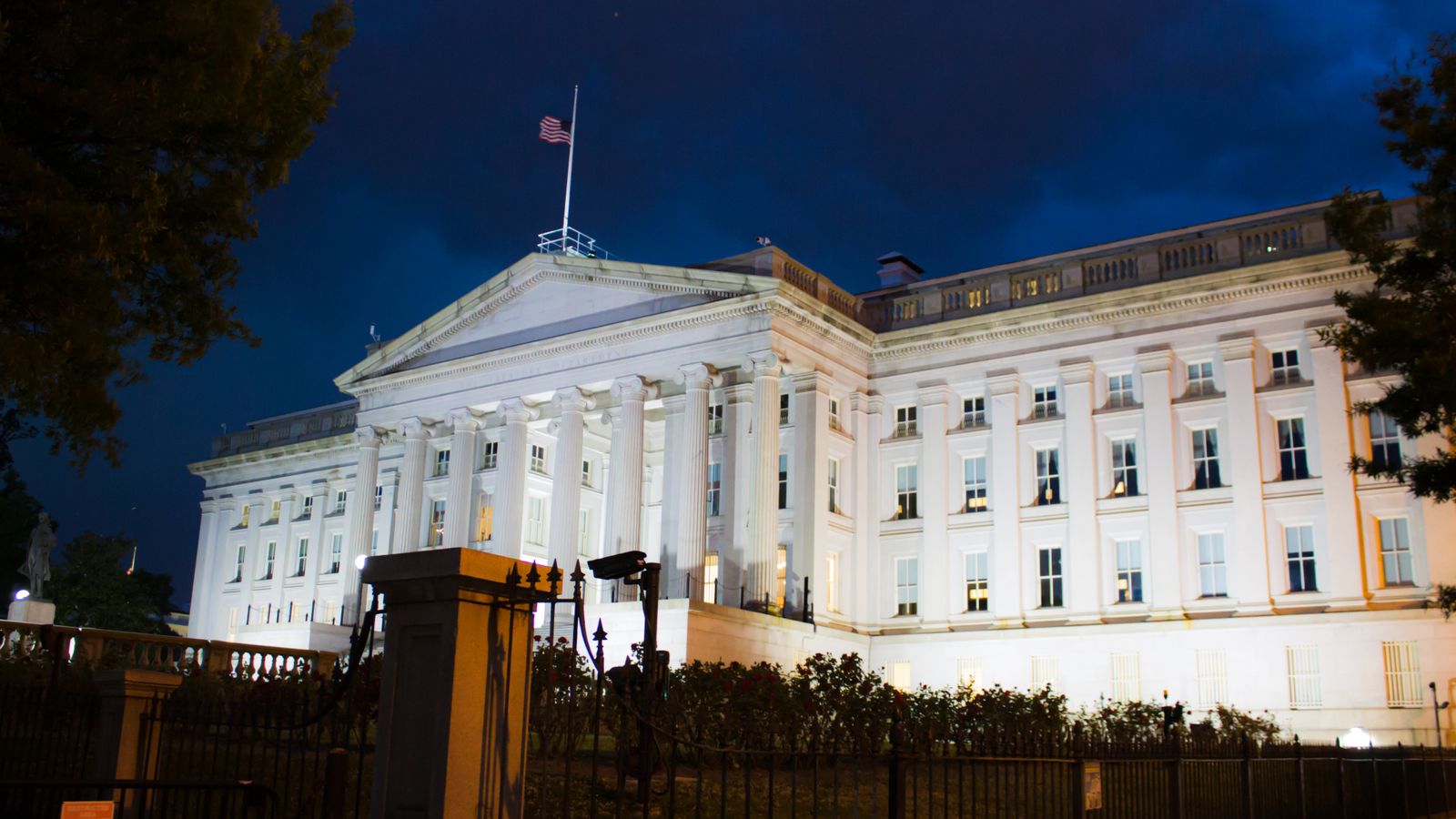
Stunning view of the U.S. Treasury Building illuminated against a twilight sky in Washington, DC.
The framing: a slowdown, not a collapse
Marijuana Moment's Monday op-ed argues, in its headline, that the federal effort to move marijuana out of Schedule I is behind schedule but still alive.
The headline reads "The Marijuana Rescheduling Process Has Been Delayed—But Not Derailed." The piece ran October 12, 2026. CannIntel is reporting on the framing and the public record behind it, not adopting the author's full argument, and no author, official or agency is quoted here.
It's an opinion piece, not a Federal Register notice. It doesn't change the legal status of marijuana. What it does capture is a view now common in Washington: the process has stalled at points, but nobody has formally ended it.
That view is testable. A rulemaking is derailed when an agency withdraws it, a court vacates it, or Congress blocks it. A rulemaking is delayed when none of those has happened and the clock keeps running.
Where the procedure actually stands
The federal record shows a two-agency process: a health recommendation first, then a DEA rulemaking that isn't complete until a final rule is published.
The Department of Health and Human Services recommended moving marijuana to Schedule III in August 2023, according to the public record. The DEA followed with a notice of proposed rulemaking published in the Federal Register on May 21, 2024, proposing to place marijuana in Schedule III of the Controlled Substances Act.
Authority for the change sits in 21 U.S.C. 811. That section governs how the Attorney General, acting through the DEA, adds, removes or transfers substances among schedules. It requires findings tied to HHS's scientific and medical evaluation.
A proposal is not a rule. Nothing changes legally until a final rule is published and takes effect. Until then, marijuana stays in Schedule I.
It also drew a request for a formal hearing, which adds procedural steps before any final action. Each step is a place where a timeline can slip without the effort ending. That's the factual core of a "delayed, not derailed" read.
CannIntel's running record of each filing and deadline is on the CannIntel topic hub on DEA marijuana rescheduling.
What operators and investors should price in
Schedule III would remove 280E exposure for licensed operators, but it would leave the federal–state conflict largely intact.
Section 280E of the tax code denies ordinary business deductions to businesses trafficking in Schedule I and II substances. A move to Schedule III would take marijuana outside that provision. For multi-state operators carrying heavy effective tax rates, that is the single largest financial prize in the rescheduling debate.
The caveat is just as plain. Schedule III is still a controlled schedule. It doesn't by itself create a federal pathway for state-licensed dispensaries in California, Ohio or any other adult-use market. Whether and how existing state programs would fit the Controlled Substances Act's registration framework is the harder question, and a final rule would have to answer it or leave it to Congress.
Three variables decide the timeline from here:
- Whether the DEA resolves the hearing process and issues a final rule.
- Whether any court challenge follows a final rule.
- Whether Congress attaches conditions through appropriations or standalone legislation.
A delay isn't free. Operators who budgeted a 280E windfall for a given fiscal year have already absorbed the cost of waiting, and lenders pricing in that relief are carrying the same risk. That math is hard to ignore.
Uncertainty isn't failure, though. Because the proposal is still a live rulemaking, planning around a final rule remains defensible. Planning around a rule on a fixed date isn't.
The next signal to watch is a final rule or a formal withdrawal in the Federal Register. Either one ends the debate over "delayed" versus "derailed." Until one appears, the op-ed's framing is an argument rather than a fact.
For complete background, history, and our ongoing coverage of this story:
Open the CannIntel topic hub →Frequently asked questions
Is marijuana still a Schedule I drug?
Yes, unless and until the DEA publishes a final rule moving it. The May 21, 2024 notice of proposed rulemaking proposed Schedule III, but a proposal carries no legal effect on its own.
What would Schedule III change for cannabis businesses?
It would take marijuana outside tax code Section 280E, which denies standard deductions to Schedule I and II businesses. That would lower effective tax rates for many licensed operators. It would not make state-licensed sales federally legal.
Who decides whether marijuana is rescheduled?
Under 21 U.S.C. 811, the Attorney General, acting through the DEA, can transfer substances between schedules after considering HHS's scientific and medical evaluation. HHS recommended Schedule III in August 2023.
What is the difference between delayed and derailed?
Delayed means the rulemaking is still active but behind schedule. Derailed means the agency withdrew it, a court vacated it, or Congress blocked it. The op-ed's headline argues the first, not the second.
Sources
The cannabis newsletter you forward to your team.
Federal policy, market data, grower alerts, and the one story that matters today. Sent every weekday at 7am. Free.
No spam. Unsubscribe with one click. 21+ only.
Related from Laws

Idaho Sets Nov. 3 Vote on Legislature's Sole Power to Legalize Marijuana
A ballot question would decide whether only lawmakers, not voters, can legalize marijuana in Idaho, a state with no adult-use or medical market.

Wholesaler Settles for $2M Over Illegal THC Product Sales
A wholesaler agreed to a $2 million settlement over illegal THC products, but the public record is thin on who, where and what was sold.

North Carolina's $3B Hemp Sector Faces Federal THC Ban Deadline
A federal redefinition of hemp takes effect Nov. 12, 2026, and North Carolina's roughly $3 billion industry is bracing for the cutoff.
More from the newsroom

Tilray Beverage Growth vs. Cannabis Weakness: The Tax Read
Kalkine Media asks whether Tilray's beverage business can offset cannabis softness; a tax and segment-level reading shows what the answer depends on.

Illinois Cannabis Use Rises While State Tax Revenue Dips
The Chicago Sun-Times reported Oct. 12 that Illinois consumption is climbing as cannabis tax collections slip, a split with consequences for state budgets and operators.

High Times Profiles Brute's Roots' Slow Pheno Bet in South Jersey
High Times Magazine profiled Brute's Roots on Oct. 12, framing the South Jersey operation's strategy around patience and phenotype selection.