Lucas indictment raises questions for Virginia's retail cannabis rollout
Cardinal News reported an indictment of a figure named Lucas has implications for Virginia's planned legal retail cannabis market; the compliance questions are now live.
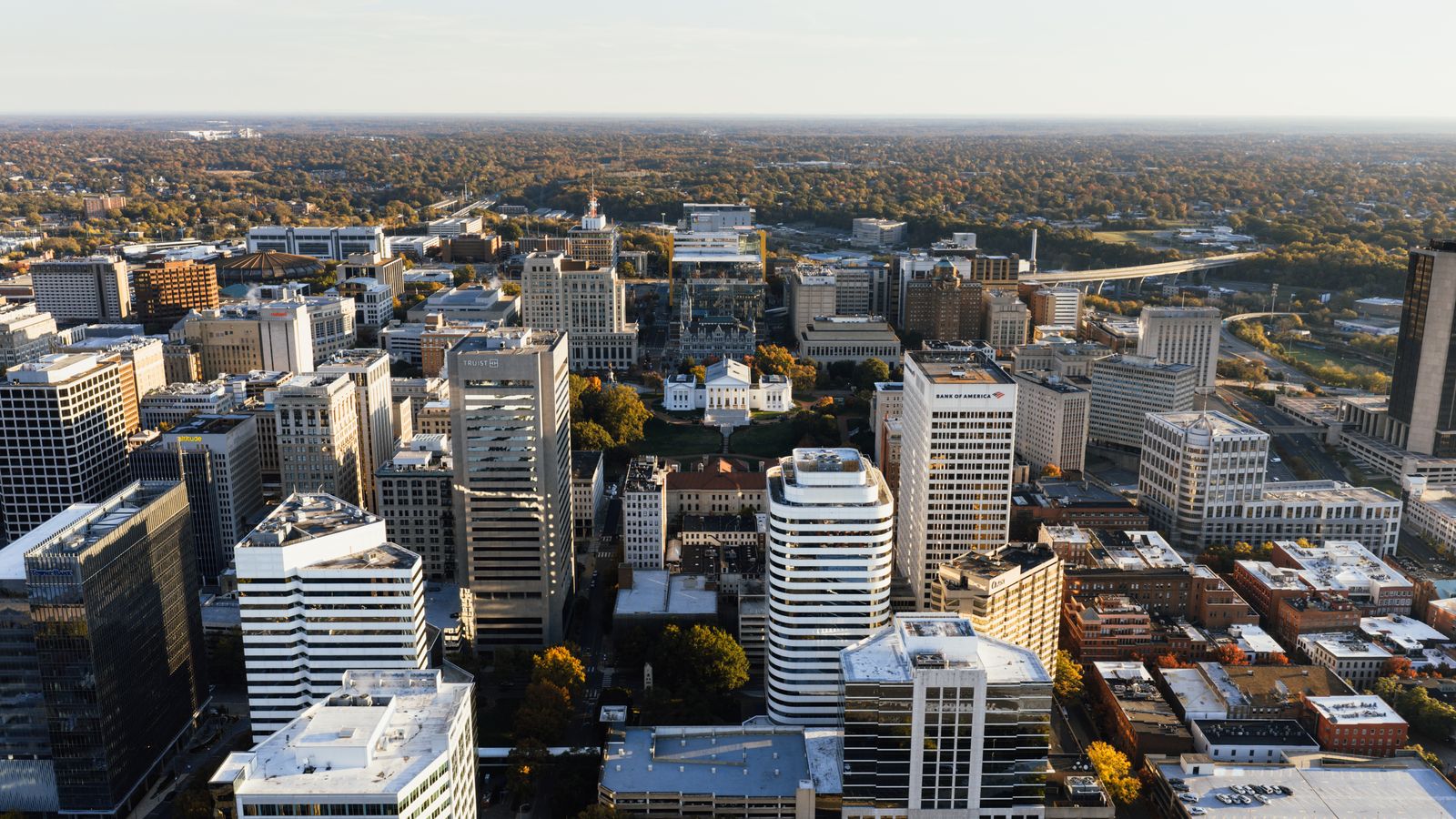
Aerial view of downtown Richmond, Virginia, capturing the city's skyline and architecture.
Cardinal News flags an indictment with retail market consequences
Cardinal News reported on Oct. 29, 2026, that a Lucas indictment raises two big questions about Virginia's coming legal retail cannabis market. That's the full extent of what the published signal supplies.
The signal doesn't include the charges, the court, the indictment date or the underlying allegations. CannIntel hasn't independently verified any of them, so we won't characterize the case.
What the signal leaves out
Two questions are named in the headline, but the text of Cardinal News's reporting wasn't part of the material reviewed. We won't guess what it concluded.
Readers should treat the compliance framework below as CannIntel's reading of how indictments generally intersect with licensed markets. It's not a summary of Cardinal's findings.
Question one: licensing eligibility
The first issue any licensing regime faces is whether a pending criminal charge, as opposed to a conviction, affects eligibility. On a strict reading, those are different legal events, and statutes treat them differently.
An indictment is an accusation. Many licensing schemes key disqualification to convictions while giving regulators discretion over suitability, and which standard Virginia applies to retail applicants is the text to read, since the answer will govern any party tied to the case.
Question two: ownership and disclosure
The second issue is whether applicants must disclose, and regulators can scrutinize, every person with a financial or governance interest. Beneficial-ownership rules are where indictments usually bite.
If a charged individual holds, or is tied to, an interest in a prospective licensee, the application's disclosure schedule becomes the pressure point. A misstatement there can be a bigger problem than the underlying charge. For lenders and investors, that's a diligence item, not a footnote.
Where Virginia's framework stands
Virginia legalized adult possession and home cultivation effective July 1, 2021, but didn't originally authorize retail sales. The Cannabis Control Authority is the state regulator.
That gap between legal possession and legal sales is why the retail rollout matters so much. Operators under federal IRC §280E will also carry a tax burden that magnifies any licensing delay, since carrying costs accrue without deductible offsets.
An indictment touching the rollout, even indirectly, adds uncertainty at the worst moment. Applicants won't enjoy that.
What to watch next
The documents that decide this are the indictment itself, the retail licensing statute and the application disclosure forms. For full background on the state's rollout, see the CannIntel topic hub on the Virginia retail cannabis market.
Next up is the court docket, along with any Cannabis Control Authority statement on suitability review. Until one of them moves, the two questions stay open.
For complete background, history, and our ongoing coverage of this story:
Open the CannIntel topic hub →Frequently asked questions
What did Cardinal News report about the Lucas indictment?
Cardinal News reported on Oct. 29, 2026, that the Lucas indictment raises two big questions about Virginia's coming legal retail cannabis market. CannIntel reviewed only the headline and metadata, so details of the charges and the two questions are not confirmed here.
Does an indictment bar someone from a cannabis license?
Not automatically. An indictment is an accusation, and many licensing statutes tie disqualification to convictions while giving regulators suitability discretion. Virginia's specific retail licensing text controls, and applicants should read it directly.
Is retail cannabis legal in Virginia yet?
Adult possession and home cultivation became legal July 1, 2021. Retail sales were not part of that original law. The signal refers to a coming legal retail market, so sales are not yet operating.
Who regulates cannabis in Virginia?
The Cannabis Control Authority is Virginia's cannabis regulator. Any suitability or licensing questions arising from the indictment would fall within its remit, subject to the governing statute.
Sources
The cannabis newsletter you forward to your team.
Federal policy, market data, grower alerts, and the one story that matters today. Sent every weekday at 7am. Free.
No spam. Unsubscribe with one click. 21+ only.
Related from Laws

NJCRC Approves Special Curaleaf Renewal, Denies Pesticide Request
New Jersey regulators granted Curaleaf an off-track renewal because of litigation and, in a separate ruling, rejected a pesticide-related request, Heady NJ reported.
California Task Force Reports $1.5B in Illegal Cannabis Destroyed
A $1.5 billion destruction tally lands in California's enforcement debate, but the valuation method and hemp-versus-cannabis testing rules behind it remain unclear.

Two Alabama Medical Cannabis Dispensaries Set to Open Next Week
The Alabama Reflector reported Thursday that two dispensaries are expected to open, a milestone for a program authorized in 2021 and slowed by litigation.
More from the newsroom

Safe Harbor Financial Signs Opifex Media Term Sheet
SHF Holdings, doing business as Safe Harbor Financial, signed a non-binding term sheet for a combination with Opifex Media Inc., but no financial terms have surfaced.

ASA names 21 recipients of 2026 Cannabis Safety Awards
Americans for Safe Access tied its annual awards to the federal rescheduling debate, but the public excerpt omits recipients, categories and selection criteria.

Snohomish County Council votes down second Clearview cannabis shop
HeraldNet reports the council rejected another retail cannabis outlet in unincorporated Clearview, leaving the vote's legal basis and tally to be documented.